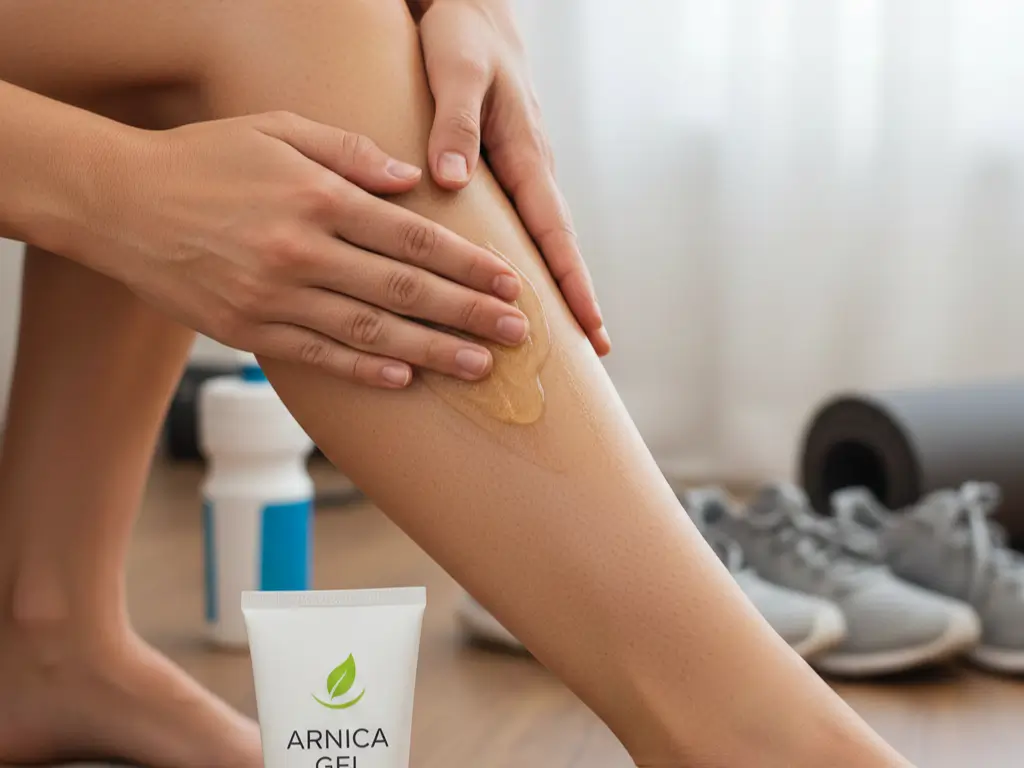
After a tough workout, you want relief, not a chemistry lecture. That little tube of arnica gel promises to ease your aching muscles, but most articles leave you wondering: how much? How often? Does it even work?
Arnica gel may help reduce muscle soreness when applied correctly, though research results are mixed. The key lies in timing your application, using the right amount, and understanding what arnica can and can’t do for your post-workout recovery.
This article provides general educational information about using arnica gel for muscle comfort. It is not medical advice and doesn’t replace consultation with a healthcare provider. Arnica products vary in formulation and strength. Individual responses differ based on skin sensitivity, health conditions, and medications. If you have allergies, skin conditions, are pregnant or nursing, or take blood-thinning medications, consult your doctor before using arnica products. For persistent pain, severe soreness, or suspected injuries, seek professional medical evaluation.
This information is for generally healthy adults experiencing typical post-exercise muscle soreness (not injuries). It’s educational content researched from medical and scientific sources. If you have specific health concerns, always consult a licensed healthcare provider for personalized guidance.
What Is Arnica Gel and How Does It Work for Muscles?
Arnica gel is a topical preparation made from Arnica montana, a flowering plant traditionally used in European folk medicine. It contains compounds believed to have anti-inflammatory properties, though the exact mechanism in commercial preparations remains debated among researchers.
Arnica montana grows in mountainous regions of Europe and has been used for centuries to address bruising, swelling, and muscle discomfort. The plant contains sesquiterpene lactones, particularly helenalin, which laboratory studies suggest may reduce inflammation.
Here’s where it gets interesting. Most commercial arnica gels use homeopathic dilutions, meaning the active compounds are highly diluted. Some products contain herbal arnica extract at higher concentrations. This distinction matters for effectiveness.
According to the National Center for Complementary and Integrative Health (NCCIH), topical arnica is applied for pain, swelling, and bruising, though they note that scientific evidence supporting its effectiveness is limited.
You’ll find arnica in several forms, gels, creams, ointments, and oils. Gels typically absorb faster and feel less greasy, making them popular for post-workout use. When exploring specialty natural ingredients for recovery, arnica stands out as one of the most recognized botanical options.
The traditional use stems from European folk herbalism traditions where mountain-dwelling communities applied arnica preparations after physical labor. Modern formulations attempt to harness these traditional uses in convenient forms.
Does Arnica Gel Actually Work for Muscle Recovery? What Research Shows
Research on arnica for muscle soreness shows mixed results. Some studies demonstrate modest benefits for reducing delayed-onset muscle soreness (DOMS), while others show no significant difference from placebo. Individual responses vary considerably.
I want to be honest with you about the evidence because most articles skip this part.
A 2014 study published in the European Journal of Sport Science found that arnica gel application reduced muscle soreness 72 hours after eccentric exercise compared to placebo. Participants reported less pain during movement and at rest.
However, a Cochrane systematic review examining arnica for muscle soreness after exercise found insufficient evidence to draw firm conclusions about effectiveness. The review noted that study quality varied and sample sizes were often small.
What does this mean practically? Arnica gel might help, but it’s not a guaranteed solution. Some people experience noticeable relief. Others feel no difference from a basic massage with any lotion.
Several factors influence whether you’ll respond well:
- Product concentration: Higher-concentration herbal extracts may work differently than homeopathic dilutions
- Application timing: Earlier application after exercise appears more beneficial in positive studies
- Type of soreness: Delayed-onset muscle soreness (that 24-72 hour stiffness) responds differently than acute injury pain
- Individual variation: Skin absorption, sensitivity, and personal physiology all play roles
The Mount Sinai Health System notes that while arnica is commonly used for muscle aches, “more research is needed to understand how well it works.” This balanced perspective reflects the current scientific understanding.
My take? Arnica gel is worth trying if you’re curious, especially given its favorable safety profile for most people when used correctly. Just maintain realistic expectations, it’s not a miracle cure, and what works for your workout partner might not work for you. Combining topical treatments with other recovery strategies often yields better results than any single approach.
How to Apply Arnica Gel After a Workout: Step-by-Step
Apply a thin layer of arnica gel to affected muscles within 2-4 hours after exercise, massage gently until absorbed, and repeat 2-3 times daily for the next 48-72 hours. Always apply to intact, unbroken skin.
Here’s the application protocol that aligns with how positive research studies used arnica:
Step 1: Time Your First Application
Apply your first dose as soon as practical after exercise, ideally within 2-4 hours. Studies showing benefit typically started application early, before severe soreness developed. Waiting until you’re already hobbling down stairs may reduce effectiveness.
Step 2: Clean and Dry the Area
Wash the target area with mild soap and pat dry. This removes sweat, oils, and any products that might interfere with absorption. Don’t apply to hot, freshly-showered skin, wait until your skin temperature normalizes.
Step 3: Apply the Right Amount
Use approximately a pea-sized amount for small muscle groups (biceps, calves) and a marble-sized amount for larger areas (quads, back). More isn’t better. A thin, even layer absorbs more effectively than a thick glob sitting on your skin.
Step 4: Massage Gently
Using circular motions, massage the gel into your skin for 1-2 minutes until fully absorbed. This massage itself may contribute to relief by increasing blood flow. Don’t press hard enough to cause discomfort.
Step 5: Wash Your Hands
Always wash hands thoroughly after application. You don’t want arnica near your eyes, mouth, or any mucous membranes.
Step 6: Repeat Strategically
Apply 2-3 times daily for 2-3 days. Space applications at least 4-6 hours apart. Most soreness peaks 24-48 hours post-exercise, so consistent application during this window matters most.
Timing tip: Many people find applying before bed helpful, as muscles can stiffen overnight. Morning application before activity keeps the routine consistent.
For athletes dealing with regular training, incorporating arnica into a broader body care and recovery routine makes more sense than relying on any single product. Consider pairing your arnica application with ice rolling techniques for enhanced relief, or gentle dry brushing before application to support circulation.
Safety Considerations and Who Should Avoid Arnica Gel
Arnica gel is generally considered safe for topical use on intact skin. However, it can cause contact dermatitis in sensitive individuals, should never be applied to broken skin or wounds, and is contraindicated for certain populations including pregnant women and those on blood thinners.
Important Safety Information:
- Never apply to broken, irritated, or damaged skin , arnica can be absorbed more readily and cause irritation or toxicity
- Do not use near eyes, mouth, or mucous membranes
- Oral arnica (internal use) is toxic , this guide discusses topical use only
- Stop use if you develop rash, itching, or irritation
- Keep away from children
Who Should NOT Use Arnica Gel:
- Pregnant or nursing women , insufficient safety data exists; consult your healthcare provider
- People allergic to plants in the Asteraceae/Compositae family (ragweed, chrysanthemums, marigolds, daisies) , cross-reactivity is possible
- Individuals on blood-thinning medications (warfarin, aspirin, etc.) , arnica may enhance anticoagulant effects
- Anyone with known arnica allergy
- People with sensitive skin conditions without patch testing first
Perform a Patch Test First
If you’ve never used arnica before, test it:
- Apply a small amount to your inner forearm
- Wait 24 hours
- Check for redness, itching, bumps, or irritation
- If any reaction occurs, don’t use the product
The American Academy of Dermatology recommends patch testing any new topical product, especially botanical preparations. Those with sensitive or reactive skin should be particularly careful with new topicals.
Potential Side Effects:
- Contact dermatitis (rash, redness, itching)
- Skin irritation or dryness
- Allergic reaction (rare but possible)
If you experience significant irritation or signs of allergic reaction (spreading rash, swelling, difficulty breathing), discontinue use and seek medical attention.
Understanding safe topical application practices helps you use any botanical product more confidently. When in doubt, consult a dermatologist or healthcare provider, especially if you have existing skin conditions.
Maximizing Results: Combining Arnica Gel with Other Recovery Strategies
Arnica gel works best as part of a comprehensive recovery routine rather than a standalone solution. Combining it with adequate hydration, proper nutrition, quality sleep, and evidence-based recovery techniques may enhance overall muscle recovery.
No single product handles muscle recovery alone. Here’s how to build arnica into a practical recovery approach:
Complementary Strategies:
Active Recovery: Light movement, walking, or gentle stretching the day after intense exercise helps maintain blood flow without adding stress. Apply arnica gel after these sessions.
Cold Therapy: Some athletes alternate arnica application with cold therapy. Apply arnica first, allow it to absorb fully, then consider ice if appropriate for your situation. Ice rollers and skin icing techniques offer targeted cooling.
Hydration and Nutrition: Muscles recover better when properly fueled. Protein intake, anti-inflammatory foods, and adequate water support the internal environment your muscles need.
Sleep: Growth hormone release peaks during deep sleep. Arnica won’t compensate for inadequate rest.
Massage and Manual Therapy: The act of massaging arnica gel into muscles provides mechanical benefits beyond the gel itself. Consider incorporating facial and body massage tools into your routine.
What NOT to Combine:
- Don’t layer multiple topical analgesics (menthol products, capsaicin, etc.) with arnica without checking for interactions
- Avoid applying arnica over areas you’ll cover with heating pads, heat increases absorption
- Don’t use arnica as a substitute for proper warm-up or cool-down practices
For athletes managing body acne, chafing, and skin concerns, the carrier ingredients in your arnica product matter. Some formulations include botanical butters or oils that provide additional skin benefits.
Explore how different botanical extracts address various concerns to customize your recovery approach. For a holistic perspective, our body care guide for glowing skin covers broader topical care strategies.
When to See a Doctor Instead of Reaching for Arnica Gel
Seek medical attention for pain that’s severe, sudden, or accompanied by swelling, bruising, weakness, or limited mobility. Arnica gel is appropriate for typical post-exercise soreness, not for injuries, persistent pain, or concerning symptoms.
Seek Medical Attention If You Experience:
- Sudden, sharp, or severe pain during or after exercise
- Visible swelling, bruising, or deformity
- Inability to bear weight or move the affected area normally
- Numbness, tingling, or weakness
- Pain that worsens over 48-72 hours rather than improving
- Pain accompanied by fever or general illness
- Persistent soreness lasting more than a week
- Recurring pain in the same location
Arnica gel is meant for routine muscle soreness, that general achiness after a new workout or increased intensity. It’s not appropriate for:
- Acute injuries (strains, sprains, tears)
- Chronic pain conditions
- Pain from underlying medical conditions
- Post-surgical recovery (unless specifically approved by your surgeon)
If you’re unsure whether your discomfort is normal soreness or something more serious, err on the side of caution. A healthcare provider can assess whether you have an injury requiring specific treatment.
For ongoing training recovery support, consult a sports medicine physician or physical therapist who can provide personalized guidance based on your activities and body.
For more evidence-based wellness information, explore our comprehensive collection at Beauty Healing Organic, where you’ll find additional resources on natural remedies for skin concerns and soothing botanical applications.
Moving Forward with Your Recovery
Arnica gel offers one tool among many for managing post-workout muscle soreness. The research is promising but not conclusive, and individual responses vary. What matters most is using it correctly and maintaining realistic expectations.
- Patch test a quality arnica gel product and try it after one workout, noting your response.
- If it works for you, incorporate arnica into a broader recovery routine that includes sleep, nutrition, and active recovery.
- If you experience persistent pain, worsening symptoms, or any concerning signs, consult a healthcare provider rather than relying on topical products.
The best recovery approach is individualized. Pay attention to what your body tells you, stay consistent with evidence-based practices, and don’t hesitate to seek professional guidance when needed. Your muscles will thank you for the thoughtful approach.
SOURCES CITED
- National Center for Complementary and Integrative Health (NCCIH). (2020). Arnica. National Institutes of Health. https://www.nccih.nih.gov/health/arnica
- Mount Sinai Health System. (n.d.). Arnica. Mount Sinai Integrative Health. https://www.mountsinai.org/health-library/herb/arnica
- Memorial Sloan Kettering Cancer Center. (2022). Arnica. About Herbs, Botanicals & Other Products. https://www.mskcc.org/cancer-care/integrative-medicine/herbs/arnica
- Pumpa, K. L., Fallon, K. E., Bensoussan, A., & Papalia, S. (2014). The effects of topical Arnica on performance, pain and muscle damage after intense eccentric exercise. European Journal of Sport Science, 14(3), 294-300.
- Iannitti, T., Morales-Medina, J. C., Bellavite, P., Rottigni, V., & Palmieri, B. (2016). Effectiveness and Safety of Arnica montana in Post-Surgical Setting, Pain and Inflammation. American Journal of Therapeutics, 23(1), e184-e197.
- Cochrane Database of Systematic Reviews. (2016). Arnica for prevention of muscle soreness after exercise. Cochrane Collaboration.
- American Academy of Dermatology Association. (n.d.). How to test skin care products. AAD. https://www.aad.org/public/everyday-care/skin-care-basics/care/test-skin-care-products