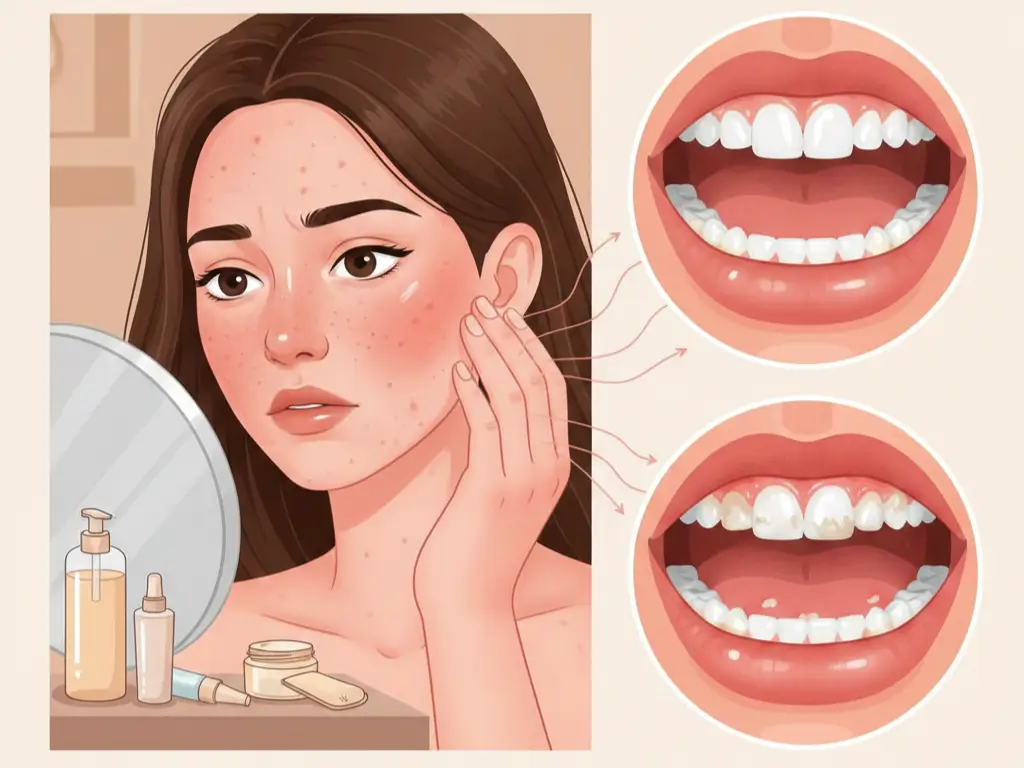
I spent years layering serums, switching cleansers, and wondering why my skin still looked inflamed and dull. The answer wasn’t in my skincare cabinet. It was in my mouth.
Your oral health directly influences your skin’s appearance through systemic inflammation, bacterial spread, and shared microbiome pathways. When your mouth is unhealthy, your skin often shows it.
This article provides educational information about the connection between oral health and skin health. It is not intended to diagnose, treat, cure, or prevent any medical condition. Always consult a licensed healthcare professional, whether a dentist, dermatologist, or physician, before making health decisions or changing existing care routines. Individual results vary. If you have persistent oral or skin concerns, seek professional medical advice.
This information is for adults interested in understanding how oral health may influence skin appearance. It’s educational content based on current research, not a replacement for professional dental or dermatological care.
This isn’t about abandoning your skincare routine or expensive treatments. It’s about recognizing that what happens in your mouth doesn’t stay in your mouth. The inflammation, bacteria, and immune responses triggered by oral health issues ripple throughout your body, and your skin is often where they surface.
I’ll walk you through what the research shows, which skin conditions have documented links to oral health, and practical steps that may support both your smile and your complexion.
What Science Says About the Oral-Skin Connection
Research indicates that chronic oral inflammation, particularly from periodontal (gum) disease, triggers systemic inflammatory responses that can manifest in skin conditions. The mouth serves as a potential gateway for bacteria to enter the bloodstream and affect distant organs, including the skin.
Your mouth isn’t an isolated system. According to research published in the Journal of Clinical Periodontology, periodontal disease is associated with elevated levels of C-reactive protein (CRP) and other inflammatory markers that circulate throughout the body.
Here’s why this matters for your skin: chronic, low-grade inflammation is increasingly recognized as a driver of numerous skin concerns. When your gums are inflamed, your immune system stays activated. This persistent inflammatory state can show up as:
- Increased skin sensitivity
- Accelerated visible aging
- Flare-ups of existing skin conditions
- Slower wound healing and skin recovery
The National Institute of Dental and Craniofacial Research notes that over 47% of adults over 30 have some form of periodontal disease. That’s nearly half the adult population potentially dealing with chronic oral inflammation, and its downstream effects.
Think of it this way: your body doesn’t compartmentalize inflammation. An immune response in your mouth can trigger reactions elsewhere. Your skin, as your largest organ and a reflection of internal health, often displays these systemic imbalances first.
How Poor Oral Health Shows Up on Your Skin
Oral health issues may manifest as increased skin inflammation, unexplained breakouts, dullness, rosacea flares, and accelerated signs of aging. The shared inflammatory pathways between mouth and skin create visible connections.
When I finally connected my persistent chin breakouts to ongoing gum sensitivity, I felt equal parts frustrated and relieved. Frustrated that I’d missed this for so long. Relieved that there might be an addressable root cause.
Research suggests several ways oral health problems can appear on your skin:
Inflammatory Acne and Breakouts
Studies have explored links between oral bacteria and acne development. While research is ongoing, the inflammatory cascade from gum disease may exacerbate breakouts, particularly along the jawline and chin, areas that some practitioners associate with digestive and oral health through body mapping approaches.
Dull, Tired-Looking Skin
Chronic inflammation diverts resources toward immune responses rather than repair and regeneration. This can leave skin looking flat and fatigued, even when you’re sleeping well and staying hydrated. Supporting your skin barrier from the outside helps, but addressing internal inflammation matters too.
Premature Aging Signs
Systemic inflammation accelerates oxidative stress. This damages collagen and elastin over time. Research in aging and dermatology points to chronic inflammation as a significant contributor to visible aging, sometimes called “inflammaging.”
Increased Sensitivity
If your skin has become more reactive and you can’t pinpoint a product culprit, internal inflammation from oral sources may be contributing. A compromised skin microbiome often mirrors oral microbiome imbalances.
The Microbiome Connection: Your Mouth and Skin Share More Than You Think
Both your mouth and skin host complex microbial communities. When your oral microbiome becomes imbalanced (dysbiosis), it can influence systemic immunity and potentially affect skin microbiome balance and function.
Here’s what clicked for me: the oral microbiome and skin microbiome are more similar than most people realize. Both are ecosystems where balance matters more than sterility.
Your mouth contains over 700 species of bacteria. In a healthy state, these communities exist in equilibrium, beneficial bacteria keeping potentially harmful species in check. When this balance tips, through poor oral hygiene, sugar consumption, certain medications, or illness, pathogenic bacteria can proliferate.
This isn’t isolated to your mouth. Research suggests that oral dysbiosis influences:
- Gut microbiome composition , you swallow billions of oral bacteria daily
- Systemic immune responses , altered immunity affects all tissues
- Inflammatory mediator production , these travel throughout your body
The parallel to skin is striking. Your skin microbiome operates similarly. When it’s disrupted, you see inflammation, sensitivity, and conditions like acne or eczema. The emerging research on the gut-skin axis increasingly recognizes the mouth as part of this interconnected system.
Some researchers describe this as the “oral-gut-skin axis”, a recognition that these microbial communities communicate and influence each other. Fermented foods and probiotic skincare approaches work on this principle, though always in combination with, not as replacement for, professional care.
Skin Conditions Research Has Linked to Oral Health
Published research has explored connections between periodontal disease and several skin conditions, including rosacea, psoriasis, and systemic inflammatory conditions that manifest on the skin. These links are based on shared inflammatory pathways.
Let me be clear: having gum disease doesn’t guarantee you’ll develop these conditions, and having clear gums doesn’t guarantee you won’t. The relationship is about risk factors and inflammatory burden, not direct causation in every case.
That said, research has documented associations worth understanding:
| Skin Condition | Potential Oral Health Link | Research Basis |
| Rosacea | Periodontal inflammation may share inflammatory pathways | Multiple studies show higher periodontal disease rates in rosacea patients |
| Psoriasis | Systemic inflammation links both conditions | Research indicates periodontal disease is more prevalent in psoriasis patients |
| Acne | Shared inflammatory mechanisms; possible bacterial influence | Emerging research on oral-skin bacterial connections |
| Premature Aging | Chronic inflammation accelerates collagen breakdown | Inflammaging research connects systemic inflammation to skin aging |
| General Inflammation | CRP and cytokine elevation affects all tissues | Well-established in periodontal research |
If you’re managing a sensitive or reactive skin condition, considering your oral health as part of the picture isn’t a stretch, it’s increasingly supported by research.
For those dealing with rosacea specifically, natural approaches like botanical ingredients for rosacea can complement professional care, but addressing potential oral inflammation sources may also be relevant to discuss with your healthcare providers.
Supporting Skin Health Through Better Oral Care
Evidence-based oral hygiene practices, consistent brushing, flossing, and regular professional cleanings, may support skin health by reducing systemic inflammatory burden. A holistic approach addresses both ends of the mouth-skin connection.
I’m not suggesting oral care replaces skincare. I am suggesting they work together as part of overall health.
Foundational Oral Hygiene
The basics matter most: brushing twice daily with fluoride toothpaste (or discussing alternatives with your dentist), flossing daily, and maintaining regular dental cleanings. The American Dental Association emphasizes that consistent mechanical removal of plaque prevents the bacterial overgrowth that triggers inflammation.
Consider Your Oral Microbiome
Just as harsh skincare can disrupt your skin’s bacterial balance, overly aggressive oral products may affect oral microbiome diversity. Some people explore gentler natural oral care approaches in consultation with their dental professionals, though effectiveness varies by individual.
Anti-inflammatory Nutrition
What you eat affects both oral and skin health. Diets high in sugar and processed foods feed inflammatory bacteria in the mouth while also affecting skin. An anti-inflammatory approach, rich in vegetables, omega-3 fatty acids, and antioxidants, supports both systems.
Reduce Known Irritants
Smoking is profoundly damaging to both oral and skin health. Excessive alcohol can dry tissues and feed harmful bacteria. These aren’t just skin concerns, they’re full-body inflammation triggers.
Mind the Stress Connection
Chronic stress affects immune function, increasing inflammation throughout the body. Approaches that reduce stress, including mindful skincare rituals, benefit both oral and skin health indirectly.
For a comprehensive approach to supporting your skin from the inside out, explore resources at Beauty Healing Organic that address holistic wellness alongside topical care.
When to See a Professional
Consult a dentist if you notice gum bleeding, persistent bad breath, loose teeth, or gum recession. See a dermatologist if you experience unexplained skin changes, persistent inflammation, or symptoms of conditions like rosacea or psoriasis. Some situations warrant seeing both.
This information doesn’t replace professional evaluation. Here’s when to seek expert care:
See a Dentist If You Notice:
- Bleeding gums during brushing or flossing
- Persistent bad breath despite good hygiene
- Gum recession or teeth appearing longer
- Loose teeth or changes in bite
- Ongoing tooth sensitivity
- Any oral pain or discomfort
See a Dermatologist If You Experience:
- Persistent, unexplained acne or breakouts
- Skin inflammation that doesn’t respond to typical care
- Symptoms consistent with rosacea (facial redness, visible blood vessels, bumps)
- Psoriasis symptoms (red, scaly patches)
- Rapid changes in skin appearance
- Signs that suggest professional assessment
Consider Both Professionals If:
- You have diagnosed periodontal disease AND persistent skin issues
- Treatments for one condition aren’t working and you haven’t addressed the other
- You’re experiencing systemic inflammation symptoms
- Your healthcare provider suggests exploring connections
Many people benefit from mentioning their skin concerns to their dentist and their oral health status to their dermatologist. This integrated approach helps both professionals see the fuller picture.
Bringing It Together: A Holistic View
The mouth-skin connection isn’t about finding another thing to worry about. It’s about recognizing that your body works as an integrated system.
I’ve noticed real differences since prioritizing oral health alongside my skincare routine. My skin calmed down. The persistent low-grade inflammation that no topical treatment seemed to touch finally improved when I addressed gum sensitivity with my dentist.
Your experience may differ. Bodies are individual, and what matters for one person may be less significant for another.
Your next steps:
- This week: Schedule a dental checkup if you’re overdue, most adults should see a dentist every six months
- This month: Notice any connections between oral health changes and skin appearance in your own experience
- Ongoing: If you have persistent skin concerns that haven’t responded to topical care alone, discuss the oral-skin connection with your healthcare providers
The best skincare routine in the world works better when it’s not fighting systemic inflammation. And sometimes, the path to clearer skin starts with a cleaner mouth.
SOURCES CITED
- National Institute of Dental and Craniofacial Research (NIDCR). Periodontal (Gum) Disease. https://www.nidcr.nih.gov/health-info/gum-disease
- Linden, G.J., et al. (2013). Periodontitis and systemic diseases: a record of discussions from the Joint EFP/AAP Workshop. Journal of Clinical Periodontology, 40(S14), S130-S133.
- Egeberg, A., et al. (2017). Rosacea and risk of periodontal disease. Journal of the European Academy of Dermatology and Venereology, 31(9), 1579-1584.
- Ungprasert, P., et al. (2017). Periodontitis is associated with a higher risk of developing psoriasis: A systematic review and meta-analysis. International Journal of Dermatology, 56(2), 128-134.
- American Dental Association. Oral Health Topics: Brushing Your Teeth. https://www.ada.org/resources/research/science-and-research-institute/oral-health-topics
- American Academy of Dermatology. Rosacea: Overview. https://www.aad.org/public/diseases/rosacea
- Teles, R., & Wang, C.Y. (2011). Mechanisms involved in the association between periodontal diseases and cardiovascular disease. Oral Diseases, 17(5), 450-461. (Referenced for systemic inflammation mechanisms)