I’ll never forget the sunburn I got after a day at the beach in San Diego. I thought I’d reapplied enough sunscreen, but by evening, my shoulders looked like boiled lobster and felt like they were radiating heat. In desperation, I Googled remedies and found conflicting advice, some of it, I later learned from my dermatologist, could have made things worse.
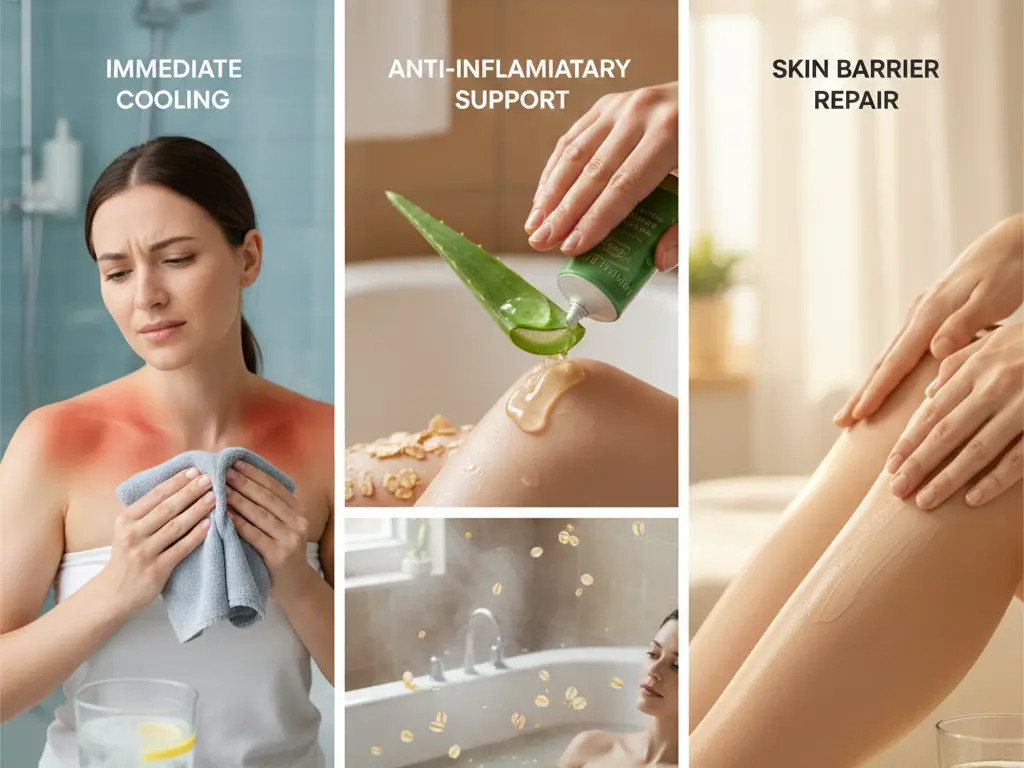
The most effective natural remedies for sunburned skin include cool compresses, pure aloe vera gel, colloidal oatmeal baths, and proper hydration. The key is matching the right remedy to your burn’s healing phase, immediate cooling first, then gentle anti-inflammatory support, followed by skin barrier repair.
Medical Disclaimer
This article provides educational information about treating mild to moderate sunburn at home using natural remedies. It is not intended to diagnose, treat, cure, or prevent any medical condition. Sunburn is a radiation injury that can range from mild (first-degree) to severe (second-degree with blistering). Always consult a licensed healthcare professional or dermatologist before treating severe burns, burns covering large body areas, or burns accompanied by fever, chills, or signs of infection. Individual skin types and reactions vary. If you experience severe pain, extensive blistering, dizziness, or signs of sun poisoning, seek immediate medical attention.
Medical Review: This content has been researched using guidelines from the American Academy of Dermatology, Mayo Clinic, and peer-reviewed dermatological research. The author is not a physician; this is educational content for mild sunburn management only.
Sunburn affects over one-third of U.S. adults each year, according to the CDC. What surprised me most when researching this topic is how much misinformation exists about treatment. Some widely-shared “remedies” can actually trap heat, increase infection risk, or delay healing.
This guide takes a different approach. Instead of just listing ingredients, I’ll walk you through what’s happening in your skin at each healing stage and which evidence-based natural remedies work best at that specific time. You’ll also learn which popular recommendations to avoid, and why.
Who This Guide Is For:
This information is for adults with mild to moderate sunburn (redness, tenderness, possibly light peeling) who want to support healing using natural, evidence-backed approaches. This is NOT for severe burns with extensive blistering, burns covering more than 20% of your body, burns on the face near eyes, or burns accompanied by systemic symptoms. Those require professional medical evaluation.
Understanding Sunburn: What’s Actually Happening to Your Skin
Sunburn is a radiation injury caused by UV exposure that triggers an inflammatory cascade in skin cells. Your body floods the area with inflammatory mediators, causing redness, heat, pain, and eventually DNA-repair processes that lead to peeling.
When UV radiation penetrates your skin, it doesn’t just cause surface damage. According to research published in the Journal of Investigative Dermatology, UV exposure damages DNA in skin cells and triggers what’s called an inflammatory cascade. Your immune system recognizes this damage and responds by dilating blood vessels (causing redness), releasing inflammatory chemicals (causing pain and heat), and eventually initiating a repair-and-shed process (the peeling phase).
This matters because effective treatment depends on which phase you’re in. What helps during acute inflammation (hours 0-24) differs from what supports healing days later.
Sunburn Severity Levels
Understanding severity helps you determine whether home treatment is appropriate:
- Mild (First-degree): Redness, tenderness, warmth. No blisters. Usually heals in 3-5 days.
- Moderate (First-degree, extensive): Intense redness, pain, possible slight swelling. Covers larger areas. May take 5-7 days.
- Severe (Second-degree): Blistering, severe pain, possible fever/chills. Requires medical evaluation.
The American Academy of Dermatology emphasizes that any burn with extensive blistering, signs of infection, or systemic symptoms needs professional care. Natural remedies discussed here support healing of mild to moderate burns only.
If you’re looking for comprehensive guidance on sun protection and after-sun care, that’s your best defense against future burns.
Immediate Relief: The First 24 Hours
In the first 24 hours after sun exposure, focus on cooling inflamed tissue, preventing further damage, and beginning anti-inflammatory support. Cool compresses, pure aloe vera, oral hydration, and NSAIDs (if appropriate) form the foundation of acute care.
The moment you realize you’re burned, your priority is stopping the inflammatory cascade before it intensifies.
Cool Compresses (Not Ice)
Apply clean cloths soaked in cool (not cold) water for 10-15 minutes several times daily. A 2018 study in Burns journal found that cool compresses reduce tissue temperature and slow inflammatory mediator release.
How to use: Soak a soft cotton cloth in cool water, wring gently, and apply to burned areas. Re-wet every few minutes as the cloth warms. Never apply ice directly, this can cause cold injury to already-damaged tissue.
Who should avoid: If you have circulation problems or temperature sensitivity disorders, consult your doctor about appropriate cooling methods.
Pure Aloe Vera Gel
Aloe vera is probably the most researched natural sunburn remedy. According to the Mayo Clinic, aloe contains compounds called glycoproteins that may help reduce inflammation and pain, while polysaccharides may support skin repair.
Look for 100% pure aloe vera gel (or straight from the plant). Many commercial products contain alcohol, which can dry and irritate burned skin. I learned about identifying clean beauty products at Sephora the hard way after buying an “aloe” gel that was mostly green dye and thickeners.
Application: Apply a thin layer to clean, cool skin 2-3 times daily. Store in the refrigerator for extra cooling relief.
Caution: Some people are allergic to aloe. Patch test on a small area first. Discontinue if you develop rash or increased irritation.
Hydration (Internal and External)
Sunburn draws fluid to the skin surface and away from internal organs. The Skin Cancer Foundation recommends drinking extra water for 24-48 hours after significant sun exposure to support healing and prevent dehydration.
Target: Aim for an additional 8-16 oz of water beyond your normal intake during the acute phase.
Over-the-Counter NSAIDs
Ibuprofen or aspirin (for adults) can reduce inflammation from the inside. According to the American Academy of Dermatology, taking these within the first 24 hours may reduce burn severity.
Important: This is a pharmaceutical, not strictly “natural.” Consult your doctor if you have contraindications. Never give aspirin to children due to Reye’s syndrome risk.
For those interested in other natural anti-inflammatory approaches, certain supplements show promise, but sunburn’s acute phase demands proven interventions.
Days 2-3: Managing Inflammation and Pain
As acute inflammation transitions to the repair phase (days 2-3), focus shifts to gentle moisturization, continued anti-inflammatory support, and protecting healing skin. Colloidal oatmeal, mild hydrocortisone, and barrier-supporting ingredients become most helpful.
By day two, your skin has moved from acute injury to active repair mode. You might notice the burn feels less hot but tighter and drier.
Colloidal Oatmeal Baths
Colloidal oatmeal (finely ground oats that disperse in water) has been recognized by the FDA as a skin protectant. Research shows it contains anti-inflammatory compounds called avenanthramides.
How to use: Add 1 cup of colloidal oatmeal to a lukewarm bath. Soak for 10-15 minutes. Pat skin gently, don’t rub. Apply moisturizer while skin is damp.
DIY option: Grind plain oats in a blender until powdery. Test that it disperses in water rather than clumps.
You can explore more about natural exfoliants and their uses, though avoid any exfoliation on sunburned skin until fully healed.
Gentle Moisturizers
As inflammation calms, your skin barrier needs support. Look for fragrance-free moisturizers with ceramides, hyaluronic acid, or squalane.
The National Eczema Association notes that damaged skin loses moisture rapidly, slowing healing. Many people find success with natural humectants for dry skin during the recovery phase.
Application: Apply to damp skin 2-3 times daily. Choose creams over lotions for better occlusion.
Avoid: Petroleum jelly on fresh burns (can trap heat), heavily fragranced products, anything containing alcohol or retinoids.
Hydrocortisone Cream (1%, OTC)
For localized areas with persistent inflammation, over-the-counter 1% hydrocortisone may help. This is a mild topical steroid that reduces inflammatory response.
Usage: Apply sparingly to affected areas 1-2 times daily for no more than 7 days. Not for broken skin or blistered areas.
Consult a doctor: Before using on face, children, or for extended periods.
The Healing Phase: Supporting Skin Repair (Days 4-7+)
During the healing phase, skin may begin peeling as damaged cells shed. Continue gentle moisturization, avoid picking at peeling skin, and maintain strict sun protection. Focus shifts from inflammation control to barrier repair and protection.
Around day 4-7, you’ll likely notice peeling. This is your body shedding damaged cells, a normal part of healing.
Continued Moisturization
This phase demands consistent barrier support. Some people explore botanical oils for facial care, though for body sunburn, simpler formulations often work better.
Helpful ingredients:
- Shea butter (for DIY body care formulations)
- Coconut oil (only after acute inflammation resolves, not on fresh burns)
- Vitamin E oil (mixed with carrier, not applied pure)
Important: Only apply oils after the burn has completely cooled and acute inflammation has resolved (typically day 4+). Applying oil-based products to fresh burns can trap heat and worsen damage.
What to Expect: Peeling
Peeling typically begins 3-7 days post-burn. According to dermatological guidance, you should never pick, pull, or force peeling skin. This can cause scarring and infection.
Instead:
- Let skin shed naturally
- Keep peeling areas moisturized
- Use gentle cleansing (no harsh soaps)
- Apply moisturizer to damp skin after showering
Some people find that understanding the broader skin barrier repair process helps them support healing more effectively.
Strict Sun Protection
Healing skin is extremely vulnerable to UV damage. New skin exposed after peeling has less melanin protection.
Requirements:
- Avoid sun exposure entirely if possible
- If you must go out, use SPF 50+ broad-spectrum mineral sunscreen
- Wear protective clothing, wide-brimmed hats
- Continue protection for at least 4-6 weeks
The American Academy of Dermatology notes that burned skin is at higher risk for hyperpigmentation and sun damage for weeks after healing appears complete.
Natural Remedies to AVOID: Common Myths That Cause Harm
Despite widespread recommendations, butter, petroleum jelly on fresh burns, direct ice, and harsh exfoliants can worsen sunburn by trapping heat, damaging tissue, or increasing infection risk. These myths persist online despite contradicting medical evidence.
This section might save you from making your burn worse. Some of the most popular “remedies” are actually harmful.
Butter, Cooking Oils, or Coconut Oil (on Fresh Burns)
The myth: Butter or oil “draws out heat” and moisturizes.
The reality: Applying fatty substances to fresh burns traps heat in tissue, potentially deepening the injury. A 2017 burn treatment review in the British Medical Journal explicitly warns against this practice.
When oils ARE safe: After acute inflammation resolves (day 4+) and skin has cooled, some plant oils may support barrier repair. But never in the first 72 hours.
Undiluted Apple Cider Vinegar
The myth: ACV’s acidity helps healing.
The reality: Vinegar on damaged skin can cause chemical irritation and pain without therapeutic benefit. There’s no credible research supporting this for burn treatment.
Ice or Very Cold Compresses
The myth: Colder is better for reducing inflammation.
The reality: Direct ice or very cold application can cause cold injury (frostbite) to already-compromised tissue. Cool water (not cold) is proven safer and effective.
Petroleum Jelly or Heavy Occlusives (First 24-48 Hours)
The myth: “Lock in moisture” immediately.
The reality: On fresh burns, occlusive barriers can trap heat. After the acute phase, gentle occlusives are fine, but timing matters.
Harsh Exfoliation
Never use scrubs, brushes, or chemical exfoliants on sunburned skin. You might be interested in natural exfoliating acids for normal skin, but burned skin needs only gentle cleansing until fully healed.
Understanding what causes keratosis pilaris taught me that damaged skin barriers need time to rebuild before any active treatment resumes.
When to See a Doctor: Red Flags for Medical Attention
Seek immediate medical care for sunburn with extensive blistering (covering areas larger than your hand), signs of infection (oozing, increasing pain after day 3, fever), burns covering more than 20% of body, severe pain uncontrolled by OTC medication, or systemic symptoms like chills, confusion, or dizziness.
When to Seek Medical Attention:
Seek immediate care (ER or urgent care) if you experience:
- Blistering covering large areas (more than a few inches)
- Severe pain not relieved by OTC pain medication
- Fever over 101°F (38.3°C)
- Chills, confusion, or dizziness
- Signs of infection: increasing redness, warmth, pus, red streaks, swelling after day 3
- Headache, nausea, or vomiting (possible sun poisoning)
- Burns covering the face, especially near eyes
- Burns covering more than 20% of your body
Schedule a doctor visit within 24-48 hours for:
- Moderate blistering, even if not extensive
- Uncertain about burn severity
- Underlying health conditions (diabetes, immune disorders, circulatory problems)
- Pregnancy
- Sunburn in infants or young children
Special populations requiring extra caution:
- Infants and children have thinner skin and greater fluid loss risk
- Elderly individuals may have compromised healing
- People with photosensitivity disorders or taking photosensitizing medications
- Anyone with compromised immune systems
The American Academy of Dermatology emphasizes that severe sunburn is a medical emergency, not a cosmetic concern. Complications can include dehydration, electrolyte imbalance, infection, and in extreme cases, shock.
For those dealing with other skin concerns, understanding when to seek professional help applies across conditions, from managing rosacea to addressing acne through body mapping.
Prevention: Your Best Natural Remedy
I won’t lecture extensively on prevention since you’re here for treatment. But one statistic changed my beach behavior forever: According to the Skin Cancer Foundation, having five or more sunburns in your lifetime more than doubles your melanoma risk.
Quick prevention essentials:
- Broad-spectrum SPF 30+ sunscreen, reapplied every 2 hours
- Seek shade during peak UV hours (10 AM – 4 PM)
- Protective clothing and wide-brimmed hats
- Check medications for photosensitivity warnings
- Use extra caution near water, snow, or sand (reflects UV)
For comprehensive sun protection guidance, including reef-safe options, explore our detailed sun protection and after-sun guide.
You might also be interested in approaches to reducing scars naturally if previous burns have left marks, though prevention remains the gold standard.
Match Remedy to Healing Phase
Treating sunburn effectively means understanding that your skin’s needs change as healing progresses. Cool compresses and pure aloe work beautifully in the acute phase. Colloidal oatmeal and gentle moisturizers support the transition to repair. Patience and protection carry you through the peeling phase.
What I wish I’d known during that San Diego sunburn: the timeline matters more than having a dozen different products. I also wish I’d understood the red flags for seeking medical care, I probably should have called my doctor given the extensive blistering on my shoulders.
- Within 24 hours of burn: Cool compresses, pure aloe vera, increased hydration, consider OTC anti-inflammatories if appropriate for you
- Days 2-3: Add colloidal oatmeal baths, gentle fragrance-free moisturizer, continue aloe
- Days 4+: Maintain moisturization, allow natural peeling, strict sun protection for 4-6 weeks
- Any severe symptoms: Contact healthcare provider immediately
Remember that while natural remedies support healing for mild to moderate burns, they’re not substitutes for professional medical care when burns are severe. Your skin is your largest organ, it deserves proper attention when injured.
For more comprehensive guidance on natural skincare approaches, evidence-based ingredient information, and DIY formulations for healthy (non-burned) skin, visit Beauty Healing Organic for our complete library of research-backed resources.
SOURCES CITED
- “CDC sunburn statistics” → CDC.gov (U.S. Centers for Disease Control and Prevention) → Section: Introduction
- “Journal of Investigative Dermatology UV damage research” → Academic peer-reviewed journal → Section: Understanding Sunburn
- “American Academy of Dermatology sunburn severity guidance” → AAD.org (Medical professional organization) → Section: Understanding Sunburn
- “Burns journal cool compress study (2018)” → Peer-reviewed medical journal → Section: Immediate Relief
- “Mayo Clinic aloe vera research” → MayoClinic.org (Medical authority) → Section: Immediate Relief
- “Skin Cancer Foundation hydration recommendations” → SkinCancer.org (Medical nonprofit) → Section: Immediate Relief
- “National Eczema Association skin barrier research” → NEA.org (Medical nonprofit) → Section: Days 2-3
- “British Medical Journal burn treatment review (2017)” → BMJ peer-reviewed journal → Section: Remedies to Avoid