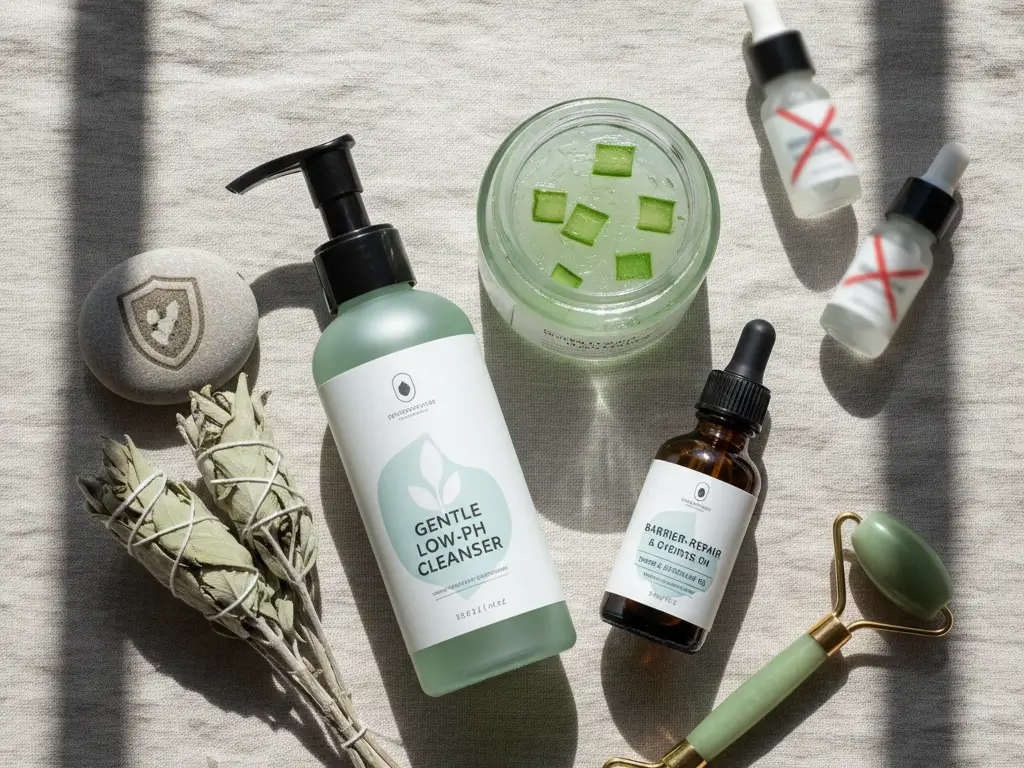
A clean beauty routine for sensitive, acne-prone skin should prioritize barrier repair over aggressive exfoliation. Focus on a gentle, low-pH cleanser, soothing hydrators like aloe or glycerin, and non-comedogenic oils high in linoleic acid (like hemp or safflower). Avoid essential oils and harsh scrubs that trigger inflammation.
This article provides educational information about skincare routines. It is not intended to diagnose, treat, cure, or prevent any medical condition, including severe acne or dermatitis. Always consult a licensed dermatologist before making significant changes to your skincare regimen, especially if you have cystic acne or open lesions. Individual skin responses vary.
Managing skin that is both breakout-prone and highly reactive is one of the most difficult balancing acts in beauty. Conventional acne products are often too harsh, stripping the skin and causing redness, while many heavy “soothing” creams can clog pores and exacerbate congestion.
For many, the pivot to clean beauty seems like the logical solution. However, there is a common misconception that “natural” automatically equals “gentle.” In reality, many botanical ingredients, like essential oils and heavy butters, can be disastrous for sensitive, acne-prone types.
This guide takes a barrier-first approach. We believe that by strengthening your skin’s natural defense system (the stratum corneum) using biocompatible, clean ingredients, you can reduce the inflammation that fuels acne while keeping sensitivity in check.
Understanding the Sensitive-Acne Paradox
The “Sensitive-Acne Paradox” occurs when the skin barrier is damaged, allowing bacteria to enter (causing acne) and moisture to escape (causing sensitivity). Treating this requires ingredients that seal the barrier without clogging pores, rather than “drying out” the pimple.
To effectively treat this specific skin type, we have to look at the root cause. According to the American Academy of Dermatology, acne is fundamentally an inflammatory condition. When you have sensitive skin, your moisture barrier is likely compromised.
This creates a vicious cycle:
- The compromised barrier lets irritants and bacteria in.
- The skin reacts with inflammation (redness and pimples).
- We often attack the pimple with harsh drying agents.
- This further damages the barrier, leading to more sensitivity and more acne.
Therefore, the goal of your routine shouldn’t just be to “kill bacteria.” It must be to support the skin barrier care so it can defend itself. This involves selecting ingredients that mimic the skin’s natural lipid structure.
The “Clean” Trap: What to Avoid
Avoid “clean” products containing high concentrations of essential oils (especially citrus and peppermint), denatured alcohol, coconut oil (highly comedogenic), and physical scrubs with walnut or apricot shells. These can disrupt the skin’s pH and micro-tears.
Before building your routine, you need to know what to subtract. In the world of organic beauty, not every plant extract is your friend.
1. Comedogenic Natural Oils
Many clean beauty products rely on Coconut Oil or Cocoa Butter as a base. While excellent for dry body skin, these are often too heavy for acne-prone facial skin. They have a high “comedogenic rating,” meaning they are likely to clog pores. Instead, you’ll want to look into oils and butters guides that focus on low-comedogenic options.
2. Sensitizing Essential Oils
While tea tree oil has antiseptic properties, applying it undiluted or in high concentrations can cause chemical burns on sensitive skin. Citrus oils (lemon, bergamot) are often phototoxic, meaning they can cause blistering when exposed to sunlight.
3. Abrasive Scrubs
Natural scrubs using crushed shells or pits cause micro-tears in the skin. For sensitive skin, this physical trauma signals the skin to produce more oil to protect itself, leading to more breakouts.
Step 1: The Gentle Cleanse
Cleansing must remove debris without stripping natural lipids. Use the Oil Cleansing Method (OCM) with high-linoleic oils (like sunflower or hemp) followed by a gentle, non-foaming water-based cleanser. This “double cleanse” ensures pores are clear without irritation.
The foundation of your routine is cleansing. If your skin feels tight or “squeaky clean” after washing, your cleanser is too harsh.
The Power of Oil Cleansing
It might seem counterintuitive to put oil on acne-prone skin, but oil dissolves oil. The oil cleansing method guide explains how specific botanical oils bind to the dirty sebum in your pores and lift it away without damaging the skin surface.
Best Oils for Acne-Prone Skin:
- Hemp Seed Oil: High in linoleic acid, which acne-prone skin often lacks.
- Jojoba Oil: Mimics human sebum, tricking the skin into producing less oil.
- Safflower Oil: Lightweight and non-clogging.
The Second Cleanse
Follow your oil cleanse with a gentle, water-based cleanser. Look for ingredients like:
- Manuka Honey: Contains natural antibacterial properties while being a humectant.
- Colloidal Oatmeal: Soothes redness and irritation.
- Aloe Vera: Calms inflammation immediately.
Step 2: Hydration and Bio-Actives
Hydration is distinct from moisture (oil). Use humectants like hyaluronic acid, glycerin, or fermented rice water to pull water into the skin. Introduce actives like niacinamide or bio-retinols cautiously to treat acne without triggering sensitivity.
Once the skin is clean, it needs hydration. Dehydrated skin often overproduces oil to compensate for the lack of water, leading to more congestion.
The Humectant Layer
Think of this step as giving your skin a drink of water. Humectants and hydration guides suggest using ingredients that bind water to the skin cells.
- Fermented Rice Water: A staple in Asian beauty, fermented rice water contains vitamins and amino acids that brighten the skin and support elasticity without being heavy.
- Glycerin: A classic, highly effective clean ingredient that is rarely sensitizing.
Treating the Acne (Gently)
This is where you treat the breakouts. Instead of harsh benzoyl peroxide, consider:
- Niacinamide (Vitamin B3): A powerhouse that regulates oil production and strengthens the barrier. A niacinamide skincare routine is often tolerated well by sensitive types.
- Willow Bark Extract: A natural source of salicylates (related to salicylic acid) that exfoliates inside the pore but is generally gentler than synthetic BHA.
- Bio-Retinols: If you are looking for anti-aging and acne control but can’t tolerate prescription retinoids, explore the bio-retinols guide. Ingredients like Bakuchiol offer similar cell-turnover benefits with significantly less irritation.
Step 3: sealing the Barrier
Lock in hydration with a moisturizer or facial oil rich in linoleic acid. This fatty acid helps repair the barrier and fluidize sebum, preventing clogged pores. Good options include Grapeseed, Rosehip, and Evening Primrose oils.
Leaving hydration on the skin without sealing it in can lead to Transepidermal Water Loss (TEWL), leaving skin drier than before.
The Importance of Linoleic Acid
Research suggests that people with acne often have low levels of linoleic acid in their skin surface lipids. When linoleic acid is low, the skin’s sebum becomes thick and sticky, clogging pores.
By applying oils high in linoleic acid, you can help liquefy that sebum. Refer to our facial oils types guide to find the right match, but generally, Grapeseed oil and Rosehip seed oil are excellent dry oils that absorb quickly and don’t feel greasy.
Barrier Support Creams
If you prefer a cream over an oil, look for “lamellar” structures or products containing ceramides derived from plants (phytoceramides). These act as mortar between your skin cells.
Step 4: Tools and Maintenance
Minimize physical irritation. Use soft tools like konjac sponges for gentle exfoliation and silk pillowcases to reduce friction while sleeping. Regularly clean all tools to prevent bacterial re-introduction.
The tools you use are just as important as the products.
- Konjac Sponge: If you need physical exfoliation, the konjac sponge is soft enough for sensitive skin. It buffs away dead skin cells without the micro-tears caused by scrubs.
- Silk Pillowcases: Cotton absorbs moisture and bacteria. A silk pillowcase creates less friction and helps keep your skincare on your face, not your bedding.
- Ice Rollers: For active, painful inflammation, ice roller skin icing can constrict blood vessels and reduce swelling immediately without chemicals.
Safety & Considerations
Always patch test new products behind the ear for 24-48 hours. Introduce one new product at a time. If you experience burning, itching, or increased inflammation, stop immediately. Do not rely on “clean” products to treat severe infection or cysts.
When transitioning to a clean beauty routine, patience is vital.
Patch Testing is Mandatory
Even gentle ingredients like chamomile can trigger allergic reactions in some individuals with ragweed allergies. Before applying a full face of product, apply a small amount behind your ear or on your inner arm.
The “Purge” vs. Reaction
When using new actives (like bio-retinols or willow bark), you may experience a “purge,” where acne worsens briefly as clogged pores clear out. However, if you experience redness, burning, or a rash, this is not a purge, it is a reaction. Wash the product off and discontinue use.
Hygiene Matters
Ensure you are using natural vegan makeup brushes and washing them weekly. Dirty tools reintroduce bacteria to the skin, rendering your routine ineffective.
When to Seek a Dermatologist
Consult a professional if you have deep, painful cysts, scarring, or if your acne does not improve after 8-12 weeks of a consistent routine. Conditions like hormonal acne or fungal acne may require medical intervention that topical clean beauty cannot provide alone.
While a clean beauty routine supports skin health, it is not a replacement for medical treatment in severe cases.
Seek professional help if:
- You have cystic or nodular acne (deep, painful bumps under the skin).
- Your acne is leaving permanent indentations or scars.
- You suspect your “acne” might be rosacea or perioral dermatitis.
- Your mental health is being impacted by your skin condition.
A dermatologist can often work with your desire for a cleaner routine, prescribing necessary medications while you support your skin with gentle, non-toxic maintenance products.
Conclusion
Navigating skincare with sensitive, acne-prone skin requires a shift in mindset. It isn’t about attacking the skin; it’s about rebuilding it. By focusing on barrier repair, hydration, and anti-inflammatory botanicals, you can calm the reactivity that often drives acne.
Your Action Plan:
- Immediate: Stop using harsh scrubs and high-alcohol toners today.
- This Week: Introduce a high-linoleic oil (like hemp or grapeseed) into your evening routine.
- This Month: Adopt the oil cleansing method and monitor how your skin’s texture changes.
For more holistic guidance on building your regimen, explore our comprehensive collection at Beauty Healing Organic.