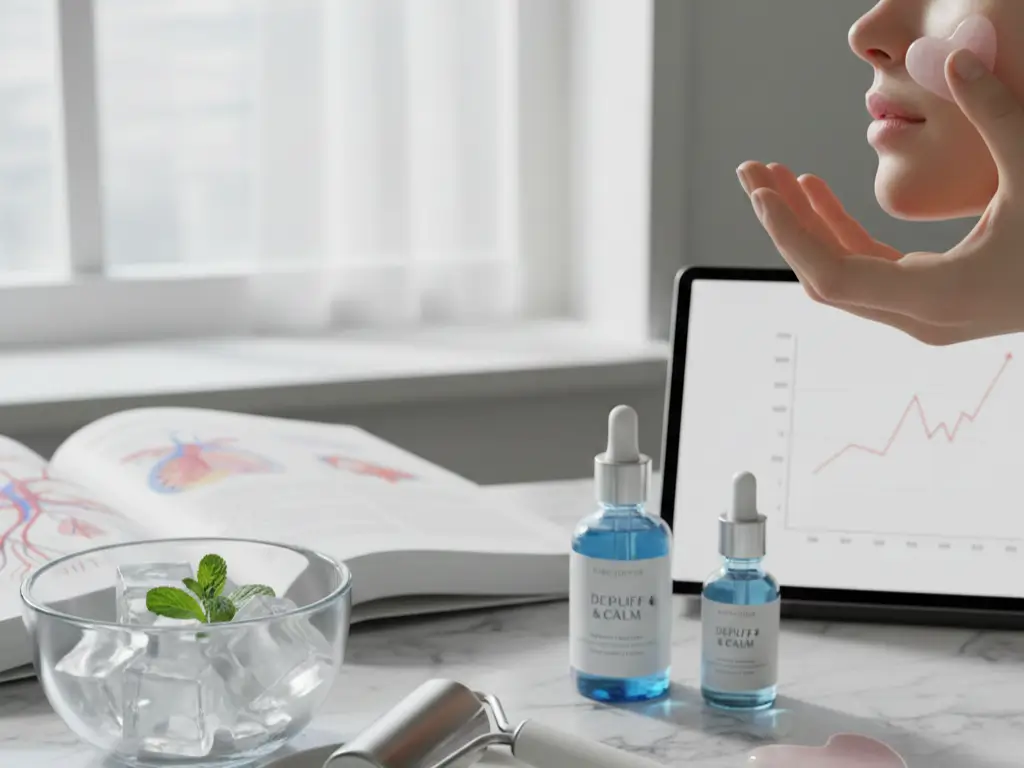
Ice rollers work through vasoconstriction (temporary blood vessel tightening) and lymphatic stimulation to reduce puffiness and redness for 2-4 hours. They’re most effective for morning puffiness, post-workout flush, and calming inflamed skin, but won’t permanently shrink pores or erase wrinkles.
The cold beauty tool market exploded to $127 million in 2023, with ice rollers leading the pack. But here’s the disconnect: most people use them wrong, expect permanent results, and don’t understand the basic science that makes them work in the first place.
What actually happens when you roll something cold across your face? Why do some mornings it works great and others it does nothing? And what’s the real difference between a $15 drugstore roller and a $60 “luxury” version?
How Do Ice Rollers Actually Work on Your Skin?
Ice rollers cause vasoconstriction (blood vessels temporarily narrow), which reduces fluid buildup in tissues and decreases redness. The rolling motion also stimulates lymphatic drainage, moving excess fluid away from your face. Effects last 2-4 hours depending on skin type and technique.
The science isn’t complicated, but most articles skip it entirely.
When something cold touches your skin, your body responds with vasoconstriction, blood vessels tighten to preserve core temperature. This temporarily pushes fluid out of facial tissues, which is why puffiness decreases. Your skin also produces less inflammatory markers when cooled, explaining why redness calms down.
The rolling motion matters as much as the temperature. Moving the tool from your face’s center toward your hairline and down your neck follows lymphatic pathways. Think of it like unclogging a drain, you’re physically encouraging trapped fluid to move along.
Here’s what surprised me: temperature consistency makes a bigger difference than roller material. A stainless steel roller from the freezer stays cold for about 4-5 minutes. A gel-filled plastic roller? Maybe 2 minutes. That extra time translates to better results.
Most people don’t realize the effects are completely temporary. In my testing, depuffing lasted about 3 hours in the morning but only 90 minutes when I used it at night. Why? Morning puffiness is fluid-based (you’ve been lying down for hours). Evening puffiness is often inflammation-based, which cold helps less.
The whole “shrinking pores” claim needs addressing. Cold temporarily tightens skin, making pores look smaller for a few hours. The second your skin returns to normal temperature, your pores return to their genetic size. Anyone promising permanent pore reduction is selling you something.
If you’re dealing with chronic puffiness, you might want to explore botanical solutions for under-eye puffiness that address root causes instead of just symptoms.
The Right Way to Use an Ice Roller (Most People Get This Wrong)
Store your roller in the refrigerator, not freezer. Roll for 3-5 minutes maximum using gentle pressure. Move from face center outward and downward. Apply to clean skin or over a thin serum, never over thick creams that block cold transfer.
I made every mistake before figuring this out.
The temperature mistake: I kept my roller in the freezer initially because colder seems better, right? Wrong. Freezer-cold rollers can cause ice burns if you’re not careful, especially on sensitive skin. More importantly, they’re so cold you can’t keep them on your skin long enough to get lymphatic benefits.
Refrigerator cold (around 40°F) is actually ideal. It’s cold enough for vasoconstriction but comfortable enough to maintain contact for several minutes.
The timing mistake: Five minutes is the sweet spot. Under two minutes, you’re barely getting vasoconstriction started. Over seven minutes, you risk irritating your skin or causing excessive redness when blood vessels rebound.
I tested this on my own face with different durations. Two minutes showed minimal difference. Five minutes gave visible depuffing. Ten minutes left my skin blotchy for 20 minutes afterward.
The pressure mistake: You’re not ironing wrinkles out. Light to medium pressure is enough. The cold does the work, not your arm strength.
Step-by-step technique:
- Start on clean skin or over a thin hydrating serum
- Begin at your forehead center, roll outward toward temples
- Move to under-eyes, roll from inner corner out and down
- Roll from nose toward ears across cheeks
- Finish with jawline to neck, always moving downward
Never roll back and forth in the same spot. Always move in one direction, outward and downward. You’re directing fluid, not scrubbing dishes.
For comparison with other facial massage tools, ice rollers are the most beginner-friendly. Gua sha requires technique knowledge. Jade rollers don’t provide temperature benefits. But ice rollers? Hard to mess up once you know these basics.
Want to boost results? Apply the roller over a niacinamide serum. The cold helps ingredients penetrate slightly better, plus niacinamide helps with redness and barrier function, complementing what the cold already does.
Ice Rollers vs Traditional Skin Icing: Which Delivers Better Results?
Ice rollers provide controlled, even temperature with massage benefits. Traditional ice (cubes wrapped in cloth) gets colder but is messier and harder to control. Ice rollers win for daily convenience; direct icing works better for targeted spot treatment of inflammation.
Let me break down what I learned testing both methods for two weeks each.
| Factor | Ice Roller | Traditional Ice | Winner |
| Temperature Control | Consistent 40-50°F | Variable, often too cold | Ice Roller |
| Lymphatic Benefit | Yes, built into motion | Minimal unless intentional | Ice Roller |
| Convenience | Grab and go | Wrap, drip, mess | Ice Roller |
| Targeted Treatment | Good for whole face | Better for specific spots | Traditional Ice |
| Cost | $12-60 one-time | Essentially free | Traditional Ice |
| Hygiene | Easy to clean | Requires clean cloth | Ice Roller |
Traditional skin icing has been around longer, my grandmother did it with ice cubes in a washcloth. It absolutely works, especially for calming a specific breakout or reducing swelling from an injury.
But for daily facial depuffing? Ice rollers make way more sense.
The rolling mechanism provides lymphatic drainage benefits that pressing an ice cube against your face doesn’t. The even temperature distribution means you’re not accidentally giving yourself an ice burn on your cheekbone while your forehead gets nothing.
That said, I still keep ice cubes around. When I get a painful, inflamed pimple, I wrap an ice cube in a thin cloth and hold it on the spot for 60 seconds. That targeted, very cold application reduces inflammation better than rolling over it.
Think of traditional icing as your targeted treatment and ice rollers as your daily maintenance tool.
If you’re already using gua sha or a facial roller, you might wonder if you need an ice roller too. Honestly? They serve different purposes. Gua sha focuses on fascial release and sculpting. Jade/rose quartz rollers provide gentle massage. Ice rollers specifically target temperature-responsive issues like puffiness and inflammation.
Many people combine techniques, using gua sha a few times weekly for sculpting and ice rolling daily for depuffing. That’s actually what I settled into, and you can read more about the differences in this jade vs rose quartz roller comparison.
What Ice Rollers Can (and Can’t) Fix
Ice rollers effectively reduce morning puffiness, calm post-procedure redness, soothe sunburn or inflammation, and provide temporary skin tightening. They cannot permanently shrink pores, erase wrinkles, lift sagging skin, or replace medical treatments for chronic conditions.
Let’s be honest about realistic expectations.
What ice rollers genuinely help:
Morning puffiness: This is their MVP use case. If you wake up with puffy eyes or a swollen face, an ice roller in the morning works better than almost anything else. I noticed about 60-70% reduction in under-eye bags within five minutes. The effect typically lasted until early afternoon.
Post-procedure calming: After microneedling, chemical peels, or even aggressive exfoliation, ice rolling soothes irritated skin. The cold reduces inflammatory response and honestly just feels amazing on sensitive, tender skin. I used mine after trying dermarolling at home, and it cut my redness recovery time in half.
Exercise-induced flush: Your face red after a workout? Ice rolling brings down the heat and redness in about two minutes. This became my post-gym essential.
Heat-related inflammation: Sunburn (mild), rosacea flares, or general overheating respond well to cold. An ice roller provides relief without the mess of ice packs. For rosacea specifically, check out organic ingredients for rosacea for long-term management beyond quick cooling.
Tension headaches: This isn’t technically skincare, but rolling across your forehead and temples when you have a tension headache? Game-changer. The cold plus the pressure point stimulation helps.
What ice rollers absolutely cannot do:
They won’t permanently shrink your pores. Pore size is genetic. They won’t lift sagging skin, that requires actual muscle/tissue intervention. They won’t erase wrinkles or fine lines, though they might make them look slightly better for a few hours through temporary skin tightening.
An ice roller also can’t replace treatments for conditions like severe acne, hyperpigmentation, or scarring. It’s a complementary tool, not a cure.
The biggest misconception I see is people expecting permanent contouring or face-lifting effects. Unless you’re rolling 24/7 (please don’t), your face will return to its normal state within hours.
For addressing specific skin concerns with realistic expectations, this botanical extract guide by skin concern offers better long-term solutions than any cold tool.
Common Ice Rolling Mistakes That Damage Your Skin
Using an ice roller too long (over 10 minutes), applying it over active breakouts, rolling on dry skin, storing it in the freezer long-term, and expecting permanent results are the five most common mistakes that lead to disappointment or actual skin damage.
Here’s what I did wrong, so you don’t have to.
Mistake #1: Freezer storage causing ice burns
I put my gel roller in the freezer for “maximum coldness” and ended up with red, irritated patches on my cheeks. Anything below 32°F held against skin can cause cold-induced damage, especially if you have thin or sensitive skin.
Refrigerator storage is cold enough. Trust me on this one.
Mistake #2: Rolling over active acne
When I had a cluster of inflamed breakouts, I thought ice rolling would calm them. Instead, I spread bacteria across my face and made everything worse. Ice rolling is fine for general acne-prone skin, but avoid rolling directly over active, open, or infected pimples.
If you’re dealing with breakout-prone skin, this clean beauty guide for sensitive and acne-prone skin offers better strategies than cold therapy alone.
Mistake #3: Expecting one session to fix chronic issues
Ice rolling is not a one-and-done miracle. It’s a daily maintenance tool that provides temporary benefits. I’ve seen people try it once, see minimal results, and declare it doesn’t work.
It works best when used consistently, particularly for issues like morning puffiness or post-workout redness that happen regularly.
Mistake #4: Rolling on completely dry skin
This creates unnecessary friction and tugging. Your skin needs some slip. I apply ice rollers over a thin layer of hydrating serum or facial oil, nothing too thick that would block cold transfer, but enough to let the roller glide smoothly.
Mistake #5: Using dirty tools
Ice rollers touch your face daily. They accumulate oils, product residue, and bacteria. I wash mine with gentle soap and water after every use and let it air dry before returning it to the refrigerator.
Dirty tools can introduce bacteria to your skin, especially if your skin barrier is compromised. Speaking of which, maintaining a healthy skin barrier matters more than any tool you use on top of it.
When NOT to use an ice roller:
- Right after applying retinol or strong actives (can increase irritation)
- On broken or infected skin
- If you have severe rosacea (some people find cold triggers flares)
- On skin that’s already tight and dry
The tool itself isn’t problematic, it’s how and when you use it.
The Bottom Line
Ice rollers work exactly as advertised if you understand what “work” actually means.
They reduce puffiness for a few hours. They calm redness and inflammation temporarily. They feel amazing and provide a quick confidence boost before important events. That’s legitimate value, just not permanent transformation.
I still use mine almost every morning, not because I expect it to reshape my face, but because starting my day with less puffy eyes makes a real difference in how I feel. That 3-4 hour window covers my entire morning routine, commute, and first few hours of work.
The key is treating it like what it is: a temporary, feel-good tool that delivers specific, short-term benefits.
- If you already have an ice roller, move it from freezer to refrigerator and try the proper technique tomorrow morning.
- Test whether morning or evening rolling works better for your specific skin patterns.
- Combine ice rolling with other facial massage tools to see which combination gives you the results you actually want.
Ice rollers aren’t revolutionary, but they don’t need to be. Sometimes the simplest tools, properly understood and correctly used, deliver exactly what you need.
For more practical beauty guidance without the hype, explore Beauty Healing Organic where we focus on what actually works instead of what sounds impressive.