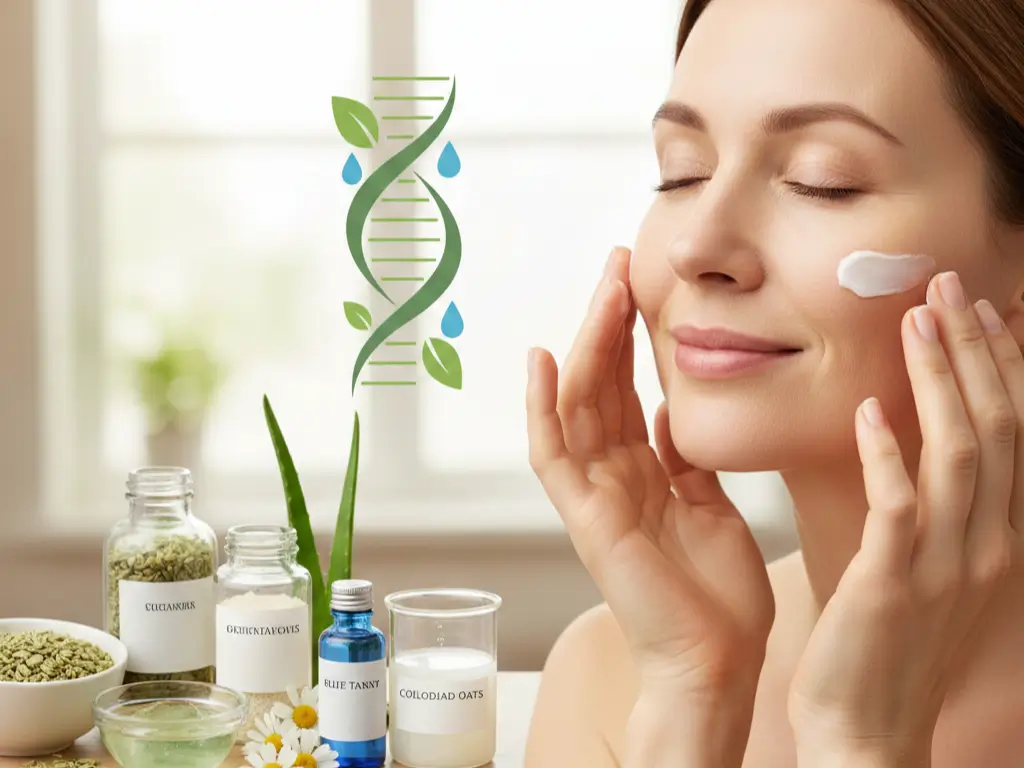
The best organic ingredients for managing rosacea include Centella Asiatica (Gotu Kola) for wound healing, Green Tea Extract (EGCG) for anti-inflammatory benefits, Licorice Root for redness reduction, Colloidal Oatmeal for soothing itch, and Aloe Vera for hydration. These botanicals function by calming vascular dilation and repairing the compromised skin barrier typical of rosacea patients.
This article provides educational information about skincare ingredients for managing rosacea. It is not intended to diagnose, treat, cure, or prevent any medical condition or disease. Always consult a licensed dermatologist or healthcare professional before making any health decisions, starting new treatments, or changing existing medical regimens. Rosacea is a complex medical condition; individual triggers and results vary significantly.
This guide is for individuals diagnosed with mild-to-moderate rosacea looking to support their skin health using organic, plant-based ingredients alongside their medical treatment plan. It is not a substitute for prescription medication prescribed by your doctor.
Living with rosacea is more than just dealing with occasional redness; it is often an emotional journey marked by the frustration of unpredictable flare-ups. If you have navigated the aisles of beauty stores only to find that “gentle” products still burn your skin, you are not alone. In the United States, an estimated 16 million people struggle with this chronic inflammatory condition.
While medical intervention is often necessary for management, the right organic skincare routine can play a pivotal role in maintaining calm, resilient skin. However, “natural” does not always mean safe. For rosacea skin, which possesses a notoriously compromised barrier, the wrong plant extract can be just as damaging as a harsh synthetic chemical.
This guide bridges the gap between holistic botanical science and dermatological needs, focusing on ingredients that don’t just cover up redness, but actually help soothe the underlying inflammation.
Researched in consultation with current dermatological guidelines and peer-reviewed botanical studies.
Understanding Rosacea and the Skin Barrier
Rosacea is a chronic vascular and inflammatory condition often characterized by a compromised stratum corneum (outer skin layer). A weakened barrier allows irritants to penetrate deeper, triggering an immune response that causes flushing, papules, and stinging.
Before diving into ingredients, we must understand the “why.” Rosacea is not simply “adult acne,” though it can look like it. It is a disorder involving vascular hyper-reactivity and innate immune system dysfunction.
According to the National Rosacea Society, a key factor in managing symptoms is maintaining a cool, hydrated environment for the skin. When your skin barrier is damaged, transepidermal water loss (TEWL) accelerates. This dehydration signals your nerves to react, leading to that familiar stinging sensation.
Therefore, the best organic ingredients for rosacea fall into two categories:
- Anti-inflammatories: To calm the immune response.
- Barrier Builders: To seal cracks in the “brick and mortar” of your skin cells.
For a deeper dive into how plant lipids restructure the surface, you might find our guide on plant ingredients for the skin barrier helpful.
Safety First: How to Patch Test
Never apply a new organic product to your entire face immediately. Apply a small amount behind your ear or on the side of your neck. Wait 24-48 hours. If no redness, itching, or burning occurs, try a small area on your cheek before full application.
Rosacea skin is hyper-reactive. Even ingredients listed below, which are generally safe, can trigger a reaction in specific individuals.
- Stop immediately if you feel burning or stinging (not to be confused with “tingling”).
- Avoid mechanical exfoliation (scrubs) during a flare.
- Consult your dermatologist if a product causes a persistent rash.
Top Anti-Inflammatory Organic Ingredients
1. Centella Asiatica (Gotu Kola)
Often labeled as “Cica” in skincare, Centella Asiatica is a powerhouse for rosacea. It contains active compounds called asiaticoside and madecassoside.
- Why it works: Research suggests Centella stimulates collagen synthesis and improves microcirculation. For rosacea sufferers, its primary benefit is its ability to speed up the healing of the skin barrier and reduce vascular inflammation.
- Best for: Subtype 1 (redness) and Subtype 2 (papules/pustules).
2. Green Tea Extract (Camellia Sinensis)
Green tea is one of the most clinically studied botanicals in dermatology. It is rich in polyphenols, specifically epigallocatechin-3-gallate (EGCG).
- Why it works: EGCG is photoprotective and anti-angiogenic, meaning it may help reduce the formation of new blood vessels, a key issue in rosacea flushing. It also acts as a potent antioxidant, neutralizing free radicals triggered by UV exposure.
- Usage: Look for serums where Green Tea is high on the ingredient list.
- Learn more: Explore how different botanical extracts target specific skin concerns.
3. Licorice Root Extract (Glycyrrhiza Glabra)
If redness is your primary concern, Licorice Root is a top contender. It contains Licochalcone A and Glabridin.
- Why it works: These compounds inhibit the enzyme that causes skin darkening after inflammation, but more importantly for rosacea, they have significant skin-soothing properties that reduce erythema (redness).
- Pro Tip: Look for alcohol-free tinctures or serums, as alcohol is a major trigger for rosacea.
4. Colloidal Oatmeal
While not an “exotic” extract, colloidal oatmeal is an FDA-recognized skin protectant. It contains avenanthramides, which are distinct phenolic compounds.
- Why it works: Avenanthramides are potent anti-itch and anti-inflammatory agents. They help break the “itch-scratch” cycle that often accompanies rosacea flare-ups.
- Application: Ideal in masks or daily moisturizers. You can even explore DIY two-ingredient masks using high-quality organic oat flour and water for immediate relief during a flare.
Barrier Repair: Oils and Butters
Rosacea skin needs lipids (oils) to repair the barrier, but heavy oils can trap heat. The best options are oils high in Linoleic Acid, such as Rosehip Seed Oil, Safflower Oil, and Hemp Seed Oil, which are lightweight and anti-inflammatory.
The Importance of Fatty Acids
Many people with rosacea are wary of oils, fearing they will clog pores. However, the right balance of botanical oils (selected for skin type, not hair) can be incredibly healing.
- Rosehip Seed Oil: High in natural Vitamin A (trans-retinoic acid) and essential fatty acids. It aids in cell regeneration without the irritation of synthetic retinoids.
- Tamanu Oil: Known for its “cicatrizing” (healing) properties. It can be heavy, so it is often best used as a spot treatment for papules.
- Shea Butter: For those with extremely dry rosacea, high-quality organic shea butter offers protection against wind and cold, which are common environmental triggers. Learn more about the differences in our guide to botanical butters.
Warning: Avoid oils high in Oleic Acid (like olive oil) if you are prone to seborrheic dermatitis, which often overlaps with rosacea, as they can disrupt the barrier further in some cases.
Ingredients to Approach with Caution (or Avoid)
While we are focusing on what to use, protecting your skin involves knowing what to skip. Even natural ingredients can be enemies of rosacea.
- Essential Oils: While some (like Chamomile/Blue Tansy) can be soothing when heavily diluted, many (Peppermint, Eucalyptus, Clove, Cinnamon) are potent vasodilators. They increase blood flow to the surface, causing immediate flushing.
- Witch Hazel: Often distilled with alcohol. Even alcohol-free versions usually contain high levels of tannins, which can be sensitizing for rosacea.
- Physical Exfoliants: Apricot scrubs or walnut shells create micro-tears. If you must exfoliate, look into extremely gentle enzymatic options, or read our guide on natural exfoliating acids (specifically PHA or Mandelic acid) and consult your doctor first.
- Lemon/Citrus Juices: These are highly acidic and phototoxic. They disturb the skin’s pH mantle, leading to stinging and increased sensitivity.
If you are dealing with organic ingredients for rosacea, stick to the soothing list and avoid the stimulating one.
When to Consult a Dermatologist
You should see a dermatologist if over-the-counter or organic skincare does not improve your redness after 4-6 weeks, if you develop pustules or eye irritation (ocular rosacea), or if your skin becomes painful or hot to the touch.
Rosacea is a progressive condition. While organic ingredients offer excellent support, they are rarely a total “cure” for advanced stages.
Seek professional medical attention if:
- Ocular Involvement: Your eyes feel gritty, watery, or look bloodshot. This requires immediate treatment to prevent vision damage.
- Phymatous Changes: You notice thickening of the skin, particularly around the nose (rhinophyma).
- Persistent Erythema: The redness does not fade after flushing triggers are removed.
- Psychological Impact: The condition is affecting your mental health or social interactions.
A dermatologist can prescribe treatments like topical ivermectin or laser therapy, which can work synergistically with a gentle, organic skincare routine. For those exploring alternatives to harsh prescriptions for other concerns, you might be interested in our article on hydroquinone alternatives, but always clear new actives with your provider.
A Gentle Path Forward
Managing rosacea is about making peace with your skin, not fighting it. By incorporating anti-inflammatory powerhouses like Centella Asiatica, Green Tea, and Licorice Root, and supporting your barrier with appropriate lipids, you can significantly reduce the frequency and severity of flare-ups.
Remember, the goal of organic skincare in this context is “do no harm.” It is about quieting the noise of inflammation so your skin can heal itself.
Your Action Plan:
- This Week: Simplify your routine. Remove alcohol-based toners and physical scrubs. Introduce one new soothing ingredient (like a Green Tea serum) and patch test it.
- This Month: Focus on barrier repair. Ensure your moisturizer seals in hydration without trapping heat.
- Long Term: Keep a trigger diary. Note which foods, weather patterns, or products cause flushing.
For more holistic skincare guidance and deep dives into botanical science, explore our comprehensive collection at beautyhealingorganic.com.
SOURCES CITED
- National Rosacea Society. (2023). All About Rosacea. rosacea.org.
- American Academy of Dermatology Association. (2023). Rosacea: Diagnosis and Treatment. aad.org.
- Bylka, W., et al. (2013). Centella asiatica in cosmetology. Postepy Dermatologii i Alergologii. NCBI.
- Saric, S., et al. (2016). Green Tea and Other Tea Polyphenols: Effects on Sebum Production and Acne Vulgaris. Antioxidants. NCBI.
- U.S. Food & Drug Administration (FDA). Code of Federal Regulations Title 21: Skin Protectant Drug Products for Over-the-Counter Human Use. accessdata.fda.gov.