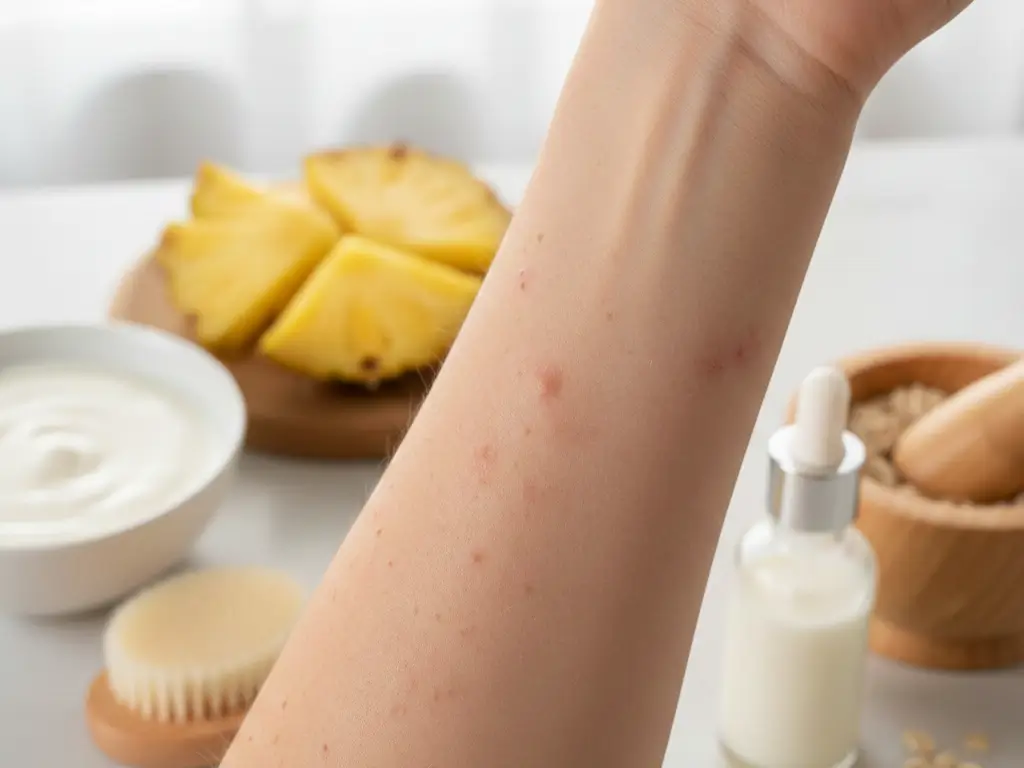
Those tiny, rough bumps on your upper arms that feel like permanent goosebumps? You’re not imagining them, and you’re definitely not alone. Keratosis pilaris affects roughly 40% of adults and up to 80% of teenagers, according to the American Academy of Dermatology.
I spent years attacking those bumps with harsh scrubs and aggressive loofahs. The result? Red, irritated skin that somehow looked worse than before. What finally made a difference wasn’t scrubbing harder, it was understanding what those bumps actually are and choosing gentler, natural exfoliants that work with my skin instead of against it.
Natural exfoliants like lactic acid, gentle enzyme treatments, and soft physical exfoliators can help manage keratosis pilaris by dissolving the keratin plugs that cause those characteristic bumps. But lasting results require consistency, patience, and the right technique.
This article provides educational information about managing keratosis pilaris with natural skincare approaches. It is not medical advice and does not replace consultation with a dermatologist or healthcare provider. Keratosis pilaris can sometimes be confused with other skin conditions that require professional diagnosis. Individual skin reactions vary, always patch test new products and discontinue use if irritation occurs. If your symptoms are severe, painful, or don’t improve with home care, please consult a licensed dermatologist.
This information is intended for people with mild to moderate keratosis pilaris looking to incorporate natural exfoliants into their skincare routine. It’s not a substitute for professional treatment of severe cases, related skin conditions, or symptoms that include inflammation, infection, or significant discomfort.
What Is Keratosis Pilaris and Why Does It Form?
Keratosis pilaris (KP) is a harmless skin condition where keratin, a protein that protects skin, builds up and plugs hair follicles. This creates small, rough bumps that often appear on upper arms, thighs, cheeks, and buttocks. Understanding this mechanism helps explain why exfoliation can help.
Your skin constantly produces keratin. Normally, this protein sheds naturally as skin cells turn over. With KP, keratin accumulates around individual hair follicles, forming hard plugs that create that sandpaper-like texture.
The Cleveland Clinic notes that KP runs in families and often appears alongside dry skin or conditions like eczema. It typically worsens in winter when humidity drops and skin loses moisture more easily.
Here’s what I wish someone had told me years ago: those bumps aren’t dirt, and they’re not caused by poor hygiene. You can’t scrub them away with force. The goal is dissolving those keratin plugs gently while keeping the surrounding skin healthy and hydrated.
This is why exfoliation, particularly chemical exfoliation, can help. By encouraging cell turnover and softening keratin, the right exfoliants help clear those plugged follicles without damaging your skin barrier.
If you’re interested in how different natural exfoliating acids work on skin, understanding their mechanisms helps you choose the right approach for KP specifically.
Best Natural Chemical Exfoliants for Keratosis Pilaris
Alpha hydroxy acids (AHAs) like lactic acid and glycolic acid are particularly effective for KP because they dissolve the keratin bonds holding those plugs together. Salicylic acid (a BHA) and fruit enzymes offer gentler alternatives for sensitive skin.
Lactic Acid: The KP Standout
Dermatologists frequently recommend lactic acid for KP, and there’s good reason. This AHA not only exfoliates but also acts as a humectant, drawing moisture into the skin. Since dry skin worsens KP, this dual action makes lactic acid especially useful.
Research published in the Journal of Clinical and Aesthetic Dermatology supports AHAs for keratinization disorders. Lactic acid appears in many natural sources, including fermented dairy and some plant extracts. Look for products with 10-12% lactic acid for body use, or start lower if your skin is sensitive.
What I’ve noticed: lactic acid works best when followed immediately by a rich moisturizer while skin is still slightly damp. This combination, exfoliation plus hydration, addresses both the keratin buildup and the dryness that contributes to KP.
Glycolic Acid: Deeper Penetration
Glycolic acid has smaller molecules than lactic acid, so it penetrates more deeply. This can be effective for stubborn KP but also means greater potential for irritation.
If you’re new to chemical exfoliation, lactic acid is typically the gentler starting point. Glycolic acid may suit those who’ve built tolerance and need stronger action. Many people find alternating between the two works well.
Salicylic Acid from Natural Sources
Salicylic acid is a BHA that’s oil-soluble, meaning it can penetrate into pores and follicles effectively. While synthetic salicylic acid is common, white willow bark extract provides a natural alternative containing salicin, a precursor that converts to salicylic acid.
The concentration in botanical sources is typically lower than synthetic formulations. This can actually be an advantage for sensitive skin or for those wanting gentler, daily-use options.
Fruit Enzymes: The Gentle Option
Enzymes from papaya (papain) and pineapple (bromelain) break down proteins, including keratin, without the pH-dependent action of acids. They’re generally gentler and can suit very sensitive skin.
Pineapple and bromelain exfoliation offers a good introduction if you’re hesitant about acids. The trade-off is that enzyme treatments typically produce subtler results and may need more consistent use.
Natural chemical exfoliants work, but they work gradually. I didn’t see significant improvement in my KP until about 6-8 weeks of consistent use. Your timeline may differ, skin responds individually.
Physical Exfoliants That Work (and Some That Don’t)
Gentle physical exfoliants like konjac sponges, colloidal oatmeal, and fine sugar scrubs can complement chemical exfoliation for KP. However, harsh scrubbing makes KP worse by irritating follicles and triggering inflammation.
Gentle Options Worth Trying
Konjac Sponges
A konjac sponge offers very gentle physical exfoliation. Made from plant fiber, these sponges soften when wet and provide mild texture that won’t aggravate sensitive skin. I use mine in the shower 2-3 times weekly on KP-prone areas.
Colloidal Oatmeal
Oatmeal’s slightly rough texture provides gentle exfoliation while its compounds soothe skin. The National Eczema Association notes oatmeal’s anti-inflammatory properties, helpful since KP often occurs alongside dry, irritation-prone skin.
Fine Sugar Scrubs
Sugar dissolves in water, making it less harsh than salt scrubs. DIY sugar scrubs mixed with moisturizing oils can provide gentle buffing. The key is light pressure, you’re not sanding wood.
If you’re exploring DIY body care for glowing skin, simple sugar-and-oil scrubs work well as occasional KP treatments when paired with chemical exfoliation.
What to Avoid
Harsh scrubs with large particles (like apricot kernel pieces or pumice) can create micro-tears and worsen inflammation around hair follicles.
Aggressive loofahs and stiff brushes used with pressure do more harm than good. I learned this the hard way, years of aggressive scrubbing left my arms red and bumpy instead of smooth.
Over-exfoliation of any kind compromises your skin barrier. When your barrier is damaged, skin becomes drier and more inflamed, both of which worsen KP.
If you do use an exfoliating glove or mitt, choose soft materials and use minimal pressure. Think gentle circles, not scrubbing.
The Dry Brushing Question
Dry brushing is popular for body exfoliation, but opinions vary on its appropriateness for KP. Some people find very gentle dry brushing helpful; others experience irritation.
If you want to try it, use a soft-bristled brush with extremely light strokes. Watch for redness or worsening bumps, if either occurs, dry brushing likely isn’t suitable for your skin.
How to Build a Natural KP Exfoliation Routine
The most effective KP routine combines gentle chemical exfoliation 2-3 times weekly, occasional soft physical exfoliation, and consistent moisturizing. Hydration is just as important as exfoliation for managing this condition.
A Sustainable Weekly Approach
Daily: Gentle cleansing, followed by a rich moisturizer. Products containing humectants like glycerin, hyaluronic acid, or urea help maintain hydration.
2-3 times weekly: Apply a lactic acid or glycolic acid product to KP-prone areas after showering, on damp skin. Follow with moisturizer.
1-2 times weekly: Optional gentle physical exfoliation with a konjac sponge or soft scrub.
The order matters. Chemical exfoliants work better on clean, slightly damp skin. Moisturizer applied afterward helps seal in hydration and supports barrier function.
Moisturizing: The Other Half of the Equation
Exfoliation alone won’t fully manage KP. The condition worsens with dryness, so keeping skin well-hydrated is essential.
Look for body lotions containing:
- Urea (5-10%) – softens keratin and hydrates
- Lactic acid – provides ongoing gentle exfoliation
- Ceramides – support skin barrier
- Shea butter or other emollients – lock in moisture
An organic body lotion designed for dry skin can serve as your base, especially if it contains hydrating ingredients that support skin barrier care.
Seasonal Adjustments
KP typically worsens in cold, dry months. During winter:
- Increase moisturizer richness
- Consider humidifier use
- Reduce exfoliation frequency if skin becomes dry or irritated
- Shower with lukewarm (not hot) water
In summer, skin often improves naturally due to humidity and UV exposure (though sun protection remains important). You may find you need less intensive intervention during warmer months.
Give It Time
This is the part nobody wants to hear: significant improvement typically takes 4-8 weeks of consistent care. The skin cell turnover cycle is roughly 28 days for adults, often longer as we age. You’re waiting for new, unplugged follicles to replace the affected ones.
If you’ve been at it for 8-12 weeks with no improvement, that’s worth discussing with a dermatologist. They can rule out other conditions and may suggest prescription-strength options.
What to Avoid and When to See a Dermatologist
Avoid over-exfoliation, very hot showers, and harsh scrubbing, all can worsen KP. See a dermatologist if home care doesn’t improve symptoms after 2-3 months, or if you notice signs of infection, significant inflammation, or uncertainty about your diagnosis.
Common Mistakes That Make KP Worse
Over-exfoliation: Using acids daily or combining multiple strong exfoliants can damage your skin barrier, causing dryness and irritation that worsens KP. More is not better here.
Hot showers: Hot water strips natural oils from skin. Lukewarm showers followed by immediate moisturizing help preserve hydration.
Picking or squeezing bumps: This can cause scarring, infection, and hyperpigmentation. The temptation is real, but resist.
Expecting overnight results: KP is a chronic condition with no cure. You’re managing it, not eliminating it permanently. Realistic expectations prevent frustration and help you stick with a routine long enough to see results.
Skipping moisturizer: Exfoliation without hydration leaves skin dry and irritation-prone. Always follow exfoliation with moisture.
When Professional Help Makes Sense
Consider consulting a dermatologist if:
- Home treatments haven’t improved symptoms after 2-3 months of consistent use
- Bumps become red, painful, or show signs of infection
- You’re unsure whether you have KP or another condition
- KP significantly affects your quality of life or causes distress
- You have KP on your face (facial KP may need different approaches)
- You want to explore prescription options (stronger retinoids, prescription-strength exfoliants)
The American Academy of Dermatology confirms that while KP is harmless, dermatologists can offer treatments that work faster or more effectively than over-the-counter options.
When to Seek Professional Advice:
- Bumps are inflamed, painful, or appear infected
- Condition worsens despite consistent home care
- You’re uncertain about your diagnosis
- KP covers large areas or causes significant distress
- Home treatments cause persistent irritation
Finding What Works for Your Skin
Managing keratosis pilaris with natural exfoliants comes down to understanding one key principle: dissolve, don’t destroy. Gentle chemical exfoliants break down keratin plugs over time. Soft physical exfoliants can complement this process. And consistent hydration keeps skin conditions optimal for improvement.
I won’t pretend my arms are bump-free today. They’re not. But they’re significantly smoother than they were during my aggressive-scrubbing years. The combination of lactic acid twice weekly, a konjac sponge in the shower, and rich moisturizer applied religiously has made a genuine difference.
For more guidance on building a natural skincare routine that addresses your specific concerns, explore the comprehensive resources at Beauty Healing Organic. From body care treatments to understanding natural exfoliants and scrubs, you’ll find evidence-based approaches to healthier skin.
- Patch test one natural exfoliant (lactic acid is a solid starting point) on a small area. Watch for irritation over 48 hours.
- Build a consistent routine, exfoliate 2-3 times weekly, moisturize daily, and track any changes.
- Schedule a dermatologist appointment if symptoms persist or worsen after 8-12 weeks of consistent home care.
Patience and consistency beat intensity every time. Your skin will thank you for the gentler approach.
SOURCES CITED
- American Academy of Dermatology Association. (n.d.). Keratosis pilaris: Overview. AAD.org. https://www.aad.org/public/diseases/a-z/keratosis-pilaris-overview
- Cleveland Clinic. (2022). Keratosis Pilaris. Cleveland Clinic Health Library. https://my.clevelandclinic.org/health/diseases/17758-keratosis-pilaris
- National Eczema Association. (n.d.). Bathing and Moisturizing. NationalEczema.org. https://nationaleczema.org/eczema/treatment/bathing/
- Kornhauser, A., Coelho, S. G., & Hearing, V. J. (2010). Applications of hydroxy acids: Classification, mechanisms, and photoactivity. Clinical, Cosmetic and Investigational Dermatology, 3, 135-142. https://doi.org/10.2147/CCID.S9042
- Draelos, Z. D. (2018). The science behind skin care: Moisturizers. Journal of Cosmetic Dermatology, 17(2), 138-144.
- DermNet NZ. (2023). Keratosis pilaris. DermNet. https://dermnetnz.org/topics/keratosis-pilaris