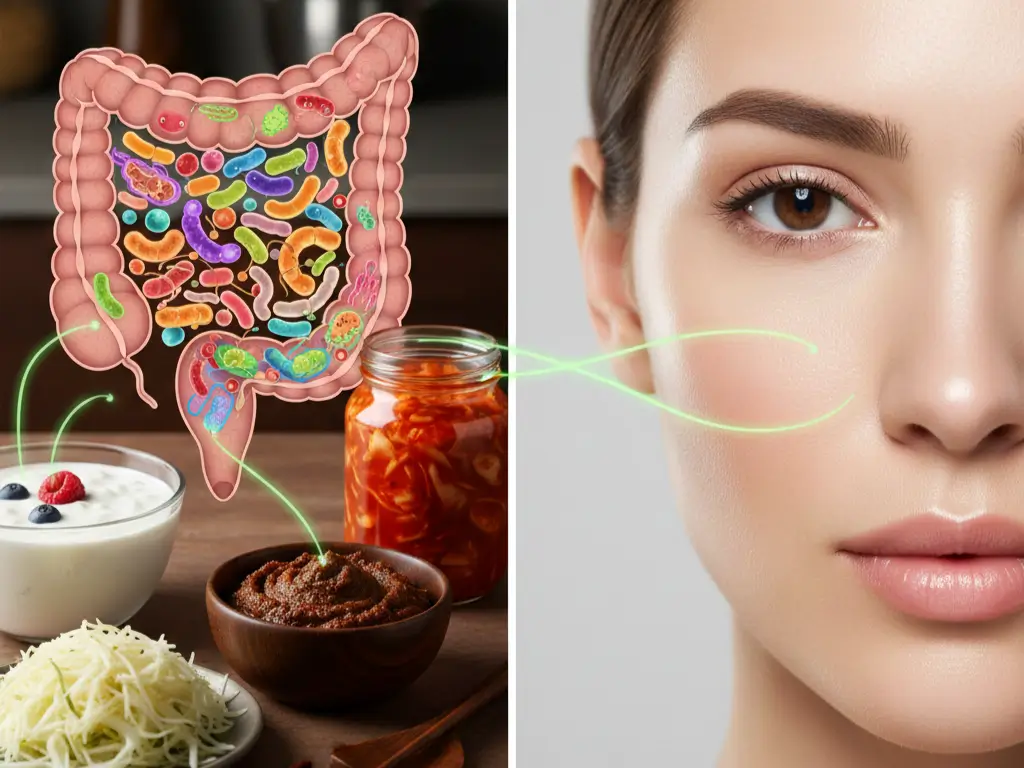
That persistent breakout on your chin might have less to do with your skincare routine and more to do with what’s happening in your gut. Research published in Frontiers in Microbiology confirms what many dermatologists now recognize: your digestive system and skin communicate constantly through something called the gut-skin axis.
Fermented foods like kefir, kimchi, miso, and sauerkraut can support clearer skin by promoting beneficial gut bacteria that reduce inflammation and strengthen your skin barrier. But the benefits aren’t instant, and not every fermented food works equally well.
This article provides educational information about the gut-skin connection and fermented foods. It is not intended to diagnose, treat, cure, or prevent any skin condition or disease. Individual responses to dietary changes vary significantly. If you have persistent acne, inflammatory skin conditions, digestive disorders, or food sensitivities, consult a licensed healthcare professional or registered dietitian before making dietary changes.
This information benefits anyone curious about supporting skin health through diet. It’s especially relevant if you’ve tried topical treatments without satisfying results and want to explore the internal factors affecting your complexion. This guide does not replace professional dermatological care for chronic skin conditions.
I’ve spent years researching the intersection of nutrition and skin health, consulting published studies and dermatology literature to separate genuine science from wellness marketing. What I’ve found is that the gut-skin connection is real , but more nuanced than most articles suggest.
What Is the Gut-Skin Axis and Why Does It Matter for Your Complexion?
The gut-skin axis describes the two-way communication between your digestive tract’s microbiome and your skin. When gut bacteria become imbalanced, inflammatory signals can trigger skin problems like acne, rosacea, and premature aging. Supporting gut health may help calm these responses.
Your gut houses roughly 70% of your immune system, according to research from Johns Hopkins Medicine. The trillions of bacteria living there don’t just digest food , they produce compounds that travel through your bloodstream and affect distant organs, including your skin.
When harmful bacteria outnumber beneficial ones (a state called dysbiosis), your gut lining can become more permeable. This allows inflammatory molecules to enter circulation. Your skin often displays the results: increased redness, breakouts, or sensitivity.
A 2021 study in Experimental Dermatology found that people with acne had measurably different gut bacteria profiles compared to those with clear skin. The acne group showed lower levels of Lactobacillus and Bifidobacterium , exactly the strains abundant in fermented foods.
This connection also explains why stress affects your skin. Stress hormones alter gut bacteria composition, which then influences skin inflammation. It’s a loop that mindful skincare practices can help interrupt from multiple angles.
The practical takeaway? What you feed your gut bacteria matters for your face. But not all fermented foods deliver the same skin-supporting benefits.
Which Fermented Foods Offer the Best Skin Benefits?
Kefir, traditionally fermented sauerkraut, kimchi, miso, and tempeh rank highest for skin support because they contain live probiotic strains researched for anti-inflammatory effects. Yogurt can help but varies widely in probiotic content. Kombucha offers some benefits but typically contains fewer skin-specific strains.
I think of fermented foods on a hierarchy based on their probiotic diversity and research backing for skin benefits:
Tier 1: Strongest Evidence
Kefir stands out as possibly the most skin-supportive fermented food. It contains 30-50 different probiotic strains, far exceeding yogurt’s typical 2-5. Research in the Journal of Clinical and Aesthetic Dermatology links kefir consumption to reduced skin inflammation and improved hydration. The diverse strains include Lactobacillus kefiri, which shows particular promise for calming inflammatory skin responses.
Traditionally Fermented Sauerkraut (refrigerated, not shelf-stable) provides high concentrations of Lactobacillus plantarum. This strain has been studied specifically for its ability to strengthen skin barrier function. A serving contains billions of live bacteria, plus fiber that feeds beneficial gut species.
Kimchi offers similar benefits to sauerkraut with additional compounds from garlic, ginger, and chili peppers. These ingredients contain their own anti-inflammatory properties. Research suggests kimchi’s probiotic profile may help reduce oxidative stress , a key driver of premature skin aging.
Tier 2: Good Supporting Evidence
Miso provides Aspergillus oryzae alongside beneficial bacteria. Traditional miso also contains linoleic acid, which supports the skin lipid barrier. If you’re exploring fermented ingredients in skincare, you’ll notice miso-derived compounds appearing in products for similar barrier-supporting reasons.
Tempeh brings both probiotics and prebiotics (fiber that feeds gut bacteria). It’s also a complete protein, providing amino acids your skin needs for collagen production. The fermentation process creates compounds that may help reduce inflammation systemically.
Tier 3: Moderate Benefits
Yogurt can support gut health, but quality varies enormously. Many commercial yogurts contain added sugars that can worsen skin inflammation, counteracting probiotic benefits. Look for plain varieties with “live and active cultures” on the label and minimal ingredients.
Kombucha contains some probiotics, though typically fewer strains than dairy-based or vegetable ferments. Its main skin benefit may come from organic acids that support detoxification. However, the sugar content in flavored varieties can be counterproductive.
The fermented rice water used in K-beauty follows similar principles , fermentation creates beneficial compounds, though topical application works through different mechanisms than dietary consumption.
How Long Before Fermented Foods Improve Your Skin?
Most people notice skin improvements after 8-12 weeks of consistent fermented food consumption. Some see changes in 4-6 weeks, while others need 3+ months. Quick fixes don’t exist , you’re rebuilding gut bacteria populations, which takes time.
I’ll be honest: if an article promises clear skin in two weeks from eating fermented foods, it’s overselling. Research on probiotics and skin typically shows meaningful results at the 8-12 week mark.
Here’s why this timeline makes sense. Your gut microbiome is an established ecosystem. Introducing new bacterial strains requires consistent exposure for them to colonize and thrive. Occasional fermented food consumption won’t shift your baseline much.
Realistic Expectations:
| Timeframe | What You Might Notice |
| Weeks 1-3 | Improved digestion, possible adjustment period |
| Weeks 4-6 | Reduced bloating, skin may look calmer |
| Weeks 8-12 | Measurable reduction in inflammation, fewer breakouts |
| 3+ months | Clearer baseline complexion, improved skin resilience |
Some people experience an adjustment period when first increasing fermented foods. This can temporarily include mild digestive changes or even a brief increase in breakouts as your system adapts. This typically resolves within two weeks.
Consistency matters more than quantity. One serving of fermented food daily generally produces better results than sporadic large amounts. Your skin microbiome needs sustained support, not occasional interventions.
Pairing fermented foods with other skin-supporting habits amplifies results. A strong skin barrier care routine works synergistically with gut health improvements.
How to Add Fermented Foods to Your Daily Routine
Start with small portions (1-2 tablespoons) and gradually increase over two weeks. Aim for variety rather than relying on one source. Include fermented foods with meals for better tolerance and nutrient absorption.
Practical implementation beats theoretical knowledge. Here’s how to actually make this work:
Week 1-2: Introduction Phase
- Start with 1-2 tablespoons of one fermented food daily
- Sauerkraut or kimchi with dinner works well for beginners
- Note any digestive responses
Week 3-4: Expansion Phase
- Increase portions to ¼-½ cup
- Add a second fermented food type (perhaps kefir at breakfast)
- Continue monitoring tolerance
Week 5+: Maintenance Phase
- Aim for 2-3 different fermented foods throughout the day
- Rotate types weekly for microbiome diversity
- Adjust quantities based on what feels sustainable
Easy integration ideas:
- Add sauerkraut to salads or grain bowls
- Use miso in salad dressings (no cooking required to preserve probiotics)
- Blend kefir into smoothies
- Include kimchi as a side with any savory meal
- Use tempeh in stir-fries (though cooking reduces some live bacteria, beneficial compounds remain)
This approach pairs well with a comprehensive organic skincare routine that addresses skin health from multiple angles.
Who Should Be Cautious with Fermented Foods?
People with histamine intolerance, SIBO (small intestinal bacterial overgrowth), certain digestive conditions, or immune system disorders should consult healthcare providers before significantly increasing fermented food intake. Some individuals may experience worsened symptoms.
Not everyone benefits equally from fermented foods, and some people may experience negative reactions:
Histamine Sensitivity
Fermented foods are naturally high in histamines. If you experience headaches, flushing, hives, or worsened skin rashes after eating aged or fermented foods, you may have histamine intolerance. This doesn’t mean fermented foods are universally bad for you , but working with a healthcare provider to identify your triggers matters.
SIBO and Digestive Disorders
Small intestinal bacterial overgrowth sometimes worsens with probiotic-rich foods. If you have diagnosed SIBO, IBS, or inflammatory bowel disease, introduce fermented foods slowly and under professional guidance. What helps one person’s gut-skin connection may not suit another’s.
Immunocompromised Individuals
People with weakened immune systems should consult healthcare providers before consuming unpasteurized fermented foods. The live bacteria beneficial for most people could potentially cause issues in immunocompromised states.
When to Pause and Consult a Professional:
- Significant digestive discomfort lasting more than two weeks
- Worsening skin symptoms after introducing fermented foods
- Any allergic reaction symptoms
- History of digestive disorders or immune conditions
Understanding your unique situation matters. Just as personalized skincare rituals acknowledge individual differences, dietary approaches require similar customization.
When to See a Dermatologist or Healthcare Provider
Seek professional guidance if skin problems persist despite dietary improvements, if you suspect underlying conditions, or if you experience significant adverse reactions to dietary changes.
Fermented foods can support skin health, but they’re not replacements for professional care when needed:
Consult a dermatologist if:
- Acne or skin inflammation persists after 3+ months of dietary and skincare adjustments
- You develop new or worsening skin symptoms
- Skin problems significantly impact your quality of life
- You suspect conditions like rosacea, eczema, or psoriasis
Consult a registered dietitian or gastroenterologist if:
- You have diagnosed digestive conditions
- You’re unsure how fermented foods fit with existing health issues
- You experience persistent digestive problems
- You want personalized nutrition guidance
The gut-skin axis research is genuinely promising, but individual factors , genetics, existing conditions, medication interactions , mean professional guidance often provides the clearest path forward.
For topical support while working on internal factors, botanical extracts targeted to specific skin concerns can complement your gut-health approach.
Bringing It Together
The connection between your gut and skin isn’t wellness hype , it’s biology that researchers continue to understand better each year. Fermented foods offer one practical tool for supporting this connection, provided you approach them realistically.
Kefir, traditionally fermented sauerkraut, kimchi, miso, and tempeh rank among the best options for skin-supporting probiotics. But expecting overnight transformation sets you up for disappointment. Plan for an 8-12 week timeline, introduce foods gradually, and pay attention to how your unique body responds.
Your next steps:
- This week: Choose one fermented food from Tier 1 and add a small serving to your daily meals
- This month: Gradually increase portions and add a second variety for diversity
- If symptoms persist or worsen: Consult a dermatologist or registered dietitian for personalized guidance
For more approaches to supporting skin health naturally, explore the comprehensive resources at Beauty Healing Organic, where evidence-based information meets practical application.
Your skin reflects many internal and external factors. The gut-skin axis is one piece of a larger picture that includes proper hydration, antioxidant support, and consistent skincare layering. Addressing multiple factors creates the foundation for genuinely clear, resilient skin.
SOURCES CITED
- Salem, I., et al. (2018). The Gut Microbiome as a Major Regulator of the Gut-Skin Axis. Frontiers in Microbiology, 9, 1459. DOI: 10.3389/fmicb.2018.01459
- Deng, Y., et al. (2021). Gut microbiota dysbiosis in patients with acne vulgaris. Experimental Dermatology, 30(6), 839-849. DOI: 10.1111/exd.14320
- Bowe, W.P., & Logan, A.C. (2011). Acne vulgaris, probiotics and the gut-brain-skin axis – back to the future? Gut Pathogens, 3(1), 1. DOI: 10.1186/1757-4749-3-1
- Kober, M.M., & Bowe, W.P. (2015). The effect of probiotics on immune regulation, acne, and photoaging. Journal of Clinical and Aesthetic Dermatology, 8(7), 36-40.
- Johns Hopkins Medicine. (2021). The Brain-Gut Connection. Johns Hopkins Health. https://www.hopkinsmedicine.org/health/wellness-and-prevention/the-brain-gut-connection
- National Center for Complementary and Integrative Health. (2019). Probiotics: What You Need to Know. NIH. https://www.nccih.nih.gov/health/probiotics-what-you-need-to-know
- Harvard T.H. Chan School of Public Health. (2022). The Microbiome. The Nutrition Source. https://www.hsph.harvard.edu/nutritionsource/microbiome/