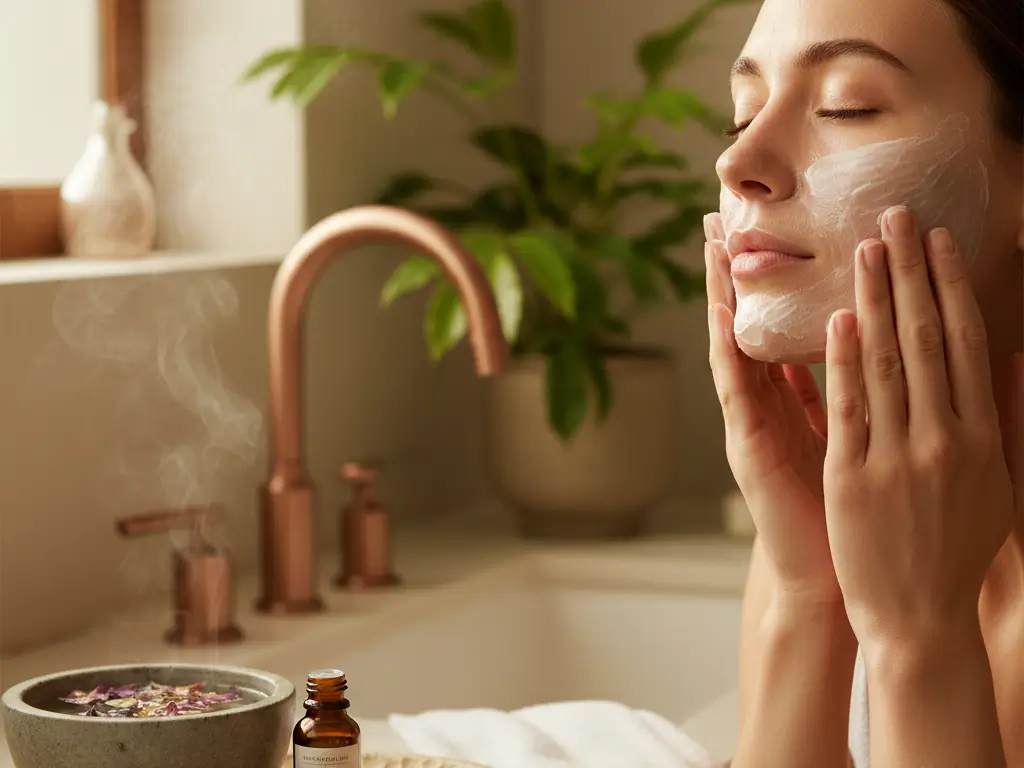
A mindful skincare routine transforms daily cleansing into a meditation practice. By focusing on sensory details, the scent of botanical oils, the temperature of water, and the texture of facial massage, you can lower cortisol levels, activate the parasympathetic nervous system, and improve skin barrier function.
This article provides educational information about mindfulness and skincare. It is not intended to diagnose, treat, or prevent anxiety, depression, or dermatological conditions. If you are experiencing chronic stress or mental health concerns, please consult a licensed healthcare professional.
Most of us wash our faces on autopilot. We scrub while mentally writing tomorrow’s to-do list, or we apply serum while staring at our phones, doom-scrolling through the news. We treat skincare as a chore, something to get over with so we can fall into bed.
But what if those five minutes in front of the mirror were the most grounding part of your day?
The connection between your mind and your skin is undeniable. It’s called the “brain-skin axis.” When you are stressed, your body produces cortisol, which can degrade collagen and cause inflammation. Conversely, soothing touch and calming scents can signal safety to your brain.
I’ve found that shifting your perspective from “maintenance” to “mindfulness” doesn’t just help you relax; it actually makes your products work better. When you aren’t rushing, you apply products more effectively, and lowered stress levels improve your skin’s ability to heal.
Here is how to stop rushing and start grounding.
Understanding the Brain-Skin Connection
The brain and skin share the same embryonic origin (the ectoderm). This connection, known as the brain-skin axis, means emotional stress translates into physical skin issues like inflammation, acne, or sensitivity. Mindful touch can reverse this loop by lowering heart rate and signaling safety.
It sounds like a marketing buzzword, but “psychodermatology” is a real field of study. It explores how our emotions affect our skin and vice versa.
Think about it: when you’re embarrassed, you blush. When you’re scared, you go pale. Your skin is an outward reflection of your internal nervous system. Chronic stress keeps your body in “fight or flight” mode. This diverts resources away from skin repair, leading to dullness and breakouts.
By engaging in a mindful skincare routine to reduce stress, you are attempting to flip the switch from “fight or flight” to “rest and digest.” You use the routine as a sensory anchor. You aren’t just cleaning pores; you are telling your nervous system that the danger has passed and it is safe to relax.
For a deeper dive into how stress hormones impact your complexion, read our guide on blue light, cortisol, and skin health.
Setting the Stage: Environment Over Products
Before applying products, alter your environment to trigger relaxation. Dim harsh overhead lights, engage your sense of smell with ambient scents, and remove digital distractions. This “sensory gating” helps the brain transition from work mode to rest mode.
You can have the most expensive organic oils in the world, but if you apply them under fluorescent lights while checking work emails, they won’t relax you.
1. The Digital Detox
Rule number one: No phone in the bathroom. The blue light interferes with your melatonin production, and the information overload keeps your cortisol spiking. Leave the phone in the bedroom. If you need background noise, use a dedicated speaker for calm music, not a screen.
2. Lighting Matters
Bright white light mimics the sun and tells your brain to stay awake. If you can, install a dimmer switch. If not, try washing your face by candlelight or using a warm-toned nightlight.
3. Temperature Check
The temperature of the room and the water plays a huge role in how your body reacts. Warm (not hot) water is vasodilitary, it opens blood vessels and promotes relaxation.
For more on how environment impacts your skin, consider how weather and environment affect skincare needs.
The 5-Step Mindful Ritual
To practice mindful skincare:
- Breath: Take three deep belly breaths.
- Cleanse: Massage slowly, focusing on texture.
- Mist: Feel the temperature change on your skin.
- Treat: Press serums in intentionally.
- Seal: Use facial massage to release jaw tension.
This isn’t about adding more products. It is about slowing down the application of the products you already own.
Step 1: The Grounding Breath
Before you even turn on the tap, stand in front of the sink. Close your eyes. Take three deep breaths, inhaling through the nose and exhaling through the mouth. Feel your feet on the floor. This separates “the day” from “the routine.”
Step 2: The Conscious Cleanse
Apply your cleanser. Instead of scrubbing aggressively, move your hands in slow, circular motions. Focus entirely on the sensation of your fingertips against your skin.
Is the cleanser cool or warm? Is it gritty or smooth? If you use a tool like a konjac sponge, notice its unique texture. This focus on physical sensation is a form of active meditation.
Step 3: The Hydration Pause
After rinsing, pat your face dry, don’t rub. If you use a toner or mist, spray it and wait for five seconds. Feel the tiny droplets settle.
Many people find making their own mists therapeutic. You can try a DIY rosewater and glycerin mist for a simple, aromatic addition to this step.
Step 4: The Massage Integration
When applying your oil or moisturizer, use it as a lubricant for facial massage. We hold an incredible amount of tension in our jaws and between our eyebrows.
Using your knuckles or a tool, gently glide upward and outward. This stimulates blood flow and lymphatic drainage. If you are curious about tools, you might want to explore the difference between a jade and rose quartz roller to see which resonates with your energy.
Step 5: The Gratitude Seal
As you finish, look at yourself in the mirror, really look, without criticism. Find one thing you are grateful for about your body. It sounds cheesy, but shifting from criticism (“I hate this wrinkle”) to gratitude (“My skin protects me”) changes your physiological stress response.
Aromatherapy for the Spirit
Scent travels directly to the olfactory bulb, which is connected to the brain’s limbic system (the emotional center). Using skincare with lavender, chamomile, or bergamot can physically lower heart rate and induce calmness faster than unscented products.
This is where “clean beauty” really shines. Synthetic fragrances can often cause headaches or irritation, but natural botanical extracts offer therapeutic benefits.
- Lavender: The gold standard for sleep and relaxation.
- Rose: Often associated with heart-opening and comfort.
- Bergamot: uplifting and anxiety-reducing.
I personally love using botanical oils because they naturally carry these scents without artificial additives. If you are unsure which oils suit your needs, check our guide on botanical oils for different skin concerns.
Important Note: Essential oils are potent. Always ensure they are properly diluted in a carrier oil. Never apply straight essential oil to your face.
Advanced Tools for Deep Relaxation
If you want to take the ritual deeper, tools can act as physical anchors for your mindfulness practice.
Gua Sha
This ancient Chinese practice involves scraping a flat stone over the skin. It requires slow, deliberate movement, which forces you to slow down your breathing. It is excellent for releasing fascia tension in the neck and jaw. Learn more about the technique in our Gua Sha guide.
Facial Steaming
Warm steam softens the pores and increases circulation, but it also forces you to sit still for 5-10 minutes. You can’t multitask while steaming. It is a forced pause button. You can read about facial steaming benefits here.
Adapting for High-Stress Days
Let’s be realistic. Some days, you are too exhausted for a full spa ritual. That is okay. Mindfulness doesn’t require 20 minutes; it requires presence.
The “I’m Exhausted” Routine:
- Cleanse: Just wash the day off. Visualize the stress washing down the drain with the soap.
- Moisturize: Slap it on, but take one deep breath while you do it.
- Sleep: Prioritize rest over perfection.
On days when you have more bandwidth, you might try a longer treatment, like a DIY charcoal and bentonite mask to draw out impurities while you meditate.
When to Seek Professional Support
While a mindful routine is a powerful tool for self-regulation, it is not a cure-all.
Consult a professional if:
- Your skin issues (acne, eczema, psoriasis) are flaring painfully despite your best efforts.
- You feel unable to manage stress through lifestyle changes alone.
- Your anxiety interferes with your daily life or sleep.
Psychologists and dermatologists can often work together. For skin conditions specifically triggered by mental health, a dermatologist may recommend treatments that work in tandem with stress reduction.
For a broader look at holistic skin health, visit our main hub at Beauty Healing Organic.
Closing Thoughts
We often view skincare as vanity, but at its core, it is self-preservation. In a world that demands we constantly hustle, taking ten minutes to touch your skin with kindness is a radical act.
You aren’t just applying moisturizer; you are checking in with yourself. You are anchoring yourself in the present moment.
Your Action Plan:
- Tonight: Leave your phone in the bedroom before you wash your face. Notice the difference.
- This Weekend: Buy a small candle or dim the lights in your bathroom to set the mood.
- Long Term: Choose one product based on how it feels and smells, not just clinical results.
Your skin is listening to your stress. It’s time to start telling it a gentler story.
SOURCES CITED
- Harvard Health Publishing. (2020). Recognizing the mind-skin connection. Harvard Medical School.
- American Psychological Association. (2023). Stress effects on the body. APA.org.
- Chen, Y., & Lyga, J. (2014). Brain-Skin Connection: Stress, Inflammation and Skin Aging. Inflammation & Allergy Drug Targets.
- National Institutes of Health. (2013). The effects of aromatherapy on stress and anxiety. NIH.gov.