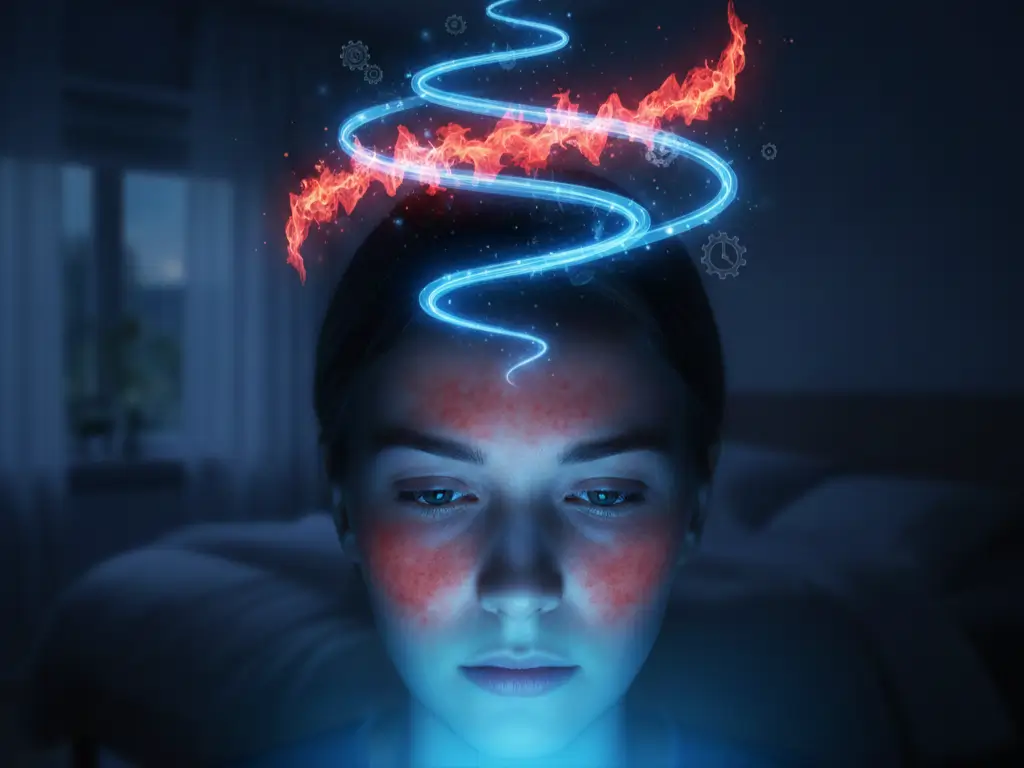
I noticed something strange about my skin three years ago. Despite a consistent skincare routine, my complexion looked dull and irritated, especially on mornings after late-night scrolling sessions. That observation sent me down a research rabbit hole I never expected.
What I found surprised me: the connection between our screens and skin troubles may run deeper than direct light exposure. The real story involves your stress hormones, your body clock, and a cascade of inflammatory responses that many skincare articles overlook.
This article provides educational information about blue light, cortisol, and skin inflammation based on current research. It is not intended to diagnose, treat, or replace professional medical advice. Skin conditions vary between individuals, and what works for one person may not work for another. If you experience persistent skin inflammation, redness, or concerning symptoms, please consult a board-certified dermatologist for personalized guidance.
This information is designed for people curious about how their digital habits might affect their skin health. It’s educational content for those looking to make informed lifestyle and skincare choices, not a treatment plan for diagnosed skin conditions like eczema, rosacea, or psoriasis.
The research on blue light and skin is still evolving. I’ll share what current studies suggest while being honest about what we don’t yet know. Let’s explore what the science actually says about protecting your skin in our screen-filled world.
What Is the Blue Light-Cortisol-Skin Connection?
Blue light from screens and LED lighting may affect your skin through two pathways: direct exposure that can generate oxidative stress, and indirect effects through disrupted sleep patterns that elevate cortisol levels. This stress hormone, when chronically elevated, can trigger inflammatory responses in skin.
Here’s what makes this topic more nuanced than most articles suggest.
Blue light, also called high-energy visible (HEV) light, sits in the 400-500 nanometer range of the light spectrum. According to research published in the Journal of Investigative Dermatology, HEV light can penetrate skin more deeply than UVA and UVB rays. However, the intensity from screens is significantly lower than from sunlight.
The more compelling pathway, in my view, involves your circadian rhythm.
When you expose yourself to blue light in the evening, those late-night phone sessions many of us know too well, your body gets confused about what time it is. Research from Harvard Medical School shows this disrupts melatonin production and can shift your cortisol patterns. Your cortisol levels, which should naturally drop at night, may remain elevated instead.
Why does this matter for your skin? Cortisol isn’t just a “stress hormone.” According to the American Academy of Dermatology, elevated cortisol can impair your skin barrier function, increase oil production, and trigger inflammatory responses. This creates what I call the “Triple Cascade”: blue light exposure leads to circadian disruption, which elevates cortisol, which then promotes skin inflammation.
Understanding this connection opens up more effective solutions than simply buying blue light protection products. Your timing and habits may matter just as much as your skincare.
How Does Blue Light Disrupt Your Skin’s Natural Rhythm?
Evening blue light exposure suppresses melatonin and delays your circadian clock. This disruption affects skin’s overnight repair processes and can keep cortisol elevated when it should be low, potentially increasing inflammation and slowing cellular renewal.
Your skin follows its own daily schedule, and evening blue light throws a wrench in those carefully timed processes.
During the day, your skin focuses on protection, fighting off UV damage, pollution, and oxidative stress. At night, it shifts into repair mode. Cell turnover accelerates. Collagen production increases. Anti-inflammatory processes take over. This happens partly because melatonin, your sleep hormone, acts as an antioxidant that supports skin healing.
Here’s the problem: blue light in the 460-480 nanometer range powerfully suppresses melatonin. A study from Brigham and Women’s Hospital found that just two hours of evening screen use can delay melatonin release by about 1.5 hours.
When melatonin delays, so does your skin’s repair window. But it gets more complicated.
Your cortisol rhythm is supposed to mirror your melatonin rhythm inversely. Cortisol should peak in the morning (helping you wake up) and drop at night (allowing rest and repair). Evening blue light exposure can keep cortisol elevated precisely when your skin needs low-stress conditions for renewal.
I’ve noticed this pattern in my own life. Nights when I set boundaries around screen time and skincare, my morning complexion genuinely looks calmer. This isn’t just anecdotal, it aligns with what circadian biology research suggests about skin barrier care.
The timing concept matters more than many realize. Blue light during daytime hours may actually be beneficial, it helps regulate your circadian rhythm properly. It’s specifically the evening exposure that seems to cause the hormonal disruption affecting skin.
What Does Cortisol Actually Do to Your Skin?
Chronic cortisol elevation may impair collagen production, weaken the skin barrier, increase oil production, and trigger inflammatory pathways. These effects can manifest as dullness, breakouts, sensitivity, and accelerated signs of aging.
Cortisol gets a bad reputation, but it’s actually essential for survival. The problem arises when it stays elevated chronically, which modern life, with its constant digital stimulation, tends to promote.
Research from dermatological studies shows several ways elevated cortisol may affect skin:
Barrier Disruption: Cortisol can reduce production of ceramides and other lipids that keep your skin barrier intact. A compromised barrier means increased water loss and greater sensitivity to irritants.
Inflammation Activation: Cortisol triggers pro-inflammatory cytokines even while simultaneously suppressing some immune responses. This paradox creates a situation where skin may be both inflamed and less able to heal efficiently.
Collagen Breakdown: Studies suggest chronic cortisol exposure accelerates collagen degradation and slows new collagen synthesis. Over time, this may contribute to fine lines and loss of firmness.
Increased Sebum Production: Some research indicates cortisol can stimulate oil glands, potentially contributing to congestion and breakouts, especially in those already prone to acne.
This helps explain why stress so often shows up on our faces. It’s not imaginary. The cortisol pathway creates real, measurable changes in skin function.
What does this mean for blue light specifically? If evening screen use consistently elevates your cortisol, you may experience these effects even without feeling particularly “stressed” in the traditional sense. Your body responds to light cues regardless of your emotional state.
The connection between mindful skincare practices and reduced stress suddenly makes more physiological sense. Supporting your circadian rhythm isn’t just about sleep, it directly affects the hormonal environment your skin exists within.
Evidence-Based Strategies for Protection
Effective protection involves both behavioral changes (limiting evening blue light exposure) and topical approaches (antioxidants that address oxidative stress). The most impactful strategies target timing and habits rather than relying solely on skincare products.
Let me be honest about something: skincare products marketed for “blue light protection” have limitations. While some ingredients show promise in lab studies, real-world screen exposure differs significantly from the high-intensity conditions used in research.
That said, a multi-layered approach can help. Here’s what the evidence actually supports:
Timing-Based Solutions (Most Impactful)
Reduce evening exposure. This single change may do more for your skin than any product. Try implementing a “digital sunset” 1-2 hours before bed. Use night mode settings on devices, they reduce blue light emission by 30-50% according to manufacturer specifications.
Prioritize morning light. Exposing yourself to bright light in the morning helps anchor your circadian rhythm, making you less sensitive to evening disruption. This supports proper cortisol patterns naturally.
Topical Approaches (Supportive)
Research suggests certain antioxidant ingredients may help address oxidative stress from HEV light:
Vitamin C: A well-studied antioxidant that neutralizes free radicals. Look for stable forms like L-ascorbic acid or ascorbyl glucoside. Learn more about vitamin C in skincare.
Vitamin E: Works synergistically with vitamin C to protect cell membranes.
Niacinamide: Supports barrier function and may help regulate inflammation. This versatile ingredient addresses multiple concerns simultaneously.
Iron Oxide-Containing Products: Some mineral sunscreens containing iron oxides may offer protection against visible light, including blue light. However, research on this is still developing.
Lifestyle Factors
The gut-skin connection also plays a role here. Chronic stress and circadian disruption can affect gut microbiome balance, which may influence skin inflammation through the gut-skin axis. Supporting digestive health becomes another layer of the protection strategy.
Sleep quality matters enormously. When you sleep well, cortisol patterns normalize, and skin can complete its repair processes effectively. Consider your sleep environment and habits as part of your skincare routine, because physiologically, they are.
Some people explore adaptogens for stress support, though evidence for skin-specific benefits remains limited. These may be worth considering as part of a holistic approach, with realistic expectations.
For a comprehensive approach to modern environmental skin challenges, explore our anti-pollution skincare guide.
What About Blue Light-Blocking Skincare Products?
Products marketed for blue light protection typically contain antioxidants that may address oxidative stress, but claims should be evaluated critically. The amount of blue light from screens is much lower than from sunlight, so product benefits may be modest compared to behavioral changes.
I want to address this honestly because marketing can sometimes outpace science.
Many products now feature “digital defense” or “blue light shield” claims. These typically contain antioxidants like those mentioned above, vitamin C, vitamin E, ferulic acid, or botanical extracts. Some include iron oxides or specialized filters.
Are these beneficial? Probably, yes, but perhaps not specifically because of blue light protection. Antioxidants support skin health regardless of your screen time. They address oxidative stress from multiple sources.
The question is whether you need specialized “blue light” products or whether a solid antioxidant-rich routine accomplishes the same goal. Based on current evidence, I lean toward the latter.
What matters more is consistency. Using antioxidants regularly, managing your evening screen exposure, and supporting healthy cortisol patterns through sleep and stress management will likely yield better results than any single product promising blue light protection.
For those interested in comprehensive ingredient strategies, beautyhealingorganic.com offers extensive guides on building effective, evidence-informed routines.
When to See a Dermatologist
Consult a dermatologist if you experience persistent redness, unexplained inflammation, skin changes that concern you, or if lifestyle modifications don’t improve symptoms after 4-6 weeks.
Understanding the blue light-cortisol-inflammation connection can help you make informed lifestyle choices. However, this information has limits.
Seek professional guidance if you experience:
- Persistent redness, especially if accompanied by burning or stinging
- Inflammatory skin conditions that aren’t improving with gentle care
- Unexplained flares or worsening of existing conditions like rosacea or eczema
- Skin changes that concern you for any reason
- Symptoms that significantly affect your quality of life
A board-certified dermatologist can properly diagnose conditions, rule out underlying issues, and provide personalized treatment recommendations that educational content simply cannot replace.
The strategies discussed here are supportive and preventive. They’re not substitutes for professional care when skin problems persist or worsen.
Moving Forward: A Balanced Perspective
The connection between blue light, cortisol, and skin inflammation represents one piece of a much larger puzzle. Our modern lifestyle creates novel challenges for our skin, challenges our ancestors never faced.
But here’s what I find encouraging: the solutions are largely within our control.
Reducing evening screen time, prioritizing sleep, managing stress, and using evidence-based antioxidant skincare creates a foundation that supports your skin’s natural resilience. You don’t need expensive specialized products or perfect avoidance of screens. You need awareness and intentional choices.
- Notice your evening screen habits. Try shifting just 30 minutes of screen time to earlier hours.
- Build a consistent antioxidant routine, focusing on ingredients with solid research support.
- If you notice persistent skin issues despite lifestyle modifications, schedule a consultation with a dermatologist for personalized guidance.
The relationship between our digital lives and our skin health will likely become clearer as research continues. For now, balancing common-sense behavioral changes with gentle, supportive skincare seems the wisest approach. Your skin, and probably your sleep, will thank you.
SOURCES CITED
- Harvard Medical School. (2020). Blue light has a dark side. Harvard Health Publishing. https://www.health.harvard.edu/staying-healthy/blue-light-has-a-dark-side
- Dong, K., Goyarts, E.C., Pelle, E., et al. (2019). Blue light disrupts the circadian rhythm and creates damage in skin cells. Journal of Investigative Dermatology, 139(5), S89. https://www.jidonline.org
- Chang, A.M., Aeschbach, D., Duffy, J.F., & Czeisler, C.A. (2015). Evening use of light-emitting eReaders negatively affects sleep, circadian timing, and next-morning alertness. Proceedings of the National Academy of Sciences, 112(4), 1232-1237. (Brigham and Women’s Hospital research)
- Slominski, A.T., et al. (2018). Melatonin, mitochondria, and the skin. Cellular and Molecular Life Sciences, 75(21), 3913-3925.
- American Academy of Dermatology. (2023). Stress and skin. AAD Patient Resources. https://www.aad.org
- American Academy of Dermatology. (2022). How to protect your skin from blue light. AAD Expert Commentary.
- National Institute of General Medical Sciences. (2022). Circadian rhythms. NIH. https://www.nigms.nih.gov/education/fact-sheets/Pages/circadian-rhythms.aspx
- National Library of Medicine. (2021). Effects of visible light on the skin. PubMed review literature.