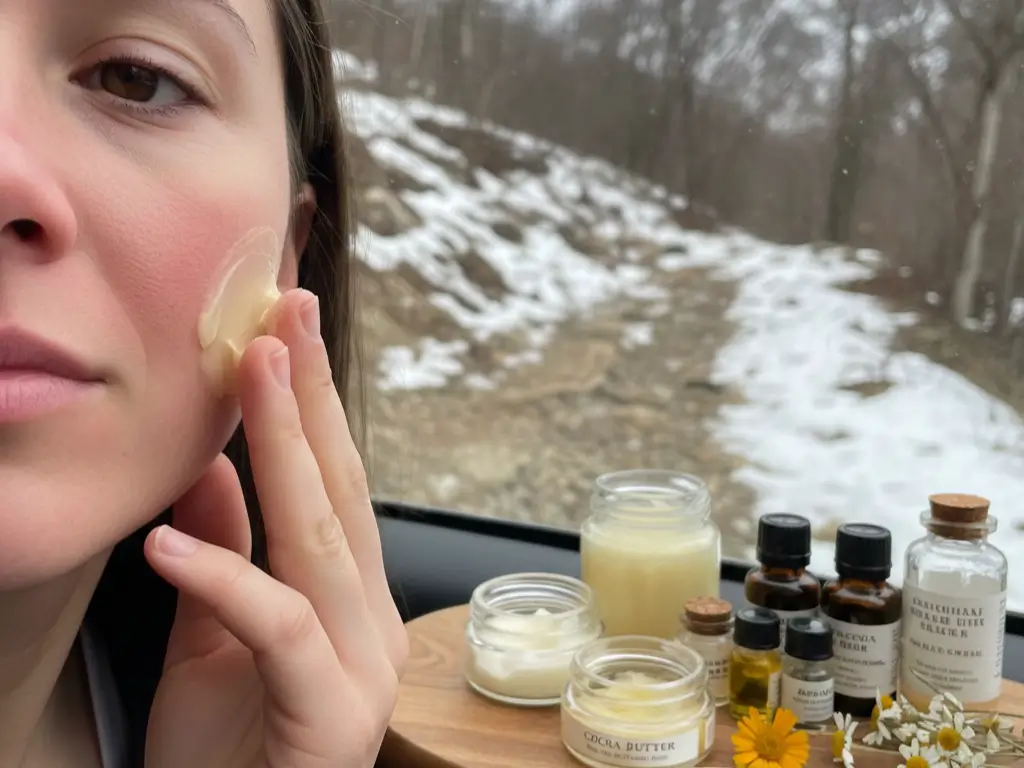
Last February, I stepped off a mountain trail with a face that looked like I’d pressed it against a hot stovetop. My cheeks burned crimson. My skin felt tight enough to crack. I’d spent six hours in 15 mph winds without realizing the damage until I reached my car’s rearview mirror.
That experience taught me something important: windburn isn’t sunburn, and treating it the same way doesn’t work.
Soothing windburn naturally comes down to one principle: repairing your skin’s damaged barrier with lipid-rich balms and oils that replace what the wind stripped away.
This guide walks you through exactly which oils and balms work best for wind-damaged skin, why they work, and how to build a simple recovery routine. I’ll also share a DIY balm recipe I developed after that brutal hiking day, one that’s become my cold-weather essential.
If your windburn involves blistering, extreme swelling, or doesn’t improve within a few days, that’s your signal to see a dermatologist. We’re focusing on typical windburn that responds well to natural care.
What Causes Windburn and Why It’s Different From Sunburn
Windburn occurs when cold, dry wind strips protective oils from your skin’s outer layer, causing inflammation, redness, and tightness. Unlike sunburn, which involves UV radiation damage to skin cells, windburn is primarily a barrier-damage issue requiring lipid replacement rather than cell repair.
Most people reach for aloe vera when their face feels raw from wind exposure. That’s the sunburn instinct kicking in. But here’s what I learned the hard way: aloe vera’s water-based, cooling nature actually works against windburn recovery.
Your skin has a protective barrier called the stratum corneum. Think of it as a brick wall where skin cells are the bricks and natural oils are the mortar. Wind literally blows that mortar away.
According to dermatological research, wind exposure increases transepidermal water loss (TEWL), basically, moisture escaping from your skin at a much faster rate. Cold temperatures make this worse by slowing your skin’s natural oil production.
| Factor | Sunburn | Windburn |
| Primary Cause | UV radiation damage | Barrier stripping from wind |
| Cellular Impact | DNA damage to skin cells | Lipid loss from outer layer |
| Best Treatment Focus | Cooling, hydration, cell recovery | Occlusion, lipid replacement |
| What Works Best | Aloe, light lotions, hydrators | Rich balms, oils, occlusives |
| Healing Timeline | 3-7 days | 2-4 days with proper care |
Understanding this difference changed everything about how I approach windburn recovery. Instead of hydrating and cooling, I focus on sealing and rebuilding, and that means reaching for very different products.
For anyone dealing with weather-related skin challenges, understanding how climate affects your skincare needs provides helpful context for year-round protection.
Best Oils for Windburn Relief and Barrier Repair
The most effective oils for windburn contain high concentrations of fatty acids that mimic your skin’s natural lipids. Rosehip seed oil, marula oil, and sea buckthorn oil stand out for their barrier-repairing properties, while heavier options like avocado oil provide immediate protective occlusion.
Not all oils perform equally when your skin is wind-damaged. I’ve tested dozens, and the winners share specific characteristics.
What Makes an Oil Effective for Windburn
Your skin barrier runs on three types of lipids: ceramides, cholesterol, and fatty acids. Wind exposure depletes fatty acids first. The oils that work best for windburn contain oleic acid, linoleic acid, and palmitic acid, the same fatty acids your skin makes naturally.
Here’s my ranking based on both research and personal testing:
Tier 1: Barrier Repair Champions
- Rosehip seed oil – High in linoleic acid, absorbs well, clinically studied for barrier function
- Sea buckthorn oil – Contains rare palmitoleic acid that closely matches human skin lipids
- Marula oil – Excellent oleic acid content plus antioxidants for inflammation
Tier 2: Protective Occlusives
- Avocado oil – Heavy, forms protective film, ideal for severe windburn
- Jojoba oil – Actually a wax ester, closely mimics natural sebum
- Argan oil – Balanced fatty acid profile with vitamin E
For a deeper dive into how different facial oils work for specific skin concerns, I’ve written a complete breakdown. You’ll find that oils behaving differently on windburn versus everyday dryness.
How I Use These Oils
When my face feels raw from wind exposure, I layer strategically. First, a lighter oil like rosehip. Then, about ten minutes later, a heavier oil like avocado to seal everything in. This combination addresses both barrier repair and moisture retention.
A few drops go a long way. Press the oil gently into damp skin, never rub windburned areas. The friction creates more irritation on already-compromised skin.
Always patch test any new oil on your inner arm 24 hours before applying to facial windburn. Even gentle botanicals can cause reactions in some people, and irritated skin tends to be more reactive.
If you’re interested in expanding your oil collection, exploring botanical oils from different regions offers options you might not find at typical retailers.
Rich Balms That Heal Wind-Damaged Skin
Thick balms containing shea butter, beeswax, and calendula provide the occlusive seal wind-damaged skin desperately needs. Unlike lighter moisturizers, balms create a physical barrier that prevents further moisture loss while delivering concentrated lipids directly to damaged tissue.
Oils are excellent, but balms take windburn recovery further. They stay put. They don’t evaporate. They work overnight while you sleep.
The Science Behind Balm Effectiveness
Research on occlusive ingredients shows they can reduce transepidermal water loss by up to 98%. That’s significant when windburn essentially involves your skin leaking moisture constantly.
The best windburn balms combine:
- Butters (shea, cocoa, mango) for fatty acid delivery
- Waxes (beeswax, candelilla) for occlusive protection
- Healing botanicals (calendula, chamomile) for inflammation
Speaking of butters, understanding the differences between shea, cocoa, and mango butter helps you choose the right one for your skin type. Shea works best for most windburn cases because it absorbs better than cocoa butter.
My Go-To DIY Windburn Balm Recipe
After that terrible hiking experience, I developed this balm recipe. It’s become something I make every October and keep by my bedside through winter.
The Lipid Repair Balm
Ingredients:
- 2 tablespoons shea butter (raw, unrefined)
- 1 tablespoon beeswax pellets
- 1 tablespoon calendula-infused oil
- 1 teaspoon rosehip seed oil
- 4 drops chamomile essential oil (optional)
Method:
- Melt shea butter and beeswax in a double boiler over low heat
- Remove from heat once fully liquid
- Stir in calendula oil and rosehip oil
- Add essential oil if using (skip for very sensitive skin)
- Pour into a small tin or jar
- Let solidify at room temperature for 2-3 hours
This makes about 2 ounces, enough for a full winter of windburn incidents. Apply a thin layer to clean, slightly damp skin before bed.
For more guidance on working with botanical butters in DIY formulations, the principles apply to any healing balm you want to create.
Calendula deserves special mention here. This humble flower contains compounds that research links to wound healing and barrier repair. I use calendula-infused oil as my base for almost every healing product I make.
How to Create a Windburn Recovery Routine
An effective windburn recovery routine prioritizes gentle cleansing, layered hydration, and occlusive sealing, typically requiring 2-4 days of consistent care for full recovery. Avoid active ingredients, harsh cleansers, and excessive touching during the healing process.
When your skin is wind-damaged, less is more. I’ve made the mistake of throwing every healing product at my face simultaneously. It backfires.
The 48-Hour Windburn Recovery Protocol
Hours 0-12 (Immediate Response)
- Rinse face with lukewarm water only, no cleanser
- Apply a hydrating layer: pure aloe (small amount) or glycerin-based mist
- Follow immediately with facial oil, pressing gently
- Seal with balm, focusing on worst areas
Understanding how humectants support hydration helps here. Glycerin and hyaluronic acid draw moisture, but without oils and balms on top, they can actually dehydrate windburned skin further in dry conditions.
Hours 12-48 (Active Repair)
- Gentle cream cleanser only (skip in the morning if skin feels okay)
- Repeat layering: hydrator → oil → balm
- Apply balm more heavily at night
- Avoid makeup, sunscreen with chemical filters, or any “active” products
Days 2-4 (Recovery Phase)
- Gradually reintroduce regular products
- Continue with extra oil in your routine
- Watch for lingering sensitivity
What to Avoid
Your skin barrier is compromised. Certain ingredients that normally benefit your skin can cause stinging or further damage right now:
- Retinoids and retinol alternatives
- Vitamin C serums
- AHAs and BHAs
- Physical exfoliants
- Fragrance-heavy products
- Alcohol-based toners
Once your windburn heals, rebuilding your skin barrier through consistent care prevents future damage from being as severe.
When Natural Remedies Aren’t Enough
Seek professional care if windburn involves blistering, doesn’t improve within 4-5 days, shows signs of infection (increased swelling, pus, fever), or affects your eyes. Severe cases may require prescription treatments that natural remedies can’t provide.
Natural oils and balms work beautifully for typical windburn. But sometimes skin damage goes beyond what home care can handle.
See a dermatologist if you experience:
- Blistering or open sores
- Windburn covering large body areas
- No improvement after 4-5 days of consistent care
- Signs of infection: warmth, pus, spreading redness
- Eye involvement or vision changes
- Accompanying frostbite symptoms (numbness, white patches)
Severe windburn occasionally requires prescription-strength anti-inflammatory creams or even oral medications. There’s no shame in seeking professional help, I’ve done it when windburn combined with cold injury after a particularly rough ski day.
For anyone dealing with various skin concerns, exploring botanical solutions matched to specific issues helps build a complete approach to skin health.
Building Long-Term Protection
That mountain trail taught me windburn recovery, but it also taught me prevention. Now I never venture into cold, windy conditions without a protective layer of balm on exposed skin.
Here’s what I want you to take away: windburn is a barrier problem, and barriers need lipids. Rich oils and balms aren’t just soothing, they’re directly replacing what wind stole from your skin.
- Assess what oils and butters you already have. Shea butter and any facial oil make a good starting point.
- Try the layering method, hydrator, oil, balm, on any current windburn or dry patches.
- Consider making or buying a dedicated windburn balm before your next outdoor winter adventure.
For more natural skincare approaches and ingredient guidance, beautyhealingorganic.com offers extensive resources on oils, butters, and their applications.
Your skin knows how to heal itself. Sometimes it just needs the right raw materials to work with.
SOURCES CITED
- American Academy of Dermatology. Skin barrier function and transepidermal water loss research. AAD.org.
- Proksch, E., Brandner, J.M., Jensen, J.M. (2008). The skin: an indispensable barrier. Experimental Dermatology, 17(12), 1063-1072.
- Lodén, M. (2003). Role of topical emollients and moisturizers in the treatment of dry skin barrier disorders. American Journal of Clinical Dermatology, 4(11), 771-788.
4. Lin, T.K., Zhong, L., Santiago, J.L. (2017). Anti-Inflammatory and Skin Barrier Repair Effects of Topical Application of Some Plant Oils. International Journal of Molecular Sciences, 19(1), 70. - Nicolaus, C., et al. (2017). In vitro studies to evaluate the wound healing properties of Calendula officinalis extracts. Journal of Ethnopharmacology, 196, 94-103.