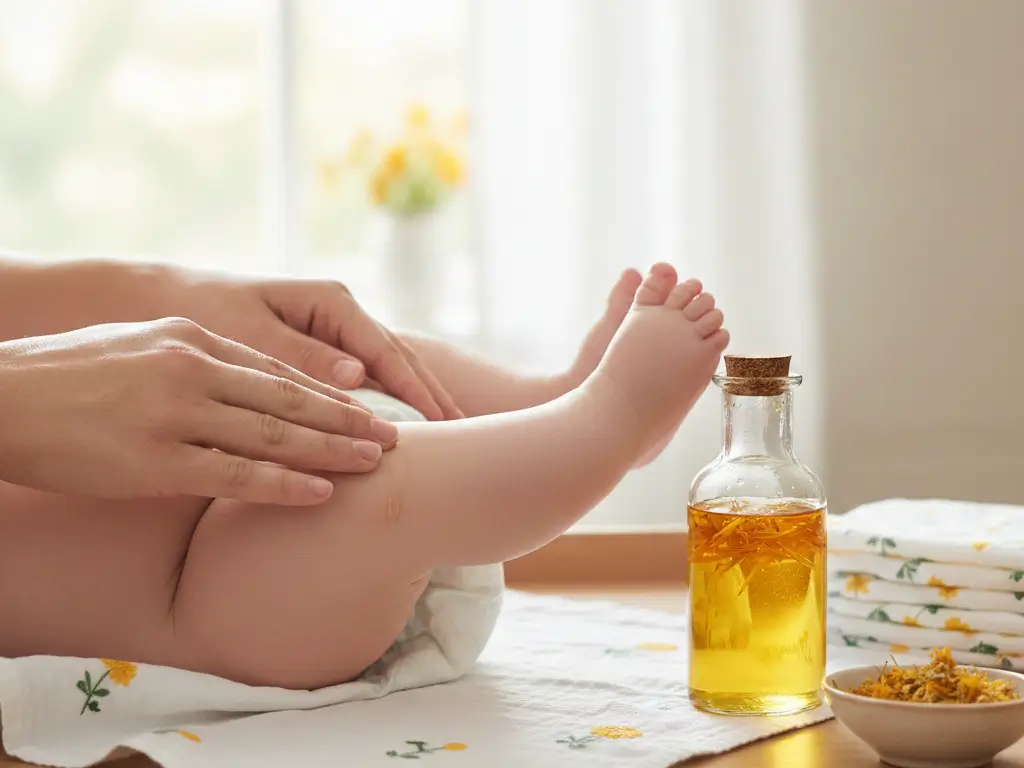
Calendula-infused oil uses the lipid-soluble compounds of the marigold flower to potentially soothe inflammation and support skin barrier repair. Unlike essential oils, it is generally gentle enough for infants when patch-tested. Apply a thin layer to clean, dry skin at diaper changes to create a moisture barrier and reduce redness associated with common irritant diaper dermatitis.
This article provides educational information about calendula-infused oil and infant skincare. It is not intended to diagnose, treat, cure, or prevent any medical condition or disease. Always consult a licensed pediatrician or healthcare professional before applying new products to an infant’s skin, especially if the skin is broken or infected. Individual results vary. If your baby has persistent symptoms, fever, or spreading redness, seek professional medical advice immediately.
Parents and caregivers looking for evidence-based information on supporting infant skin health using botanical oils. This guide addresses common irritant diaper dermatitis only. It does not cover treatment for yeast infections, bacterial infections, or severe allergic reactions, which require medical intervention.
Why Parents Turn to the “Mother of the Skin”
When you lift your baby’s legs during a diaper change and see that angry, inflamed redness, the instinct to fix it is visceral. In the search for relief, many parents look past standard petroleum jellies toward botanical solutions. Among them, Calendula officinalis (pot marigold) is often cited as the gold standard—sometimes called the “mother of the skin.”
But in the world of natural skincare, “natural” does not automatically mean “safe,” especially for the delicate, permeable skin barrier of a newborn.
While research suggests calendula has potent anti-inflammatory properties, the way it is prepared matters. There is a massive difference between a harsh essential oil and a gentle infused oil. This guide strips away the marketing fluff to examine the science, safety, and proper application of calendula oil for your little one.
Understanding Diaper Rash and Calendula Science
Diaper dermatitis is typically caused by prolonged exposure to moisture, friction, and enzymes in waste. Research indicates that calendula contains triterpenoids (like faradiol esters) which may inhibit inflammation. A 2012 study found calendula cream to be effective in reducing diaper rash symptoms, suggesting it supports the skin’s natural healing process.
The Mechanism of Irritation
To treat the problem, you have to understand the enemy. Diaper rash (diaper dermatitis) is largely a barrier failure. The combination of wetness, increased pH from urine, and fecal enzymes breaks down the stratum corneum (the outer skin layer).
Why Calendula?
Calendula isn’t just a pretty flower. Its petals contain specific bioactive compounds:
- Triterpenoids (Faradiol esters): The heavy lifters for reducing inflammation.
- Flavonoids: Antioxidants that protect cells from damage.
- Saponins: Compounds that may offer mild antimicrobial properties.
Evidence Check:
A comparative study published in the Scientific World Journal compared calendula extract to aloe vera for treating diaper dermatitis. The results showed that while both were effective, the calendula group saw a significant reduction in rash sites, supporting its traditional use as a soothing agent.
Note: This applies to Calendula officinalis, not other marigold varieties like Tagetes, which can be irritating.
Safety First: Is Calendula Safe for Your Baby?
Calendula is generally recognized as safe for topical use on infants, but risks exist. The primary risk is an allergic reaction, particularly if the baby is sensitive to plants in the Asteraceae/Compositae family (ragweed, daisies, chrysanthemums). Parents must distinguish between infused oil (safe) and essential oil (unsafe for direct infant use).
The Asteraceae Warning
If you have a history of ragweed allergies in the family, proceed with caution. Cross-reactivity is real. While rare in topical oil applications compared to airborne pollen, a baby’s immune system is still developing.
Infused Oil vs. Essential Oil: A Critical Distinction
This is where many DIY attempts go wrong.
- Essential Oil: A highly concentrated volatile compound distilled from the plant. Too potent to use undiluted on a baby. High risk of chemical burns or sensitization.
- Infused (Macerated) Oil: Dried calendula flowers are soaked in a carrier oil (like sunflower or olive oil) for weeks. The oil pulls out the soothing properties gently. This is the form used for baby care.
DANGER:
Never apply undiluted essential oils to a baby’s skin. Ensure any product you buy or make is a calendula-infused carrier oil, not a bottle of essential oil.
The Carrier Oil Matters: Choosing the Right Base
The oil used to extract the calendula is just as important as the flower. For babies, high-linoleic sunflower oil or jojoba oil are superior choices. They mimic the skin’s natural sebum and support barrier repair. Avoid high-oleic oils (like cheap olive oil brands) if the skin is already damaged, as they can sometimes disrupt the skin barrier further.
When selecting a calendula oil, check the ingredient list for the “carrier.”
- Sunflower Oil (High Linoleic): Research suggests this helps preserve the integrity of the stratum corneum and improves hydration without blocking pores.
- Sweet Almond Oil: Gentle and emollient, but a potential allergen for nut-sensitive families.
- Olive Oil: Traditionally used, but some studies suggest pure olive oil can slightly damage the skin barrier if used exclusively on infants due to its high oleic acid content.
Pro Tip: Look for “Helianthus Annuus (Sunflower) Seed Oil” as the first ingredient in your calendula infusion.
For more on how different botanical bases affect skin, read our guide on botanical oils for different skin needs.
Step-by-Step: How to Use Calendula Oil
- Clean the diaper area with water and a soft cloth (avoid wipes with alcohol).
- Pat dry completely—moisture is the enemy.
- Apply a small amount of calendula-infused oil to the affected area.
- Allow it to absorb for a moment.
- Optionally, seal with a zinc oxide cream if the rash is severe.
Step 1: The Gentle Cleanse
When skin is raw, even water can sting. Use a soft muslin cloth or a cotton ball soaked in lukewarm water. Avoid scrubbing.
Step 2: Absolute Dryness
Trapping moisture under oil creates a greenhouse for bacteria. Let the baby have some “air time” for 5-10 minutes. This is arguably the most effective treatment of all.
Step 3: The Calendula Application
Warm a few drops of the infused oil between your clean palms. Gently press or pat it onto the red areas. Do not rub. The oil acts as a semi-occlusive layer—it soothes the skin while allowing it to breathe, unlike heavy petroleum products.
Step 4: The Barrier (Optional)
If the rash is “wet” or very angry, the oil alone might not provide enough protection against the next diaper. You can layer a zinc-oxide based paste over the oil. The oil treats the skin; the paste blocks the urine.
Explore more about plant ingredients for the skin barrier to understand how layering works.
Mandatory Patch Testing Protocol
Before applying any new product to a baby’s diaper area, test it on a small, safe spot. Apply a dime-sized amount of calendula oil to the baby’s inner arm or leg. Wait 24 hours. If redness, bumps, or itching appear, wash immediately and discontinue use.
CAUTION:
Do not skip the patch test. A baby’s diaper area is occluded (covered), which increases the absorption of anything you put on it. A reaction there will be more severe than on an arm.
- Select the Spot: Inner thigh or inner arm.
- Apply: A tiny dab of the oil.
- Wait: Monitor for 24 hours.
- Observe: Look for hives, redness, or fussiness indicating itch.
When to See a Pediatrician
Home remedies like calendula are for mild irritant dermatitis. Seek medical attention if the rash has blisters, pustules (pimples), bright red plaques with satellite spots (yeast), or if the baby has a fever. Also consult a doctor if the rash does not improve after 3 days of home care.
Home care has limits. Calendula is supportive, not a replacement for antibiotics or antifungals when infection is present.
Watch for these signs:
- Candida (Yeast): Bright beefy red rash with smaller red dots scattered around the edges (“satellite lesions”). Oil may make this worse by trapping moisture.
- Impetigo/Bacteria: Yellow crusting, weeping fluid, or blisters.
- Systemic Illness: Fever, lethargy, or if the baby seems in pain when urinating.
If you suspect a yeast infection, your pediatrician may prescribe an antifungal. You can ask them if using organic ingredients for sensitive skin is appropriate once the infection clears.
Making Your Own vs. Buying Commercial
Buying a reputable, certified organic calendula oil is safer for most parents to ensure sterility and proper dosage. DIY infusions run the risk of bacterial growth if the flowers weren’t perfectly dried or if water was introduced during the process.
If You Buy:
Look for:
- Certifications: Organic (crucial to avoid pesticides on baby skin).
- Ingredients: Simple list. Calendula officinalis flower extract + Carrier oil (Sunflower/Jojoba) + Vitamin E (Tocopherol) for preservation.
- Packaging: Dark glass bottles to protect the light-sensitive triterpenoids.
If You DIY (Safety Note):
Only use completely dried organic flowers. Any moisture in the petals can cause botulism or mold growth in the oil. This is a significant risk for infant products. For safe DIY practices, review our guide on natural preservatives to understand the risks of water-free formulations.
A Gentle Tool for the Parenting Toolkit
Calendula-infused oil represents the best of botanical skincare: it’s time-tested, supported by emerging research, and, when used correctly, gentle enough for our most vulnerable family members. By choosing an infused oil over an essential oil, patch testing religiously, and knowing when to call the doctor, you can use this “mother of the skin” to bring comfort to your little one.
Skincare for babies is about doing less, not more. A simple, high-quality oil can often support the skin’s natural ability to heal itself better than a cocktail of synthetic fragrances and stabilizers.
- Check your current diaper cream ingredients. Does it contain fragrance? If so, stop using it.
- Purchase a high-quality, organic calendula-infused oil (remember: infused, not essential oil) or perform a patch test if you already have one.
- If your baby battles chronic diaper rash, consult your pediatrician to rule out food allergies or other underlying causes.
For more guidance on safe, botanical living for your family, explore our comprehensive collection at Beauty Healing Organic.
SOURCES CITED
- Panahi, Y., et al. (2012). A comparative study of the therapeutic effects of Aloe vera and Calendula officinalis on diaper dermatitis in children. The Scientific World Journal. https://www.ncbi.nlm.nih.gov/pmc/articles/PMC3335272/
- Cooke, A., et al. (2016). Olive Oil, Sunflower Oil or no Oil for Baby Dry Skin or Massage: A Pilot, Assessor-blinded, Randomized Controlled Trial (the Oil in Baby SkincaRE [OBSeRvE] Study). Acta Dermato-Venereologica. https://pubmed.ncbi.nlm.nih.gov/26551528/
- European Medicines Agency. (2018). European Union herbal monograph on Calendula officinalis L., flos. https://www.ema.europa.eu/en/medicines/herbal/calendulae-flos
- American Academy of Dermatology Association. (n.d.). Diaper rash: How to treat. https://www.aad.org/public/everyday-care/itchy-skin/rash/diaper-rash-how-to-treat
- DermNet NZ. (2002). Compositae allergy. https://dermnetnz.org/topics/compositae-allergy