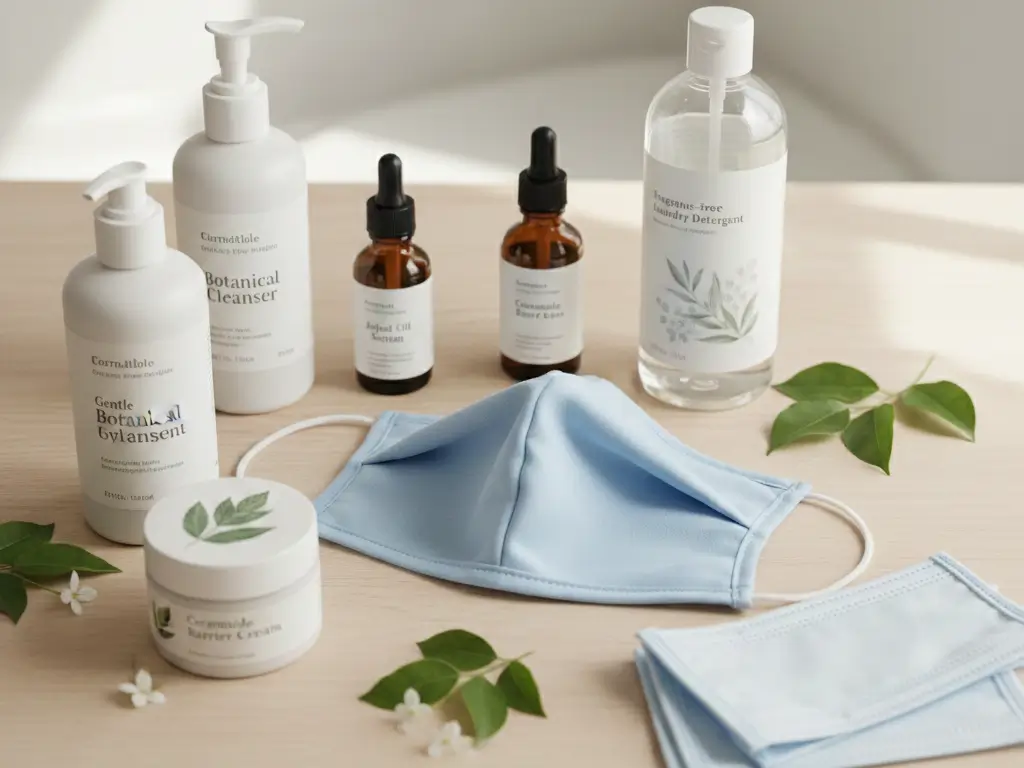
You might have noticed a frustrating pattern: you take excellent care of your skin, yet breakouts keep appearing exactly where your face mask sits. You aren’t imagining it, and you aren’t alone. This phenomenon, colloquially known as “maskne,” has become a ubiquitous skin concern in recent years.
To prevent maskne, adopt a “breathable” skincare routine: wash your face before and after wearing a mask using a gentle cleanser, apply a lightweight barrier-supporting moisturizer (like one with ceramides or jojoba oil) to reduce friction, avoid heavy makeup under the mask, and wash reusable masks daily with fragrance-free detergent.
This article provides educational information about skincare and hygiene practices. It is not intended to diagnose, treat, cure, or prevent any medical condition or disease. Always consult a licensed healthcare professional or dermatologist before making any health decisions, starting new treatments, or changing existing medical regimens. Individual results and health needs vary. If you have severe acne, persistent symptoms, or medical concerns, seek professional medical advice.
Understanding the “Greenhouse Effect” on Your Chin
Before you can effectively treat maskne, you have to understand why it’s happening. It isn’t just standard acne. In dermatology, this is often classified as acne mechanica, breakouts triggered by heat, friction, and pressure.
When you breathe inside a mask, you create a trapped environment of heat and humidity. Dermatologists refer to this as a “microclimate.” This tropical environment on your chin causes three distinct problems:
- Friction: The fabric rubs against your skin barrier, creating micro-tears that let bacteria in.
- Occlusion: Sweat and oil are trapped against the skin, clogging pores.
- Bacterial Imbalance: The humid environment encourages the overgrowth of bacteria like C. acnes.
To combat this, you don’t just need “acne products.” You need a routine that specifically addresses barrier strength and breathability.
This guide is for individuals experiencing mild to moderate friction-induced breakouts or irritation from face masks. It is not intended for those with cystic acne, open wounds, or undiagnosed rashes, who should see a doctor.
The Botanical Strategy: Breathable Layering
The key to preventing maskne isn’t drying your skin out, it is protecting it with layers that breathe. Heavy, occlusive creams can trap heat further, worsening the greenhouse effect. Instead, we turn to botanical ingredients that mimic the skin barrier’s natural structure.
Step 1: The “Reset” Cleanse
Cleansing is non-negotiable, but stripping your skin is dangerous. If your barrier is dry, friction will damage it faster.
- What to use: A sulfate-free, pH-balanced cleanser.
- Botanical Star: Manuka Honey or Aloe Vera. These ingredients are humectants that cleanse without stripping natural oils.
- The Method: Wash your face immediately after removing your mask for the day. This removes the saliva, sweat, and bacteria that have accumulated.
For a deeper reset 1-2 times a week, consider using natural exfoliating acids like fruit enzymes. Avoid harsh physical scrubs, which can aggravate skin already sensitized by fabric friction.
Step 2: Friction Defense (The Most Important Step)
This is where most people go wrong. You need a barrier between the fabric and your pores. Think of this step as “lubrication” for your skin.
Apply a lightweight moisturizer 15 minutes before putting on a mask. Look for ingredients that reduce friction without clogging pores, such as squalane or jojoba oil.
- Jojoba Oil: Structurally similar to human sebum, facial oils like jojoba provide a slip that prevents chafing but remains non-comedogenic (won’t clog pores).
- Centella Asiatica (Gotu Kola): A powerhouse for wound healing, this botanical calms the inflammation caused by rubbing.
If you have sensitive skin, exploring clean beauty options for sensitive skin can help you find products free from synthetic irritants that might react with the heat under your mask.
Step 3: Targeted Botanical Actives
Once the barrier is secure, you can use specific botanicals to keep pores clear.
- White Willow Bark: A natural source of salicylates (precursors to salicylic acid). It gently exfoliates inside the pore lining to prevent clogs. You can read more about how white willow bark extract functions as a gentle alternative to synthetic acne treatments.
- Green Tea Extract: Packed with antioxidants and tannins, it helps control sebum production naturally.
- Tea Tree Oil: Known for its antimicrobial properties. However, use with caution, dilution is essential, as high concentrations under an occlusive mask can cause chemical burns.
Adjusting Your Routine: AM vs. PM
Your morning routine should focus on protection, while your evening routine should focus on repair.
| Time | Goal | Key Botanicals |
| Morning | Protection & Breathability | Aloe, Jojoba, Green Tea, Zinc Oxide |
| Evening | Repair & Decongestion | Willow Bark, Chamomile, Clays |
Pro Tip: In the evening, if your skin feels congested, a skin microbiome probiotic approach can help restore the bacterial balance disrupted by the humidity of the mask.
The Fabric Factor: It’s Not Just Skincare
You cannot out-skincare a dirty mask. The material touching your face is just as critical as the serum you apply.
Material Matters
Synthetic fabrics like polyester can be occlusive, trapping heat and sweat. Natural fibers like cotton or silk are generally more breathable. A silk pillowcase is often recommended for acne prevention for the same reason a silk mask liner works: it reduces friction and drag on the skin.
Hygiene Habits
- Wash Daily: Treat your mask like underwear. Wash it after every single use.
- Detergent Choice: Use a fragrance-free, hypoallergenic detergent. Residue from fabric softeners can get trapped in the mask fibers and irritate the skin when heat and sweat are introduced.
- Fit: A mask should fit snugly but not be so tight that it bruises the skin. If you need to adjust it constantly, you are touching your face and transferring bacteria.
Safety & Risks: When Botanicals Aren’t Enough
While botanical skincare is effective for mild maskne, it has limitations. It is vital to recognize when a reaction is cosmetic and when it is a medical issue requiring professional help.
When to Seek Medical Attention:
- Cystic Lesions: Deep, painful lumps under the skin that do not come to a head.
- Infection Signs: Weeping, yellow crusting (honey-colored), excessive heat, or spreading redness.
- Perioral Dermatitis: A rash around the mouth that looks like acne but consists of small, red, itchy bumps. Steroids and heavy creams can make this worse.
- No Improvement: If you adjust your routine and hygiene for 4-6 weeks with no change.
If you suspect your redness is related to rosacea rather than acne, standard acne treatments might be too harsh. Look into organic ingredients for rosacea or consult a dermatologist.
Specific Skin Considerations
For Oily Skin Types
If you are prone to excess oil, the “greenhouse effect” is your enemy. Focus on “dry oils” high in linoleic acid, like grapeseed or hemp seed oil. You might also benefit from botanical extracts for skin concerns that specifically target sebum regulation, such as niacinamide (often derived from plants or yeast).
For Dry/Sensitive Skin
Your risk isn’t just acne; it’s raw, chafed skin. Your barrier is likely compromised. Focus on soothing ingredients. A simple DIY approach, like a rosewater and glycerin mist, can provide hydration, but ensure you seal it in with a moisturizer so it doesn’t evaporate and dry you out further.
Managing Stress and Diet
Stress releases cortisol, which increases oil production. The stress of the pandemic or daily life contributes to maskne just as much as the mask itself. Incorporating mindful skincare to reduce stress can be a helpful holistic addition. Furthermore, gut health plays a role; looking into the gut-skin axis may provide internal support for clearer skin.
Balance is Key
Preventing maskne doesn’t require a ten-step chemical peel routine. In fact, aggressive treatment often backfires by destroying the skin barrier you desperately need for protection against friction. By adopting a breathable, botanical approach, cleansing gently, lubricating with plant oils, and keeping your mask hygiene impeccable, you can maintain clear skin while staying safe.
Next Steps:
- Today: Check your mask stash. Wash reusable ones with fragrance-free detergent.
- This Week: Switch to a gentle, non-stripping cleanser if you aren’t using one already.
- When to call a pro: If your breakouts are painful, deep, or spreading despite these changes, make an appointment with a dermatologist.
For more comprehensive guidance on building a natural routine, explore our resources at Beauty Healing Organic.
SOURCES CITED
- American Academy of Dermatology Association. (n.d.). Face mask skin problems: DIY treatment. AAD. https://www.aad.org/public/everyday-care/skin-care-secrets/face/prevent-face-mask-skin-problems
- Yan, Y., et al. (2020). The novel coronavirus outbreak and the dermatological challenges for healthcare professionals. Journal of the American Academy of Dermatology. https://www.jaad.org/article/S0190-9622(20)30392-3/fulltext
- Teo, W. L. (2021). Diagnostic and Management Considerations for “Maskne” in the Era of COVID-19. Journal of the American Academy of Dermatology. https://www.ncbi.nlm.nih.gov/pmc/articles/PMC7531776/
- Mills, O. H., & Kligman, A. (1975). Acne mechanica. Archives of Dermatology. (Referenced via NCBI context on friction-induced acne).