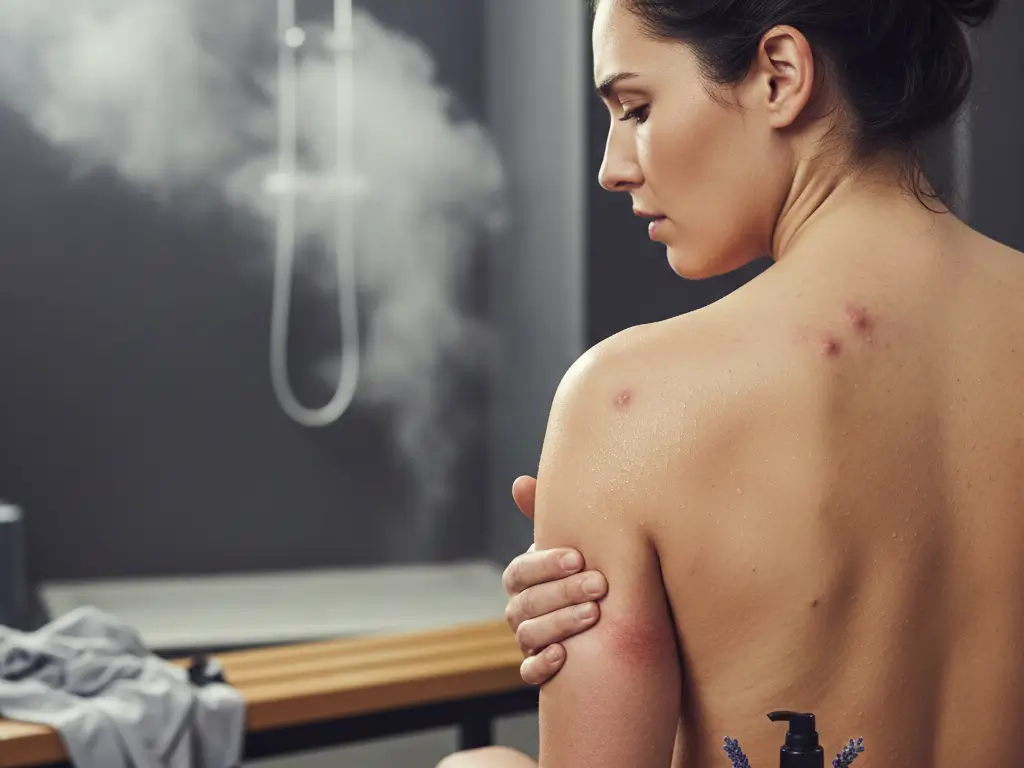
You finish a brutal training session, peel off your soaked shirt, and notice it: another cluster of angry red bumps on your back. Or maybe it’s that raw, burning patch on your inner thighs that makes every step uncomfortable for the next two days.
Body acne and chafing aren’t separate problems requiring different solutions. They’re two symptoms of the same root issue, friction, moisture, and bacteria having a party on your skin. And the standard advice (“shower immediately after working out!”) ignores the reality that most of us can’t always hit the shower within 30 seconds of our last rep.
Athletes face body acne and chafing because sweat, friction, and bacteria create the perfect storm for skin irritation, but strategic timing and natural ingredients can prevent both issues simultaneously.
I’ve watched too many active people waste money on expensive body washes that don’t work, or worse, strip their skin so aggressively that they create new problems. What actually works is understanding when your skin is vulnerable and protecting it at those specific moments.
Why Do Athletes Get More Body Acne and Chafing?
Athletes experience more body acne and chafing because repetitive motion creates friction while sweat increases skin pH, creating an environment where acne-causing bacteria thrive and skin barriers break down faster than they can repair.
The combination is brutal. Every time you run, cycle, or lift, you’re creating micro-friction on your skin. Add sweat, which contains salt, urea, and raises your skin’s pH from around 5.5 to 6.5 or higher, and you’ve created ideal conditions for Cutibacterium acnes (the bacteria behind acne) and Staphylococcus (which loves inflamed skin).
What surprised me when researching this was how much your clothing contributes. That polyester compression shirt traps moisture against your skin, preventing evaporation. Your skin stays wet longer, which softens the outer layer (called maceration). Soft, wet skin chafes easier AND provides perfect conditions for bacterial overgrowth.
Here’s the part most articles skip: timing matters more than products. Your skin is most vulnerable in three specific windows:
- Pre-workout: When you’re about to create friction
- During exercise: When sweat accumulates and friction peaks
- Post-workout: The 1-3 hour window when bacteria multiply fastest
Most people only address the post-workout phase. That’s like locking your front door after burglars are already inside.
The areas that get hit hardest, back, chest, shoulders, inner thighs, underarms, aren’t random. They’re where fabric rubs repeatedly AND where you have the highest concentration of sebaceous glands. Understanding how your skin microbiome reacts to exercise is key to prevention.
I’ve noticed that many athletes also struggle with issues like keratosis pilaris, which friction and trapped sweat can aggravate. The approach I’m sharing addresses these connected issues.
The 3-Zone Timeline: When Prevention Actually Matters
Effective prevention happens in three zones, pre-workout barrier creation, mid-workout moisture management, and the critical 60-minute post-workout window when bacterial overgrowth occurs fastest.
Stop thinking about body acne and chafing prevention as a single “after shower” routine. Here’s the framework that actually works:
Zone 1: Pre-Workout (15 minutes before)
This is when you create barriers. I know what you’re thinking, who has time for skincare before working out? You need about 90 seconds.
Apply a thin layer of natural barrier protection to high-friction areas: inner thighs, underarms, under sports bra bands, between buttocks if you’re a runner. Natural options include:
- Coconut oil mixed with arrowroot powder (absorbs excess moisture while providing slip)
- Shea butter with a drop of tea tree oil (antimicrobial protection)
- Botanical butters like mango or cupuacu for sensitive skin
The goal isn’t heavy coverage, it’s a protective layer that reduces friction coefficient. Think of it like lubricating a machine before use.
Zone 2: During Workout (as needed)
For sessions longer than 60 minutes, bacteria start partying. If possible, pat (don’t wipe) sweat with a clean towel. Wiping creates more friction.
If you’re doing multi-hour endurance work, reapply barrier cream at the halfway point. I learned this from ultrarunners who understand that chafing at mile 3 becomes unbearable by mile 20.
Zone 3: Post-Workout (the “Golden Hour”)
This is your critical window. Whether you can shower immediately or not, you need to address bacterial overgrowth within 60 minutes.
If you CAN shower immediately:
- Use lukewarm (not hot) water first to rinse salt and sweat without opening pores too aggressively
- Apply a natural antibacterial cleanser (more on specific ingredients below)
- Finish with cool water to close pores
- Apply treatment ingredients while skin is still slightly damp
If you CAN’T shower for 1-3 hours (the reality for many):
- Change out of sweaty clothes immediately (this is non-negotiable)
- Use natural antibacterial wipes or a spray on acne-prone areas
- Apply moisture-wicking powder to prevent continued maceration
- Shower as soon as possible
The biggest mistake I see? People leave sweaty workout clothes on because they’re “going to shower in an hour anyway.” That extra hour of bacterial growth causes more damage than you can undo with any cleanser.
Understanding proper body mapping for acne helps you identify your specific vulnerable zones. Your pattern of breakouts tells you where friction and bacterial overgrowth are worst.
Natural Ingredients That Work for Both Acne and Chafing
Witch hazel, tea tree oil, white willow bark (natural salicylic acid), bentonite clay, and niacinamide address both bacterial overgrowth and inflammation while supporting skin barrier repair, making them dual-action solutions for athletes.
Here’s what frustrates me about most “natural athlete skincare” advice: it treats acne and chafing as completely separate problems. You end up with 12 different products when you need maybe four strategic ingredients.
These ingredients work for BOTH issues because they address the underlying causes:
For Immediate Post-Workout
Witch hazel (alcohol-free): This is your first line of defense when you can’t shower immediately. It’s antibacterial, anti-inflammatory, and doesn’t strip your skin. I keep a spray bottle in my gym bag. Studies show witch hazel reduces skin bacteria by up to 30% within minutes.
Tea tree oil (diluted): Mix 2-3 drops with a carrier oil or add to your body wash. It’s bactericidal against C. acnes and helps prevent chafing wounds from getting infected. Never apply undiluted, I learned that lesson the painful way.
For Cleansing
White willow bark extract: This is natural salicylic acid. It exfoliates dead skin cells that trap bacteria, but it’s gentler than synthetic salicylic acid. Look for body washes with 0.5-2% concentration.
Bentonite or kaolin clay: For weekly deep treatment, mix clay with apple cider vinegar or water to create a paste. Apply to acne-prone areas for 10 minutes. Clay absorbs excess sebum and bacteria, think of it as a reset button.
For Repair and Prevention
Niacinamide: This deserves more attention in athlete skincare. It regulates sebum production (preventing acne), reduces inflammation (helping chafing heal), and strengthens skin barrier (preventing both). Use 4-5% concentration in a lightweight serum or lotion.
Calendula oil: For areas that are already irritated or showing early chafing. It’s anti-inflammatory and promotes healing without clogging pores. I’ve used calendula preparations for everything from minor chafing to post-race skin damage.
One ingredient that surprised me: arnica gel. Most people use it for muscle soreness, but it’s incredibly effective for chafing prevention because it reduces inflammation before it starts. Apply it to areas prone to rubbing before long workouts.
DIY Recipe That Works
Mix these in a small container:
- 2 oz witch hazel
- 1 oz aloe vera gel
- 10 drops tea tree oil
- 5 drops lavender oil
Spray or apply with cotton pads to back, chest, and shoulders post-workout. This costs about $8 to make and lasts 3-4 weeks. You can find more DIY options in this body care guide.
The Post-Workout “Golden Hour” Protocol
Within 60 minutes of finishing exercise, remove wet clothing, cleanse with antibacterial ingredients, apply treatment products to damp skin, and choose breathable fabrics, this window determines whether bacteria causes breakouts or gets eliminated.
I call it the Golden Hour because what you do in the first 60 minutes post-workout matters more than anything you do the rest of the day.
Here’s the step-by-step that actually fits into real life:
Minute 0-5: Strip and Prep
Remove all sweaty clothing immediately. This is the most important step. If you absolutely can’t shower yet, change into clean, dry, breathable clothes. Your sweaty compression shirt is a bacterial incubator.
If your gym has them, use natural body wipes on acne-prone areas. Look for ones with witch hazel or tea tree, not alcohol or harsh preservatives.
Minute 5-15: Cleanse
Lukewarm shower first, hot water feels good but opens pores too aggressively when they’re full of sweat and bacteria. Rinse thoroughly, especially areas where sports bra bands, waistbands, or straps sit.
Use a natural antibacterial body wash on problem areas. For areas not prone to acne, a gentle cleanser is fine. You don’t need to strip your entire body.
Here’s the counterintuitive part: don’t scrub aggressively. You want to remove bacteria and sweat, not damage skin that’s already been through friction stress. I use a soft konjac sponge for gentle exfoliation.
Minute 15-20: Treat
This is where most people stop too soon. Your pores are clean but still open. This is your opportunity.
Apply treatment products while skin is still slightly damp:
- Niacinamide serum or lotion on acne-prone areas (back, chest, shoulders)
- Anti-chafing barrier balm on friction points
- Light moisturizer everywhere else to restore barrier
The damp skin helps ingredients penetrate better. But wait 2-3 minutes before getting dressed so products absorb properly.
The Rest of the Day
Wear breathable, loose-fitting clothes for a few hours post-workout if possible. Your skin is recovering from friction stress, don’t add more.
If you work out in the morning and need to get to work, focus on breathable fabrics in your professional clothes. Cotton undershirts, moisture-wicking dress shirts. Your skin is still slightly vulnerable for 2-3 hours.
For athletes dealing with severe or persistent body acne, the approach is similar to treating acne-prone skin on the face, consistency matters more than intensity.
Fabric Choices That Prevent Both Problems
Cotton for low-intensity work, technical moisture-wicking fabrics for high-sweat activities, and immediate post-workout changes matter more than any product, fabric choice can reduce chafing by up to 80% and body acne by 40-60%.
I’m going to say something unpopular: your expensive technical gear might be causing your problems.
Don’t get me wrong, moisture-wicking fabrics have their place. But I’ve watched people develop terrible back acne from wearing the same brand of polyester compression shirts that worked fine for years. Why? Because they wore them too long post-workout.
For Low-Intensity or Short Workouts (<45 minutes)
Cotton or cotton-blend actually works well. It absorbs sweat and breathes. Yes, it stays wet longer, but if you’re changing out of it within 15 minutes of finishing, that’s not a problem. Cotton gets unfairly blamed for issues that are actually timing problems.
For High-Intensity or Long Workouts (>60 minutes)
Technical moisture-wicking fabrics (polyester, nylon blends) move sweat away from skin. This prevents maceration during exercise. But, and this is critical, you need to remove these within 5-10 minutes of finishing. The same properties that wick sweat also trap bacteria against your skin once sweat production stops.
The Fabric Rules
- Seams matter more than you think: Flat-lock seams reduce friction by 60-70% compared to traditional seams. Check inside thighs, underarms, and anywhere elastic bands sit.
- Compression is a tool, not a default: Compression gear increases friction in exchange for support. Use it when you need it, not for every workout. I see people wearing compression everything for casual gym sessions where it’s creating more problems than it solves.
- Wash before wearing: New athletic gear has sizing chemicals and manufacturing residues. These irritate already-stressed skin. I learned this after breaking out in hives from a brand-new running shirt.
- Laundry mistakes: Use fragrance-free, dye-free detergent. Those “sport” detergents with heavy fragrances can irritate skin. More importantly, make sure you’re actually removing bacteria. Athletic fabrics need hot water (if care label allows) or a sport-specific enzyme detergent. Regular cold-water washing can leave bacteria in the fabric that recolonize your skin during your next workout.
For ideas on maintaining skin health overall, many athletes benefit from understanding their skin barrier and how to support it with natural ingredients.
What About Anti-Chafing Bands and Accessories?
Thigh bands, nipple guards, and anti-chafing tape work, but only if they’re made from breathable materials and you’re applying barrier protection underneath. The band itself can create new friction points if not used correctly.
Building Your Sustainable Routine
The difference between skin that breaks out after every workout and skin that handles athletic stress well isn’t genetics, it’s systems.
You don’t need 15 products or an hour-long post-workout routine. You need the right 3-4 natural ingredients applied at the right times, combined with smart fabric choices and respect for that post-workout Golden Hour.
Before your next workout, pick up witch hazel and tea tree oil. That’s it. Before you exercise, apply a thin barrier to friction points. After you finish, remove wet clothes immediately and use witch hazel on acne-prone areas. Notice what changes in the next week.
Add niacinamide lotion and evaluate your workout wardrobe. How old are those compression shirts? When do you actually change out of sweaty clothes? Adjust your timing and fabric choices based on what you learn.
When to Get Help
If you’re doing all of this and still dealing with severe body acne or chafing that breaks skin, see a dermatologist. Some athletes have underlying hormonal issues or conditions that need medical intervention. Natural prevention works for friction and bacterial acne, it’s not a replacement for treating underlying medical conditions.
The athletes I know who’ve solved these problems didn’t find a magic product at Beauty Healing Organic, they found a timing-based system that worked with their actual schedule. That’s what I hope you’ve gained from this guide: not another product to buy, but a framework for protecting your skin while you push your body.
Your skin recovers from workouts just like your muscles do. Give it the right support at the right time, and it’ll keep up with whatever you throw at it.