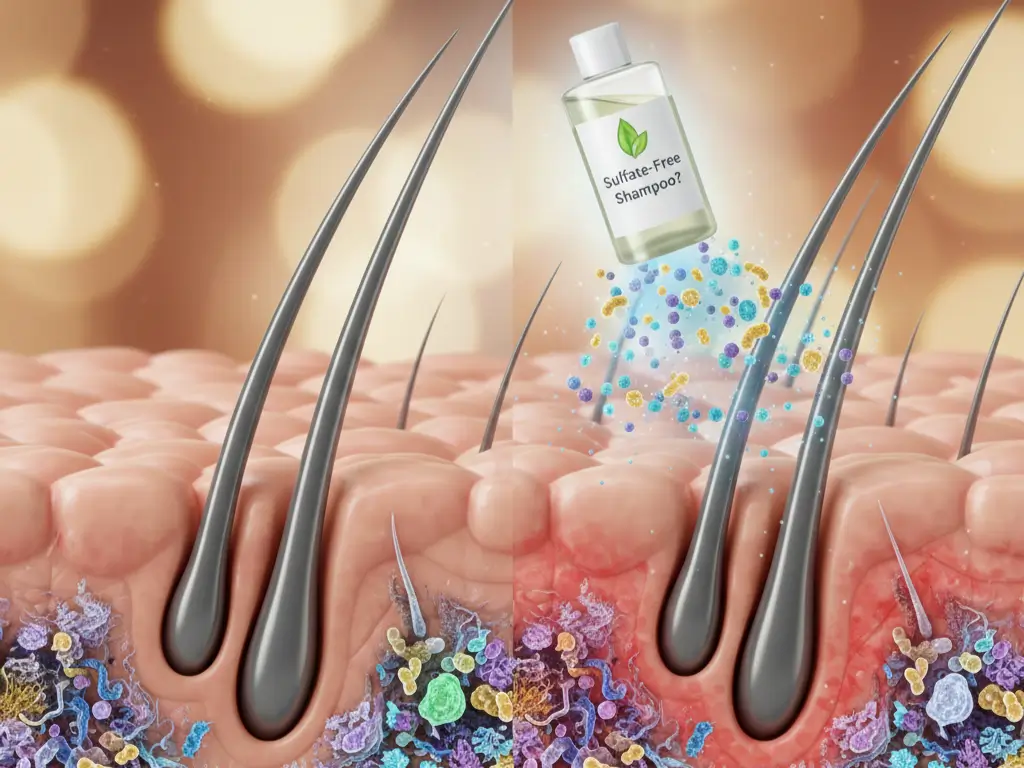
Your scalp hosts roughly one million bacteria per square centimeter. That’s not a contamination problem, it’s your body working exactly as designed. But when I tell clients their expensive sulfate-free shampoo might be destroying these beneficial microbes, they look at me like I’ve grown a second head.
Your scalp microbiome is the ecosystem of bacteria, fungi, and other microorganisms living on your scalp that regulate oil production, pH balance, and inflammation. Keeping it balanced requires protecting beneficial microbes through strategic washing, pH-appropriate products, and avoiding over-sanitization.
Here’s what changed my thinking about scalp health: I spent years recommending “clarifying” treatments and frequent washing for scalp issues. Then I started paying attention to the research on skin microbiomes. Turns out, we’ve been approaching scalp care the same way we approached gut health in the 1990s, trying to sterilize instead of cultivate.
The scalp microbiome directly affects hair growth, dandruff, inflammation, oiliness, and even hair loss. When balanced, these microscopic organisms form a protective barrier, maintain optimal pH, and prevent harmful bacteria from taking over. When disrupted, you get the cascade of issues most people blame on “sensitive scalp” or “bad genes.”
What Is Your Scalp Microbiome and Why Should You Care?
Your scalp microbiome is a diverse community of beneficial bacteria and fungi that maintain scalp health by regulating sebum, preventing pathogen overgrowth, and supporting the skin barrier. When balanced, it prevents dandruff, excess oil, inflammation, and supports healthy hair growth.
Think of your scalp as a garden, not a battlefield. A healthy garden has diverse plants, beneficial insects, and balanced soil. You don’t sterilize your garden, you cultivate the right conditions for good organisms to thrive and naturally crowd out the harmful ones.
Your scalp works the same way. The dominant residents include:
- Cutibacterium acnes (yes, the acne bacteria, but on your scalp, it’s helpful, breaking down sebum and maintaining pH)
- Staphylococcus epidermidis (produces antimicrobial peptides that fight harmful bacteria)
- Malassezia species (yeasts that become problematic only when overgrown, not inherently “bad”)
These microbes exist in specific ratios. When that balance shifts, you see symptoms: flaking, itching, excess oil, or paradoxically, extreme dryness. What surprised me during my research was discovering that “oily scalp” and “dry, flaky scalp” can both result from the same microbiome disruption, just manifesting differently based on your genetics and environment.
The microbiome maintains your scalp’s pH around 4.5-5.5 (slightly acidic). This acidity is crucial. It keeps harmful bacteria from colonizing while allowing beneficial species to flourish. When you disrupt this pH with alkaline products or over-washing, you’re essentially salting your garden.
According to research published in Scientific Reports (2021), people with seborrheic dermatitis and dandruff show significantly lower microbial diversity on their scalps compared to healthy controls. It’s not about having “bad” bacteria, it’s about losing the variety that keeps any one species from dominating.
clients with the most “high-maintenance” scalps usually have the most aggressive cleansing routines. They’re stuck in a cycle, disrupted microbiome causes symptoms, they cleanse more aggressively, which further disrupts the microbiome. Breaking this cycle requires understanding what your scalp actually needs, which brings us to assessment.
For more context on how microbial balance affects different body areas, check out Beauty Healing Organic, which explores natural approaches to skin health throughout the body.
How to Tell If Your Scalp Microbiome Is Out of Balance
Signs include persistent dandruff, itching, unusual oiliness or dryness, inflammation, scalp acne, or sudden sensitivity to products you previously tolerated. These symptoms indicate microbial imbalance rather than just “scalp type.”
Here’s the frustrating part: you can’t test your scalp microbiome at home with the same ease you’d test your gut microbiome. There are emerging services offering scalp microbiome analysis, but they’re expensive and not yet mainstream. For most people, symptom assessment is your best tool.
Physical signs of imbalance:
- Persistent flaking (not just winter dryness but year-round flakes that don’t respond to moisturizing)
- Itching without visible cause (no lice, no obvious dermatitis, just constant irritation)
- Rapid oil production (hair looks greasy 12-24 hours after washing)
- Paradoxical dryness (scalp feels tight and hair is dry despite oil production)
- Product sensitivity (suddenly reacting to products you’ve used for years)
- Small bumps or scalp acne (especially along the hairline)
- Thinning hair (not hereditary pattern baldness but overall density reduction)
What I find interesting is the timing. If your scalp issues appeared after a major change, new product, relocation to different climate, illness requiring antibiotics, or significant stress, that’s your clue. The microbiome responds to environmental shifts.
One client came to me after moving from humid Florida to dry Colorado. Her previously balanced scalp went haywire, severe flaking and itching. She assumed it was just the dry air and started washing more frequently with medicated shampoo. Actually made it worse. The climate change had shifted her microbiome composition, and the aggressive treatment prevented it from rebalancing naturally.
If you’re dealing with scalp issues that seem connected to broader skin concerns, understanding the skin microbiome and probiotic skincare might provide helpful context about how these systems work throughout your body.
The self-assessment test:
- How quickly does your scalp produce oil after washing? (Faster than 48 hours suggests possible imbalance)
- Do you have persistent symptoms despite changing products? (Suggests systemic issue, not product mismatch)
- Have your scalp symptoms appeared recently after years of normalcy? (Indicates disruption, not just genetics)
- Do symptoms improve when you travel or change routines? (Environmental or behavioral factor)
If you answered yes to two or more, microbiome imbalance is worth investigating.
The Biggest Mistakes That Destroy Your Scalp’s Good Bacteria
Over-washing, using high-pH products, applying harsh exfoliants, over-sanitizing, using very hot water, and not accounting for seasonal changes all disrupt beneficial scalp bacteria. Most people make these mistakes while trying to “fix” symptoms that are actually caused by these same behaviors.
This is where I have to deliver some uncomfortable truths. Many clean beauty practices, done with good intentions, wreck your scalp microbiome.
The Daily Wash Cycle
I know you’ve heard conflicting advice. “Wash daily to prevent buildup!” versus “Only wash weekly to preserve natural oils!” Here’s what nobody mentions: washing frequency should match your scalp’s current microbiome state and your lifestyle, not some universal rule.
Daily washing strips beneficial bacteria before they can colonize properly. This is especially true with shampoos containing surfactants (even gentle ones from sulfate-free formulations). Your scalp compensates by producing more oil, which feeds Malassezia overgrowth, which causes flaking, which makes you wash more. See the trap?
But, and this matters, if you’re genuinely dirty (heavy exercise, construction work, etc.), not washing creates its own problems. Sweat and environmental debris can also disrupt the microbiome.
pH Chaos
Most commercial shampoos have a pH of 6-7, some even higher. Your scalp needs 4.5-5.5. This alkalinity weakens your scalp’s acid mantle and shifts microbial populations toward species that prefer neutral pH, often the problematic ones.
I tested this myself. I switched from my pH-balanced shampoo to a popular “natural” bar soap (pH around 9) for two weeks. By day 10, I had flaking I hadn’t experienced in years. Switched back, symptoms resolved in five days. Coincidence? I doubt it.
The Clarifying Treatment Trap
Apple cider vinegar rinses, clarifying shampoos, scalp scrubs, these are supposed to “detox” your scalp. What they actually do is strip away the biofilm layer where beneficial bacteria live. Think of it like pressure-washing your garden to remove weeds but also destroying all the good plants and topsoil.
Use these treatments occasionally (monthly at most), not weekly. The microbiome needs time to reestablish between disruptions.
Temperature Extremes
Hot showers feel amazing on your scalp. They also increase sebum production and can damage the skin barrier that protects microbial colonies. Cold water is better for your microbiome, though I’ll admit I struggle with this one myself, especially in winter.
Ignoring Seasonal Shifts
Your scalp microbiome changes with seasons. Winter indoor heating creates dryness; summer humidity increases oil production. Using the same routine year-round doesn’t account for these natural fluctuations. You might need more frequent washing in summer, less in winter, or vice versa depending on your baseline. For seasonal hair care strategies, explore natural hair care across seasons.
What changed my approach was realizing that “problems” are often just your scalp trying to rebalance after disruption. Instead of treating symptoms aggressively, I started asking, “What disrupted the balance in the first place?”
How to Rebuild a Healthy Scalp Microbiome (The Practical Guide)
Extend washing intervals gradually, switch to pH-balanced products, rinse with cooler water, protect your scalp barrier with gentle botanical oils matched to your hair type, and give changes 4-6 weeks to show results as the microbiome rebalances.
Rebuilding takes patience. The microbiome doesn’t reset overnight. You’re cultivating an ecosystem, which means weeks, not days.
Adjust Washing Frequency (The Transition Period)
If you’re washing daily, extend to every other day for two weeks. Expect a rough transition, your scalp will overproduce oil initially because it’s used to being stripped. Push through. Use dry shampoo if needed, but sparingly.
After two weeks at every other day, assess. Is your scalp adjusting? If so, extend to every third day. The goal isn’t a specific schedule, it’s finding the minimum frequency that keeps your scalp comfortable while maximizing microbiome stability.
For most people, washing every 2-4 days hits the sweet spot. Athletes or those in very humid climates might need daily washing, that’s fine if you use gentle, pH-balanced products.
Fix Your Product pH
This changed everything for me. I started testing products with pH strips (available cheap on Amazon). You want shampoos and conditioners in the 4.5-5.5 range.
If your current products test higher, you have two options:
- Switch to pH-balanced formulations
- Follow alkaline shampoo with an acidic rinse (1 tablespoon apple cider vinegar in 1 cup water, once weekly maximum)
Cool Down Your Rinse
I’m not suggesting ice-cold showers, just lukewarm washing and a final cool rinse. The temperature change also stimulates blood flow to hair follicles, which is a bonus.
Nourish the Ecosystem
Your scalp needs occasional feeding with prebiotic ingredients (food for good bacteria) and protective oils that don’t disrupt the microbiome. Options include:
- Prebiotic scalp treatments: Look for products with inulin, alpha-glucan oligosaccharide, or xylitol (use weekly)
- Protective oils: Jojoba mimics sebum and doesn’t feed Malassezia; other botanical oils work depending on your hair type
- Fermented ingredients: Some fermented beauty ingredients support microbial diversity when applied topically
Apply treatments to scalp (not just hair) 30 minutes before washing, weekly to start.
Support from the Inside
Your scalp microbiome connects to your overall health. Poor diet, stress, and gut health issues all affect your scalp. While this article focuses on topical care, don’t ignore the gut-skin axis connection. Fermented foods, adequate hydration, and stress management all contribute.
Give It Time
Mark your calendar for six weeks from when you start changes. Assess then, not daily. The microbiome rebalancing is gradual. You might feel worse before better as populations shift.
I’ve seen clients give up at week three because they “weren’t seeing results,” then restart the same harmful routine. If you’re at week four and not actively worse, you’re probably heading in the right direction.
For persistent scalp issues like dandruff or psoriasis that don’t respond to microbiome balancing, specialized natural treatments for dandruff and scalp conditions might be necessary.
Do You Actually Need Probiotic Hair Products?
Most people don’t need probiotic hair products if they correct the behaviors disrupting their microbiome. These products may help after antibiotic use, severe disruption, or if behavioral changes alone don’t resolve symptoms after 6-8 weeks. They’re not magic and won’t work if you’re still making microbiome-destroying mistakes.
Probiotic hair care is the current marketing darling, and while the science is promising, we’re overselling and underdelivering.
When probiotic products might help:
- After antibiotics (oral or topical) that decimated scalp bacteria
- Following chemical treatments (bleaching, perms) that severely damaged the scalp barrier
- For chronic conditions (seborrheic dermatitis, scalp psoriasis) that haven’t responded to other treatments
- As a reset after years of harsh product use
When they probably won’t:
- If you’re still washing daily with high-pH shampoo
- If you’re not addressing lifestyle factors (stress, diet, sleep)
- If you expect instant results (unrealistic for microbiome changes)
- If you’re using them while continuing clarifying treatments or harsh exfoliation
What the research actually says:
A 2022 study in Frontiers in Cellular and Infection Microbiology found that topical probiotics could reduce scalp inflammation and improve seborrheic dermatitis symptoms, but the trial ran for 8 weeks with consistent use. Most people try a product for two weeks and declare it doesn’t work.
Another consideration: live probiotics are difficult to preserve in cosmetic formulations. Many products contain probiotic lysates (dead bacteria fragments) or postbiotics (beneficial compounds bacteria produce) rather than live organisms. These can still be effective, but they work differently than live probiotics.
My recommendation: Fix your routine first. Give it 6-8 weeks. If symptoms persist, then try a probiotic product from a reputable brand. Use it consistently for at least 8 weeks before assessing. And keep doing the foundational practices, pH balance, appropriate washing frequency, barrier protection.
If you’re exploring broader natural hair care treatments, remember that microbiome balance is foundational. Other treatments work better on a balanced scalp.
Your Scalp Is Smarter Than Your Products
Your scalp microbiome is a sophisticated ecosystem that evolved over millions of years. It doesn’t need rescuing with expensive products, it needs you to stop disrupting it.
What worked for me and my clients: simplify, observe, and adjust. Less frequent washing with pH-appropriate products, cooler water, and patience during the rebalancing period. Most people see improvement within 4-6 weeks once they stop the disruptive behaviors.
The counterintuitive insight? Doing less often achieves more. Your scalp knows how to balance itself if you create the right conditions and then get out of the way.
Check the pH of your current shampoo with pH strips (or look up the brand, many publish this data). If it’s above 5.5, that’s your first change. Order a pH-balanced alternative or plan an acidic rinse protocol.
Map your current washing frequency and extend it by one day starting this week. Track symptoms daily for two weeks to see patterns.
If you’ve corrected all these factors, given it 8 weeks, and still have persistent symptoms, consult a dermatologist. Some scalp conditions need medical intervention, not just microbiome support.
The future of hair care is moving toward microbiome-focused approaches. We’re finally understanding that healthy hair grows from a healthy ecosystem, not from stripping, sanitizing, and rebuilding with products. Your scalp has been trying to tell you this all along.