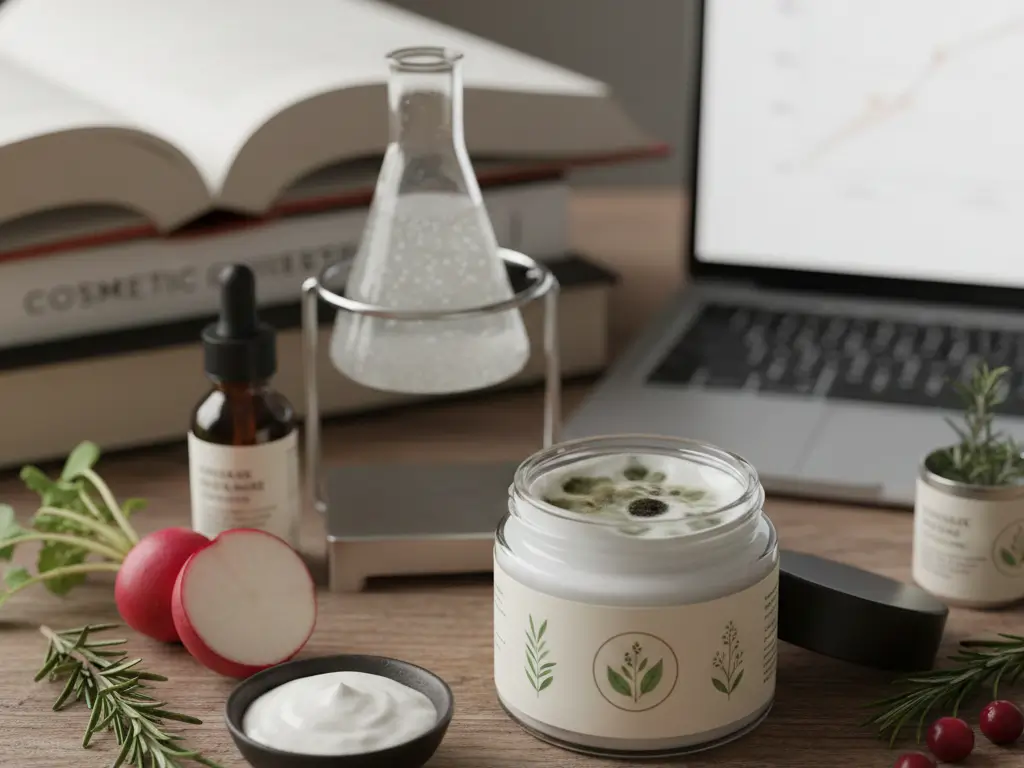
Last year, I opened a beautiful jar of handmade organic cream. The packaging promised “pure botanical ingredients, no nasty chemicals.” Within three weeks, fuzzy mold spotted the surface. That $65 jar became an expensive lesson in why preservation matters.
Natural preservatives are plant-derived or fermentation-based compounds that prevent bacteria, mold, and yeast from contaminating your skincare products, and the most effective ones include radish root ferment, certain botanical extracts, and specific natural acids.
This article provides educational information about cosmetic ingredients and formulation principles. It is not intended to diagnose or treat skin conditions. Individual reactions to any ingredient, natural or synthetic, vary. If you have sensitive skin, allergies, or existing skin concerns, consult a dermatologist before trying new products. When creating DIY skincare, proper preservation is essential for safety, this guide provides general information, not comprehensive formulation instruction.
The clean beauty movement has pushed brands toward “natural” preservation systems. That’s generally positive, consumers want fewer synthetic ingredients. But here’s what most articles won’t tell you: not all natural preservatives are equally effective, some popular options barely work, and inadequate preservation creates real safety risks.
What makes this guide different? I’m not selling you a product or pushing you toward a particular brand philosophy. I’ve researched what the cosmetic chemistry literature actually says, consulted formulation guidelines, and separated marketing claims from scientific evidence. You’ll learn which natural preservatives have solid research behind them, which don’t, and how to evaluate products yourself.
This article is researched from peer-reviewed cosmetic science literature and industry formulation guidelines. The author is not a cosmetic chemist; information has been verified against authoritative sources including the Cosmetic Ingredient Review (CIR) and FDA guidance.
What Are Natural Preservatives and Why Do They Actually Matter?
Natural preservatives are compounds derived from plants, fermentation, or other non-synthetic sources that inhibit microbial growth in cosmetic products. They matter because any water-containing product can become contaminated with bacteria, mold, or yeast, organisms that can cause skin infections, irritation, and illness.
Let’s get real about something the marketing rarely mentions. The moment water enters a formula, it becomes a potential home for microorganisms. That gorgeous organic face cream with botanical extracts? Without effective preservation, it’s essentially a petri dish sitting on your bathroom counter.
This isn’t fear-mongering. It’s basic microbiology. According to the FDA, cosmetic products can become contaminated during manufacturing or through normal consumer use, and contaminated products have caused infections and injuries. Every time you dip your fingers into a jar, you introduce bacteria.
Natural preservatives work the same way synthetic ones do: they create an environment where microorganisms can’t thrive. Some disrupt microbial cell membranes. Others alter the pH to levels bacteria hate. The difference is their origin, plant extracts versus laboratory synthesis.
Understanding these ingredients helps you evaluate whether a product is adequately protected. For those exploring organic skincare routine options, knowing your preservatives is just as important as knowing your active ingredients.
The challenge? “Natural” doesn’t automatically mean “effective at preservation.” And that’s where things get complicated.
How Natural Preservatives Work: The Science Behind Microbial Protection
Natural preservatives protect skincare products through several mechanisms, including antimicrobial peptides, pH manipulation, and compounds that damage microbial cell structures. Different preservatives work against different types of microorganisms, which is why effective systems often combine multiple ingredients.
Think of preservation like a security system. You wouldn’t rely on just a front door lock if you have ground-floor windows. Similarly, effective preservation typically uses multiple approaches because bacteria, mold, and yeast all have different vulnerabilities.
The main mechanisms include:
Antimicrobial peptides and ferments , Some natural preservatives contain peptides (small proteins) that punch holes in bacterial cell walls. Radish root ferment filtrate (Leuconostoc) works this way, creating antimicrobial peptides during fermentation that remain active in formulations.
pH manipulation , Most harmful bacteria thrive at neutral pH levels (around 7). Many natural preservatives work best in acidic environments (pH 4-5.5), which is conveniently within the healthy skin pH range. Organic acids like citric acid contribute to preservation partly by maintaining acidity.
Antioxidant protection , Ingredients like vitamin E (tocopherol) and rosemary extract don’t kill microbes directly. Instead, they prevent oils from going rancid (oxidation). This is crucial for botanical oils but doesn’t replace antimicrobial preservation in water-containing formulas.
Here’s where I see the biggest misconception: many consumers (and unfortunately, some brands) confuse antioxidants with preservatives. Rosemary extract and vitamin E are excellent for keeping oils fresh, they’re not going to stop bacteria from growing in your water-based serum. Understanding the science of clean beauty means recognizing these distinctions.
The most reliable natural preservation systems combine antimicrobial compounds with pH optimization and often include chelating agents that starve microbes of minerals they need to survive.
The Most Effective Natural Preservatives: An Evidence-Based List
Research supports several natural preservatives including fermentation-derived peptide systems, specific organic acids, and certain plant extracts with proven antimicrobial activity. Effectiveness varies significantly based on concentration, formulation type, pH, and the specific microorganisms being targeted.
Not all natural preservatives are created equal. Some have solid scientific backing; others rely mostly on tradition or wishful thinking. Here’s what the evidence actually shows:
Tier 1: Strong Evidence for Antimicrobial Activity
| Preservative | Source | Best For | Limitations |
| Leuconostoc/Radish Root Ferment Filtrate | Fermented radish | Water-based products | pH-sensitive; works best below pH 5 |
| Gluconolactone + Sodium Benzoate | Corn fermentation + plant-derived | Broad spectrum | Requires specific concentration ratios |
| Organic Acids (citric, sorbic, benzoic) | Plant-derived | pH-dependent formulas | Most effective at low pH only |
| Caprylyl Glycol | Plant-derived (coconut) | Water-based; often combined | Usually needs pairing with other preservatives |
These preservatives have challenge testing data, meaning laboratories have deliberately contaminated products and verified that these ingredients prevent microbial growth. That’s the gold standard, according to the Cosmetic Ingredient Review panel.
Tier 2: Supportive Evidence, Often Used in Combination
- Ethylhexylglycerin , Derived from grain; boosts effectiveness of other preservatives
- Sodium Anisate , From anise; works synergistically in combination systems
- Potassium Sorbate , Plant-derived; effective at low pH (below 5.5)
What About Essential Oils?
I know this isn’t what some readers want to hear. Essential oils like tea tree, thyme, and oregano do have antimicrobial properties in lab studies. However, the concentrations needed for effective preservation often exceed safe levels for skin application, especially for those with sensitive skin.
Using essential oils as your only preservation strategy is generally not recommended by cosmetic chemists. They can contribute to a multi-hurdle approach but shouldn’t carry the full preservation load.
This connects to the larger conversation about the distinction between natural and synthetic ingredients in skincare. Sometimes the natural option works beautifully. Sometimes it has genuine limitations.
Natural vs. Synthetic Preservatives: An Honest Comparison
Both natural and synthetic preservatives can effectively protect skincare products when properly formulated. Natural options often require lower pH, specific concentrations, and sometimes combination systems. Synthetic preservatives like phenoxyethanol typically offer broader-spectrum protection with fewer formulation constraints. Neither category is inherently safer or more dangerous, individual ingredient safety varies.
The clean beauty movement has positioned “natural” against “synthetic” as if this maps neatly onto “safe” versus “toxic.” Reality is messier.
Where natural preservatives shine:
- Often gentler for sensitive skin (though not always)
- Appeal to consumers avoiding specific synthetic ingredients
- Some offer additional skin benefits (humectant properties, antioxidants)
- Increasingly effective as formulation science improves
Where natural preservation gets tricky:
- pH requirements can conflict with some active ingredients
- Shorter shelf life is often realistic (12-18 months vs. 24-36 months)
- Higher concentrations sometimes needed
- More formulation expertise required for reliable results
The parabens question:
Parabens became skincare’s villain despite the Cosmetic Ingredient Review panel and FDA considering them safe at typical concentrations. The controversy stems from endocrine disruption concerns, though research on this remains debated among scientists. Many consumers prefer avoiding them, a valid personal choice, but the science isn’t as conclusive as marketing often suggests.
What matters more than “natural versus synthetic” is whether the preservation system works. Inadequately preserved products pose actual safety risks. A well-formulated product with phenoxyethanol is safer than a poorly preserved product with only “natural” claims.
For those building an organic skincare routine, look for products with tested preservation systems rather than focusing solely on ingredient origin.
Safety Considerations and Real-World Limitations
Natural preservatives require proper formulation to work effectively. Limitations include pH sensitivity, shorter shelf life, potential for allergic reactions (natural doesn’t mean hypoallergenic), and reduced effectiveness in challenging conditions. DIY formulators face significant challenges in achieving safe preservation without professional training.
Let’s talk about what can go wrong, because understanding risks helps you make informed decisions.
Shelf Life Reality Check
Products with natural preservation systems typically have shorter shelf lives. The 36-month expiration you might see with conventional products often shrinks to 12-18 months, sometimes less. This isn’t a flaw, it’s an honest acknowledgment that natural antimicrobials may be less aggressive than synthetic alternatives.
Check your products for:
- PAO (Period After Opening) symbols, that little jar icon with a number
- Expiration dates
- Changes in color, smell, or texture (signs of contamination)
When Natural Preservation Fails
Contaminated cosmetics aren’t just gross, they’re genuinely dangerous. Bacterial contamination has caused eye infections, skin infections, and more serious complications. This isn’t theoretical; the FDA documents adverse event reports linked to contaminated cosmetics.
Warning signs your product may be compromised:
- Unusual smell (even in unscented products)
- Color changes
- Texture separation that doesn’t resolve with shaking
- Visible mold or floating particles
- Product has exceeded its expiration date
If you notice these signs, stop using the product. This isn’t being overcautious.
DIY Skincare: A Frank Conversation
I see concerning DIY recipes everywhere suggesting vitamin E and essential oils can preserve water-based products. They generally can’t, not reliably.
If you’re interested in DIY clean beauty at home, here’s my honest take:
Safer DIY territory:
- Anhydrous (water-free) products like body oils, balms, and butter-based formulas
- Fresh-use preparations made in small batches and refrigerated
- Dry products like powder masks
Higher-risk DIY without training:
- Lotions and creams (water + oil emulsions)
- Serums with water
- Anything stored at room temperature with water content
For products requiring water, proper preservation demands understanding of challenge testing, concentration calculations, and formulation compatibility. Our advanced DIY formulation guide covers principles, but adequate preservation often requires additional coursework.
When to Seek Professional Help
- You experience persistent skin reactions to products (consult a dermatologist)
- You’re developing products for sale (consult a cosmetic chemist and understand regulatory requirements)
- You have existing skin conditions (see a dermatologist before significantly changing your routine)
How to Evaluate Products Like a Smart Consumer
Look for products with clear preservation systems listed (not just “preserved with essential oils”), appropriate shelf life claims, proper packaging that minimizes contamination, and brands transparent about their formulation approach. Price doesn’t guarantee adequate preservation; formulation integrity does.
You don’t need a chemistry degree to make informed choices. Here’s what to look for:
Green Flags
- Specific preservative ingredients listed , Generic claims like “naturally preserved” without naming ingredients are concerning
- Reasonable shelf life , 12-24 months is realistic for naturally preserved products
- Airless pumps or tubes , Packaging that minimizes finger contact reduces contamination risk
- Certified organic brands with transparent formulation , Reputable certifiers like USDA Organic and COSMOS require effective preservation
- pH-appropriate formulation , Products should be formulated within a pH range where their preservatives work
Red Flags
- Water-based products claiming preservation from essential oils only
- No expiration date or PAO symbol
- Jar packaging for water-based products without preservatives listed
- Claims that sound too good (“preserved by the power of plants” without specifics)
Understanding the distinction between organic, natural, and clean beauty helps you navigate marketing claims more effectively. These terms aren’t interchangeable, and only some have regulatory definitions.
Making Your Preservation-Smart Decisions
The bottom line isn’t that natural preservatives are good or bad, it’s that they require more sophistication than many consumers realize.
What I want you to take away from this guide:
Natural preservation works when formulated correctly, at appropriate concentrations, in compatible formulations. Many excellent organic skincare brands have invested in developing effective natural preservation systems. Their products are safe and stable.
But “natural” isn’t magic. Some natural preservation claims are more marketing than microbiology. Learning to evaluate products critically protects your skin and your wallet.
- Check your current products for expiration dates and PAO symbols. Discard anything expired or showing signs of contamination.
- Research one or two brands you use regularly, look for their preservation approach in product descriptions or company transparency pages.
- If you experience skin reactions or have concerns about product safety, consult a dermatologist. They can help identify potential irritants and recommend appropriate products.
For those building conscious beauty routines, understanding preservation is part of being an informed consumer. It’s not the most glamorous aspect of skincare, but it might be one of the most important.
Want to explore specific ingredient categories further? You’ll find comprehensive resources on fermented skincare ingredients, botanical actives, and formulation principles at Beauty Healing Organic.
SOURCES CITED
- U.S. Food and Drug Administration. (2022). Microbiological Safety and Cosmetics. FDA.gov. https://www.fda.gov/cosmetics/cosmetics-science-research/microbiological-safety-and-cosmetics
- Cosmetic Ingredient Review (CIR). (2024). Safety Assessments. CIR-Safety.org. https://www.cir-safety.org/
- Cosmetic Ingredient Review (CIR). (2019). Amended Safety Assessment of Parabens. International Journal of Toxicology, 38(1_suppl), 5S-169S.
- Steinberg, D. C. (2012). Preservatives for Cosmetics (3rd ed.). Allured Business Media.
- Herman, A. (2019). Antimicrobial Ingredients as Preservative Booster and Components of Self-Preserving Cosmetic Products. Current Microbiology, 76(6), 744-754.
- Varvaresou, A., et al. (2009). Self-preserving cosmetics. International Journal of Cosmetic Science, 31(3), 163-175.