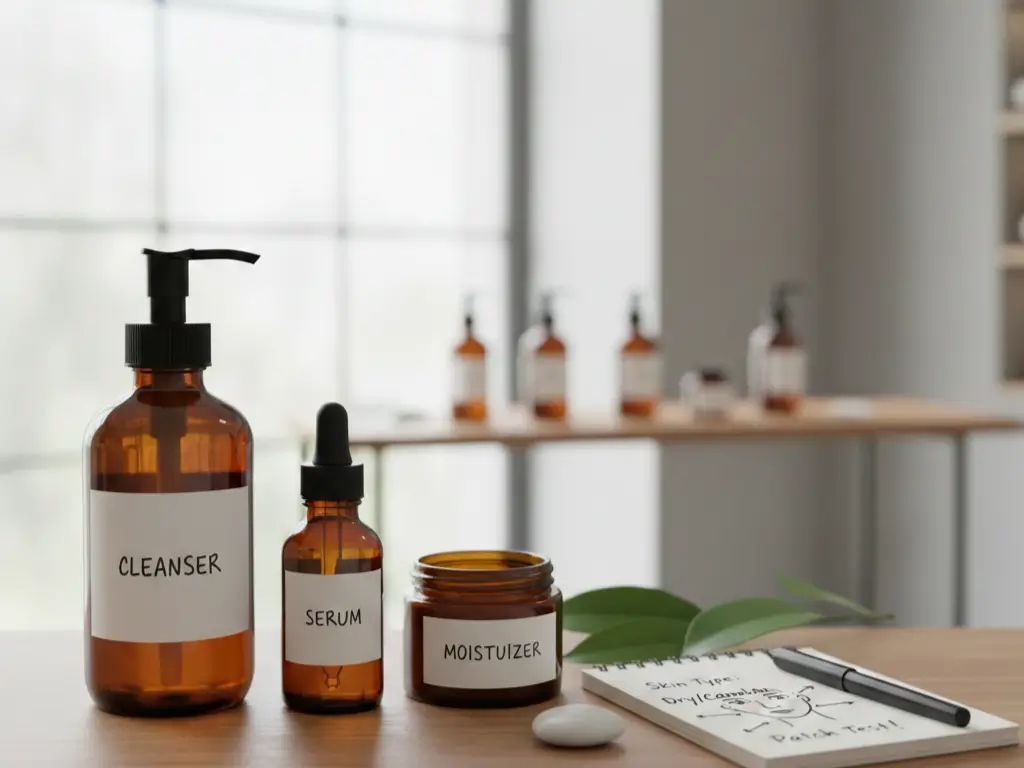
I remember standing in a natural beauty store, completely paralyzed. Shelves of amber bottles promised radiant skin, detoxified pores, and something called “glass skin glow.” I grabbed seven products that day. Most sat unopened for months.
Building an organic skincare routine doesn’t require twelve products or a chemistry degree. You need three essentials, a basic understanding of your skin, and patience to build thoughtfully.
This guide walks you through creating a personalized organic skincare routine, without the overwhelm, wasted money, or bathroom cabinet full of half-used products.
This article provides general educational information about organic skincare practices. It is not intended to diagnose, treat, or replace professional dermatological advice. Skin responds differently to products based on individual factors including genetics, environment, and underlying conditions. Always patch test new products and consult a licensed dermatologist if you have persistent skin concerns, conditions like eczema or rosacea, or experience adverse reactions. What works beautifully for one person may not suit another.
This guide is designed for skincare beginners curious about organic products, or anyone wanting to simplify their existing routine with cleaner ingredients. If you have active skin conditions requiring prescription treatment, work with your dermatologist to determine which organic products complement your medical regimen.
What Actually Makes Skincare “Organic”?
Organic skincare contains ingredients grown without synthetic pesticides, fertilizers, or GMOs, and typically avoids petroleum-based chemicals, parabens, and artificial fragrances. Look for certifications like USDA Organic, COSMOS, or Ecocert to verify claims.
The terms “organic,” “natural,” and “clean” get thrown around interchangeably, but they mean different things. Understanding the difference between organic, natural, and clean beauty helps you make informed choices.
Organic refers specifically to how ingredients were farmed. The USDA requires products labeled “organic” to contain at least 95% certified organic ingredients.
Natural simply means ingredients come from nature rather than a lab. However, “natural” is unregulated, poison ivy is natural, but you wouldn’t want it in your moisturizer.
Clean beauty focuses on excluding potentially harmful ingredients regardless of whether they’re organic. Think of it as safety-focused rather than farming-focused.
For building your routine, I recommend prioritizing organic ingredients where they matter most (oils, botanical extracts) while focusing on overall product safety and your skin’s response.
Understanding Your Skin Type Before Buying Anything
Identifying your skin type, oily, dry, combination, sensitive, or normal, determines which organic products will actually work for you. Skipping this step leads to wasted money and frustrated skin.
Here’s where most organic skincare guides fail: they recommend products before helping you understand your skin. That rosehip oil everyone raves about? It might break out oily skin types.
The Bare-Face Test:
- Wash your face with a gentle cleanser
- Pat dry and don’t apply anything
- Wait 30 minutes
- Observe your skin
What you’ll notice:
- Oily: Shiny all over, especially T-zone
- Dry: Tight, possibly flaky, no shine
- Combination: Oily T-zone, normal or dry cheeks
- Sensitive: Redness, reactions to many products
- Normal: Balanced, minimal issues
Your skin type can shift with seasons, hormones, and age. I discovered my “oily” skin was actually dehydrated combination skin, a common misidentification that led me to use harsh products making everything worse.
For deeper guidance on matching organic products to your specific type, this organic skincare by skin type guide covers the nuances.
3 Essential Products Every Organic Routine Needs
Every effective skincare routine, organic or otherwise, builds on three non-negotiable products: a gentle cleanser, a moisturizer suited to your skin type, and daily sun protection. Master these before adding anything else.
When I simplified to these three products, my skin actually improved faster than when I was layering seven items daily. Here’s why each matters:
1. Gentle Cleanser
Your cleanser removes dirt, oil, and environmental buildup without stripping your skin’s protective barrier. For organic options, look for:
- Oily skin: Clay-based or gel cleansers with ingredients like tea tree or charcoal
- Dry/Sensitive skin: Cream or milk cleansers with chamomile, oat, or calendula
- All types: The oil cleansing method works beautifully as a first cleanse
A good test: your skin shouldn’t feel tight or squeaky after washing. That “clean” feeling often signals damaged moisture barrier.
2. Moisturizer
Even oily skin needs hydration. The difference is texture and ingredients.
Organic moisturizers typically rely on plant-based oils and botanical butters rather than petroleum-derived ingredients. Choose based on your skin type:
- Oily: Lightweight gel moisturizers with jojoba or squalane
- Dry: Richer creams with shea butter, argan oil
- Combination: Hydrating serums with lighter facial oils
- Sensitive: Simple formulas with minimal ingredients, look for oat, aloe, or chamomile
3. Sunscreen (Non-Negotiable)
Sun protection prevents premature aging and skin damage more than any serum or treatment. For organic routines, mineral sunscreens using zinc oxide or titanium dioxide offer broad-spectrum protection without chemical UV filters.
Many people skip this step because mineral sunscreens once left white casts. Newer formulations have largely solved this, look for tinted options or micronized minerals.
Important: Apply SPF 30 or higher every morning, even on cloudy days. Reapply every two hours with sun exposure.
Building Your Morning Routine: Step-by-Step
A basic organic morning routine follows this order: cleanse (optional), treat with serum (if using), moisturize, and apply sunscreen. The sequence matters because products layer from thinnest to thickest consistency.
Mornings are about protection. Your skin faces environmental stressors, UV rays, pollution, blue light from screens, so morning products should shield and hydrate.
The Basic Morning Sequence:
- Cleanse (or simply rinse with water if your skin isn’t oily)
- Serum (optional, once you’ve mastered basics)
- Moisturizer
- Sunscreen (always last before makeup)
Understanding proper skincare layering prevents products from pilling and ensures active ingredients absorb correctly.
If you’re interested in adding antioxidant protection, a vitamin C serum between cleansing and moisturizing helps neutralize environmental damage. But honestly? Start with the Core 3 for at least two weeks before adding serums.
Time-Saving Reality Check:
My morning routine takes four minutes. Cleanse, moisturize with a few drops of facial oil mixed into moisturizer, sunscreen. Done. Elaborate routines aren’t necessary for healthy skin.
Creating Your Evening Skincare Ritual
Evening routines focus on removal and repair. Double cleanse if wearing sunscreen or makeup, then apply treatment products (serums, retinols) and seal with moisturizer. Your skin repairs itself overnight, so evening is when active ingredients work hardest.
Nighttime is when I enjoy my skincare ritual most. No rush, no sunscreen urgency, just cleaning off the day and feeding my skin what it needs.
The Basic Evening Sequence:
- First cleanse: Oil-based cleanser to dissolve sunscreen, makeup, and daily grime
- Second cleanse: Water-based gentle cleanser to clean the skin itself
- Treatment: Serums or active ingredients (retinoids, acids, targeted treatments)
- Moisturizer: Slightly richer than morning, or add a few drops of facial oil
For organic treatment options, bio-retinols like bakuchiol offer gentler alternatives to prescription retinoids. These plant-based options typically cause less irritation while still supporting cell turnover.
Weekly Additions:
Once your basic routine feels solid (usually after 3-4 weeks), consider adding:
- Exfoliation (1-2x weekly): Enzyme masks or gentle fruit acids
- Masks: Simple DIY masks using honey, oats, or clay
- Facial massage: Using a jade roller or gua sha after applying oils
When and How to Add Products
Expand your routine only after your Core 3 products work well for 4-6 weeks. Add one product at a time, waiting two weeks between additions to identify what helps versus what causes reactions.
The temptation to buy everything at once is real. I’ve been there. But here’s what I’ve learned: adding products slowly reveals exactly what your skin loves and hates.
Signs You’re Ready to Expand:
- Your skin feels balanced, not reactive
- You understand how your Core 3 products perform
- You’ve identified a specific concern to address (fine lines, hyperpigmentation, dullness)
Strategic Additions by Concern:
| Concern | Organic Options to Consider |
| Dullness | Vitamin C serum, gentle enzyme exfoliants |
| Fine lines | Bakuchiol, rosehip oil, peptide serums |
| Hyperpigmentation | Vitamin C, licorice root, kojic acid alternatives |
| Dehydration | Hyaluronic acid serum, natural humectants |
| Texture | Gentle fruit acids, consistent exfoliation |
Learning about effective ingredient combinations helps you layer products that enhance rather than conflict with each other. Some ingredients shouldn’t be used together, vitamin C and retinoids, for example, can cause irritation when layered.
For exploring less common but powerful botanical ingredients, this specialty natural ingredients guide introduces options you might not find at mainstream stores.
Common Mistakes When Starting an Organic Skincare Routine
The biggest mistakes beginners make include buying too many products at once, skipping patch tests, expecting overnight results, and assuming “organic” means universally safe for all skin types.
Let me save you some frustration (and money):
Mistake 1: Buying Your Entire Routine Day One
When everything’s new, you can’t identify what’s helping or causing problems. If you break out, was it the serum? The cleanser? The new moisturizer? You’ll never know.
Mistake 2: Skipping Patch Tests
Always test new products on your inner arm or behind your ear for 24-48 hours before applying to your face. Organic ingredients can still trigger reactions, essential oils and botanical extracts are common culprits for sensitive skin.
Mistake 3: Expecting Immediate Results
Skin cell turnover takes roughly 28 days. Give products at least 4-6 weeks before judging effectiveness. The exception: discontinue immediately if you experience burning, severe redness, or allergic reactions.
Mistake 4: Believing All Organic Equals “Safe for You”
Your skin is unique. Coconut oil, organic, cold-pressed, virgin, is highly comedogenic and clogs pores for many people. Tea tree oil, while naturally antibacterial, causes irritation for sensitive types.
For more truths the industry doesn’t always share, check out common clean beauty myths.
When to Consult a Dermatologist
See a dermatologist for persistent acne, suspected skin conditions (eczema, rosacea, psoriasis), reactions that don’t resolve, or any unusual skin changes. Organic skincare complements but doesn’t replace professional medical care.
Organic products can support healthy skin, but they’re not treatment for medical conditions. Please consult a licensed dermatologist if you experience:
- Acne that doesn’t improve after 8-12 weeks of consistent care
- Suspected rosacea, eczema, or psoriasis
- Allergic reactions (swelling, hives, difficulty breathing, seek immediate care)
- Unusual moles or skin changes
- Persistent redness or irritation
A good dermatologist can identify which organic products safely complement prescription treatments. Many are supportive of cleaner skincare approaches when used appropriately.
Your Starting Point
Building an organic skincare routine isn’t about perfection or purchasing everything at once. It’s about understanding your skin, starting simply, and expanding thoughtfully based on what your face actually tells you.
- Identify your skin type using the bare-face test. Research one organic cleanser suited to that type.
- Build your Core 3 (cleanser, moisturizer, SPF). Use consistently for four weeks, noting how your skin responds.
- Add one product at a time based on specific concerns. Patch test everything. Trust the slow process.
Your skin is unique, what works for your favorite influencer might not work for you. The best organic routine is one that’s sustainable, affordable for your budget, and makes your skin genuinely happy.
For more guidance as you continue your journey, explore comprehensive resources at Beauty Healing Organic covering everything from ingredient deep-dives to advanced DIY formulations.
SOURCES CITED
- U.S. Department of Agriculture. (2024). Organic Regulations. USDA National Organic Program. https://www.usda.gov/topics/organic
- American Academy of Dermatology Association. (2024). Sunscreen FAQs. https://www.aad.org/public/everyday-care/sun-protection
- Rodan, K., Fields, K., Majewski, G., & Falla, T. (2016). Skincare Bootcamp: The Evolving Role of Skincare. Plastic and Reconstructive Surgery – Global Open, 4(12 Suppl), e1152. https://www.ncbi.nlm.nih.gov/pmc/articles/PMC6715121/
- Environmental Working Group. (2024). Skin Deep Cosmetics Database. EWG.org.
- Krutmann, J., et al. (2017). The skin aging exposome. Journal of Dermatological Science, 85(3), 152-161. (Referenced for environmental stressor context)
- Bowe, W. P., & Logan, A. C. (2011). Acne vulgaris, probiotics and the gut-brain-skin axis. Gut Pathogens, 3(1), 1. (Referenced for skin barrier and microbiome context)