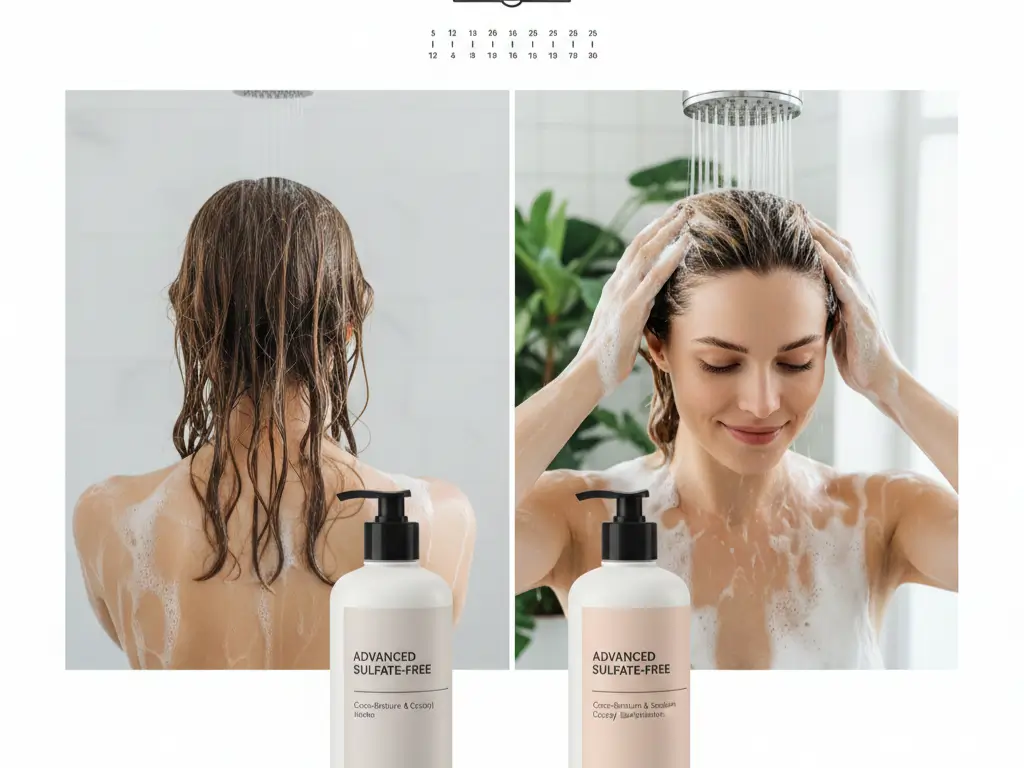
I’m going to tell you something the clean beauty industry doesn’t want you to hear: most sulfate-free shampoos don’t clean your hair very well.
There. I said it.
After testing dozens of formulas and talking to frustrated friends who’d switched to sulfate-free shampoo only to find their hair greasy by day two, I realized we’re all dancing around an obvious truth. The emperor has no lather, and nobody wants to admit it.
A sulfate-free shampoo that actually cleans contains specific alternative surfactants (like coco-betaine or sodium cocoyl isethionate) at high enough concentrations, often combined with chelating agents to remove buildup without the harsh stripping action of traditional sulfates.
But here’s what makes this frustrating: whether you need a sulfate-free shampoo depends entirely on your hair type, scalp condition, and styling routine. And most content treats sulfate-free as universally better, which is like saying everyone should wear the same shoe size.
Why Most Sulfate-Free Shampoos Feel Like They Don’t Clean (Because They Don’t)
Sulfate-free shampoos often feel less effective because alternative surfactants have weaker cleaning power and lower foam production. This isn’t a formulation failure, it’s the inherent trade-off for gentler cleansing that preserves natural oils.
Let’s talk about what sulfates actually do. Sodium lauryl sulfate (SLS) and sodium laureth sulfate (SLES) are incredibly efficient surfactants. They grab onto oil, dirt, and product buildup like a molecular magnet and wash them away with water. They also create tons of foam, which has zero cleaning benefit but makes us feel like something’s working.
The problem? They’re so good at this job that they strip everything, including the protective lipid layer your scalp produces.
For people with dry, color-treated, or textured hair, this stripping causes real damage. But for someone with an oily scalp who uses heavy styling products, sulfates might be exactly what they need. The clean beauty movement forgot to mention this part.
When you switch to sulfate-free, you’re trading cleaning power for gentleness. Most alternative surfactants, like cocamidopropyl betaine or decyl glucoside, are significantly milder. This is by design. But if you’re coming from a sulfate-based shampoo, it feels like washing your dishes with just water.
What surprised me most was discovering that many people complaining about sulfate-free shampoos weren’t experiencing product failure. The shampoos were doing exactly what they’re designed to do: clean gently. The users just needed more aggressive cleansing than the formula could provide.
Your scalp microbiome balance might actually prefer gentler cleansing, but only if you’re not overwhelming it with silicones and styling products that require stronger surfactants to remove.
What Actually Cleans Your Hair When Sulfates Aren’t Doing the Work
Effective sulfate-free cleaning relies on gentler surfactants (coco-glucoside, sodium cocoyl isethionate, coco-betaine), often combined with saponified oils, chelating agents like citric acid, and clay-based cleansers that absorb oil rather than stripping it.
Here’s the thing about cleaning hair: there are multiple mechanisms, and sulfates represent just one approach.
Surfactant-based cleaning uses molecules with one water-loving end and one oil-loving end. They surround oil and dirt particles so water can wash them away. Sulfate-free surfactants do this too, just less aggressively.
The most effective sulfate-free surfactants I’ve found include:
- Sodium cocoyl isethionate (SCI): The gentlest option that still produces decent foam and cleaning power
- Coco-betaine and cocamidopropyl betaine: Amphoteric surfactants that are mild but effective, especially in combination
- Decyl glucoside and coco-glucoside: Sugar-based surfactants that are extremely gentle (sometimes too gentle)
- Sodium lauroyl methyl isethionate: A newer alternative that closely mimics sulfate performance without the irritation
Saponification-based cleaning uses traditional soap chemistry, think castile soap made from olive oil. These work well in soft water but can leave residue in hard water. If you’ve ever had that waxy, coated feeling after using a “natural” shampoo, this was probably why.
Absorption-based cleaning uses clays (bentonite, rhassoul) or charcoal to physically absorb oil. Some sulfate-free shampoos incorporate these, especially in formulas designed for oily hair. You’ll see this in many DIY approaches as well, like natural hair care treatments that rely on clay masks.
Chelation and pH adjustment help alternative surfactants work better. Ingredients like citric acid adjust pH to close the hair cuticle and bind to mineral deposits from hard water. This is why some sulfate-free shampoos work better than others with identical surfactant profiles, the supporting cast matters.
Here’s what most articles won’t tell you: you can’t rely on surfactants alone if you use heavy products. I learned this the hard way after switching to sulfate-free while still using silicone-heavy serums. The buildup was real, and no amount of gentle cleansing could remove it.
How to Know If You Actually Need Sulfate-Free Shampoo
You likely benefit from sulfate-free shampoo if you have color-treated hair, dry/textured hair, sensitive skin, or if you practice low-poo/no-poo methods. You probably don’t need it if you have oily scalp, use heavy styling products daily, or live in areas with hard water.
This is the section nobody writes because it contradicts the “everyone should use sulfate-free” marketing narrative. But here’s the truth: sulfate-free isn’t universally better. It’s situationally better.
You probably need sulfate-free shampoo if:
- You have color-treated hair: Sulfates fade color faster by opening the hair cuticle. A study by the Journal of Cosmetic Science found sulfates increased color loss by 30-40% compared to gentler surfactants.
- Your hair is naturally dry or textured: Curly, coily, and kinesthetic hair types typically produce less sebum that travels down the hair shaft. Stripping what little oil you have creates dryness and breakage.
- You have scalp sensitivity or conditions like eczema: Sulfates can irritate sensitive skin. I’ve seen people’s organic ingredients for rosacea routines completely undermined by harsh shampoo.
- You wash your hair daily or multiple times per week: Frequent washing with sulfates compounds the stripping effect.
You probably DON’T need sulfate-free shampoo if:
- You have an oily scalp or seborrheic dermatitis: Sometimes you actually need the stronger cleansing. Managing an oily scalp often requires removing excess sebum efficiently.
- You use heavy styling products, silicones, or oils regularly: These require stronger surfactants to remove properly. Using sulfate-free with heavy products creates buildup faster than you can say “apple cider vinegar rinse.”
- You have hard water: The minerals in hard water interfere with gentle surfactants, making them even less effective. You might need a shower filter for chlorine and hard water before sulfate-free will work for you.
- You swim regularly in chlorinated pools: Chlorine and pool chemicals need aggressive removal.
What changed my thinking on this was working with someone who’d struggled with natural dandruff and scalp psoriasis. She’d switched to sulfate-free thinking it would help, but her scalp condition worsened because the shampoo couldn’t adequately remove the flaking and oil buildup. Once she switched back to a targeted medicated shampoo (which contained sulfates), her scalp improved dramatically.
The goal isn’t to avoid sulfates at all costs. The goal is to match your cleanser to your actual hair and scalp needs.
The 5 Ingredients That Make Sulfate-Free Shampoo Actually Work
Look for formulas with sodium cocoyl isethionate or coco-betaine (effective surfactants), citric acid or EDTA (chelating agents), saponified oils for boost, hydrolyzed proteins for conditioning, and botanical oils matched to your hair type.
After testing what felt like every sulfate-free shampoo on the market, I noticed patterns in the ones that actually performed.
1. Sodium Cocoyl Isethionate (SCI) or Coco-Betaine as Primary Surfactants
These should appear in the first 3-5 ingredients. If decyl glucoside is the primary surfactant and you need decent cleansing, you’ll probably be disappointed. Check the ingredient list on Beauty Healing Organic product recommendations, you’ll see this pattern in formulas that clean effectively.
2. Chelating Agents (Citric Acid, Sodium Citrate, or EDTA alternatives)
These bind to minerals and help surfactants work better, especially in hard water. They also adjust pH to seal the hair cuticle, reducing that rough, tangled feeling after washing.
3. Saponified Oils (Potassium Cocoate, Sodium Olivate)
These traditional soap ingredients boost cleaning power without adding sulfates. They work synergistically with modern surfactants but can leave residue in hard water, so they’re usually in supporting roles rather than leading the formula.
4. Conditioning Agents That Don’t Create Buildup
Look for hydrolyzed proteins (wheat, silk, quinoa), panthenol, or light plant extracts rather than heavy silicones. The formula needs to balance cleaning with conditioning, or your hair will feel stripped. Understanding botanical oils by hair type helps you identify which conditioning ingredients work for you.
5. Clay or Charcoal for Oil Absorption
Some formulas include kaolin clay, bentonite, or activated charcoal to physically absorb oil. This isn’t necessary for all hair types, but it significantly improves performance for oily scalps.
Here’s the formula architecture that works:
| Component | Purpose | Examples |
| Primary surfactant | Main cleaning | Sodium cocoyl isethionate, coco-betaine |
| Secondary surfactant | Boost & foam | Decyl glucoside, cocamidopropyl betaine |
| Chelating agent | Hard water, pH | Citric acid, sodium citrate |
| Conditioning | Prevent dryness | Hydrolyzed protein, panthenol |
| Optional boost | Extra oil removal | Clays, charcoal, saponified oils |
The ratio matters too. A formula with fantastic ingredients at low concentrations won’t clean effectively. This is why some expensive “clean beauty” shampoos underperform, they’re formulated to be gentle above all else, even at the expense of function.
When Sulfate-Free Shampoo Won’t Work for Your Hair (And What to Do Instead)
Sulfate-free formulas struggle with heavy product buildup, hard water, very oily scalps, and mineral sunscreen removal. In these cases, use clarifying shampoo periodically, address water quality, or accept that you might not be a sulfate-free candidate.
I need to be honest about when sulfate-free shampoos fail, because the transition period can make you think you’re doing something wrong when actually the approach isn’t right for your situation.
You Have Significant Product Buildup
If you use silicone-based serums, heavy oils, or dry shampoo frequently, sulfate-free shampoo often can’t remove buildup adequately. You’ll notice your hair feels coated, weighed down, or stringy.
What to do: Use a clarifying shampoo (yes, with sulfates) once every 2-4 weeks, or switch to water-soluble styling products only. You can’t have heavy silicones and sulfate-free cleansing, pick one. Exploring natural hair care across seasons might give you lighter product alternatives.
You Live in a Hard Water Area
The minerals in hard water (calcium, magnesium) bind to gentle surfactants and reduce their effectiveness. Your hair might feel filmy or tangled even after washing.
What to do: Install a shower filter first, seriously, this makes or breaks sulfate-free success. Alternatively, use a chelating shampoo monthly or do an apple cider vinegar rinse to remove mineral buildup.
You Have a Very Oily Scalp or Active Lifestyle
Some people produce significantly more sebum, or sweat heavily from workouts. Gentle surfactants may not cut through the oil effectively, leaving hair greasy by the next day.
What to do: You might not be a good candidate for sulfate-free right now. Consider this like choosing between regular and sensitive skin cleansers, you need what works for your biology. For those dealing with specific skin conditions, understanding your unique needs matters, like how athletes handle body acne and chafing differently than sedentary individuals.
You Use Mineral Sunscreen
Zinc oxide and titanium dioxide from sunscreens can be difficult to remove with gentle surfactants, especially from hairlines and scalp.
What to do: Focus the sulfate-free formula on your lengths and ends, but use a stronger cleanser on your scalp and hairline. Double shampooing (yes, even with sulfate-free) helps too.
The Transition Period Reality
When you first switch to sulfate-free, your hair might feel weird for 2-4 weeks. This happens because:
- Your scalp is still producing oil at the rate needed to compensate for harsh sulfate stripping
- You have residual silicone buildup from previous products
- You’re using too much or too little product (sulfate-free formulas require different amounts)
I tell people to do a clarifying wash before switching, cut out silicones entirely, and give it a full month before deciding. If your hair still feels terrible after a month, you probably need a different approach.
This connects to broader conversations about skin barrier care, sometimes gentle isn’t enough if you’re dealing with specific challenges that require more intervention.
Match Your Shampoo to Your Actual Hair, Not Marketing Claims
Here’s what I wish someone had told me before I went down the sulfate-free rabbit hole: it’s not about good versus bad ingredients. It’s about matching your cleanser to your hair’s actual needs.
If you have dry, color-treated, or textured hair and use minimal styling products, sulfate-free shampoo with effective surfactants like sodium cocoyl isethionate will likely transform your hair for the better. You’ll see less frizz, better moisture retention, and longer-lasting color.
If you have an oily scalp, live in a hard water area, or use heavy styling products, you might need the cleaning power that only sulfates (or at minimum, very strong sulfate-alternatives) can provide. And that’s okay.
The sulfate-free movement has pushed the industry toward gentler, more thoughtful formulations. But we’ve overcorrected into treating sulfates like they’re universally toxic, which isn’t supported by science, just marketing.
- Assess your actual hair needs using the framework in this guide. Be honest about your scalp oil production and product routine.
- If switching, start with a clarifying wash to remove all buildup, then commit to sulfate-free for 4 weeks with water-soluble products only.
- Choose a formula with effective surfactants (SCI, coco-betaine) in the first 5 ingredients, plus chelating agents if you have hard water.
You might find that understanding your broader approach to organic skincare routines helps inform your hair care decisions too. It’s all connected, scalp is skin, after all.
The best shampoo is the one that cleans your hair adequately without causing damage. Sometimes that’s sulfate-free. Sometimes it isn’t. The sooner we accept this, the sooner we can stop wasting money on products that were never going to work for us in the first place.