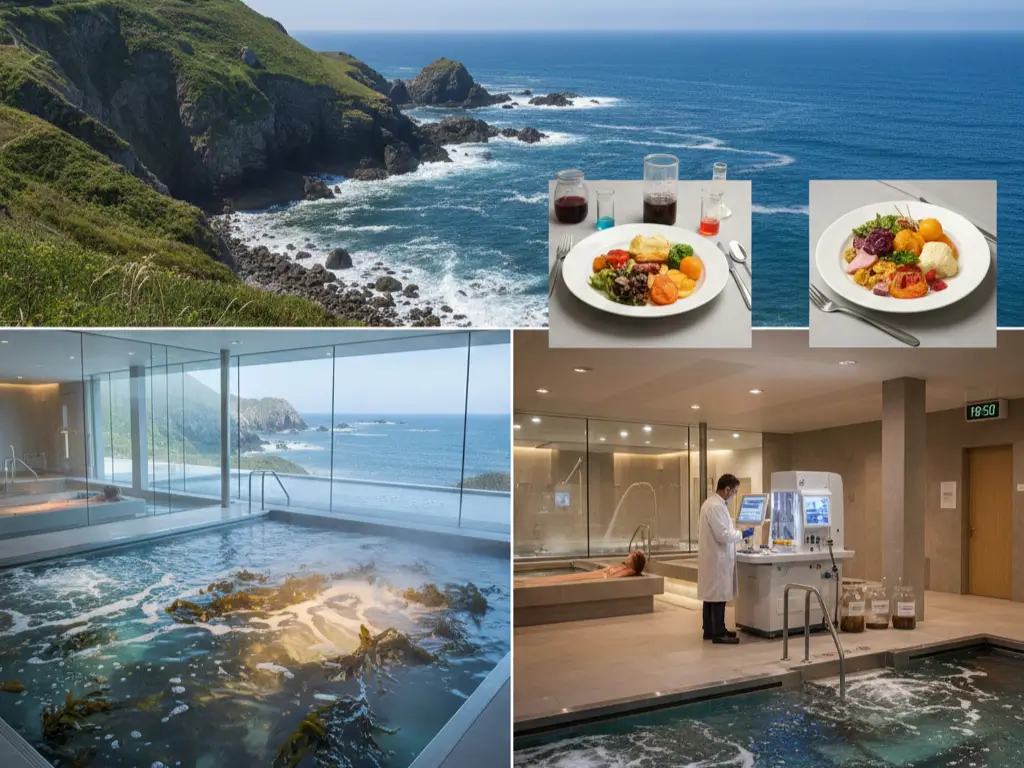
Real thalassotherapy isn’t just warm water with salt. It’s a specific approach to remineralizing your body using marine elements in ratios that mirror actual seawater. The clinics in Brittany, France charging €200 per session? They’re not just running you a hot bath with grocery store sea salt.
Effective thalassotherapy requires specific mineral ratios, marine algae, proper temperature, and timing most bath recipes ignore.
Modern mineral depletion is real. Agricultural soil has lost 40-60% of its mineral content since 1950, which means the food on your plate contains fewer trace minerals than your grandparents’ did. Your body needs magnesium, iodine, selenium, and dozens of trace elements for everything from thyroid function to muscle recovery.
What makes this guide different? I’m not selling you on expensive spa packages or oversimplifying the science. We’re building an actual remineralizing protocol based on what research shows about transdermal mineral absorption, including what won’t work and why your basic Epsom salt routine is missing the point.
What Makes a Bath Actually Remineralizing? (The Mineral Gap Most People Miss)
A truly remineralizing bath requires a multi-mineral profile similar to seawater (not just magnesium), plus marine algae for trace elements and iodine. Single-mineral soaks like Epsom salt baths don’t replicate the broad-spectrum mineral exposure that makes thalassotherapy effective.
Here’s what I’ve noticed after testing different bath protocols: most people use Epsom salt (magnesium sulfate) and think they’re getting “mineralized.” You’re getting ONE mineral. Seawater contains 90+ minerals in specific ratios.
The actual mineral profile of seawater includes:
- Magnesium chloride (1,290 mg/L)
- Calcium (411 mg/L)
- Potassium (399 mg/L)
- Sodium (10,781 mg/L)
- Plus trace amounts of iodine, selenium, zinc, iron, manganese, copper, and more
Your skin can absorb these through two mechanisms: passive diffusion through the lipid barrier and active transport through hair follicles and sweat glands. A 2012 study in the journal PLOS ONE found significant magnesium absorption from Dead Sea salt baths, with blood serum levels increasing after 12 weeks of regular bathing.
But here’s the part nobody mentions: absorption efficiency depends on multiple factors working together. Water temperature affects skin permeability. Bath duration matters, too short and you won’t absorb much; too long and you’ll dehydrate. Mineral ratios need balance because certain minerals compete for absorption pathways.
Think of it like this: athletes don’t just chug magnesium supplements. They use electrolyte formulas with balanced sodium, potassium, magnesium, and calcium because these minerals work synergistically. Your bath should follow the same logic, which is why understanding mineral-rich ingredients matters beyond just grabbing any salt.
The remineralization happens because your skin isn’t just a barrier, it’s selectively permeable. When you create the right gradient (higher mineral concentration outside than inside), minerals move into tissues and eventually circulation.
How to Build Your Thalassotherapy Bath: The 4 Essential Components
Combine Dead Sea or Celtic sea salt (2-4 cups), powdered seaweed like bladderwrack or kelp (1/4 cup), marine magnesium (1/2 cup), and trace mineral concentrate (1-2 tablespoons) in 98-102°F water for 20-30 minutes.
I break authentic thalassotherapy into four components. Miss one and you’re getting incomplete results.
Multi-Mineral Salt Base
Your foundation should be Dead Sea salt or unrefined Celtic sea salt, NOT regular sea salt or Epsom salt alone. Dead Sea salt contains roughly 21% magnesium chloride, 3% potassium, and 0.1-0.2% bromides, along with calcium and trace elements.
Use 2-4 cups for a standard bathtub (about 40 gallons). This creates approximately 1-2% salinity, similar to seawater. I’ve found 3 cups hits the sweet spot where you feel the density change without overshooting into dehydration territory.
Marine Algae (The Iodine Source)
Add 1/4 cup powdered kelp, bladderwrack, or dulse. Seaweed brings iodine, alginates, and polysaccharides that regular salt can’t provide. These compounds help with both mineral delivery and skin barrier support.
If you’re exploring marine algae benefits, you’ll find that different species offer different mineral profiles. Bladderwrack is particularly high in iodine and fucoidans, while spirulina adds protein and B-vitamins (though it’s freshwater, not marine).
Additional Magnesium
Even with Dead Sea salt, I add 1/2 cup magnesium chloride flakes (not Epsom salt/magnesium sulfate). Why? Americans are chronically magnesium-deficient, up to 75% according to some estimates. Magnesium chloride absorbs better transdermally than magnesium sulfate based on several small studies.
This matters for muscle recovery, sleep quality, and managing stress response. Think of your bath as part of your body recovery routine, not just skincare.
Trace Mineral Concentrate
Add 1-2 tablespoons of concentrated inland sea minerals or ionic trace mineral drops. These provide the 70+ trace elements in balanced ratios that are nearly impossible to get from single ingredients.
Yes, this adds cost. But the total investment is maybe $40-60 for supplies that last 8-12 baths, versus $200+ per professional thalassotherapy session.
For a complete approach to DIY body care, this ritual pairs especially well with dry brushing before your bath to stimulate lymphatic flow and increase circulation.
Does Transdermal Mineral Absorption Really Work in Bath Water?
Yes, but with significant limitations. Magnesium, bromides, and certain trace minerals can absorb through skin, especially through hair follicles and sweat glands. However, absorption rates are lower than oral supplementation, and you won’t correct severe deficiencies through bathing alone.
Let’s get real about what the science actually shows.
A 2004 study by Dr. Rosemary Waring at Birmingham University found that soaking in Epsom salt baths raised both blood magnesium and sulfate levels in participants. A 2017 review in the International Journal of Dermatology confirmed transdermal magnesium absorption is measurable but highly variable between individuals.
What actually absorbs well:
- Magnesium: Moderate absorption, especially magnesium chloride
- Bromides: Good absorption (which is why Dead Sea baths feel sedating)
- Iodine: Limited but measurable absorption from seaweed
- Potassium and calcium: Minimal direct absorption
What doesn’t absorb well:
- Large molecules like proteins
- Most minerals in insoluble forms
- Minerals when skin is fully keratinized (dry, thick)
Here’s what I got wrong initially: I thought longer baths meant more absorption. Actually, after about 20-30 minutes, your skin saturates and you start losing water through osmosis if the salt concentration is too high. You’ll step out feeling depleted rather than restored.
Water temperature is critical. Between 98-102°F, your blood vessels dilate and pores open without stressing your cardiovascular system. Hotter than 104°F and you’re putting unnecessary strain on your heart; cooler than 95°F and you won’t get adequate circulation increase.
The uncomfortable truth? If you’re seriously mineral deficient (confirmed by blood work), you need oral supplementation and dietary changes. Baths are supportive therapy, not primary treatment. Think of thalassotherapy like adaptogen support, helpful when part of a comprehensive approach, not a magic fix in isolation.
That said, for stress reduction, muscle recovery, and gentle ongoing mineral support, this ritual absolutely has value. The magnesium alone can improve sleep quality and reduce muscle tension, which is why many athletes incorporate similar soaking protocols.
The Complete Remineralizing Bath Ritual (Step-by-Step Protocol)
Dry brush for 3-5 minutes, prepare 98-102°F bath with all four mineral components, soak for 20-30 minutes, cool rinse, rest horizontal for 15 minutes post-bath. Practice 1-3 times weekly.
Here’s my tested protocol that maximizes absorption and benefits.
Before the Bath (10 minutes prep):
- Dry brush your entire body toward your heart for 3-5 minutes. This stimulates lymphatic drainage and removes dead skin cells that block mineral absorption. If you need guidance, check out proper dry brushing technique.
- Hydrate with 8-12 oz of water. You’ll sweat in the bath; pre-hydrating prevents dehydration.
- Prepare your bath space: dim lights, have water nearby, set a 25-minute timer.
Bath Preparation:
Fill your tub with 98-102°F water (use a thermometer, this matters). While filling, add in order:
- 3 cups Dead Sea salt (dissolves slowly)
- 1/2 cup magnesium chloride flakes
- 1/4 cup powdered kelp or bladderwrack
- 1-2 tablespoons trace mineral concentrate
- Optional: 5-10 drops lavender essential oil for nervous system support
Swirl the water to dissolve. The seaweed will make the water slightly cloudy and feel silkier, this is normal.
During the Soak (20-30 minutes):
Submerge as much of your body as possible, including neck if comfortable. Keep your head elevated on a bath pillow to avoid dizziness.
I use this time for mindful breathing or gentle self-massage on areas holding tension. Some people like to incorporate facial massage tools while soaking, though I prefer keeping it simple.
You’ll feel progressively more relaxed as bromides and magnesium absorb. If you start feeling lightheaded or your heart races, get out immediately, the water may be too hot or concentration too high.
After the Bath:
- Don’t soap off immediately. Let the minerals sit on your skin for 5-10 minutes. Pat dry gently, leaving some moisture.
- Cool rinse (optional): A 30-second cool shower can help close pores and stimulate circulation, but it’ll remove some mineral residue. I skip this.
- Apply oil or butter while slightly damp. Your skin barrier is temporarily more permeable, making this ideal for botanical oils or body butters.
- Rest horizontal for 15 minutes. Don’t jump up and start activity. Your blood pressure will be lower and you need integration time.
Frequency:
Start with once weekly, build to 2-3 times weekly maximum. Daily is excessive and can actually deplete you through repeated water loss.
Best timing? Evening, 1-2 hours before bed. The magnesium and temperature drop post-bath trigger sleep hormones.
Sea Salt vs. Dead Sea Salt vs. Epsom Salt: Which Actually Remineralizes?
Dead Sea salt provides the broadest mineral profile for remineralization. Epsom salt delivers magnesium only. Regular sea salt falls between but lacks the concentrated minerals of Dead Sea sources.
Here’s the breakdown that nobody gives you straight:
| Salt Type | Primary Minerals | Mineral Diversity | Best For | Cost Per Bath |
| Dead Sea Salt | Mg, Ca, K, Br, Na + 20+ trace | High (21% Mg chloride, bromides, potassium) | Full remineralization, skin conditions, sleep | $3-5 |
| Epsom Salt | Mg sulfate only | Low (single mineral) | Muscle soreness, magnesium boost only | $0.50-1 |
| Celtic/Himalayan Sea Salt | Na, Mg, Ca, K, Fe + trace | Medium (80+ minerals in small amounts) | Gentle mineralization, flavor for food use | $2-4 |
| Regular Sea Salt | Mostly NaCl | Low (refined, trace minerals removed) | Not recommended for therapeutic bathing | $1-2 |
When to choose Dead Sea salt: You want comprehensive remineralization, have inflammatory skin conditions (eczema, psoriasis), or struggle with sleep and muscle tension. This is your foundation salt.
When to choose Epsom salt: You specifically need magnesium for immediate muscle recovery after intense exercise, or you’re on a tight budget. But understand you’re getting one mineral, not the full spectrum. For athletic recovery specifically, look at complete muscle care approaches.
When to choose Celtic sea salt: You want a middle ground and prefer the gray unrefined option. It’s gentler than Dead Sea salt and good for sensitive skin. The mineral content is real but less concentrated.
When to avoid regular sea salt: Always, for therapeutic purposes. It’s been refined to basically pure sodium chloride with trace minerals removed. You’re paying for salty water without benefits.
What surprised me in my testing: mixing 2 cups Dead Sea salt + 1 cup Epsom salt created noticeable muscle relaxation but felt less “complete” than the four-component system. The seaweed addition makes a measurable difference in skin feel afterward, smoother, more hydrated, less reactive.
For those exploring Mediterranean beauty traditions, you’ll find thalassotherapy is foundational in coastal European wellness practices, often combined with clay treatments and olive oil applications.
One limitation to acknowledge: if you have high blood pressure, kidney issues, or are pregnant, check with your doctor before regular salt bathing. The mineral absorption, while gentle, does enter your system. This applies to many body care rituals that affect circulation and mineral balance.
Making Thalassotherapy Part of Your Routine (Without Overthinking It)
Real remineralization doesn’t happen from one luxurious bath. It’s built through consistent, properly structured exposure over weeks and months.
The critical insight I want you to take away: most bath recipes are incomplete because they focus on one mineral or rely on refined salts. True thalassotherapy requires mimicking actual seawater’s complexity, multiple minerals, marine algae, proper temperature, and realistic timing.
This isn’t about achieving perfection. It’s about creating a ritual that actually supports your body’s mineral needs rather than just feeling temporarily relaxing. The difference shows up in how you sleep, how your muscles recover, and how your skin responds over time.
Source Dead Sea salt, magnesium chloride, and powdered kelp from Beauty Healing Organic or a quality supplier. Quality matters more than quantity.
Complete your first full four-component bath following the protocol exactly. Notice how you feel that night and the next morning.
Assess changes in sleep quality, muscle recovery, and skin texture. Adjust frequency and concentration based on your response.
If you find the full protocol overwhelming, start with just Dead Sea salt and magnesium chloride. It’s 80% of the benefit. Add the seaweed and trace minerals when you’re ready to go deeper.
The ocean has been remineralizing humans for millennia. You’re just bringing that ancient wisdom into your bathroom with a bit more precision than our ancestors had. No spa appointment needed.