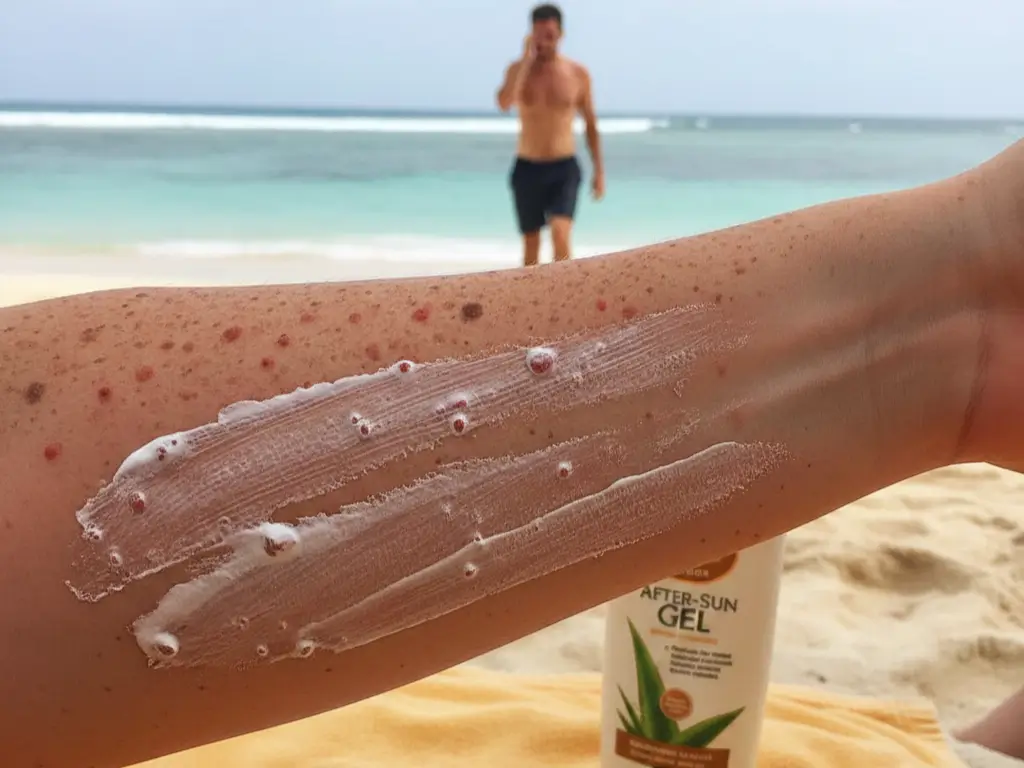
Here’s something that’ll probably annoy you: that SPF 50 you carefully applied this morning? You’re likely getting SPF 15 protection. Maybe less.
The problem isn’t your sunscreen, it’s how you’re using it. Most people apply about one-quarter of the amount needed for the SPF rating on the bottle. Then they skip the after-sun steps that could reverse early damage.
I’ve watched friends religiously apply “reef-safe” sunscreen, then wonder why they’re still getting dark spots and premature wrinkles. The issue isn’t always the product. It’s the gap between what we think protects our skin and what actually does.
This guide strips away the marketing language and gives you what works. You’ll learn why most sun protection fails, how to fix your application technique, and what to do in the critical 24 hours after sun exposure. No fear-mongering about skin cancer (you already know). No miracle ingredient claims. Just practical steps that fit into real life.
Because sun protection isn’t about perfection. It’s about consistent habits that actually make a difference.
Why Most Sun Protection Fails (And It’s Not What You Think)
Sun protection fails because people apply too little sunscreen (getting 25-50% of labeled protection), don’t reapply when actually needed, and have a weakened skin barrier that amplifies UV damage before exposure even happens.
The math is brutal. The SPF rating on your bottle assumes you’re using 2 milligrams per square centimeter of skin. For your face alone, that’s about half a teaspoon. When researchers measure how much people actually apply, it’s closer to one-quarter teaspoon.
Apply half the amount? You get roughly the square root of the SPF number. Your SPF 50 becomes SPF 7. Your SPF 30? About SPF 5.5.
This creates what I call the sunscreen paradox. People who wear sunscreen sometimes get more sun damage than those who don’t. Why? False confidence. They stay out longer, skip shade, and think they’re protected when they’re not.
But here’s what really interests me: your skin’s condition before sun exposure matters as much as what you put on it. A compromised skin barrier lets UV penetration go deeper. Inflammation from yesterday’s sun exposure makes today’s exposure worse.
Think of it like a chain reaction. Weak barrier → more UV penetration → inflammation → weaker barrier → even more damage tomorrow. The solution isn’t just better sunscreen. It’s strengthening your skin’s natural defenses before you step outside.
What changed my thinking was talking to a dermatologist who admitted she focuses more on barrier repair ingredients than chasing higher SPF numbers. Her skin looked better than patients using “clinical strength” products.
How to Choose and Apply Sunscreen That Actually Protects
Choose broad-spectrum SPF 30-50 (higher numbers offer minimal extra protection), apply a full half-teaspoon to your face, wait 15 minutes before sun exposure, and reapply based on activity, not a rigid 2-hour timer.
Let’s kill some myths first.
SPF 30 blocks about 97% of UVB rays. SPF 50 blocks 98%. SPF 100? About 99%. You’re paying significantly more for a 1-2% difference. The real protection boost comes from proper application, not higher numbers.
“Waterproof” sunscreen doesn’t exist, the FDA banned that term in 2011. Products can only claim “water-resistant” for 40 or 80 minutes. If you’re swimming or sweating heavily, plan to reapply.
Here’s what actually matters:
Choosing Your Sunscreen:
- Broad-spectrum (protects against UVA and UVB)
- SPF 30-50 (sweet spot for protection vs. cost)
- Mineral or chemical based on your skin type (more on this later)
- Texture you’ll actually use daily
I can’t stress that last point enough. The best sunscreen is the one you’ll wear consistently. If mineral sunscreen leaves a white cast that makes you skip it, try a chemical formula or a tinted version.
The Application Technique Nobody Teaches:
- Amount: Half teaspoon for face and neck (a line of sunscreen down your index and middle finger)
- Timing: Apply 15 minutes before sun exposure so it binds to skin
- Method: Don’t rub it in like moisturizer, pat and press to build an even film
- Coverage: Get your ears, hairline, and neck (the spots everyone misses)
For your body, you need about a shot glass worth of sunscreen (1 ounce) to cover exposed areas. Yes, really.
The reapplication rule is more nuanced than “every 2 hours.” Reapply when:
- You’ve been swimming or sweating heavily
- You’ve toweled off
- It’s been 2+ hours of continuous sun exposure
- You’ve touched your face repeatedly
If you’re indoors most of the day, morning application is probably fine. This is where the rigid advice fails people, it doesn’t account for real life.
One trick I learned from someone who actually studies photobiology: apply your antioxidant serum under sunscreen. Vitamin C with vitamin E and ferulic acid boosts photoprotection. It’s not a replacement for SPF, but it helps neutralize free radicals that slip through.
What to Do Immediately After Sun Exposure (The 24-Hour Window)
Cool your skin within 2-4 hours, apply antioxidants to neutralize free radicals within 24 hours, use anti-inflammatory ingredients like niacinamide, and focus on barrier repair with ceramides and peptides to prevent long-term damage.
This is the part most guides skip. They focus on prevention (good) but ignore damage control (crucial).
UV exposure triggers a cascade of inflammation and free radical damage that continues for 24-48 hours after you come inside. What you do in this window determines whether your skin recovers or accumulates permanent damage.
Immediately (0-4 hours):
- Cool your skin with lukewarm water (not ice-cold, which can shock skin)
- Apply a hydrating mist, I like rosewater and glycerin for its soothing properties
- Avoid hot showers that increase inflammation
Within 4-8 hours:
- Apply antioxidants to neutralize ongoing free radical damage
- Use niacinamide (it reduces UV-induced inflammation and supports DNA repair)
- Skip active ingredients like retinoids or acids that could irritate
8-24 hours:
- Layer on humectants like hyaluronic acid to draw moisture in
- Seal with barrier-repair ingredients (ceramides, fatty acids)
- Consider peptides that support collagen repair
For actual sunburn:
The protocol changes if you’re pink or red. Aloe vera helps (pick pure gel without added alcohol or fragrance). But what surprised me was learning that oral anti-inflammatories taken within a few hours of sunburn can reduce long-term damage more than topicals alone.
Natural options include calendula for inflammation and cooling botanical ingredients like cucumber extract and green tea.
What nobody tells you: severe sunburn (blistering, fever, chills) is a medical emergency. After-sun products can’t fix that. You need medical attention.
Natural vs. Synthetic Sun Protection: The Honest Comparison
Mineral (natural) sunscreens sit on skin and physically block UV rays but can leave white cast and feel heavy. Chemical sunscreens absorb UV radiation and feel lighter but may irritate sensitive skin. Neither is inherently better, choose based on your skin type and values.
Let me be straight with you: calling mineral sunscreens “natural” and chemical ones “synthetic” is marketing language that obscures what actually matters.
| Factor | Mineral (Zinc Oxide/Titanium Dioxide) | Chemical (Avobenzone/Octocrylene) |
| How It Works | Reflects and scatters UV rays | Absorbs UV radiation and converts to heat |
| Protection | Immediate upon application | Needs 15-20 minutes to bind to skin |
| Skin Feel | Can be thick, may leave white cast | Usually lighter, absorbs easily |
| Best For | Sensitive skin, rosacea, pregnancy | Oily skin, athletic activities |
| Environmental Impact | Generally reef-safe | Some ingredients harm coral reefs |
| Stability | Very stable in sunlight | Can degrade faster, needs reapplication |
When mineral makes sense:
You have reactive skin, you’re pregnant or nursing, you want reef-safe options, or you have conditions like rosacea where heat-generating ingredients could trigger flushing.
Modern formulations have gotten better about the white cast issue. Tinted versions or mineral sunscreens designed for no white cast work well for many skin tones.
When chemical makes sense:
You need something lightweight under makeup, you’re very active (they tend to be more water-resistant), or you have oily skin that doesn’t play well with mineral formulas.
The combination approach:
Some formulas mix mineral and chemical filters to get benefits of both. These can be solid middle-ground options.
What frustrates me is the fear-mongering around chemical sunscreens. Yes, some ingredients like oxybenzone have raised environmental and hormonal concerns. But avoiding all sun protection because you’re worried about ingredients gives you a much higher risk of skin cancer than any sunscreen ingredient poses.
If you’re DIY-inclined and want complete control, you can explore clean beauty formulations, but formulating effective sunscreen at home is genuinely difficult. The FDA regulates sunscreen as an over-the-counter drug for good reason.
Building a Sun Protection Routine That Works Year-Round
Year-round sun protection requires daily SPF (even in winter), barrier-strengthening ingredients to minimize UV penetration, antioxidants for additional photoprotection, and seasonal adjustments based on UV index and environmental factors.
The biggest mistake? Treating sun protection as a summer-only concern.
UVA rays (the ones that cause aging and deep skin damage) penetrate windows and clouds. They’re present year-round. If you’re only wearing sunscreen from June to August, you’re getting significant UV exposure for nine months.
Your Year-Round Framework
Morning (Every Day):
- Cleanse with a gentle method like the oil cleansing approach
- Apply antioxidant serum (vitamin C or similar)
- Use a niacinamide product for barrier support
- Apply SPF 30-50 (even if you’ll be mostly indoors)
Seasonal Adjustments
In summer or high-altitude locations, check the UV index. Above 6 means aggressive protection needed. Below 3, your morning application might suffice if you’re not outdoors long.
Winter sun protection often gets ignored, but weather and environment significantly affect your skin. Snow reflects up to 80% of UV rays. You can absolutely get sunburned skiing.
For outdoor athletes dealing with extended exposure, layer your protection: SPF clothing, wide-brimmed hats, shade breaks, and diligent reapplication. Managing athlete-specific skin concerns often starts with proper sun and sweat protection.
The Part About Blue Light
Should you worry about blue light from screens? Probably less than UV from the sun, but emerging research suggests it contributes to hyperpigmentation and oxidative stress. Some mineral sunscreens block blue light as a bonus. It’s not worth obsessing over, but if you’re choosing between two products and one offers blue light protection, it doesn’t hurt.
Special Circumstances
If you’re pregnant, stick with mineral formulations and check out pregnancy-safe skincare guidelines. If you’re dealing with hyperpigmentation, sun protection becomes non-negotiable, any treatment for dark spots will fail if you’re getting UV exposure.
For those exploring bio-retinols or other actives, remember these increase photosensitivity. Your sunscreen game needs to be especially strong.
The bottom line? Sun protection isn’t about paranoia or vanity. It’s about giving your skin the best chance to age well and stay healthy. You don’t need a 12-step routine or $200 products. You need consistent habits with products that actually work for your life.
Start with one thing: proper application of a sunscreen you’ll actually wear. Everything else builds from there.