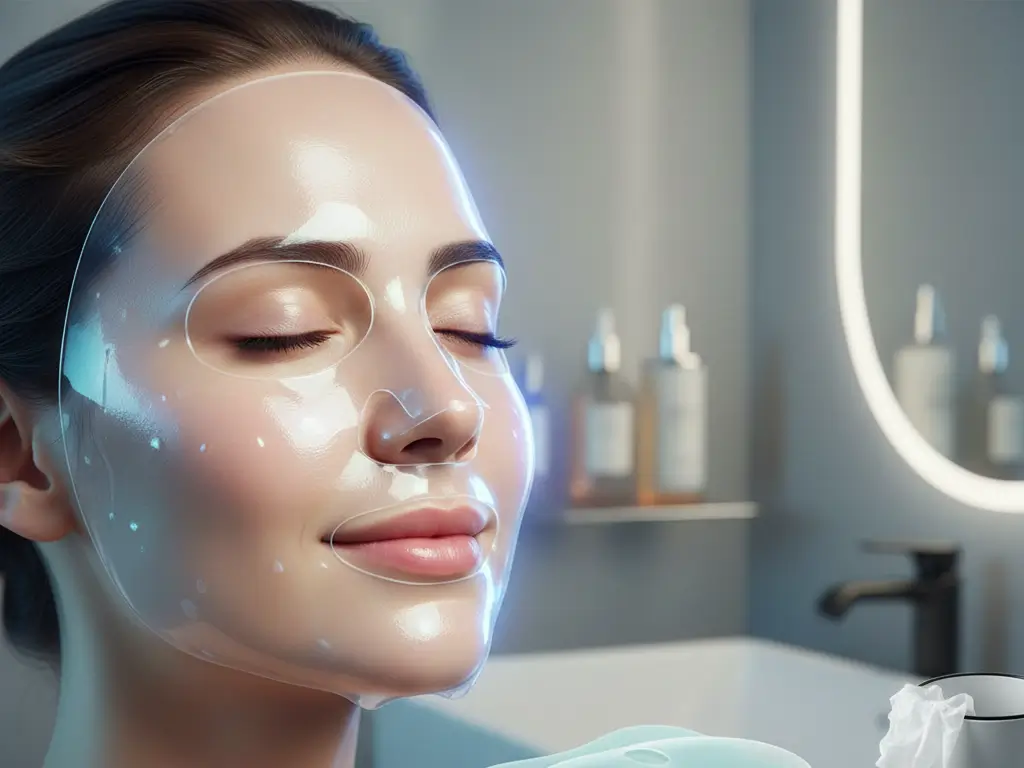
You’ve probably seen them on social media. They look a little like something from a sci-fi movie, a shiny, slightly terrifying second skin sitting on someone’s face. But here is the thing about the reusable silicone mask: it is arguably the most underrated tool in a modern skincare routine.
For years, the beauty industry sold us a lie. They told us that to get that “glass skin” glow, we needed to buy single-use cotton sheet masks at $5 to $10 a pop. We bought them, we used them for 20 minutes, and then we threw a soggy piece of trash into the bin.
I realized something critical a few years ago. You aren’t paying for the sheet mask. You are paying for the serum on the mask. The cotton sheet is just a inefficient delivery system that dries out before your skin can drink it all in.
A reusable silicone mask changes the math. It doesn’t contain ingredients itself; it acts as a seal. It forces the serums you already own into your skin and stops them from evaporating into the dry air. It’s practical, it saves you hundreds of dollars a year, and honestly? It works better.
If you are ready to stop throwing money in the trash and start getting serious about hydration, here is how to master the art of silicone masking.
How Do Reusable Silicone Masks Actually Work?
Reusable silicone masks work through occlusion. They create a physical seal over the skin that prevents Transepidermal Water Loss (TEWL). By trapping heat and moisture, the mask softens the stratum corneum (the outer skin layer) and forces active ingredients to penetrate deeper rather than evaporating into the air.
The Science of “Trapping” Moisture
Let’s get technical for a second, but keep it simple. Your skin is designed to keep things out. It is a barrier. When you apply a serum, especially in a dry environment (like an air-conditioned office or a heated bedroom in winter), a significant percentage of that water content evaporates before it absorbs.
Silicone is non-porous. When you strap a silicone mask over a layer of humectants (water-loving ingredients), you create a greenhouse effect.
Here is what happens underneath that layer:
- Temperature Rise: Your skin’s surface temperature increases slightly.
- Pore Relaxation: The warmth and moisture cause the skin to soften.
- Forced Absorption: Because the water cannot go up (evaporation), it must go down (absorption).
This is why dermatologists often use occlusion to treat severe dry skin conditions. We are just borrowing that medical principle for cosmetic gain. If you are struggling to understand which ingredients need this kind of help, check out our humectants hydration guide to see what you should be layering underneath.
The Math: Single-Use vs. Reusable
- Single-Use: $5/mask × 2 times/week = $520/year. (High waste).
- Reusable Silicone: $20 one-time purchase + existing serums = $20/year. (Zero waste).
I’m a pragmatist. I like products that pay for themselves. The biggest barrier to regular masking isn’t time; it’s usually cost and guilt. Using a disposable sheet mask daily is financially irresponsible for most of us, and the environmental impact of those foil packets and synthetic fibers is massive.
With a reusable silicone mask, you can mask every single day if you want. You buy the tool once. You can pair it with a high-end serum or affordable DIY two-ingredient masks you make in your kitchen.
The “Slippage” Factor
There is another practical benefit nobody mentions enough. Cotton sheet masks slide off. You have to lie down like a mummy for 20 minutes. Silicone masks usually come with ear loops. You can vacuum, answer emails, or do yoga while wearing one. It fits into a real life, not just a spa fantasy.
Best Ingredients to Use (And What to Avoid)
- YES: Hyaluronic acid, glycerin, peptides, aloe vera, plant extracts.
- MAYBE: Vitamin C (monitor for irritation).
- NO: Clay (needs to dry), strong exfoliating acids (high irritation risk), pure retinol (unless experienced).
The Danger of Occlusion
This is where I need you to pay attention. Because silicone amplifies absorption, it also amplifies irritation.
If you put a strong glycolic acid or a potent retinoid under a silicone mask, you are essentially “pressure cooking” that ingredient into your skin. For sensitive skin types, this can lead to chemical burns or a damaged barrier.
Safe Pairings:
- Hydrating Toners: Soak your skin with a rosewater mist or a hydrating essence first.
- Water-Based Serums: Anything targeting dehydration is gold here.
- Gentle Botanicals: Ingredients like centella asiatica or chamomile work beautifully to soothe redness under occlusion. If you are dealing with specific issues, look at how to match botanical extracts to your skin concern.
Risky Pairings:
- Retinol: If you are new to vitamin A, do not put it under silicone. If you are using gentle bio-retinol alternatives, you might be okay, but patch test first.
- Clays: Clay masks work by drying and drawing out impurities. If you put silicone on top, the clay stays wet, and you lose the benefit.
Targeted Treatments: Eye Patches and Neck Wraps
- Eye Patches: Target puffiness and fine lines; best used cold.
- Neck Wraps: Target “tech neck” lines; difficult to treat with standard creams alone.
- Brow Patches: Target “11” lines (glabellar lines) by physically preventing frowning while worn.
The Eye Patch Hack
I stopped buying disposable gold foil eye patches two years ago. Most of them are just hydrogel dipped in glycerin water.
Instead, I use reusable silicone eye patches. Here is my morning ritual for waking up a tired face:
- Apply a caffeine-based eye serum or a specialized botanical blend for under-eye puffiness.
- Take my silicone patches out of the fridge.
- Apply them over the serum.
The cold silicone constricts blood vessels (reducing puffiness) while the occlusion forces the caffeine to penetrate. It’s basically skin icing with a hydration bonus.
Don’t Neglect the Neck
The neck is often the first place to show age because the skin is thin and has fewer oil glands. Plus, we spend hours looking down at phones. Silicone neck wraps are fantastic for this. They keep the area hydrated for 20-30 minutes, plumping up those horizontal lines temporarily.
Hygiene: Keeping Your Mask Clean
- Wash: Immediately after use with warm water and gentle soap.
- Dry: Pat dry with a lint-free cloth or air dry completely.
- Store: Keep in a dedicated container or bag to prevent dust accumulation.
The Bacteria Trap
Here is the gross part: if you don’t clean your reusable silicone mask, you are just pressing yesterday’s bacteria back into your pores. Silicone is non-porous, which means bacteria doesn’t grow inside it, but it sits happily on the surface.
Use a mild, fragrance-free cleanser. Honestly, the same natural soaps suitable for sensitive skin work perfectly here. Do not use harsh scrubbing brushes or abrasive sponges; if you scratch the silicone, you create micro-tears where bacteria can hide.
Storage Matters
Don’t just throw the wet mask in your drawer. It will collect lint, dust, and hair. Once it’s tacky and dry, stick it back on the plastic sheet it came with, or put it in a dedicated Ziploc bag or travel case.
Troubleshooting Common Issues
- Mask won’t stick: Skin is too dry or too oily. Apply serum first, wait 30 seconds until tacky.
- Too tight on ears: Cut the ear loops slightly or use a “mask extender” clip behind the head.
- Sweating underneath: This is normal (it’s occlusion), but if it’s uncomfortable, shorten the wear time.
“It keeps slipping off!”
This usually happens for two reasons. One, you used a heavy oil underneath. Oils are slippery. While facial oils are great as a final step, they can make the silicone slide around. Try applying your water-based serums, putting the mask on, and then applying oil after you take the mask off to seal everything in.
Two, you might have applied too much product. You want a thin, glistening layer, not a dripping face.
Customizing the Fit
Most reusable masks are “one size fits most,” which in reality means “one size fits nobody perfectly.”
- If it’s too big: You can trim the edges with scissors. Just be careful not to create jagged edges.
- If the ear loops hurt: This is a common complaint. I recommend snipping the ear loops off entirely and just letting the moisture tension hold the mask to your face (you’ll have to lie down for this version), or using a silicone mask holder that wraps around the back of the head.
A Step-by-Step Routine for Maximum Glow
If you want to try this tonight, here is a fool-proof routine that I use before events.
- Cleanse: Remove all makeup and dirt. You want a clean canvas.
- Exfoliate (Lightly): Use a mild enzyme powder or gentle acid. This clears dead skin cells so the serum can penetrate.
- Mist: Drench your skin with a hydrating toner.
- Treat: Apply a generous layer of a humectant-rich serum (look for glycerin, hyaluronic acid, or tremella mushroom).
- Seal: Apply the reusable silicone mask. Hook it over your ears. Smooth out air bubbles.
- Wait: Leave it on for 15 to 30 minutes. (Don’t sleep in it, your skin needs to breathe eventually).
- Remove & Lock: Peel off the mask. Massage the remaining serum in. NOW, apply your moisturizer or oil to lock it all in.
This method aligns perfectly with a zero waste beauty routine, reducing your bathroom trash significantly over a year.
Is It Worth The Hype?
Here is my bottom line. If you are looking for a miracle cure that fixes acne or wrinkles overnight, a reusable silicone mask isn’t it. It is just a piece of silicone.
However, if you are looking to maximize the efficiency of the skincare products you already buy, save hundreds of dollars a year, and reduce your environmental footprint, it is an absolute no-brainer. It effectively turns a $15 bottle of serum into a $100 spa treatment by changing the physics of absorption.
Make the switch. Your wallet (and the landfill) will thank you.
- Buy a mask: Look for “medical grade” silicone. It doesn’t need to be expensive; the $10 ones work just as well as the $30 ones.
- Check your serums: Read the ingredients. Ensure you have a good water-based hydrator ready to go.
- Start slow: Try 10 minutes at first to see how your skin reacts to the increased heat and absorption.
For more insights on building a routine that actually works without the fluff, explore BeautyHealingOrganic.com for deep dives into ingredients and methods.