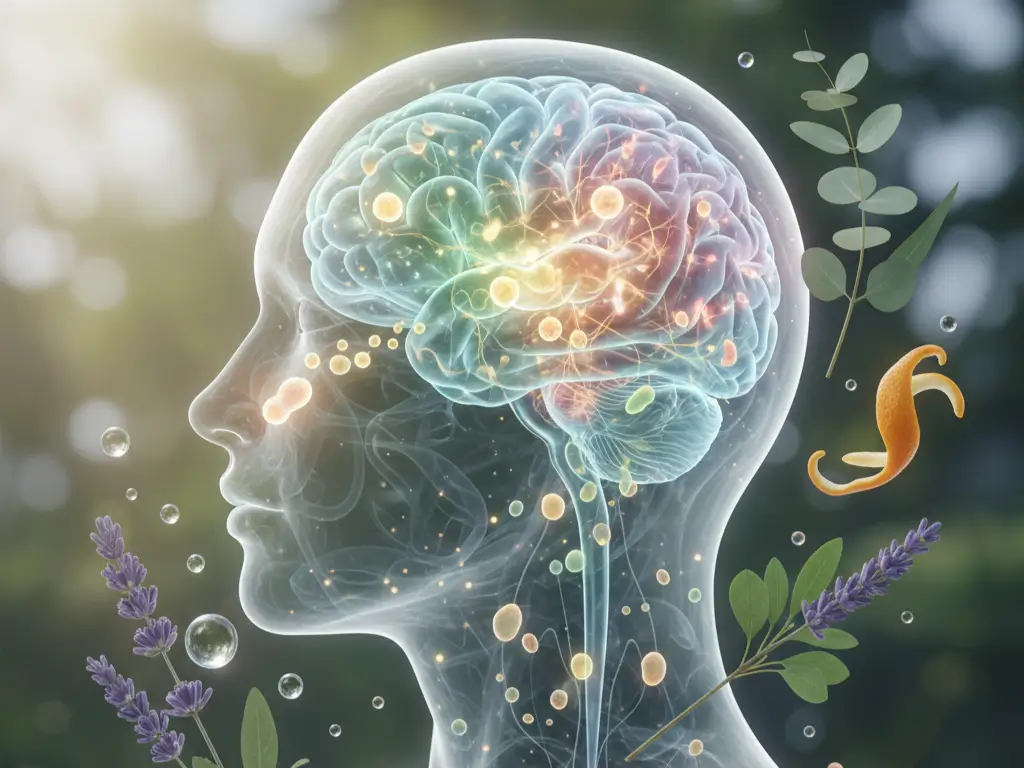
The psychology of scent explores how inhaling aroma molecules triggers the limbic system, the brain’s emotional center, to regulate mood and stress. This process, known as the “nose-brain-skin axis,” suggests that by lowering cortisol levels through scent, essential oils can indirectly improve skin barrier function, reduce inflammation, and promote collagen production.
This article provides educational information about the science of scent and essential oils. It is not intended to diagnose, treat, cure, or prevent any medical condition, mental health disorder, or skin disease. Essential oils are potent chemical compounds; incorrect use can cause injury. Always consult a healthcare professional before using essential oils, especially if you are pregnant, nursing, or managing a medical condition.
Why Smells Trigger Feelings
Have you ever caught a whiff of vanilla and felt instantly comforted, or smelled pine and felt a surge of alertness? This isn’t just nostalgia; it’s biology.
The sense of smell, or olfaction, is the only sense that bypasses the brain’s “logical” processing center (the thalamus) and wires directly into the limbic system. This is the ancient part of your brain responsible for memory, emotion, and survival instincts.
While we often focus on the topical benefits of botanical ingredients, the inhalation of these compounds plays a critical, often overlooked role in skin health. This concept, emerging from the field of psychodermatology, suggests that what you smell impacts your stress levels, which in turn dictates how well your skin heals, ages, and glows.
Understanding the Nose-Brain-Skin Axis
The Nose-Brain-Skin Axis is a biological pathway. When you inhale essential oils, the olfactory bulb signals the limbic system to reduce the production of stress hormones like cortisol. Since high cortisol degrades collagen and impairs the skin barrier, reducing stress through scent physically improves skin health.
The Biological Pathway
When you inhale an essential oil, you aren’t just smelling a fragrance; you are inhaling volatile organic compounds (VOCs). Here is the rapid-fire journey those molecules take:
- Detection: Aroma molecules enter the nose and bind to receptors on the olfactory epithelium.
- Transmission: The olfactory nerve transmits signals directly to the olfactory bulb in the brain.
- Emotional Processing: The signal moves to the amygdala (emotion processing) and the hippocampus (memory).
- Physiological Response: The brain signals the autonomic nervous system to shift from “fight or flight” (sympathetic) to “rest and digest” (parasympathetic).
Why This Matters for Your Skin
You might be wondering, “What does my brain’s stress response have to do with my face?” The answer lies in cortisol.
When your limbic system detects stress, it triggers the release of cortisol. Chronic cortisol exposure is catastrophic for the skin. It breaks down collagen (leading to wrinkles), increases sebum production (leading to acne), and weakens the skin’s ability to hold water.
By using the psychology of scent to hack your limbic system and lower stress, you are essentially stopping skin damage at the source.
The Chemistry of Calm
Essential oils work because of specific chemical constituents. Linalool (found in lavender) modulates neurotransmitters to promote relaxation. Limonene (found in citrus) creates uplifting effects. Sesquiterpenes (found in frankincense) can cross the blood-brain barrier to oxygenate the limbic system.
To understand the psychology of scent, we have to look at chemistry. It is not magic; it is molecules.
1. Linalool & Linalyl Acetate (The Relaxers)
Found predominantly in Lavender and Clary Sage.
- Brain Impact: Studies suggest linalool acts on the central nervous system similarly to mild sedatives, modulating GABA receptors to reduce neuronal excitability.
- Skin Impact: By lowering systemic stress, these compounds help reduce “stress skin” symptoms like flare-ups and redness.
2. Limonene (The Uplifters)
Found in Lemon, Grapefruit, and Bergamot.
- Brain Impact: Linked to increased serotonin and dopamine production, promoting alertness and mood elevation.
- Skin Impact: While excellent for mood, limonene is a known sensitizer. It highlights the importance of understanding essential oils safe skincare practices, never apply these undiluted.
3. Alpha-Pinene (The Grounders)
Found in Pine, Cypress, and Rosemary.
- Brain Impact: Associated with “forest bathing” effects; reduces mental fatigue and aids memory retention.
- Skin Impact: Often anti-inflammatory, helpful for puffiness when properly diluted.
Note on Adaptogens: Many of these oils work synergistically with internal support. Exploring adaptogens and nootropics in skincare can offer a holistic approach to stress management.
Top 3 Oils for the Mind-Skin Connection
Three powerhouse oils for the mind-skin connection are Lavender (anxiety reduction/skin healing), Frankincense (grounding/cellular regeneration), and Rose (grief support/anti-aging). Each offers dual benefits for emotional regulation and physical dermal repair.
1. Lavender (Lavandula angustifolia)
- The Psychology: Widely researched for anxiolytic (anxiety-reducing) effects. It can lower heart rate and blood pressure within minutes of inhalation.
- The Skin Benefit: Anti-inflammatory and antimicrobial. It’s one of the few oils that bridges the gap between calming the mind and soothing irritated skin conditions.
2. Frankincense (Boswellia carterii)
- The Psychology: Deepens breathing and induces a meditative state. It affects the hypothalamus, often used to break cycles of obsessive thinking.
- The Skin Benefit: A legendary ingredient for mature skin. It encourages cellular turnover and pairs beautifully with regenerative carriers like rosehip oil.
- Learn more about specific pairings in our specialty natural ingredients guide.
3. Rose Otto (Rosa damascena)
- The Psychology: Associated with relieving grief and depression. It has one of the highest vibrational frequencies of tangible matter, theoretically influencing emotional state.
- The Skin Benefit: Intensely hydrating and vascular constricting (reduces redness). It is vital for repairing the plant ingredients skin barrier.
How to Use Scent Without Harming Your Skin
Safe usage requires dilution. Never apply essential oils directly to the skin (neat). Typical facial dilution is 0.5% to 1% (3-6 drops per ounce of carrier oil). Be aware of phototoxicity with citrus oils, which can cause severe burns if exposed to sunlight.
Safety Warning:
- Do NOT ingest essential oils unless under the care of a clinical aromatherapist.
- Stop use immediately if you experience redness, burning, or itching.
- Pets: Many oils (like tea tree and peppermint) are toxic to cats and dogs. Diffuse in well-ventilated areas away from pets.
The Art of Dilution
Since essential oils are volatile concentrates, they must be dispersed in a lipid (fat) base. This not only makes them safe but helps them penetrate the skin.
- Carrier Oils: Jojoba, Argan, and Marula are excellent choices. See our facial oils types guide to pick the right carrier for your skin type.
- Ratios:
- Face: 0.5% to 1% dilution.
- Body: 2% to 3% dilution.
- Wash-off: 2% to 4% dilution.
Phototoxicity Awareness
Certain oils, particularly cold-pressed citrus (Bergamot, Lemon, Lime), contain furanocoumarins. These compounds react with UV light to cause blistering burns. If using citrus oils, stick to steam-distilled versions (which are usually FCF – Furanocoumarin Free) or use them only in your evening routine.
Creating a “Mindful Beauty” Ritual
A mindful beauty ritual combines tactile skincare application with intentional inhalation. This activates the parasympathetic nervous system (rest and digest) before sleep, enhancing overnight skin repair mechanisms and improving sleep quality.
Step 1: The Reset Inhalation
Before applying any product, place a few drops of your natural perfumery fragrance or diluted oil blend in your palms. Rub them together to warm the volatiles. Cup your hands over your nose (without touching your eyes) and take three deep, slow breaths. This signals your amygdala that you are safe.
Step 2: The Massage Application
Apply your oil using slow, upward strokes. This tactile stimulation lowers cortisol further. You might incorporate tools like a jade or rose quartz roller to aid lymphatic drainage while you inhale the scent.
Step 3: The Environment
Extend the scent beyond your face. Using a DIY rosewater glycerin mist on your pillowcase can anchor the association between that scent and sleep, helping to combat insomnia.
Pro Tip: Consistency is key. Pavlovian conditioning works on humans, too. If you smell lavender every night before sleep, eventually the smell alone will trigger drowsiness, even if you aren’t tired.
When Scent Isn’t Enough: Professional Care
While essential oils are powerful supportive tools, they are not cures for medical conditions. If you have persistent cystic acne, eczema, severe anxiety, or depression, home remedies should not replace professional medical intervention.
When to Seek a Professional:
- Dermatologist: If skin irritation persists for more than 48 hours or if you see signs of infection (heat, oozing, spreading redness).
- Mental Health Professional: If you are using essential oils to self-medicate for severe anxiety, depression, or trauma. Scent is a support, not a substitute for therapy or medication.
- Clinical Aromatherapist: If you want to create therapeutic blends for specific health concerns or for use during pregnancy/breastfeeding.
Integrating mindful skincare to reduce stress is a lifestyle choice, but it operates best alongside professional advice when dealing with chronic issues.
The Future of Neuro-Cosmetics
We are currently witnessing the rise of “Neuro-Cosmetics”, products specifically engineered to impact mood. The science is clear: the boundary between your brain and your beauty is permeable.
By understanding the psychology of scent, you gain a powerful tool. You aren’t just applying a serum; you are dosing your nervous system with calm. You are telling your body that it is safe to divert energy from survival mode to repair mode.
Your Next Steps:
- Immediate: Check your current skincare products. Do they contain synthetic fragrances (which can trigger headaches) or natural oils?
- This Week: Try the “Palm Inhalation” technique before your nightly routine using a simple, high-quality lavender or chamomile oil diluted in jojoba.
- Long Term: Observe your skin’s reaction to stress. Does a calming scent routine reduce your breakouts over a month?
For a deeper dive into the world of botanical healing and to find the specific ingredients that match your biological needs, explore the comprehensive resources at beautyhealingorganic.com.
SOURCES CITED
- Sowndhararajan, K., & Kim, S. (2016). Influence of Fragrances on Human Psychophysiological Activity: With Special Reference to Human Electroencephalographic Response. Scientia Pharmaceutica.
- Koulivand, P. H., Khaleghi Ghadiri, M., & Gorji, A. (2013). Lavender and the Nervous System. Evidence-Based Complementary and Alternative Medicine.
- Chen, Y., & Lyga, J. (2014). Brain-Skin Connection: Stress, Inflammation and Skin Aging. Inflammation & Allergy – Drug Targets.
- Tisserand, R., & Young, R. (2013). Essential Oil Safety: A Guide for Health Care Professionals. Churchill Livingstone. (Referenced for dilution and phototoxicity data).