I’ve watched three friends waste $40 powder cleansers because they couldn’t figure out the right water ratio. One mixed it so thick it sat on her skin like paste. Another used so much water it ran down her arms before doing anything useful.
Powder-based skincare products are concentrated formulas you activate with water or other liquids right before use.
They promise preservative-free ingredients, customizable consistency, and zero-waste packaging. But here’s what most articles won’t tell you: the powder itself matters less than how you activate it. Mix it wrong, and even the best formula underperforms. Use hard water with high mineral content, and you’ll get completely different results than someone with filtered water.
If you’re considering powder skincare, this guide will save you from the trial-and-error phase that costs most people money and frustration.
Why Powder Skincare Exists (Not Just Because It’s Trendy)
Powder skincare eliminates water from formulas, which means no preservatives are needed to prevent bacterial growth. This creates more stable active ingredients and reduces packaging weight, though it requires user activation before each use.
The format isn’t new. Japanese enzyme powder cleansers have existed for decades, and your grandmother probably used powder face masks. What changed is the clean beauty movement’s focus on preservative-free options.
Here’s the science that matters: water in skincare creates an environment where bacteria and mold thrive. Traditional formulas need preservatives, parabens, phenoxyethanol, or natural alternatives like leuconostoc. Remove the water, and you remove the preservation problem entirely.
This connects directly to the broader anhydrous skincare movement, where products contain zero water. Balms, oils, and powders all fall into this category.
But there’s another advantage nobody talks about: stability. Vitamin C is notoriously unstable in water-based serums, oxidizing within months. In powder form, L-ascorbic acid stays potent for over a year. Same with enzymes like papain and bromelain, they’re far more stable when dry.
The environmental angle is more complicated than brands admit. Yes, you’re shipping less weight (no water means lighter packages). But if you’re activating with tap water at home, you’re not necessarily reducing your water footprint. What you are reducing is plastic waste from multiple product bottles, especially if you’re using refillable beauty systems.
What surprised me most about powder formats is the customization factor. You control the consistency by adjusting your liquid ratio. Want a thicker mask? Use less water. Need a gentle daily exfoliant? Add more liquid for a thinner consistency. Traditional products force you into one texture whether it suits your needs or not.
What Are the Real Benefits of Powder-Based Skincare?
Powder products offer preservative-free formulas, longer shelf life, concentrated actives, customizable consistency, and reduced packaging. They work best for exfoliation, cleansing, and targeted treatments when you need maximum ingredient stability.
Let me break down the benefits that actually matter in practice:
Preservative-Free Formulas Mean Fewer Sensitivities
If you react to common preservatives, powder formats eliminate that variable entirely. I’ve seen this make a real difference for people with sensitive, acne-prone skin who struggle with traditional cleansers. No preservatives means fewer potential irritants, though you’ll still need to watch for active ingredients that might cause reactions.
Concentrated Actives at Full Potency
A powder vitamin C product contains pure L-ascorbic acid at whatever percentage the formula specifies, often 10-20%. Compare that to a serum where the active ingredient is diluted in a water base, and you’re getting more bang for your buck. The same applies to exfoliating acids in powder form, which maintain potency until you activate them.
You Control the Texture and Strength
This is where powder skincare shines for practical use. On days when my skin feels sensitive, I add more water to my enzyme cleanser for a gentler effect. When I need deeper exfoliation, I use less liquid for a concentrated paste. Traditional products don’t give you this flexibility, you get what’s in the bottle.
Extended Shelf Life Without Refrigeration
Powder products typically last 12-24 months unopened, and 6-12 months after opening. Water-based vitamin C serums oxidize in 3-6 months even when refrigerated. For people who don’t use products daily, powder formats reduce waste from expired products.
Lighter Shipping and Less Plastic
A 30-day supply of powder cleanser weighs about 1-2 ounces versus 4-6 ounces for a liquid equivalent. That’s 70% less shipping weight. Many powder products come in glass jars or aluminum tins that fit into zero-waste beauty routines more easily than plastic pump bottles.
Travel-Friendly and TSA-Approved
Powder products don’t count toward your liquid limits on flights. A month’s worth of powder cleanser, mask, and exfoliant takes up less space than a single full-size liquid cleanser.
Here’s what I’ve noticed after two years of using powder formats: they work exceptionally well for specific product categories. Cleansers, exfoliants, and masks perform better in powder form than oils or moisturizers. The format matches the function, you want these products to be active and concentrated, not diluted and preserved.
The part that surprised me most? Cost per use is often lower than liquid equivalents. A $35 powder cleanser that lasts 3-4 months beats a $25 liquid cleanser you replace monthly. You’re paying for concentrated actives without the filler ingredients.
The Honest Drawbacks Nobody Mentions
Powder skincare requires more effort, creates potential mess, needs proper activation technique, and doesn’t work well for all product types or skin conditions. Some people will find the learning curve isn’t worth the benefits.
Let me be direct about the downsides, because this is where most content goes silent:
The Learning Curve Is Real
You’ll waste product during the first week or two. I dumped too much powder into my palm, added too little water, and watched it fall into the sink more times than I want to admit. There’s a technique to cupping your hand, adding the right amount of powder, and mixing without losing half of it. Some people never get comfortable with this, and that’s fine, it doesn’t make you bad at skincare.
Water Quality Affects Results More Than Anyone Admits
If you have hard water with high mineral content, it changes how powder products perform. Calcium and magnesium in hard water can interfere with cleansing powders and affect pH. I didn’t realize this until I traveled and noticed my powder cleanser foamed differently with softer water. If you’re serious about powder skincare, you might need to use filtered water for activation. A shower filter that addresses chlorine and hard water can help, or just keep filtered water in your bathroom.
Moisture Contamination Shortens Shelf Life
The biggest enemy of powder products is getting water into the container. One wet hand reaching into a jar can introduce enough moisture to cause clumping or bacterial growth. You need to work with completely dry hands or use a dry spoon to scoop product. This extra step annoys some people enough that they abandon powder formats entirely.
Not All Product Types Work in Powder Form
Moisturizers, eye creams, and gentle daily serums don’t translate well to powder. You want these products to be emollient and soothing, which requires oils and humectants that don’t work in dry powder form. Some brands try to force the format where it doesn’t belong. If you’re building a complete organic skincare routine, powder will only replace certain steps, not everything.
The Mess Factor During Morning Routines
Powder on your bathroom counter, powder on your hands, powder in your sink, it happens. If you’re rushed in the morning, this format adds time and cleanup. I’ve learned to lay down a washcloth under my work area, but it’s still more involved than pumping liquid from a bottle.
Compromised Barrier Function Makes Powder Exfoliants Too Harsh
If your skin barrier is damaged, even a gentle powder exfoliant mixed with extra water can be too much. The physical texture combined with enzymatic or chemical exfoliation is more aggressive than liquid alternatives. People with rosacea or extremely sensitive skin often do better with liquid formats they can control more precisely.
What nobody tells you: powder skincare isn’t more “natural” by default. Some powder products contain synthetic ingredients just like traditional products. The format doesn’t determine the ingredient philosophy, the brand does. Don’t fall for the assumption that powder equals clean beauty automatically.
How to Actually Use Powder Skincare Products (Without the Mess)
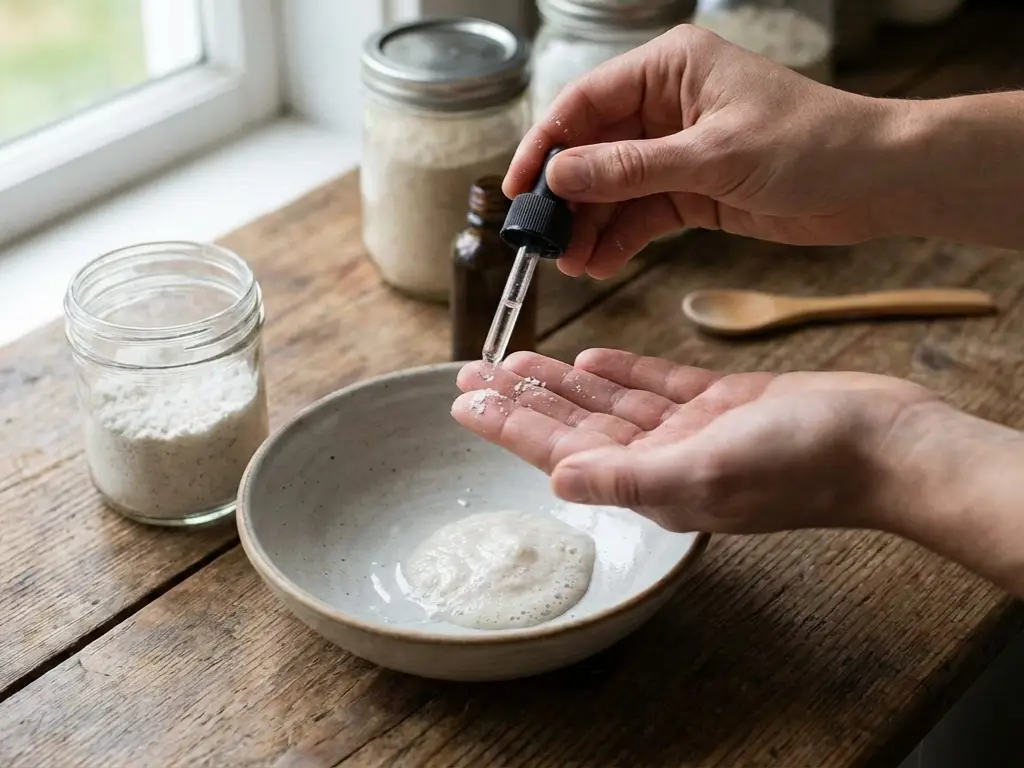
Dispense powder into your dry palm, add 3-5 drops of liquid, mix into a paste with your fingertip, then add more liquid to reach desired consistency. The ratio matters more than the specific amounts.
Here’s what I’ve learned after dozens of wasted applications:
The Activation Triangle: Powder + Water + Technique
Success comes from getting all three elements right. Start with a dry palm cupped slightly to prevent powder from sliding off. Dispense a quarter-sized amount of powder (about 1/4 teaspoon for most cleansers and exfoliants).
Add just 3-5 drops of water first, this is the step most people skip. Mix this small amount into a thick paste using your opposite hand’s fingertip. Once you have a paste, gradually add more liquid until you reach the consistency you want. This prevents the too-thin, runny mixture that slides off before you can use it.
For masks, you can mix in a small bowl or directly on your face in sections. I prefer working in a small dish so I can see the consistency before application.
What to Activate With (It’s Not Always Water)
Plain water works for most products, but you have options:
- Filtered or distilled water: Best for hard water areas
- Rosewater or hydrosols: Adds soothing properties to masks
- Aloe vera juice: Extra calming for sensitive skin
- Green tea (cooled): Antioxidant boost for powder masks
- Facial oils: For extremely dry skin, though this changes the product texture significantly
What doesn’t work well: milk, honey, or yogurt in powder cleansers meant to rinse off, they’re too thick and difficult to remove completely.
Temperature Matters for Enzyme Powders
Enzyme cleansers with papain or bromelain activate better with lukewarm water (around 85-95°F). Hot water can denature enzymes, making them less effective. Cold water doesn’t activate them fully. This connects to pineapple bromelain exfoliation chemistry, enzymes need the right temperature to work.
Application Techniques by Product Type
For cleansers: Mix in your palm, apply to damp face in circular motions for 30-60 seconds, rinse thoroughly. Don’t let it sit like a mask unless the product specifically says to.
For exfoliating powders: Apply to damp skin, use gentle circular motions on areas that need exfoliation, avoid eye area, rinse after 1-2 minutes maximum. These are more concentrated than liquid exfoliants.
For masks: Mix to a spreadable consistency (like Greek yogurt), apply in an even layer, leave on for the recommended time (usually 10-15 minutes), rinse with lukewarm water. If you’re using clays in natural skincare, don’t let them dry completely on your skin, spritz with water if they start to tighten too much.
Preventing Contamination
Keep a small spoon or scoop in your powder container. Never reach in with wet or damp hands. If you do accidentally introduce moisture, use that product up quickly rather than letting it sit for months.
Store powder products in a cool, dry place, not in your shower where humidity is high. Bathroom cabinets work if they’re away from direct steam.
The Ratio Guide I Wish I’d Had
- Thick paste (masks, spot treatments): 1 part powder to 0.5 parts liquid
- Medium consistency (cleansers): 1 part powder to 1 part liquid
- Thin, gentle (daily use): 1 part powder to 1.5-2 parts liquid
These ratios are starting points. Adjust based on the specific product and your preferences. Some powders foam more than others, some are finer or coarser ground.
What changed my results entirely: mixing in stages rather than dumping powder and water together at once. That one technique eliminated 80% of my waste and mess.
Which Powder Products Work Best, and Which to Skip
Powder cleansers, enzyme exfoliants, vitamin C treatments, and clay masks perform exceptionally well in powder form. Skip powder moisturizers, eye treatments, and everyday serums, liquid formats work better for these.
Products Worth the Learning Curve
Enzyme Powder Cleansers
These are the gateway product for good reason. Japanese and Korean beauty brands have perfected this format over decades. Look for papain (from papaya), bromelain (from pineapple), or rice enzymes. They provide gentle exfoliation while cleansing without the harsh surfactants in many liquid cleansers.
Best for: Daily cleansing for normal to oily skin, gentle exfoliation for sensitive skin when mixed with extra water. If you’re exploring K-beauty innovations, enzyme powder cleansers are a staple worth trying.
Vitamin C Powder Treatments
Pure L-ascorbic acid in powder form stays stable until you mix it. You can customize the concentration, mix with a small amount of water or aloe for a potent treatment, or add to your moisturizer for a gentler daily boost. This addresses the main problem with vitamin C in skincare, oxidation and instability in water-based serums.
Best for: Anyone frustrated with vitamin C serums turning orange, people who want to control concentration, those who don’t use vitamin C daily.
Clay-Based Powder Masks
Pre-mixed clay masks contain preservatives and often fillers. Pure clay powders let you mix fresh batches, adjust consistency, and combine different clays for your skin needs. French green clay for oily skin, kaolin for sensitive skin, bentonite for deep cleaning.
Best for: Weekly or bi-weekly masking, custom blending with other ingredients, people who want fresh formulations. Pairs well with understanding different clays in natural skincare.
Powder Exfoliants with AHAs/BHAs
Some brands offer powder exfoliants with glycolic, lactic, or salicylic acid that activate when mixed with water. These tend to be gentler than liquid acid toners because you control the dilution and contact time.
Best for: People who find liquid acid toners too harsh, those who want occasional rather than daily exfoliation.
Products You Should Skip in Powder Form
Powder Moisturizers
I’ve tried these. They don’t work well. You end up with a thin, watery consistency that doesn’t provide the occlusion and emollient benefits you need from a moisturizer. The format doesn’t match the function. Stick with traditional creams, lotions, or facial oils for moisturizing.
Eye Treatments
The delicate eye area needs gentle, pre-formulated products that won’t risk getting powder in your eyes or requiring harsh mixing and application. This is one area where powder creates more risk than benefit.
Powder Toners
Some brands sell these, but they’re solving a problem that doesn’t exist. Liquid toners work perfectly well, and the powder format doesn’t add meaningful benefits while making application more complicated.
Daily Hydrating Serums
Hyaluronic acid and other humectants work best in pre-formulated serums where the ingredient ratios are precisely calibrated. Powder versions require exact mixing that’s hard to replicate consistently at home.
Integration Strategy
If you’re curious about powder skincare, start with one product, probably an enzyme cleanser since the learning curve is lowest. Use it for a month before adding more powder products. This prevents the overwhelming feeling of changing your entire routine at once.
For those building a skinimalist routine, one high-quality powder cleanser and a clay mask might be all you need beyond your moisturizer and sunscreen.
The products that justify the powder format share common traits: they benefit from maximum stability, you don’t need them daily, and concentrated actives matter more than elegant texture. That’s your test for whether a powder version makes sense.
Making Powder Skincare Work for Your Life
Powder-based skincare products deliver real benefits when the format matches your needs and habits. The preservative-free formulas, stable actives, and customizable consistency work exceptionally well for cleansers, exfoliants, vitamin C treatments, and masks.
But they require more technique, create potential mess, and don’t replace every product in your routine.
Here’s what I’d do if I were starting today:
Start with one powder enzyme cleanser. Use it for morning cleansing when you have time to mix properly. Keep your evening liquid cleanser as backup for rushed days.
Add a clay powder mask second. Mix small batches weekly, experiment with different liquids for activation, and pay attention to how your skin responds to fresh versus pre-mixed formulas.
Consider vitamin C powder third if you’ve been frustrated with oxidized serums. Mix just enough for 2-3 days at a time if you want pre-made solution, or activate fresh each use.
Skip powder formats for moisturizers, eye treatments, and products you need to apply quickly without thinking.
The critical factor isn’t whether powder skincare is “better” than traditional formats, it’s whether the specific benefits matter enough to you that you’ll actually use the products consistently. If you love the ritual of mixing fresh formulas and appreciate preservative-free options, powder skincare becomes a valuable part of your routine. If you need grab-and-go simplicity, these products will sit unused on your shelf.
For more insights on building an effective routine with the right format for each step, explore our complete guide to skincare layering to understand how powder products fit into your overall regimen.
The powder format works best when you respect both its advantages and its limitations. Start small, master the activation technique, and expand only into products where the powder format genuinely serves your skin better than the alternatives.