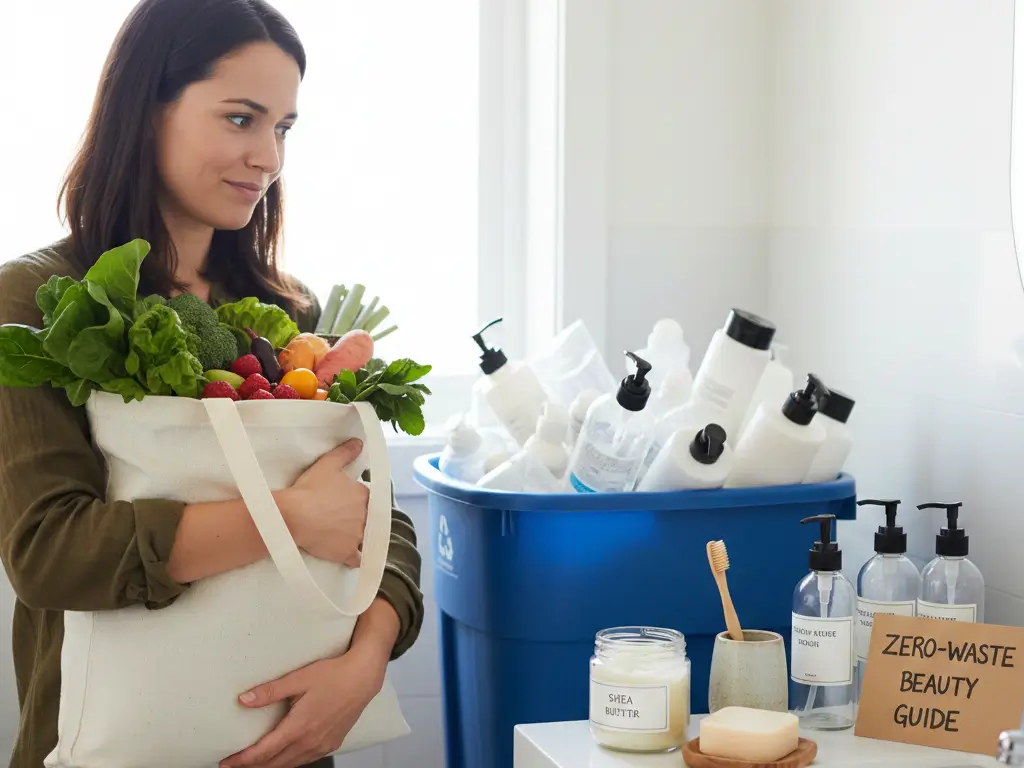
My wake-up call came while unpacking groceries. I realized my reusable bags held organic produce, yet my bathroom overflowed with single-use plastic bottles. The disconnect was almost comical. Here I was, feeling proud about my canvas tote collection while tossing empty shampoo bottles into the recycling bin, knowing most would probably end up in landfills anyway.
Creating a zero-waste natural beauty routine means replacing single-use, synthetic products with sustainable, refillable, or package-free alternatives made from natural ingredients.
This guide walks you through building that routine from scratch, without requiring you to throw out everything you own or spend a fortune on trendy eco-products. I’ve made plenty of mistakes during my own transition (including a homemade deodorant disaster that left me smelling like a salad), so consider this your shortcut past the learning curve.
While natural ingredients are generally gentle, everyone’s skin is different. Patch test new products and DIY recipes before full application. If you have sensitive skin, allergies, or skin conditions like eczema or rosacea, consult a dermatologist before making major routine changes. This guide provides general information, not personalized skincare advice.
Why Zero-Waste Natural Beauty Actually Matters
The beauty industry produces over 120 billion units of packaging annually, most of which isn’t recycled. Switching to a zero-waste natural routine reduces your environmental footprint while often simplifying your skincare approach with fewer, more effective products.
The Environmental Protection Agency reports that containers and packaging make up nearly 30% of municipal solid waste in the United States. Your bathroom contributes more than you might think.
Beyond packaging, conventional beauty products often contain microplastics, synthetic fragrances, and ingredients that wash down drains and into waterways. When you switch to natural ingredients and botanical extracts, you’re making a choice that extends beyond your bathroom.
But here’s what most zero-waste content won’t tell you: perfection isn’t the goal. Progress is. A routine that’s 80% sustainable and actually works for you beats a 100% zero-waste routine you abandon after two weeks.
The financial argument matters too. Multi-use natural products and DIY alternatives often cost less per use than their conventional counterparts. My monthly beauty spending dropped by roughly 40% after making the switch, though the upfront investment in quality reusable products took some planning.
Start With a Beauty Waste Audit: Your First Step
Before buying anything new, inventory your current products. Note what you use daily, what’s collecting dust, and what packaging each item comes in. This audit reveals your actual needs versus marketing-driven purchases.
I recommend spending one week tracking every beauty product you touch. Write it down. You’ll probably notice patterns: maybe you reach for the same three products daily while ignoring the fifteen “miracle” serums you bought on impulse.
Your waste audit checklist:
| Product Category | Daily Use? | Package Type | Nearly Empty? | Sustainable Swap Possible? |
| Cleanser | Yes/No | Plastic/Glass/Other | Yes/No | Yes/No |
| Moisturizer | Yes/No | Plastic/Glass/Other | Yes/No | Yes/No |
| Shampoo | Yes/No | Plastic/Glass/Other | Yes/No | Yes/No |
| Makeup items | Yes/No | Plastic/Glass/Other | Yes/No | Yes/No |
This exercise serves two purposes. First, you finish what you already own, the most sustainable choice is using what exists. Second, you identify your true essentials versus products you’ve been guilted into thinking you need.
Most people discover they can function beautifully with far fewer products. This connects directly to the skinimalism philosophy that’s been gaining traction for good reason.
The Core Zero-Waste Natural Routine: Essential Categories
A complete zero-waste routine covers five categories: cleansing, moisturizing, targeted treatment, sun protection, and body care. Each category has sustainable, natural alternatives that often outperform their conventional counterparts.
Cleansing: Where Most People Should Start
The oil cleansing method revolutionized my approach. One bottle of quality oil, jojoba, sweet almond, or sunflower, removes makeup, cleanses skin, and comes in recyclable glass. Compare that to buying separate makeup remover, face wash, and micellar water.
For those who prefer bar alternatives, solid cleansing bars now exist for both face and hair. The key is choosing sulfate-free options that won’t strip your skin’s natural moisture barrier.
Safety note: If you’re new to oil cleansing, start with lighter oils like grapeseed or jojoba. Heavier oils like coconut can clog pores for some skin types. Always patch test on a small area for 24-48 hours first.
Moisturizing: Less Is Actually More
Understanding carrier oils and butters transformed how I approach hydration. A single jar of shea butter can replace body lotion, hand cream, cuticle oil, and even hair mask. That’s four plastic bottles eliminated with one package-free or glass-packaged product.
For face moisturizing, facial oils matched to your skin type often work better than complex emulsions with twenty ingredients you can’t pronounce.
Tools and Application
Reusable beauty tools deserve attention here. Swap cotton rounds for washable bamboo pads. Replace plastic razors with safety razors. Consider a konjac sponge for gentle daily exfoliation, it’s biodegradable and requires no additional product.
Smart Swaps for Every Step of Your Routine
Transitioning to zero-waste works best when you replace products as they run out. Prioritize high-waste, frequently repurchased items first: shampoo, conditioner, body wash, and deodorant.
Hair Care Transitions
Shampoo and conditioner bars have improved dramatically over the past few years. The initial adjustment period (where your hair might feel different) typically lasts two to four weeks as your scalp recalibrates. Supporting your scalp microbiome during this transition helps.
For styling, botanical hair treatments often come in minimal or recyclable packaging. A small amount of argan or marula oil replaces multiple styling products.
Body Care Simplification
Bar soap seems obvious, but the game-changer was discovering that my cleanser, shave cream, and body wash could all be the same product. Quality natural soaps work for everything.
Natural deodorant requires its own conversation. Your body needs time to adjust, usually two to three weeks. This is normal, not a sign of failure. Brands offering refillable systems make this transition more sustainable long-term.
Important: Natural deodorants don’t prevent sweating (that’s what antiperspirants do). They neutralize odor. If you have concerns about excessive sweating, speak with a healthcare provider.
Skincare Treatments
For targeted concerns, natural exfoliating acids like fruit enzymes and gentle plant-based options address texture and tone without harsh synthetic formulas. Bio-retinols offer gentler alternatives for anti-aging concerns.
The layering of skincare principles still apply with natural products, you just use fewer layers overall.
DIY Zero-Waste Beauty Recipes to Try
Homemade beauty products eliminate packaging entirely and cost pennies per use. Start with simple recipes using 2-3 ingredients before attempting complex formulations.
Always patch test DIY products on a small skin area 24-48 hours before full use. Label and date everything. Most DIY products without preservatives should be used within 1-2 weeks or stored in the refrigerator. If you notice any irritation, redness, or reaction, discontinue use immediately.
Beginner-Friendly Recipes
Simple Face Oil Blend
- 1 oz jojoba oil (mimics skin’s natural sebum)
- 3-4 drops of essential oil appropriate for your skin type (optional)
Store in a dark glass bottle. Apply 3-4 drops to damp skin.
For more complex DIY formulations, understanding natural emulsification becomes important. But honestly? You don’t need to become a cosmetic chemist. Simple preparations work beautifully.
Two-ingredient masks offer an easy entry point. Honey and oatmeal. Yogurt and turmeric. Avocado and olive oil. These combinations have nourished skin for generations before the beauty industry existed.
If you have rosacea, eczema, psoriasis, or highly reactive skin, consult a dermatologist before experimenting with homemade products. Some natural ingredients (like citrus oils) can cause photosensitivity or irritation.
Building Your Routine: Week-by-Week Transition Plan
Transition gradually over 8-12 weeks, replacing one product category at a time. This approach prevents overwhelming your budget, your skin, and your motivation.
Weeks 1-2: Cleansing
Replace your face wash with an oil or bar option. Continue using everything else normally. Let your skin adjust.
Weeks 3-4: Body Care
Swap body wash for bar soap. Introduce your sustainable bathroom products like bamboo toothbrush and reusable cotton rounds.
Weeks 5-6: Hair Care
Transition to shampoo and conditioner bars. Your hair may go through an adjustment period, this is temporary.
Weeks 7-8: Moisturizing
Replace lotions and creams with oils and butters. Explore botanical butter options for different needs.
Weeks 9-12: Refinement
Address remaining products. Explore DIY body care recipes. Find your groove.
This timeline isn’t rigid. Some people move faster; others need more time. The goal is sustainability, in both senses of the word.
Maintaining Your Zero-Waste Routine Long-Term
Sustainability requires systems, not willpower. Set up refill subscriptions, identify local refill stations, and build relationships with brands that align with your values.
Finding clean beauty brands committed to sustainability makes maintenance easier. Many offer take-back programs for packaging or refill pouches that reduce waste significantly.
Create a rotation for seasonal adjustments. Your skin and hair needs change throughout the year. Having versatile products that adapt prevents the temptation to buy specialized items you’ll barely use.
The everything shower ritual concept works beautifully here, designating one day weekly for deeper treatments using your multi-purpose products.
For comprehensive guidance on structuring your approach, the organic skincare routine guide offers detailed frameworks adaptable to zero-waste principles.
Your Zero-Waste Journey Starts Now
Building a zero-waste natural beauty routine isn’t about perfection or purchasing an entirely new product collection overnight. It’s about gradual, intentional choices that align your values with your daily habits.
The three products making the biggest environmental impact for most people: solid shampoo, reusable cotton rounds, and multi-use oil or butter for moisturizing. Start there.
- Complete your beauty waste audit. Finish products you already own.
- Make your first sustainable swap when something runs out.
- If you have specific skin concerns or sensitivities, consider consulting a dermatologist to ensure your new routine supports your skin health.
For more guidance on building a complete zero-waste beauty routine and exploring natural beauty options, the journey continues with every small choice you make.
The bathroom that once overflowed with plastic now holds perhaps eight products total. Each one earns its space. Each one aligns with values I actually hold. That quiet consistency means more than any dramatic overnight transformation could.
SOURCES CITED
- U.S. Environmental Protection Agency. (2023). Facts and Figures about Materials, Waste and Recycling. https://www.epa.gov/facts-and-figures-about-materials-waste-and-recycling
- American Academy of Dermatology. General guidance on patch testing and consulting dermatologists for skin conditions. Referenced for professional consultation recommendations.
- Beauty industry packaging statistics (120 billion units annually) derived from environmental sustainability research and industry reports.
- Natural deodorant transition period guidance based on dermatological understanding of skin microbiome adjustment.