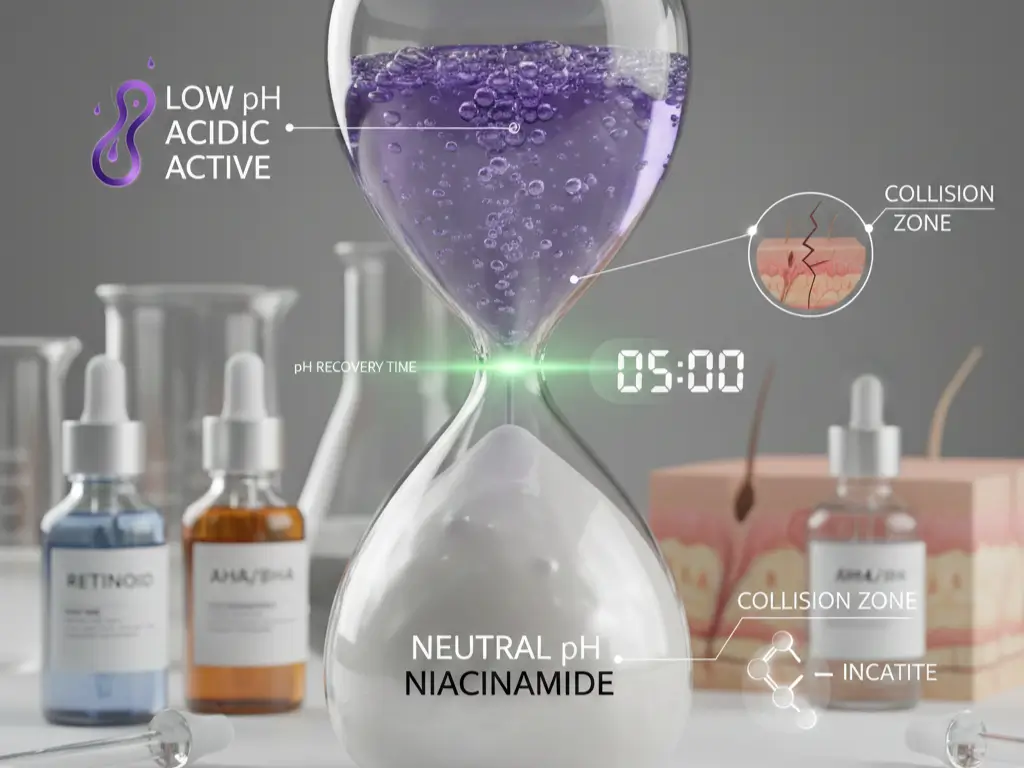
I’d carefully layer my vitamin C, wait what felt like forever, apply niacinamide, and my skin would flush red within minutes.
Turns out, I was doing exactly what most guides recommend. The problem? Generic advice ignores what’s actually happening on your skin’s surface.
Niacinamide works beautifully after actives, but only if you understand pH recovery time. Layer too soon, and you risk inactivating both products or irritating your skin. The wait time isn’t arbitrary, it depends on your specific formulations, not just product categories.
Most articles treat niacinamide as universally gentle. And compared to retinoids or acids, it is. But that doesn’t mean it plays nicely with everything immediately after application. The issue isn’t niacinamide itself, it’s the pH collision happening on your skin when you rush the routine.
What changed my approach was understanding that my skin’s pH needs to recover after certain actives before introducing niacinamide. Not because niacinamide is problematic, but because the interaction between a low-pH active (still sitting on your skin) and a neutral-pH product can create temporary irritation or, worse, reduce the effectiveness of both.
Why Niacinamide Works as a Post-Active (And When It Doesn’t)
Niacinamide (vitamin B3) works at a neutral pH of 5.0-7.0, making it ideal after actives because it soothes and repairs while your skin barrier recovers. However, layering it immediately over low-pH actives (below 4.0) can cause temporary flushing from niacin conversion or reduce active effectiveness.
Niacinamide has become the post-active darling for good reason. It strengthens your skin barrier, reduces inflammation, and helps with everything from hyperpigmentation to oil control. When your skin is slightly stressed from actives, niacinamide acts like a repair crew.
But here’s what most guides skip: the pH of your active matters more than the active type.
Your skin’s natural pH sits around 4.7-5.5. When you apply a low-pH active like vitamin C (pH 2.5-3.5) or glycolic acid (pH 3.0-4.0), you’re temporarily shifting your skin’s surface pH lower. Within 20-30 minutes, your skin naturally buffers back toward its baseline. This is normal and part of how actives work.
The issue appears when you apply niacinamide (pH 5.0-6.0) while your skin surface is still highly acidic. In that acidic environment, a small percentage of niacinamide can convert to niacin, which causes temporary flushing, redness, or tingling. Not dangerous, but uncomfortable and a sign you’re not getting optimal results from either product.
I’ve noticed this happens most with L-ascorbic acid serums (the most acidic vitamin C form) and high-strength AHA formulations. With gentler acids or encapsulated actives, the pH shift is less dramatic.
What surprised me: modern formulations are changing this equation. Some niacinamide serums now include pH adjusters that make them more flexible. Similarly, some actives are formulated at higher pH levels (less effective but gentler), meaning less recovery time needed.
For those interested in how different active ingredients work in natural formulations, understanding natural exfoliating acids can help you choose options that layer more easily with niacinamide.
How Long Should You Wait Between Actives and Niacinamide?
Water-based low-pH actives (vitamin C, AHAs): 20-30 minutes. Oil-based or encapsulated actives (retinol, retinaldehyde): 10-15 minutes or immediate. BHAs and azelaic acid: 10-15 minutes. Prescription retinoids: 30 minutes minimum.
Here’s where I wasted months following the wrong advice. Everyone says “wait 30 minutes” like it’s universal law. Actually, it depends entirely on formulation.
The pH Recovery Framework
Think of wait time as pH recovery time, not drying time. Your skin needs to return closer to its natural pH before introducing niacinamide.
For L-ascorbic acid serums (most common vitamin C), you’re looking at pH 2.5-3.5. This is quite acidic. I wait 25-30 minutes, and I’ve tested this with pH strips on my hand, it takes about that long to climb back above pH 4.5. Below that, I notice flushing.
For glycolic or lactic acid products (AHAs), pH typically runs 3.0-4.0. Wait time: 20-30 minutes if it’s a strong formulation (10%+), but only 15 minutes for gentler versions (5-8%).
For salicylic acid (BHA), pH is usually 3.0-4.0, but BHA is oil-soluble, so it penetrates differently. I find 15 minutes is plenty. Some people layer immediately with no issues.
For retinol or bakuchiol (oil-based actives), pH isn’t the issue since these work through different mechanisms. You can apply niacinamide immediately after, or even mix them. In fact, niacinamide may help buffer retinol irritation. I do this regularly with no problems.
For prescription retinoids (tretinoin, adapalene), I still wait 30 minutes. Not because of pH, but because these are potent and I want them fully absorbed before introducing anything else. This is more caution than chemistry.
You might not need to wait at all if your active is formulated at pH 4.5 or above. Check your product. Some newer vitamin C derivatives (ascorbyl glucoside, tetrahexyldecyl ascorbate) work at neutral pH. Some AHA products are formulated at pH 4.5-5.0 for sensitive skin. With these, I layer niacinamide immediately.
When I’m trying to streamline my skincare routine, I intentionally choose higher-pH actives so I can skip the wait.
If you experience flushing, tingling, or redness after layering, increase your wait time by 5-10 minutes until it stops. That’s your skin telling you the pH collision is still happening.
What Happens When You Layer Niacinamide with Specific Actives
Niacinamide pairs well with most actives but requires timing consideration with vitamin C and high-strength acids. It can be mixed directly with retinol, peptides, and hyaluronic acid. Avoid only with very high concentrations of pure ascorbic acid (above 20%) without waiting.
Let me break down the common combinations I see people asking about:
Niacinamide + Vitamin C
This is the big one everyone worries about. The old advice said “never combine” because niacinamide and ascorbic acid supposedly create nicotinic acid, causing flushing.
Modern research shows this conversion requires very specific conditions (high heat, storage over time) that don’t typically occur on your skin. But I’ve definitely experienced flushing when I layer them immediately, so something’s happening.
My approach: If using L-ascorbic acid (the acidic form), I wait 20-30 minutes. If using ascorbyl glucoside or magnesium ascorbyl phosphate (stable, neutral-pH derivatives), I layer immediately or even use products with both ingredients pre-mixed.
Some people apply vitamin C in the morning and niacinamide at night. That works, but you’re not getting the barrier repair benefits when you need them most (right after the active).
For more on choosing the right vitamin C form for your routine, check out this vitamin C skincare guide.
Niacinamide + Retinoids
This combination actually works beautifully. Niacinamide helps reduce the irritation and dryness that retinoids can cause.
For over-the-counter retinol, I apply them in the same step, either mixed in my palm or layered immediately. For prescription tretinoin, I wait 30 minutes, then apply niacinamide as a buffer to reduce irritation.
Research supports this. A 2016 study showed that combining niacinamide with retinoids reduced irritation without decreasing efficacy.
If you’re exploring gentler alternatives, bio-retinols often pair even more easily with niacinamide due to their plant-based formulations.
Niacinamide + AHAs/BHAs
With glycolic acid or lactic acid (AHAs), I wait 20-30 minutes as mentioned earlier. The pH difference is significant enough that I notice irritation if I rush.
With salicylic acid (BHA), I wait about 15 minutes. BHA is less pH-dependent for effectiveness, and niacinamide afterward helps calm any redness.
One tip: if you’re using a BHA toner, apply it, wait 15 minutes, then do the rest of your routine including niacinamide. Don’t try to layer multiple serums between them, it dilutes the BHA before it works.
Niacinamide + Peptides or Hyaluronic Acid
These are all neutral-pH, barrier-supporting ingredients. Layer in any order with no wait time. I often use products that combine niacinamide with peptides or hyaluronic acid.
Understanding proper skincare layering helps you build a routine where these complementary ingredients work together instead of competing.
Niacinamide + Azelaic Acid
Azelaic acid typically has a pH of 4.0-5.0. I wait about 15 minutes before niacinamide, though some people tolerate immediate layering. Both target hyperpigmentation through different mechanisms, so this combo is popular for dark spots.
The compatibility table:
| Active | Wait Time Before Niacinamide | Why | Can Mix? |
| L-Ascorbic Acid | 20-30 min | pH difference, flushing risk | No |
| Vitamin C Derivatives | 0-10 min | Neutral pH | Yes |
| Glycolic/Lactic Acid | 20-30 min | Low pH, effectiveness | No |
| Salicylic Acid | 10-15 min | Moderate pH difference | Sometimes |
| Retinol/Bakuchiol | 0 min | Different mechanism | Yes |
| Prescription Retinoids | 30 min | Potency, full absorption | No |
| Peptides | 0 min | Compatible pH | Yes |
| Azelaic Acid | 15 min | Moderate pH | Sometimes |
The Right Niacinamide Percentage and Formulation for Post-Active Use
For post-active use, 5-10% niacinamide is optimal, strong enough to repair and soothe without overwhelming already-stressed skin. Choose serum formulations with added barrier ingredients (ceramides, centella) rather than standalone niacinamide for better tolerance after actives.
Here’s something I got wrong initially: thinking higher percentage equals better results, especially after actives when my skin needed “extra help.”
Concentrations above 10% don’t provide additional benefits and can cause irritation, particularly when skin is already sensitized from actives.
Research shows that 5% niacinamide provides significant benefits for barrier repair, oil control, and hyperpigmentation. Going to 10% may offer slightly better results for some people. Above that? Diminishing returns and increased irritation risk.
When I’m using niacinamide as my post-active step, I stick with 5% formulations. My skin is already processing retinol or acids, it doesn’t need another high-strength ingredient piled on top.
Formulation matters as much as percentage.
I look for niacinamide serums that include:
- Ceramides: Help repair barrier alongside niacinamide
- Centella asiatica: Additional soothing for active-stressed skin
- Hyaluronic acid: Hydration without weight
- Panthenol (vitamin B5): Works synergistically with niacinamide
What I avoid in post-active niacinamide products:
- High concentrations of additional actives (I’m already using actives)
- Heavy silicones (can trap acids on skin)
- Fragrance (irritation risk when skin is sensitized)
Lightweight serums absorb quickly and don’t interfere with the active underneath. Thick creams can sometimes pill or dilute the active before it’s fully absorbed.
For those building a complete clean beauty regimen, exploring niacinamide in clean beauty formulations can help you find products without unnecessary irritants.
Some products now combine actives with niacinamide in pH-adjusted formulations. These are specifically designed to work together and eliminate the waiting game entirely. I use a few of these and they’re convenient, though I still prefer to control each step separately to adjust percentages based on my skin’s daily needs.
Starting percentage if you’re new to niacinamide: 2-5% for the first month, then increase to 5-10% as tolerated. This applies even more when using it post-active, since you’re introducing it to already-active skin.
Common Mistakes That Waste Your Products (And How to Fix Them)
Don’t apply niacinamide to dripping-wet skin after actives (dilutes both). Don’t layer multiple niacinamide products (redundant, not better). Don’t skip the wait time just because your skin looks dry (absorption isn’t the same as pH recovery). Do patch test new combinations before using on full face.
After three years of experimenting with niacinamide in my routine, here are the mistakes I see most often (and definitely made myself):
Thinking “Dry Skin = Fully Absorbed”
Just because your vitamin C serum has dried down doesn’t mean your skin pH has recovered. Absorption and pH recovery happen on different timelines.
I used to touch my skin after 5 minutes, feel it dry, and immediately apply niacinamide. Cue the flushing.
Fix: Use actual time, not skin feel. Set a timer for 20 minutes after low-pH actives. Do something else, don’t judge by touch.
Applying Niacinamide to Wet Skin
Some people mist their face right before niacinamide to help it spread. If you just applied an acid, that water reactivates it and dilutes everything.
Fix: Let your active fully dry, wait your pH recovery time, then apply niacinamide to dry skin. If you want to mist, do it after niacinamide.
Layering Multiple Niacinamide Products
Your serum has 10% niacinamide. Your moisturizer has 5%. Your sunscreen has 2%. You’re now at 17%, well into irritation territory, especially post-active.
I made this mistake constantly until I tracked my percentages.
Fix: Choose ONE dedicated niacinamide product (usually serum for potency), then use supporting products without it. Or use multiple products with small amounts (2-3% each) rather than stacking high percentages.
Not Adjusting for Season or Skin State
In winter, my skin is drier and more sensitive. The same niacinamide concentration that works perfectly in summer can sting in January, particularly after actives.
Fix: Reduce to 5% niacinamide in winter or when skin is compromised. Increase wait time after actives by 5-10 minutes if you notice any sensitivity.
Understanding how weather affects your skincare helps you adjust your post-active routine seasonally.
Introducing Everything at Once
New active + new niacinamide product = no idea what’s causing the irritation.
Fix: Introduce your active first. Use it for 2-3 weeks with your existing routine. Once your skin adjusts, add niacinamide. Then you know what’s responsible for any reactions.
Ignoring Formulation When Timing
I used to wait 30 minutes after every active, even when using encapsulated retinol that doesn’t shift pH. Waste of time.
Fix: Check your active’s pH and formulation type. Adjust wait time accordingly using the framework earlier in this article. Time-release or encapsulated actives usually need minimal wait time.
Applying Niacinamide Under Prescription Retinoids
Some dermatologists recommend applying niacinamide before tretinoin to buffer it. In my experience, this reduces tretinoin’s effectiveness. I get better results waiting 30 minutes after tretinoin, then applying niacinamide to soothe.
Fix: Use niacinamide after prescription retinoids, not before. The buffering happens from what you apply after, not before.
For comprehensive guidance on building an effective routine, exploring organic skincare routines can provide a framework that prevents these common stacking errors.
Niacinamide is forgiving compared to most actives, but it’s not foolproof. Small adjustments in timing and formulation make the difference between products that work beautifully together and products that waste your money by inactivating each other.
Making Niacinamide Work in Your Post-Active Routine
The breakthrough for me came when I stopped treating skincare like a recipe to follow exactly and started treating it like chemistry to understand.
Your specific wait time between actives and niacinamide depends on your formulation pH, your skin’s buffering capacity, and your tolerance. The 20-30 minute guideline for low-pH actives is a starting point, not gospel.
Here’s what actually matters:
- Know your active’s pH (ask brands if it’s not listed)
- Watch for flushing or tingling as your indicator to increase wait time
- Choose 5-10% niacinamide formulations with barrier-supporting ingredients
- Accept that streamlined routines sometimes require intentionally choosing higher-pH actives
I use vitamin C in the morning (wait 25 minutes, then niacinamide), and retinol at night (apply together or with 10-minute gap). This gives me both actives without doubling my wait time in one routine.
If you’re short on time, consider products that combine actives with niacinamide in pH-adjusted formulations. They’re not quite as potent as separate high-strength products, but they’re far better than rushing and inactivating everything.
The goal isn’t perfection. It’s effectiveness without irritation. Niacinamide excels at this when you give it the right conditions to work.
For a complete approach to clean beauty that considers ingredient interactions, beautyhealingorganic.com offers extensive guides on building routines that maximize efficacy while respecting your skin barrier.
Start with the timing framework here. Adjust based on your skin’s feedback. Within a few weeks, you’ll know exactly how long your specific products need, and you can stop guessing.