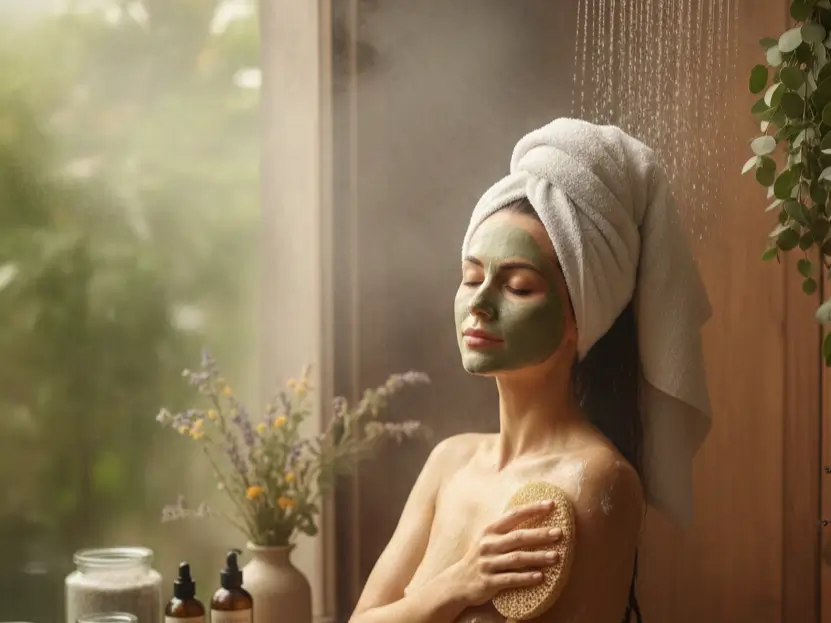
The first time I attempted an “everything shower,” I emerged two hours later feeling more exhausted than pampered. My bathroom looked like a beauty supply store exploded. I’d checked off every step I’d seen on TikTok, but something felt off.
The problem wasn’t the concept. It was treating my body like a car going through an automated wash instead of honoring it as something worth tending to.
An everything shower is an extended bathing ritual where you perform multiple body care steps in one intentional session, exfoliation, deep conditioning, masking, and treatments you typically skip in daily showers. But here’s what makes it different from just “doing everything at once”: it’s about creating a reset for your body and mind, not completing a checklist.
What changed my approach was recognizing that cultures worldwide have practiced elaborate bathing rituals for centuries, Japanese onsen traditions, Moroccan hammams, Scandinavian sauna cycles. These weren’t about efficiency. They were about restoration. That’s when I realized the American version needed the same shift: from productivity to presence.
What Is an “Everything Shower” (And Why It’s More Than a Trend)
An everything shower is a comprehensive bathing session (typically 45-90 minutes) where you perform multiple body care treatments in strategic order, dry brushing, exfoliation, hair treatments, body masks, and targeted skincare, creating a full-body reset rather than basic cleansing.
The term exploded on TikTok in 2022, racking up over 1.2 billion views. But what started as social media content actually taps into something humans have always needed: intentional time to care for our bodies beyond functional hygiene.
Here’s what I’ve noticed after talking with dozens of people about their everything shower practices. Most start because it looks luxurious online. They continue because it provides something our fragmented, efficiency-obsessed culture rarely allows, uninterrupted time focused entirely on physical restoration.
The difference between an everything shower and just “doing a lot in the shower” comes down to intention. When I’m doing my regular shower, I’m often mentally planning my day or rehearsing conversations. My everything shower? That’s when I practice what I call “body listening.” I notice which areas need extra attention. I move slower. I actually feel the dry brushing strokes instead of rushing through them.
Think of it like the difference between grabbing fast food while driving versus a slow meal where you actually taste your food. Same basic function (eating), completely different experience and benefits.
What makes the natural approach different from conventional everything showers is ingredient consciousness. Instead of layering synthetic fragrances and harsh surfactants, you’re working with botanical oils, natural exfoliants, and plant-based treatments that support your skin’s barrier rather than stripping it.
This matters because when you’re spending 60+ minutes with products on your skin, ingredient quality becomes critical.
The Science Behind Why Layered Body Care Actually Works
Layered treatments work through sequential penetration, exfoliation removes dead cells, warm water opens pores, and successive treatments penetrate deeper layers. This mimics professional spa protocols that achieve better results than sporadic single treatments.
Most skincare content tells you to layer products on your face but treats body care like it’s optional. Actually, your body responds to the same physiological principles.
Your skin completely renews itself every 28-40 days through cellular turnover. Dead skin cells accumulate on the surface, creating a barrier that blocks hydration and treatment absorption. When you exfoliate before applying treatments, you’re removing this barrier. The products you apply afterward penetrate up to 3x more effectively than on un-prepped skin.
Here’s what surprised me when I researched this: the order matters more than the products themselves.
Your lymphatic system, which clears cellular waste and supports immunity, doesn’t have a pump like your cardiovascular system does. It relies on physical movement and external manipulation. That’s why starting with dry brushing before your shower stimulates lymphatic drainage, your body actually processes about 2 liters of lymphatic fluid daily, and gentle brushing toward your heart supports this natural detoxification.
The warm water component isn’t just comfort. Heat increases blood circulation to your skin by up to 50%, bringing oxygen and nutrients to cells while carrying away waste products. This is why traditional bathing cultures, from Finnish saunas to Turkish hammams, incorporate heat as a foundational element.
When you apply treatments to warm, exfoliated skin, you’re working with your body’s natural absorption mechanisms instead of against them. Facial steaming operates on this same principle, which is why estheticians steam before extractions or masks.
The psychological component matters too, though it’s harder to quantify. In my experience, the ritual aspect, the deliberate sequencing, the unrushed timing, signals to your nervous system that you’re safe enough to rest. That shift from sympathetic (stress) to parasympathetic (rest) nervous system activation has real physiological effects on everything from muscle tension to skin inflammation.
What most content won’t tell you: this doesn’t work if you’re forcing it. When everything showers feel like another obligation on your to-do list, you lose the restorative benefits. The key is finding your version that feels sustainable, not performative.
Your Natural Everything Shower Ritual: Step-by-Step
(1) Dry brush toward heart; (2) Apply hair mask to dry hair; (3) Warm water rinse; (4) Gentle body exfoliation; (5) Cleanse with natural soap; (6) Face mask while conditioning hair; (7) Final treatments on damp skin. Total time: 45-75 minutes.
I’ve refined this sequence over three years of experimentation. Here’s what actually works without leaving you waterlogged or exhausted.
Before Water Touches Your Skin (5-10 minutes)
Start with dry brushing your entire body using long strokes toward your heart. Begin at your feet, move up your legs, then arms toward shoulders, and torso toward heart center. This isn’t a scrubbing motion, think gentle, sweeping pressure.
What I got wrong initially: brushing too hard. Your lymphatic vessels are close to the skin surface. Aggressive brushing just irritates without additional benefit.
Next, apply a deep conditioning treatment or hair mask to completely dry hair, focusing on mid-lengths to ends. The dry application matters, wet hair dilutes the treatment. I like mixing botanical oils based on my hair’s needs, but even plain coconut or argan oil works.
Clip your hair up. Now you’re ready for water.
The Exfoliation Phase (10-15 minutes)
Turn on warm (not hot) water, around 95-100°F feels comfortable without stripping your skin. Let it run over your body for 2-3 minutes. This isn’t wasted time; you’re preparing your skin.
Apply your body exfoliant. I rotate between:
- Sugar or salt scrubs with carrier oils twice monthly
- Clay-based treatments for detoxification
- Gentler konjac sponge exfoliation for sensitive areas
Use circular motions on limbs and torso, gentler pressure on sensitive areas like inner arms or chest. Spend extra time on rough spots, elbows, knees, heels.
Rinse thoroughly. Your skin should feel smooth but not raw.
Cleansing and Treatment Phase (15-20 minutes)
Now cleanse with a gentle, sulfate-free body wash or natural soap. You need less than you think, exfoliation did half the cleaning work already.
While your body is still wet, apply a face mask suited to your skin needs. If you’re interested in natural formulations, DIY two-ingredient masks are surprisingly effective. I often use fermented rice water for brightening or clays for deep cleaning.
This is also when I massage in my hair conditioner or rinse out my pre-shower mask and apply a lighter conditioner. The steam from your shower activates both your face and hair treatments.
Here’s the part nobody mentions: this middle phase is when I usually sit down on my shower floor or a stool. Standing for an hour gets tiring. Permission to make this comfortable.
Let treatments sit for 5-10 minutes. Some people shave during this time. I prefer doing any body hair removal after exfoliation when it’s gentler.
The Finishing Phase (10-15 minutes)
Rinse your face mask with cool water, this helps close pores. Rinse hair thoroughly (I mean really thoroughly, leftover conditioner causes buildup).
Do a final cool water rinse over your entire body. Yes, it’s uncomfortable. It’s also what tightens pores, boosts circulation, and leaves you feeling energized rather than sluggish.
Post-Shower (10-20 minutes)
Pat dry, don’t rub. Your skin should be damp, not dripping.
This is the most important part for locking in hydration. Apply your products to damp skin in this order:
- Face: Essence or toner, then facial oil or serum, then moisturizer if needed
- Body: Rich body butter or organic lotion on slightly damp skin, this seals in moisture 10x better than applying to fully dry skin
- Extras: Under-eye treatments, neck care, cuticle oil
I finish with hair care, leave-in treatment or styling products for my hair type.
The entire ritual, start to finish, takes me about 60 minutes now. When I started, it was closer to 90. You’ll find your rhythm.
Customizing Your Ritual (Without the Overwhelm)
Adapt frequency (weekly to monthly), duration (30-90 minutes), and complexity (3-10 steps) based on your actual schedule and energy levels. A consistent shortened version beats an elaborate routine you quit after two attempts.
The biggest mistake I see people make is treating the everything shower like it must be the same every time. It shouldn’t.
I categorize mine into three versions:
The Reset (90 minutes): Full sequence with multiple masks, treatments, maybe a body mapping assessment. I do this monthly, usually the first weekend of the month.
The Standard (60 minutes): The routine I described above. Every 7-10 days, depending on how my skin feels and what my schedule allows.
The Express (30 minutes): Dry brush, exfoliate, cleanse, one hair treatment, moisturize. This happens when I need the mental reset but don’t have time for the full ritual.
Your version will look different based on your skin type, hair texture, and what feels restorative versus draining. If you have rosacea or sensitive skin, you’ll skip aggressive exfoliation. If you have keratosis pilaris, you might focus extra attention on gentle chemical exfoliation.
Some practical adaptations that helped me:
- Time-poor: Do the prep work (dry brushing, hair mask application) while listening to a podcast before you even start the shower
- Low energy: Skip multiple face masks; just do the body care
- Seasonal adjustments: I exfoliate more gently in winter when my skin barrier needs protection from cold air
- Travel version: Bring 3-4 key products; skip the rest
What I’ve learned is that a 30-minute everything shower I actually do monthly beats a 2-hour perfect ritual I only manage once before burning out.
What Nobody Tells You About Everything Showers
Everything showers can over-exfoliate if done too frequently (stick to weekly or less), waste significant water (consider sustainability trade-offs), and become performative rather than restorative if you’re doing them for content rather than genuine self-care.
Let’s address the uncomfortable parts most beauty content skips.
The Sustainability Question
An hour-long shower uses 50-100 gallons of water depending on your flow rate. That’s substantial. I struggled with this until I realized two things:
First, I’m doing this weekly at most, not daily. My regular showers are 7-10 minutes. The weekly water increase is significant but not outrageous in context.
Second, I installed a low-flow showerhead that filters chlorine while reducing water use by about 30%. I also turn the water off during treatment waiting periods. You don’t need running water while a face mask sits.
These aren’t perfect solutions. They’re honest attempts to balance self-care with environmental awareness.
When NOT to Do an Everything Shower
If your skin is irritated, sunburned, or inflamed, skip it. Exfoliation on compromised skin causes more damage. If you’re exhausted and the thought of this feels draining, don’t force it.
I’ve noticed my everything showers work best when I’m already reasonably well-rested. When I’m depleted, any self-care feels like another task. That’s a sign to take a regular shower and go to bed early instead.
The Over-Exfoliation Trap
This is where I see people hurt their skin most. If you’re doing an everything shower weekly AND using exfoliating acids daily AND scrubbing with a washcloth every regular shower, you’re over-doing it.
Signs you’ve crossed the line: persistent redness, increased sensitivity, products that normally feel fine suddenly sting, or that tight “squeaky clean” feeling that’s actually your stripped skin barrier.
Pull back to everything showers every 10-14 days if you’re using active ingredients regularly in your daily skincare routine.
The Real Why
Here’s what I’ve come to understand about why this practice resonates so deeply: we live in a culture that treats bodies as machines to be optimized rather than organisms to be tended. The everything shower, when done right, is a rebellion against that.
It’s permission to move slowly. To pay attention. To treat your skin as something worth more than three-minute efficiency.
That’s not revolutionary. It’s just rare.
If you’re interested in building other intentional beauty practices, explore Beauty Healing Organic for comprehensive guides on natural skincare, DIY formulations, and rituals from cultures worldwide that never forgot what we’re just remembering, that caring for your body is both practical and sacred.
The everything shower isn’t about achieving some Instagram-perfect routine. It’s about finding your version of restoration in a practice that works with your body’s natural processes, honors your actual schedule, and uses ingredients that support rather than strip your skin.
Start with 30 minutes and the basic sequence. Add elements as they feel natural. Skip what doesn’t serve you. This is one area where you’re allowed to be selfish, in the best possible way.