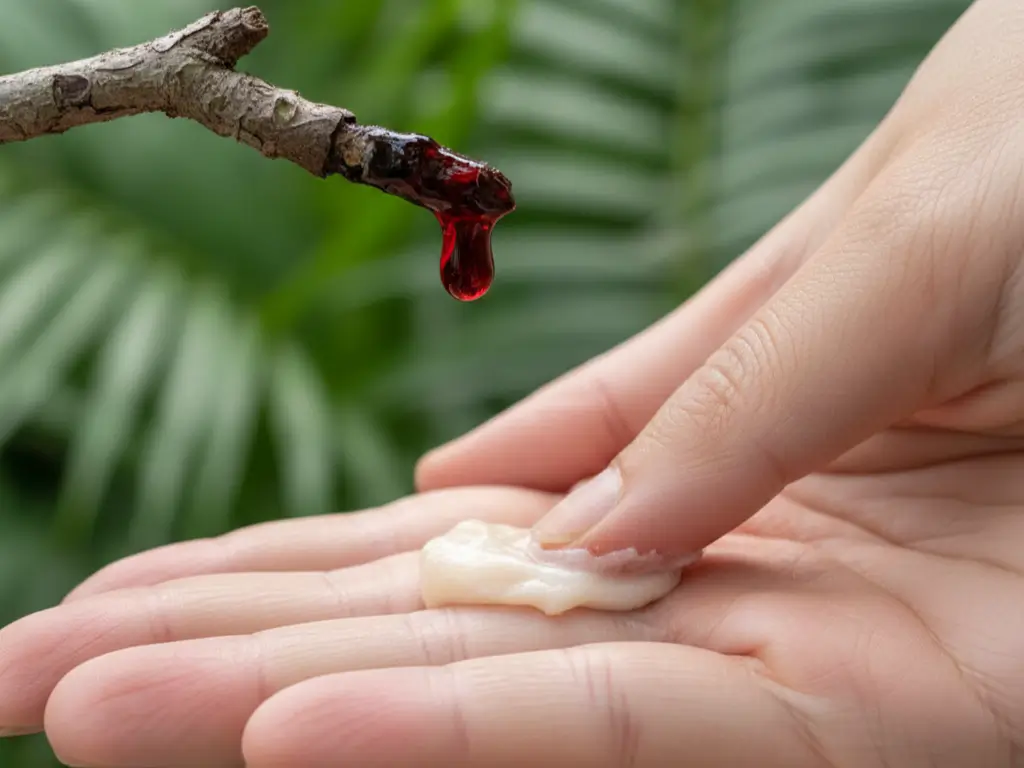
Dragon’s Blood (Sangre de Grado) is a latex sap from the Croton lechleri tree used traditionally to support wound healing. To use it, clean a minor cut or scrape, apply a drop of the pure resin, and rub it gently until it turns into a creamy, white paste. As it dries, it forms a protective “second skin” barrier that may reduce bleeding, protect against infection, and minimize scarring.
This article provides educational information about Croton lechleri (Dragon’s Blood). It is not intended to diagnose, treat, cure, or prevent any medical condition or disease. Always consult a licensed healthcare professional before making any health decisions, starting new treatments, or changing existing medical regimens. Individual results and health needs vary. If you have a deep wound, heavy bleeding, signs of infection, or medical concerns, seek professional medical advice immediately.
This guide is for individuals looking for natural, evidence-based supportive care for minor surface wounds, scratches, and abrasions. It is not for those dealing with deep punctures, arterial bleeding, third-degree burns, or infected wounds requiring antibiotics.
In the depths of the Amazon rainforest, when a guide or local villager sustains a cut, they don’t immediately reach for a plastic tube of synthetic ointment. Instead, they look for the Croton lechleri tree. When the bark of this tree is slashed, it “bleeds” a thick, dark red latex known locally as Sangre de Grado or Sangre de Drago, Dragon’s Blood.
For centuries, indigenous tribes in Peru, Ecuador, and Colombia have utilized this sap as a primary defense against skin injuries. But this isn’t just folklore. Modern research has begun to validate what Amazonian healers have known for generations: this resin is a powerhouse of tissue-repairing compounds.
However, using a potent botanical resin requires knowledge. It is sticky, stains easily, and works differently than your standard pharmacy creams. This guide explores the science behind the sap, safety considerations, and the correct protocol for adding this “liquid bandage” to your natural first-aid kit.
Researched in consultation with clinical phytotherapy journals and botanical safety data.
Understanding Dragon’s Blood (The Science)
Dragon’s Blood resin contains taspine, an alkaloid shown to stimulate the migration of fibroblast cells (essential for closing wounds), and proanthocyanidins, potent antioxidants that help form a protective physical barrier over the skin.
While the name sounds mythical, the chemistry of Sangre de Grado is grounded in reality. To understand why it helps, we have to look at the active constituents that make this red sap unique among Amazonian oils and ingredients.
The Taspine Factor
The primary “heavy lifter” in Dragon’s Blood is an alkaloid called taspine. According to research published in the Journal of Ethnopharmacology, taspine promotes the early phases of wound healing by stimulating the migration of fibroblasts. Fibroblasts are the cells responsible for synthesizing collagen and the extracellular matrix, essentially the scaffolding that pulls a wound back together.
The “Second Skin” Effect
Unlike an oily salve that sits on top of the skin, Dragon’s Blood is a latex. When applied and exposed to air/friction, it dries rapidly. The high concentration of proanthocyanidins (up to 90% of the dried weight) cross-links proteins in the skin. This creates a seal, a literal biological bandage, that protects the area from bacteria and mechanical irritation while holding the wound edges together.
This mechanism is distinct from standard moisturizers. It acts more like a natural cauterizer and sealant, which is why it is often cited in guides regarding natural remedies for reducing scars.
Safety, Risks, and Contraindications
While generally considered safe for topical use on minor wounds, Dragon’s Blood can cause allergic reactions in some individuals. It should not be used on deep puncture wounds or eyes. Pregnant or nursing women should consult a doctor before use.
Before uncapping that bottle of red resin, you must assess whether it is safe for your specific situation. Natural does not automatically mean safe for everyone.
When to Seek Medical Attention
Do not attempt to treat a wound at home with Dragon’s Blood if:
- The bleeding is heavy, spurting, or doesn’t stop after 10 minutes of pressure.
- The wound is deep, gaping, or shows fat/muscle (requires stitches).
- The injury involves a rusty object (risk of tetanus).
- You see signs of infection: spreading redness, heat, yellow pus, or red streaks.
- You have a fever.
Contraindications
- Deep Punctures: Because Dragon’s Blood heals rapidly from the outside in, applying it to a deep puncture (like a nail step) could seal bacteria inside the wound, leading to an abscess. Only use it on surface abrasions or shallow cuts.
- Pregnancy/Breastfeeding: While topical use is likely low-risk, clinical safety data for these populations is limited. Consult your OB-GYN.
- Latex Allergies: Although not the same as rubber latex, Croton lechleri is a latex sap. Patch testing is crucial.
The Patch Test Protocol
- Apply a small dot of resin to your inner forearm.
- Wait 24 hours.
- If you experience itching, swelling, or redness, wash it off and discontinue use.
How to Apply Dragon’s Blood for Wound Healing
- Cleanse the wound thoroughly with water and mild soap.
- Apply 1-2 drops of pure resin directly to the area.
- Rub the resin gently until it turns into a light cream/white froth.
- Dry Let it sit for drying; it will form a protective film.
- Repeat 1-2 times daily as needed.
Using Sangre de Grado is a tactile experience. Unlike applying facial oils, which stay slick, this resin undergoes a texture change that indicates it is working.
Step 1: Preparation
Hygiene is paramount. Wash your hands and the affected area carefully. If there is debris in the wound, rinse it out. Dragon’s Blood seals things in, so you do not want to seal in dirt or bacteria.
Step 2: The Application (The “Creaming” Effect)
Shake the bottle well. Apply a drop directly onto the cut or scrape. Using a clean finger, spread the liquid sap over the area.
Pro Tip: Rub the sap in a circular motion. You will notice the dark red liquid suddenly thickens and turns into a pale, creamy white paste. This is normal! This “lathering” is the latex emulsifying with the natural oils and moisture of your skin. This physical change helps create the seal.
Step 3: Setting the Barrier
Stop rubbing once it turns creamy. Allow it to air dry. Within minutes, the white color will fade back to a brownish-red film that feels tight, like a layer of dried glue. This is your barrier. It functions similarly to the skin barrier plant ingredients we discuss elsewhere, but with a stronger physical hold.
Step 4: Maintenance
The barrier will naturally wear off over time. You can wash it off with warm water and soap if necessary, though it is durable. Reapply once or twice a day until the wound is closed.
Benefits Beyond Wound Closure
Beyond closing wounds, Dragon’s Blood offers antimicrobial properties to prevent infection, anti-inflammatory activity to reduce swelling, and antioxidant protection that may minimize scarring and stimulate collagen production.
Antimicrobial Protection
In the humid Amazon rainforest, infection is a constant threat. Dragon’s Blood has demonstrated broad-spectrum antimicrobial activity against bacteria, fungi, and viruses. A study in the Journal of Traditional and Complementary Medicine noted its effectiveness against Staphylococcus aureus, a common culprit in skin infections.
Scar Minimization
By facilitating faster wound closure and stimulating collagen (without over-stimulating it into keloids), Dragon’s Blood is a popular choice for those prone to scarring. It pairs well with other specialty natural ingredients aimed at tissue regeneration.
Itch Relief (Anti-Pruritic)
As wounds heal, they often itch. The taspine in the resin also possesses anti-inflammatory properties that can soothe the “itchy phase” of healing, preventing you from scratching and reopening the wound. This makes it an excellent addition to protocols for natural remedies for sunburned skin or bug bites.
Comparing Dragon’s Blood to Conventional Options
Compared to antibiotic ointments, Dragon’s Blood dries dry (non-greasy) and forms a stronger physical barrier. However, it is deeply pigmented and will stain clothing permanently, unlike clear pharmaceutical gels.
| Feature | Dragon’s Blood Resin | Antibiotic Ointment (e.g., Neosporin) | Liquid Bandage (Synthetic) |
| Texture | Latex/Sap (dries hard) | Greasy/Oily (stays wet) | Chemical solvent (dries hard) |
| Active Agent | Taspine, Proanthocyanidins | Bacitracin, Neomycin | Polymers, Antiseptics |
| Barrier Formation | Excellent (Natural Seal) | Poor (Slides off) | Excellent |
| Staining | High (Red stains) | None | None |
| Use Case | Natural first aid, hiking, minor cuts | Preventing infection in open wounds | Waterproofing minor cuts |
The Staining Warning: We cannot stress this enough, Dragon’s Blood looks like blood. If you get it on a white shirt or expensive sheets, it will likely not come out. Be careful during application.
Sourcing Quality Resin
Look for “100% Pure Croton Lechleri Resin.” Avoid products labeled as “Dragon’s Blood Scent” (synthetic) or diluted extracts unless formulated for a specific cosmetic purpose. The liquid should be dark red, thin, and smell earthy/vegetal.
The skincare market is flooded with products claiming to contain Dragon’s Blood. However, for wound healing, you want the pure, raw resin, not a diluted serum intended for firming the neck and decolletage.
What to look for:
- Latin Name: Croton lechleri.
- Origin: Usually Peru or Ecuador.
- Sustainably Harvested: The trees can be harmed by over-harvesting. Look for brands that use “incision” methods rather than cutting the whole tree down, or those supporting indigenous communities.
- Ingredients: Should list only pure resin/sap. No alcohol or glycerin bases if you want the “liquid bandage” effect.
If you are interested in how natural ingredients are preserved, note that pure Dragon’s Blood is largely self-preserving due to its high antioxidant content, similar to some concepts discussed in our natural preservatives guide.
Combining with Other Botanicals
Dragon’s Blood works best on its own for the initial sealing of a wound. Once the wound is closed (the scab phase), you can transition to oils like Rosehip or Tamanu to further assist with scarring.
While we often advocate for power ingredient combos, Dragon’s Blood is a soloist during the acute phase of healing. Mixing it with oil before it dries will prevent it from forming that crucial protective film.
Suggested Protocol:
- Phase 1 (Open Wound): Pure Dragon’s Blood to seal and protect.
- Phase 2 (Closed/Scabbed): Gentle moisture.
- Phase 3 (Pink Skin/Scarring): Transition to facial oils tailored to repair or creams rich in Vitamin E.
When to Consult a Professional
While this botanical is a potent ally, it is not a replacement for modern emergency medicine.
Consult a doctor if:
- The wound shows no improvement after 3 days.
- The redness around the wound expands.
- You have diabetes (foot/leg wounds require special medical monitoring).
- The wound is from an animal bite.
For more detailed information on skin concerns and which botanical extracts pair best with specific issues, explore our comprehensive guide on botanical extracts for skin concerns.
Nature’s Liquid Bandage
Dragon’s Blood resin bridges the gap between ancient shamanic wisdom and modern dermatological needs. It offers a unique mechanism, the “liquid bandage”, that few other natural ingredients can replicate. By physically sealing the wound while chemically stimulating repair via taspine, it provides a dual-action approach to healing.
However, respect the potency of the plant. Use it for minor cuts, scrapes, and bites. Respect the stain. And most importantly, listen to your body, if a wound feels serious, prioritize professional medical care over natural remedies.
- Purchase a small bottle of ethically sourced Croton lechleri resin (10-30ml is plenty).
- Perform a patch test on your inner arm to ensure no sensitivity.
- Keep it handy for gardening scratches, paper cuts, or hiking abrasions, remembering to shake the bottle well before use.
For more organic skincare guidance and deep dives into botanical ingredients, explore our comprehensive collection at beautyhealingorganic.com.
SOURCES CITED
- Gupta, D., et al. (2008). Taspine: the wound healing alkaloid from the latex of Croton lechleri. Journal of Ethnopharmacology.
- Jones, K. (2003). Review of Sangre de Drago (Croton lechleri) – A Gastronomic, Ethnobotanical, and Medicinal Review. Journal of Alternative and Complementary Medicine.
- Namjoyan, F., et al. (2015). Efficacy of Dragon’s Blood on Wound Healing: A Clinical Study. Journal of Traditional and Complementary Medicine.
- U.S. Food and Drug Administration (FDA). (2012). FDA approves Fulyzaq for HIV-associated diarrhea (Context on safety of Croton lechleri derivatives).
- Chen, Z., et al. (1994). Studies on the chemical constituents of Dragon’s Blood. Acta Botanica Sinica.
- Porras-Reyes, B.H., et al. (1993). Enhancement of Wound Healing by the Alkaloid Taspine. Proceedings of the Society for Experimental Biology and Medicine.
- American Herbal Products Association (AHPA). (2013). Botanical Safety Handbook, 2nd Edition.
- Lopes, M.I., et al. (2004). Mutagenic and antioxidant activities of Croton lechleri sap in biological systems. Journal of Ethnopharmacology.