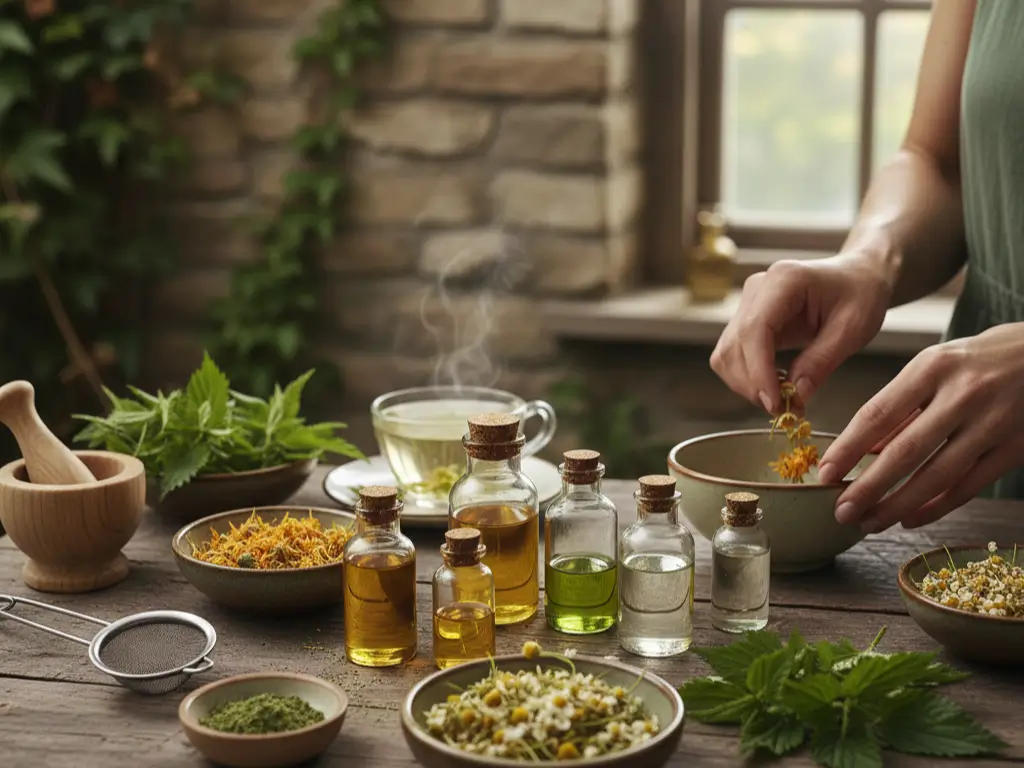
A natural skincare routine inspired by European folk herbalism focuses on simplicity, seasonality, and whole-plant infusions. Instead of harsh actives, it utilizes gentle ingredients like cold-pressed oils, herbal macerations (calendula, chamomile), floral waters, and beeswax. The routine typically involves cleansing with oil or cream, hydrating with hydrosols, and sealing moisture with an infused balm, aligning skincare with the rhythms of nature.
This article provides educational information about traditional herbal skincare practices. It is not intended to diagnose, treat, cure, or prevent any medical condition or disease. Natural ingredients can cause allergic reactions. Always patch-test new products and consult a dermatologist or licensed healthcare professional before changing your skincare regimen, especially if you have pre-existing skin conditions, are pregnant, or are nursing.
This guide is for readers looking to simplify their beauty routine using traditional, whole-plant methods. It is not for treating severe dermatological conditions (like infected eczema or cystic acne) which require professional medical intervention.
We live in an era of the “10-step routine,” where bathroom cabinets overflow with plastic bottles promising eternal youth. Yet, if you look back just a few generations, you’ll find a different story. In the cottage gardens of Europe, from the lavender fields of Provence to the chamomile-lined paths of the British Isles, skincare wasn’t a product you bought; it was a ritual you practiced.
I’ve often wondered why, despite our advanced technology, so many of us struggle with compromised skin barriers and sensitivity. The answer might lie in what we’ve lost: the art of working with nature rather than trying to dominate it.
European folk herbalism offers a refreshing counter-narrative. It isn’t about isolating a single chemical compound (like Vitamin C or retinol) and maximizing its percentage. It’s about the synergy of the whole plant. It’s about slower, gentler infusion methods that respect the skin’s microbiome.
Understanding the “Whole Plant” Philosophy
The “Whole Plant” philosophy in folk herbalism posits that the combined compounds of a plant work better together than isolated chemicals. Rather than using essential oils (which are highly concentrated volatile compounds), folk methods prioritize macerations (herbs infused in carrier oil) and teas. This approach is generally gentler on the lipid barrier and less likely to cause sensitization.
In modern clean beauty, we are often sold “extracts.” While effective, these are often potent isolates. European folk traditions took a humbler approach. They believed the plant had an innate intelligence.
When you infuse a whole calendula flower into oil, you aren’t just getting one active ingredient; you’re extracting resins, flavonoids, mucilage, and fatty acids that buffer the skin. This creates a “slow-release” effect that nourishes rather than shocks the skin.
The Three Pillars of Folk Beauty:
- Seasonality: Using cooling herbs in summer (like rose) and warming, circulatory herbs in winter (like rosemary).
- Lipid-First Logic: European traditions recognized that healthy skin needs healthy fats (tallow, lard, or cold-pressed seed oils) to maintain the barrier.
- Simplicity: Using fewer ingredients effectively is better than using many ingredients poorly.
If you are transitioning from a complex chemical routine, this shift requires a change in mindset. You are moving from “attacking” flaws to “feeding” the skin.
Explore More: To understand how these principles differ from modern trends, read our guide on Organic vs. Natural vs. Clean Beauty.
The Cleansing Ritual (Unction and Cream)
Traditional European cleansing relies on rich fats rather than foaming agents. Historically, “cold creams” (emulsions of wax, oil, and water) or pure oils were massaged into the skin to dissolve grime without stripping natural sebum. This preserves the acid mantle and prevents the “squeaky clean” feeling that signals barrier damage.
Forget the foaming gels that leave your face feeling tight. In folk tradition, “like dissolves like.” Oil dissolves the dirty oil on your face without disrupting the microbiome.
One of the most enduring legacies of European beauty is Cold Cream. Invented by the Greek physician Galen but perfected in European apothecaries, this simple mixture of beeswax, oil, and rosewater cools the skin upon evaporation, hence the name.
How to Cleanse the Folk Way:
- The Oil Massage: Apply a quarter-sized amount of plain carrier oil (like sunflower or almond) or a simple DIY balm.
- Mechanical Action: Spend 60 seconds massaging the face. This stimulates lymph flow, a technique akin to modern Gua Sha or manual lymphatic drainage.
- The Removal: Use a warm (not hot) damp Muslin Cloth to gently wipe away the oil. The cloth provides mild exfoliation, replacing the need for harsh scrubs.
Why It Works:
This method respects the skin’s pH. By avoiding sulfates, you keep the protective lipid layer intact. If you have struggled with stripping your skin, this historical method is often a revelation.
Learn about the fascinating origins of this staple in our article on Cold Cream History.
Hydration via Floral Waters (Hydrosols)
Hydrosols, or “floral waters,” are the condensate water left behind after distilling plants. In folk herbalism, rain water or herbal teas were also common. These provide hydration (water content) and trace plant nutrients. Common European waters include Rose (cooling/hydrating), Lavender (soothing), and Cornflower (historically used for eyes).
After cleansing, the skin needs hydration. In modern routines, this is the “toner” step, but often toners contain drying alcohols.
In the European countryside, “Queen of Hungary Water” (an early alcohol-based perfume/toner involving rosemary) was legendary, but for daily care, simple distillates were preferred.
The Method:
Don’t just spritz and run. Spray your face liberally with a hydrosol. While the skin is still damp, apply your oil (Step 3). This traps the water into the skin, acting as a manual emulsion. This mimics what a lotion does, but you are mixing the water and oil directly on your face.
Top Folk Choices:
- Rosewater: Classic for a reason. Mildly astringent but deeply hydrating.
- Chamomile Water: Excellent for sensitive or reactive skin types.
- Witch Hazel (Alcohol-Free): A true folk remedy for toning, distilled from the bark of the shrub.
DIY Tip: You can make a simple version at home. Check out our guide on DIY Rosewater and Glycerin Mist.
The Nourish Phase (Herbal Macerations)
The core of the routine is the Herbal Macerated Oil. Unlike essential oils, which are distilled, macerations are made by steeping dried herbs in a carrier oil (like olive, sunflower, or almond) for 4-6 weeks. This extracts the lipid-soluble goodness of the plant gently. Popular choices include Calendula (soothing), St. John’s Wort (repairing), and Plantain (healing).
This is where the magic happens. A macerated oil is the “serum” of folk herbalism. It captures the soul of the plant without the volatility of essential oils, making it safer for long-term use.
Choosing Your Carrier Oil
Geography dictated the oil. In the Mediterranean, olive oil was liquid gold for the skin. In the north, darker, richer oils might be used.
- Sunflower Oil: High in linoleic acid, great for balancing barriers.
- Almond Oil: Rich and softening, a staple in French beauty.
Top European Herbs for Infusion:
- Calendula (Marigold): Known as “pot marigold,” this sunshine-yellow flower is renowned for soothing irritated skin.
- Yarrow: Often called “soldier’s woundwort,” it is excellent for oily or troubled skin due to its astringent properties.
- Comfrey: Contains allantoin, which supports cell turnover (use strictly on unbroken skin and be mindful of PA content, consult safety guides).
Application:
Warm 3-5 drops of the oil in your hands. Press, don’t rub, into your damp skin.
Safety Note: St. John’s Wort oil is fantastic for repair but can be photosensitizing. Use it only in your evening routine.
For more on botanical oils, see our Facial Oils Types Guide.
Important Safety Considerations
Natural does not equal safe. Plants contain potent chemical compounds. Patch testing is mandatory. Certain herbs (like citrus family or St. John’s Wort) interact with sunlight. Preservation is critical; if you add water to any DIY product without a broad-spectrum preservative, it will grow bacteria within days.
Before you start foraging or mixing, we need to address the risks. Folk herbalism was learned over lifetimes; dabbling without knowledge can cause harm.
1. Identification Matters
If you choose to forage (a practice we discuss in Hyperlocal Beauty Foraging), you must be 100% certain of the plant ID. Many toxic plants look like beneficial ones.
2. The “Water” Rule
Any product containing water (tea, hydrosol, aloe) is a breeding ground for mold and bacteria.
- Oils/Balms (Anhydrous): Safe for months if kept dry.
- Waters/Teas: Keep in the fridge and use within 3-5 days, or use a preservative system.
3. Phototoxicity
Some compounds, like furanocoumarins found in certain plants (angelica, citrus, fig leaves, St. John’s Wort), react with UV light to cause severe burns. Always research “phototoxicity” before applying an herb and going into the sun.
4. When to See a Professional
If you develop redness, itching, swelling, or heat after applying a botanical, wash it off immediately. If symptoms persist, seek medical attention.
Learn about keeping your creations safe in our Natural Preservatives Guide.
Protection (Balms and Waxes)
In harsh weather, oil alone isn’t enough. Folk herbalism utilizes occlusives like Beeswax or Lanolin (wool wax) to create a physical barrier against wind and cold. These ingredients “seal in” the moisture and protect the skin from the elements, a concept known today as preventing Transepidermal Water Loss (TEWL).
If you live in a northern climate or deal with dry indoor heating, this step is vital. A thin layer of balm acts as a second skin.
Making a Simple Balm:
A classic “salve” is simply 1 part beeswax to 4-5 parts infused herbal oil, melted gently together.
- Beeswax: Humectant and occlusive; it draws moisture in and keeps it there.
- Animal Fats: Historically, tallow was prized for its similarity to human skin lipids. Today, plant butters like Shea are common substitutes, though not native to Europe.
Explore how to work with solid fats in our Botanical Butters Guide or learn about Plant-Based Waxes for DIY Beauty.
Seasonal Adjustments: The Circadian Rhythm of the Earth
One of the biggest failures of modern skincare is its static nature, using the same routine in July as in January. Folk herbalism is inherently seasonal.
Spring/Summer: Lighter & Cooling
- Focus: Hydration and sun recovery.
- Herbs: Rose, Elderflower, Peppermint.
- Texture: Milky lotions, light oils, fresh mists.
- Ritual: Cool water splashes and lighter application.
Autumn/Winter: Richer & Warming
- Focus: Barrier protection and circulation.
- Herbs: Rosemary (stimulates flow), Calendula (soothes windburn), Comfrey.
- Texture: Heavy salves, balms, cold creams.
- Ritual: Warm cloth compresses and longer massage times.
Adapt your routine throughout the year with our guide to Weather and Environment Skincare.
Returning to Roots
Adopting a European folk skincare routine isn’t just about changing products; it’s about changing your relationship with time and nature. It invites you to slow down. The “active ingredient” in these rituals isn’t just the botanical compound, it’s the intentionality.
By cleansing gently with oil, hydrating with floral waters, and protecting with infused balms, you support your skin’s natural ability to heal itself. You stop fighting your biology and start nourishing it.
- Stop over-cleansing. Try the “oil cleanse” method tonight using a simple oil like sunflower or jojoba.
- Replace your alcohol-based toner with a pure floral water (Rose or Chamomile).
- Attempt to make one herbal maceration. Buy dried calendula, put it in a jar with oil, and let it sit. In four weeks, you’ll have your own luxury serum.
- If you have persistent acne, rosacea, or dermatitis, consult a holistic dermatologist before relying solely on DIY methods.
For more guidance on building a complete botanical regimen, explore our comprehensive collection at Beauty Healing Organic.
SOURCES CITED
- American Herbal Products Association (AHPA). (2013). Botanical Safety Handbook, 2nd Edition. CRC Press.
- Akhtar, N., et al. (2011). Calendula extract: effects on mechanical parameters of human skin. Acta Poloniae Pharmaceutica, 68(5), 693-701.
- Vaughn, A. R., et al. (2018). Natural Oils for Skin-Barrier Repair: Ancient Compounds Now Backed by Modern Science. American Journal of Clinical Dermatology, 19(1), 103-117.
- Cosmetic Ingredient Review (CIR). (2019). Safety Assessment of Plant-Derived Fatty Acids as Used in Cosmetics. International Journal of Toxicology.