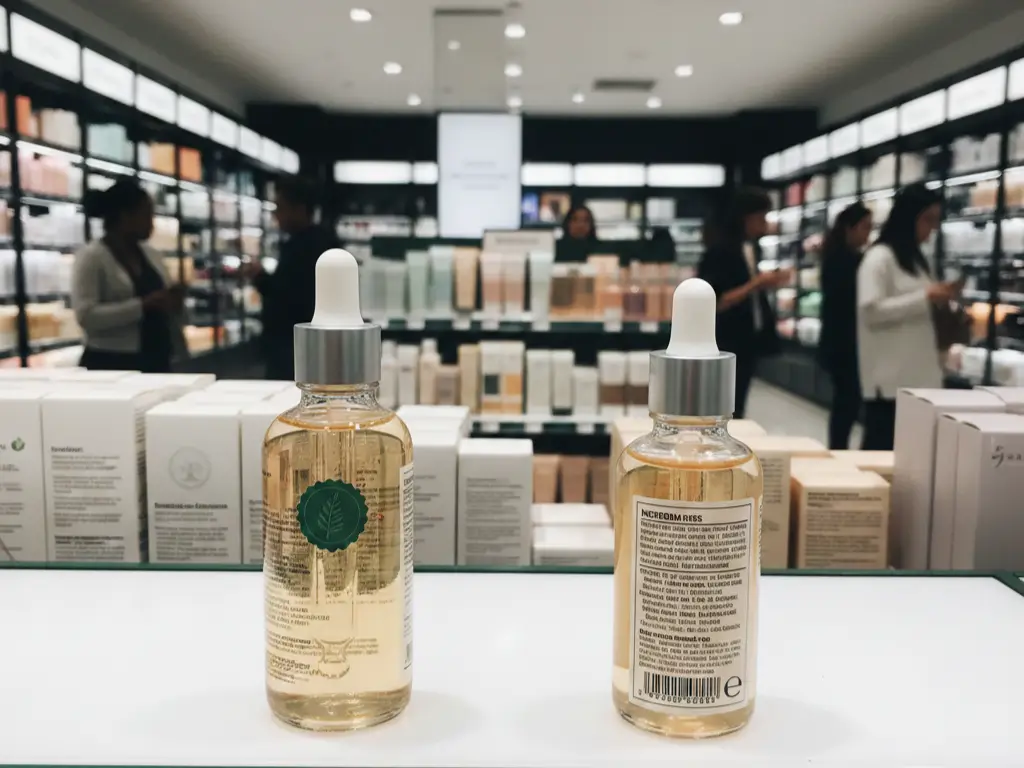
I stood in Sephora last month, staring at two nearly identical face serums. One had the green “Clean at Sephora” seal and cost $68. The other, three feet away, was $42 without the seal. Same key ingredients. Similar reviews.
This is the clean beauty dilemma in a nutshell.
Clean beauty at Sephora refers to products that meet the retailer’s “formulated without” list of over 50 questionable ingredients, including parabens, sulfates, and phthalates. But here’s what matters more: knowing how to navigate this section strategically so you’re buying results, not just marketing.
The clean beauty market hit $11.6 billion in 2023, and Sephora’s Clean program launched in 2018 to capitalize on this demand. But “clean” doesn’t automatically mean better, safer, or more effective. What it does mean is that you need a smarter approach to shopping this category, one that considers your skin’s actual needs, your budget, and whether that green seal is solving a real problem or just making you feel virtuous.
Here’s what I’ve learned after three years of testing clean products, interviewing cosmetic chemists, and honestly? Wasting money on overhyped “botanical” moisturizers that did exactly nothing.
What Does “Clean at Sephora” Actually Mean in?
Sephora’s Clean program excludes products containing more than 50 specific ingredients the retailer has deemed undesirable, including parabens, formaldehyde, and certain fragrance compounds. However, it’s based on Sephora’s internal standards, not third-party certification, and has evolved since launch.
Let me be direct: Sephora’s Clean seal is a retail marketing program, not a regulatory standard.
The “formulated without” list started with about 13 ingredients in 2018 and expanded to over 50 by 2021. This includes the usual suspects, parabens, phthalates, mineral oil, but also some head-scratchers that appear in perfectly safe products elsewhere.
What Sephora’s Clean program actually tells you is that a brand chose to formulate without specific ingredients that carry consumer concern (whether scientifically justified or not). It doesn’t tell you:
- Whether the replacement ingredients are actually safer
- If the product is organic, natural, or sustainable
- Whether it’ll work better for your skin
- If it’s been third-party tested for purity
I’ve noticed that shoppers treat the Clean seal like a guarantee of superiority. In reality, it’s one data point among many.
The program does offer transparency, which I appreciate. You can check Sephora’s full exclusion list on their website, and products must meet these standards consistently. When understanding what makes beauty truly clean, you’ll realize Sephora sits somewhere in the middle, stricter than conventional beauty, more lenient than specialty clean retailers.
For context on specific ingredients, brands in the Clean program often use bio-retinols instead of traditional retinoids and natural alternatives to hydroquinone for brightening.
How to Shop Clean Beauty at Sephora Without Overspending
Use the Three-Sample Rule, never buy full-size clean products without testing samples first, leverage Sephora’s 60-day return policy, and price-compare the same active ingredients in non-clean formulas before paying a premium.
Here’s what changed my clean beauty spending: I stopped buying based on labels and started shopping based on value.
The Three-Sample Strategy works like this
First, identify three products in the same category (say, face oils) that address your concern. Request samples of each, Sephora will typically give you three small containers per visit. Test each for a week. The one that performs best? That’s your purchase, regardless of price.
This approach saved me from buying a $72 “clean” face oil when a $28 option from the same section worked identically. Both were clean. One had better branding.
Smart timing matters. Sephora’s sales typically happen during:
- Spring Savings Event (April): 10-20% off for Beauty Insiders
- Holiday Sales (November): Similar tier-based discounts
- Weekly Wow deals: Rotating sales on specific clean brands
I’ve found that waiting two months to buy during a sale beats impulse purchasing by 15-20% savings.
Price-comparison is critical. Before buying any clean product over $40, I check:
- Does a non-clean version exist with the same actives?
- Do other retailers sell this cheaper (Ulta, brand website, Dermstore)?
- Can I replicate this with DIY formulations using botanical ingredients for a fraction of the cost?
Sometimes clean is worth it. A gentle, sulfate-free cleanser for $24? Reasonable. A “clean” setting spray for $34 that’s mostly water and aloe? Skip it and make a DIY rosewater glycerin mist for under $8.
The uncomfortable truth: you’re often paying for the absence of ingredients rather than the presence of superior ones. Make sure that trade-off serves your skin, not just your conscience.
When building a complete clean beauty routine, prioritize where clean matters most, products that stay on your skin (serums, moisturizers) over rinse-off products (cleansers, masks).
The Best Clean Beauty Products at Sephora by Category
Youth to the People Superfood Cleanser ($38) for daily cleansing, Drunk Elephant C-Firma ($78) for vitamin C, Ilia Super Serum Skin Tint ($48) for complexion, and Biossance Squalane + Vitamin C Rose Oil ($72) for hydration deliver measurable results.
I’m giving you specific products that I’ve either tested personally or that consistently appear in cosmetic chemist recommendations, not just Instagram favorites.
Cleansers That Actually Work
Youth to the People’s Superfood Cleanser contains kale, spinach, and green tea, but what makes it effective is the gentle surfactant system that removes makeup without stripping. At $38 for 8 oz, the cost-per-use is actually reasonable.
Drunk Elephant’s Beste No. 9 Jelly Cleanser ($32) is a solid option for sensitive skin, though I’ll be honest, you can find similar gentle cleansers for half the price outside the clean category.
Serums Worth the Investment
This is where I spend money on clean formulas. Drunk Elephant’s C-Firma Day Serum combines 15% L-ascorbic acid with vitamin C derivatives that actually penetrate. It’s pricey at $78, but the formulation is legitimately sophisticated.
Biossance’s squalane-based serums (ranging $52-$78) use sugarcane-derived squalane instead of shark-derived, which addresses both clean and sustainability concerns. Their Vitamin C Rose Oil is one of the few oil-based vitamin C products that doesn’t oxidize rapidly.
For those exploring niacinamide in clean formulations, The Inkey List (available at Sephora) offers a $6 niacinamide serum that’s clean, effective, and absurdly affordable.
Foundation and Complexion
Ilia’s Super Serum Skin Tint genuinely delivers, SPF 40, skin-like finish, and clean ingredients that support skin barrier function. At $48, it’s mid-range for clean makeup.
RMS Beauty’s Un-Cover Up ($36) works beautifully as concealer, though the coconut oil base won’t suit everyone. This is where sampling prevents expensive mistakes.
Moisturizers and Oils
Herbivore’s Lapis Facial Oil ($44-$88 depending on size) contains blue tansy and squalane, genuinely soothing for reactive skin. However, you could achieve similar results with botanical oils selected for your skin type at lower cost.
Drunk Elephant’s Protini Polypeptide Cream ($68) uses peptides in a clean matrix that actually firms over time. Eight weeks of consistent use showed visible improvement in my neck area, which aligns with targeted firming approaches.
Sun Protection
This category frustrates me. Most clean mineral sunscreens at Sephora still leave a white cast, despite claims otherwise. Supergoop’s mineral options ($32-$38) are improving, but if you want mineral sunscreen with no white cast, you’ll often find better formulations at specialty clean retailers.
Clean at Sephora vs. Other Retailers: What You Need to Know
Sephora’s Clean program is more lenient than Credo and The Detox Market, roughly equivalent to Ulta’s Conscious Beauty, and stricter than conventional beauty counters, but focuses on ingredient exclusion rather than sourcing or sustainability.
Here’s the reality check most beauty content avoids: Sephora’s standards are middling.
| Criteria | Sephora Clean | Credo | Whole Foods Beauty | Conventional |
| Banned Ingredients | 50+ | 2,700+ | 100+ | ~11 (FDA) |
| Third-Party Certified | No | Often | Sometimes | Rarely |
| Sustainability Required | No | Yes | Varies | No |
| Fragrance Restrictions | Partial | Strict | Moderate | None |
What this means practically: a product can be “Clean at Sephora” but still contain synthetic fragrance, non-organic ingredients, and questionable sustainability practices.
Credo and The Detox Market enforce what I’d call “actually clean” standards, examining not just what’s excluded but also ingredient sourcing, environmental impact, and brand ethics. Their banned ingredient lists are 50x longer than Sephora’s.
Does this make Sephora’s program worthless? No. It makes it accessible.
The advantage of Sephora’s approach is selection and price range. You’ll find clean options from $6 to $200, with major brands reformulating to meet these standards. At stricter retailers, you’re paying premium prices with limited selection.
For those interested in different philosophies of clean beauty, Sephora offers a gateway. You can explore brands, figure out which ingredients your skin actually needs, then decide whether to graduate to stricter standards or stay in this middle zone.
I’ve also noticed Sephora doesn’t emphasize natural preservation systems the way dedicated clean retailers do. Many Sephora Clean products still use synthetic preservatives, just not the controversial ones like parabens.
When comparing affordable clean beauty brands across retailers, Sephora typically offers better rewards programs and return policies, which matters when testing expensive products.
Common Clean Beauty Mistakes (And How to Avoid Them)
Don’t assume clean is hypoallergenic, don’t ignore your skin’s actual needs for the sake of “clean” status, and don’t overlook sustainable packaging, which Sephora’s Clean program doesn’t address at all.
The biggest mistake I see? Equating “clean” with “safe for all skin types.”
Botanical doesn’t mean gentle. I’ve seen more reactions to essential oil-heavy clean products than to well-formulated conventional ones. Ingredients like tea tree oil, citrus extracts, and lavender can be seriously irritating, especially in high concentrations.
If you have sensitive or acne-prone skin, the Clean seal won’t protect you from reactions. Patch testing matters more than certifications.
The “natural fallacy” costs money. Just because something comes from a plant doesn’t make it superior to a lab-created alternative. Sometimes the synthetic version is actually purer, more stable, and more sustainable than extracting tiny amounts from endangered botanicals.
Ignoring preservation is dangerous. Some clean beauty fans avoid all preservatives, creating a contamination risk. Products with water need preservation systems, period. Sephora’s Clean products use alternatives to parabens, but they’re still using preservatives, which is correct formulation practice.
Overlooking packaging waste is hypocritical. I’ve bought “clean” products in excessive plastic packaging that completely undermined any environmental benefit. Sephora’s program doesn’t require sustainable packaging, which bothers me. Some brands at Beauty Healing Organic discuss refillable systems and truly sustainable approaches that Sephora hasn’t prioritized.
The affordability trap: Assuming you need to spend $60+ for clean products to work. The Ordinary, Versed, and The Inkey List all offer clean formulations under $15 that perform identically to luxury options.
What actually matters is matching active ingredients to your specific skin concerns, not the price tag or how many plants appear in the marketing copy.
Finally, don’t ignore proper skincare layering techniques just because everything’s clean. A $200 clean routine applied wrong delivers worse results than a $40 conventional routine applied correctly.
Making Clean Beauty Work for You
The truth about clean beauty at Sephora is this: it’s a useful starting point, not a guarantee of anything except ingredient exclusions.
Shop it strategically. Use samples religiously. Compare prices ruthlessly. And remember that the best product for your skin is the one that delivers results you can see, regardless of which marketing category it falls into.
Check your current products against Sephora’s formulated-without list. Are you already using mostly clean formulas without realizing it? Or are there specific concerning ingredients you’d like to avoid?
Visit Sephora and request samples of three clean products in one category you want to upgrade. Test properly, one week minimum per product.
Build one complete clean routine (cleanser, treatment, moisturizer, SPF) using the price-comparison strategy. Track whether you notice actual improvements or just feel better about your choices.
Clean beauty works when it serves your skin’s real needs, not just Instagram aesthetics. Sephora’s program makes these products accessible and returnable, two significant advantages. Use them wisely.