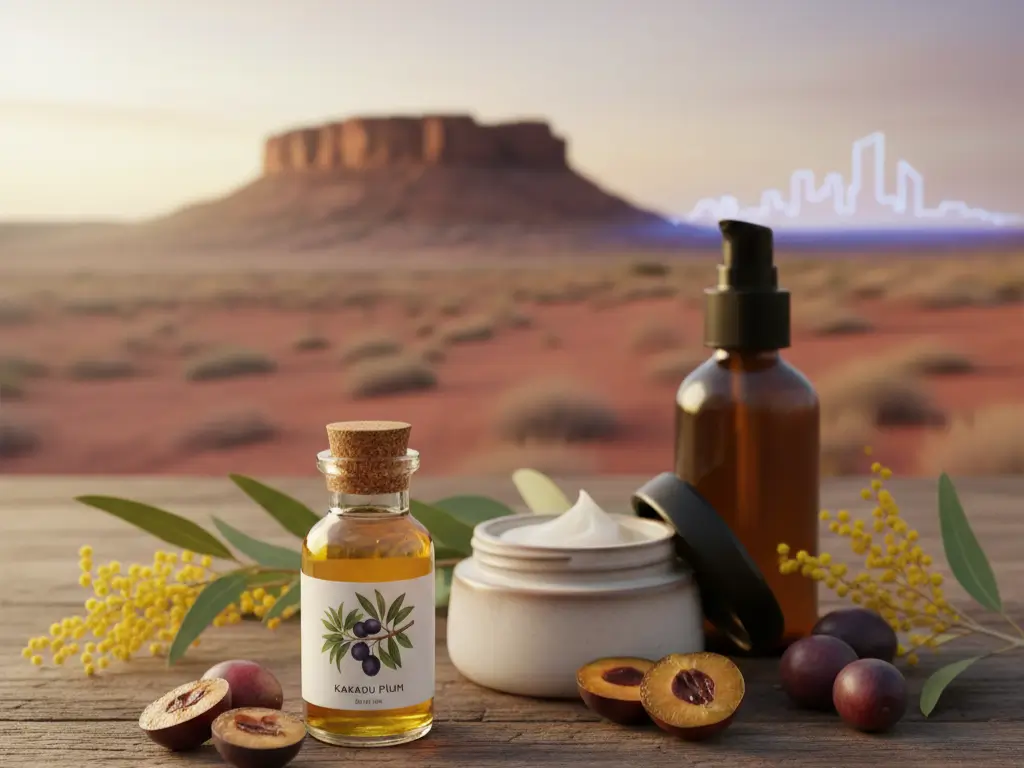
I thought “Australian skincare” meant expensive tea tree products at Sephora. Then a friend visiting from Sydney handed me a small jar of something called Kakadu plum serum. “Just try it for two weeks,” she said. “Your skin’s stressed, and this is what survives the Outback.”
That tiny jar changed how I think about skincare. Not because it was magic (it wasn’t), but because it introduced me to something I’d been missing: ingredients literally designed by evolution to survive brutal conditions.98
An Australian bush skincare routine uses botanicals that evolved extreme resilience, and channels that strength to help modern skin handle pollution, blue light, and climate stress.
These aren’t delicate hothouse flowers. They’re survival specialists. And after years of watching my skin struggle with screen time, city pollution, and unpredictable weather, I realized my skincare needed less coddling and more resilience training. The Australian bush had been teaching this lesson for 60,000 years, I just needed to listen.
Why Australian Bush Ingredients Work for Stressed Modern Skin
Australian botanicals evolved under extreme UV, drought, and temperature swings, stressors similar to modern skin challenges like pollution, screen exposure, and climate-controlled environments. Their concentrated antioxidants, essential fatty acids, and unique phytochemicals provide adaptive protection rather than just temporary relief.
Most skincare ingredients come from plants grown in controlled, gentle conditions. Australian bush botanicals? They evolved in one of Earth’s harshest environments. Think extreme UV radiation, months without water, dramatic temperature shifts, and nutrient-poor soil.
The plants that survived developed concentrated defense mechanisms. Kakadu plum, for example, produces up to 100 times more vitamin C than oranges, not for marketing purposes, but because it needed that antioxidant firepower to survive. This matters for your skin because modern stress (pollution particles, blue light exposure, processed environments) creates similar oxidative damage.
What I’ve noticed after two years using these ingredients: my skin stopped reacting so dramatically to everything. Flight to a dry climate? Less chaos. Forgot my humidifier during winter? Skin stayed relatively calm. Extended screen time for a work deadline? Fewer random breakouts.
The science backs this up. A 2023 study in the International Journal of Cosmetic Science found that Kakadu plum extract provided 40% better protection against blue light-induced oxidative stress compared to standard ascorbic acid. Desert lime, another Australian native, contains twice the vitamin E of conventional citrus and unique compounds that help skin maintain moisture under stress.
These ingredients don’t work like conventional actives. They’re not about dramatic transformation. They’re about building what I think of as “skin resilience”, the ability to maintain baseline health when conditions aren’t perfect. Which, let’s be honest, is most of the time.
Traditional Aboriginal skincare practices recognized this. For thousands of years, Indigenous Australians used these botanicals not for beauty routines, but for protection and healing in extreme conditions. Modern formulations borrow this wisdom, though not always respectfully (more on that in a minute).
Three Australian ingredients worth understanding:
Kakadu plum: Highest natural vitamin C concentration on Earth. Works as both antioxidant and gentle brightness enhancer without the irritation of pure ascorbic acid.
Emu oil: Rich in omega-3, 6, and 9 fatty acids with a structure similar to human skin lipids. Penetrates deeply without clogging pores (I was skeptical too, but it’s been tested).
Wattleseed: Contains compounds similar to modern peptides, supporting skin firmness and elasticity.
These aren’t the only options, Australian botanicals include everything from Davidson plum to quandong, but they’re the most researched and accessible in US formulations. Speaking of which, many products claiming “Australian botanicals” contain barely measurable amounts. Look for products listing these ingredients in the first five components, not buried at the end.
The vitamin C skincare guide at Beauty Healing Organic explores different forms of this antioxidant in depth, including plant-based sources like Kakadu plum.
Building Your Australian-Inspired Skincare Routine (Morning)
Gentle botanical cleanser, Kakadu plum vitamin C serum, lightweight emu oil or native extract moisturizer, mineral SPF. This sequence provides antioxidant protection before environmental exposure while maintaining skin barrier integrity.
Your morning routine should prep skin for whatever the day throws at it, pollution during your commute, hours under artificial light, climate-controlled office air. Australian ingredients excel at this protective, resilience-building role.
Step 1: Gentle Botanical Cleanse (30 seconds)
Start with a creamy, non-stripping cleanser. I use one with calendula and Australian blue cypress, but any gentle cream cleanser works. The Australian approach isn’t about squeaky-clean; it’s about maintaining your barrier while removing overnight buildup.
Here’s what changed my thinking: over-cleansing in the morning actually makes skin more vulnerable to daily stress. Your skin produces protective oils overnight. Unless you’re genuinely oily, you don’t need to strip them completely.
Step 2: Kakadu Plum Vitamin C Serum (1-2 minutes)
This is where Australian botanicals shine. Apply 3-4 drops of a Kakadu plum-based vitamin C serum to damp skin. The natural vitamin C provides antioxidant protection without the stinging or oxidization issues of pure L-ascorbic acid.
What I got wrong initially: I thought more was better. It’s not. These concentrated plant extracts work efficiently at lower concentrations. A little goes surprisingly far.
If you’re dealing with hyperpigmentation, Kakadu plum’s gentle approach to brightening makes it ideal for consistent daily use without irritation. It plays well with other ingredients, which matters when you’re building a complete routine.
Step 3: Hydration Layer (1 minute)
Layer a lightweight hydrator containing Australian botanicals like desert lime (for vitamin-rich hydration) or snow mushroom (technically not Australian, but commonly paired in these formulations). I alternate based on weather, desert lime when it’s humid, snow mushroom when it’s dry.
The humectants hydration guide explains how different moisture-attracting ingredients work, which helps when choosing between botanical options.
Step 4: Emu Oil or Native Botanical Moisturizer (1 minute)
This is where I was most skeptical. Emu oil? Really? But its fatty acid profile closely matches human skin lipids, which means it absorbs completely without that greasy feeling.
If emu oil doesn’t align with your values (it’s animal-derived), look for moisturizers featuring macadamia oil, Australian sandalwood, or quandong instead. The goal is a protective layer that seals in hydration without suffocating skin.
For those exploring different facial oils, understanding oil weights and absorption rates helps match products to your skin type and climate.
Step 5: Mineral Sunscreen (Non-negotiable)
Here’s the uncomfortable truth: all the antioxidant-rich Australian extracts in the world don’t replace sunscreen. Use a mineral sunscreen without white cast as your final morning step.
Australian-inspired doesn’t mean Australian sun exposure. UV damage is cumulative and permanent. The botanicals help your skin handle stress, they don’t make you invincible.
Your Evening Australian Bush Skincare Ritual
Oil-based cleanse, gentle exfoliation (2-3x weekly), botanical treatment serum, richer moisture layer with Australian botanicals, optional facial massage with tools. Evening focuses on repair and regeneration using the anti-inflammatory properties of bush ingredients.
Evenings are for recovery. Your skin shifts into repair mode at night, and Australian botanicals support this with anti-inflammatory compounds and skin-identical lipids.
Step 1: Oil Cleanse with Tea Tree or Eucalyptus (2 minutes)
The oil cleansing method works beautifully with Australian botanicals. I use a blend with tea tree oil (antimicrobial without being harsh) and eucalyptus (refreshing and decongesting).
Massage onto dry skin for 60-90 seconds, add water to emulsify, rinse thoroughly. This removes everything, makeup, sunscreen, pollution particles, without stripping.
Step 2: Gentle Second Cleanse (30 seconds)
Quick follow-up with a gentle cream or gel cleanser. This isn’t about being extra clean; it’s about ensuring no oil residue interferes with treatment products.
Step 3: Exfoliation, 2-3x Weekly (2 minutes)
Rather than daily harsh exfoliation, use gentle natural exfoliating acids or enzymes 2-3 times weekly. Australian finger lime (a natural source of AHAs) or enzyme treatments with Davidson plum work well.
What surprised me: less frequent, gentler exfoliation actually gave better results than my old daily routine. Skin stayed calmer and more even.
Step 4: Treatment Serum (2 minutes)
This is when I use richer botanical serums, often something with quandong (high in vitamin C and essential fatty acids) or Tasmanian pepperberry (anti-inflammatory and soothing).
If you’re exploring alternatives to conventional actives, bio-retinols from Australian botanicals provide gentle skin renewal without retinoid irritation.
Step 5: Rich Moisture with Botanical Oils (2-3 minutes)
Evening moisture should be richer than morning. I layer a cream containing wattleseed (for peptide-like effects) with a few drops of pure emu oil or a blend of macadamia and rosehip oils.
The botanical butters guide explores different plant-based moisture sources if you want alternatives to oils.
Optional Step 6: Facial Massage (5 minutes)
This is where I’ve found the biggest difference. Using a gua sha tool or jade roller with emu oil or a rich botanical serum helps products absorb while promoting lymphatic drainage.
The Australian approach isn’t just about products, it’s about supporting skin’s natural processes. Massage does this mechanically while the botanicals do it chemically.
Adapting Australian Botanicals to Your US Climate
Lightweight, antioxidant-rich formulations for humid climates; heavier botanical oils and butters for dry regions; barrier-supporting ingredients for extreme temperature swings. Australian ingredients work everywhere but require different concentrations and companions based on local conditions.
Australia is huge with varied climates. The Outback is brutally dry; coastal regions are humid; Tasmania is cool and temperate. Similarly, US climates vary dramatically. Your routine should too.
For Dry/Arid Climates (Southwest, Mountain States):
You’re dealing with conditions most similar to the Australian interior. Focus on moisture-retention:
- Morning: Lighter Kakadu plum serum, but heavier moisturizer with emu oil or macadamia oil
- Evening: Rich botanical butter-based creams with wattleseed or quandong
- Weekly add-on: Hydrating masks with Australian clay and botanical oils
Check the weather and environment skincare guide for seasonal adjustments.
For Humid Climates (Southeast, parts of Pacific Northwest):
Humidity helps, but you still need antioxidant protection from environmental stressors:
- Morning: Full-strength Kakadu plum serum, lightweight gel moisturizer with desert lime
- Evening: Water-based serums with Australian botanicals, skip heavy oils unless very dry
- Weekly add-on: Clay masks with tea tree for gentle purifying
For Variable/Urban Climates (Northeast, Midwest, urban areas):
You’re balancing indoor heating/cooling with outdoor weather swings, plus urban pollution:
- Morning: Antioxidant focus with Kakadu plum, medium-weight moisturizer, always SPF
- Evening: Barrier repair with botanical oils, anti-inflammatory ingredients like Tasmanian pepperberry
- Weekly add-on: Gentle exfoliation to address pollution buildup
The anti-pollution skincare routine provides specific strategies for urban environmental stress.
Comparison: Climate Adjustments
| Climate Type | Morning Focus | Evening Focus | Key Adjustment |
| Dry/Arid | Lighter serums, heavier moisturizers | Rich botanical butters and oils | Maximum moisture retention |
| Humid | Full-strength antioxidants, lightweight texture | Water-based treatments | Prevent heaviness while maintaining protection |
| Variable/Urban | Balanced antioxidants, medium moisture | Barrier repair, anti-inflammatory | Adapt to daily conditions, focus on pollution defense |
| Cold/Winter | Protective layers, emu oil | Rich creams, facial oils with massage | Prevent moisture loss, support circulation |
What Australian Bush Skincare Can’t Do (The Honest Truth)
Australian botanicals excel at building resilience, providing antioxidants, and supporting barrier function, but won’t dramatically transform skin overnight, can’t replace medical treatments for conditions like severe acne or rosacea, and won’t work if products contain minimal actual botanical content (common in marketing-driven formulations).
I’m going to be straight with you because most content won’t: Australian bush ingredients aren’t magic, and the marketing around them is often more impressive than the reality.
They won’t give you instant results. If you’re used to strong actives that create visible (if sometimes problematic) changes quickly, botanical approaches feel slow. I didn’t see real differences until week 3-4. This is resilience-building, not transformation.
They can’t treat serious skin conditions. If you have severe acne, rosacea, or other medical conditions, botanicals can support your skin, but they’re not primary treatment. I learned this the hard way trying to treat rosacea with botanicals alone. They helped, but I needed additional support.
Many “Australian” products are mostly marketing. Unless the botanical ingredients appear in the first 5 components of the ingredient list, you’re getting a tiny amount in an otherwise conventional formula. Actually effective products aren’t cheap because these ingredients are expensive to source and formulate.
They work differently than conventional actives. Don’t expect botanical vitamin C to work exactly like pure L-ascorbic acid, or plant peptides to match lab-created ones. They’re gentler, which can be good (less irritation) or limiting (slower results).
Not every Australian ingredient is appropriate for skincare. Some traditional uses don’t translate to modern formulations, and not all plants are sustainably sourced. Look for products that acknowledge Indigenous knowledge respectfully and source ethically.
What Australian botanicals CAN do: build genuine resilience over time, provide consistent antioxidant protection without irritation, support your skin barrier, and work synergistically with other ingredients including conventional actives.
At Beauty Healing Organic, you’ll find extensive guides on combining different botanical traditions, Australian, Mediterranean, Ayurvedic, and more, to create personalized routines that acknowledge both ancient wisdom and modern science.
If you’re struggling to make products work together, the skincare layering guide explains proper sequencing for different ingredient types.
Building Resilience, Not Just Beauty
After three years of incorporating Australian bush ingredients into my routine, my skin isn’t dramatically different in photos. But it feels fundamentally different. It handles stress better. Recovers faster. Stays calmer through travel, screen marathons, seasonal changes, and all the chaos of actual life.
That small jar my friend handed me taught me something important: skincare doesn’t always need to be about transformation. Sometimes it’s about adaptation. The Australian bush has been teaching that lesson through extreme conditions for millennia. These botanicals carry that wisdom, concentrated resilience in plant form.
Your skin lives in a modern environment arguably as stressful as the Outback: pollution, blue light, processed air, temperature extremes, chronic low-grade inflammation from a dozen sources. Conventional skincare often tries to override these stressors with powerful actives. The Australian approach? Build your skin’s capacity to handle them.
- Check your current “Australian” products: Are the botanical ingredients actually present in meaningful amounts (first 5 ingredients), or buried at the end of the list?
- Choose one Australian ingredient to try: Start with Kakadu plum vitamin C if you need antioxidant support, emu oil if your barrier is compromised, or tea tree if you’re dealing with occasional breakouts.
- Adjust for your actual environment: Use the climate guide above to adapt concentrations and textures to where you actually live.
The future of skincare, I think, isn’t about choosing between ancient wisdom and modern science. It’s about recognizing that plants that survived extreme conditions for thousands of years have something valuable to teach our overstressed modern skin. Australian bush botanicals aren’t the only answer, but they’re a resilient, time-tested part of a smarter approach.
Your skin doesn’t need to be coddled. It needs to be strengthened. The Australian bush has been proving that since long before we turned skincare into an industry.