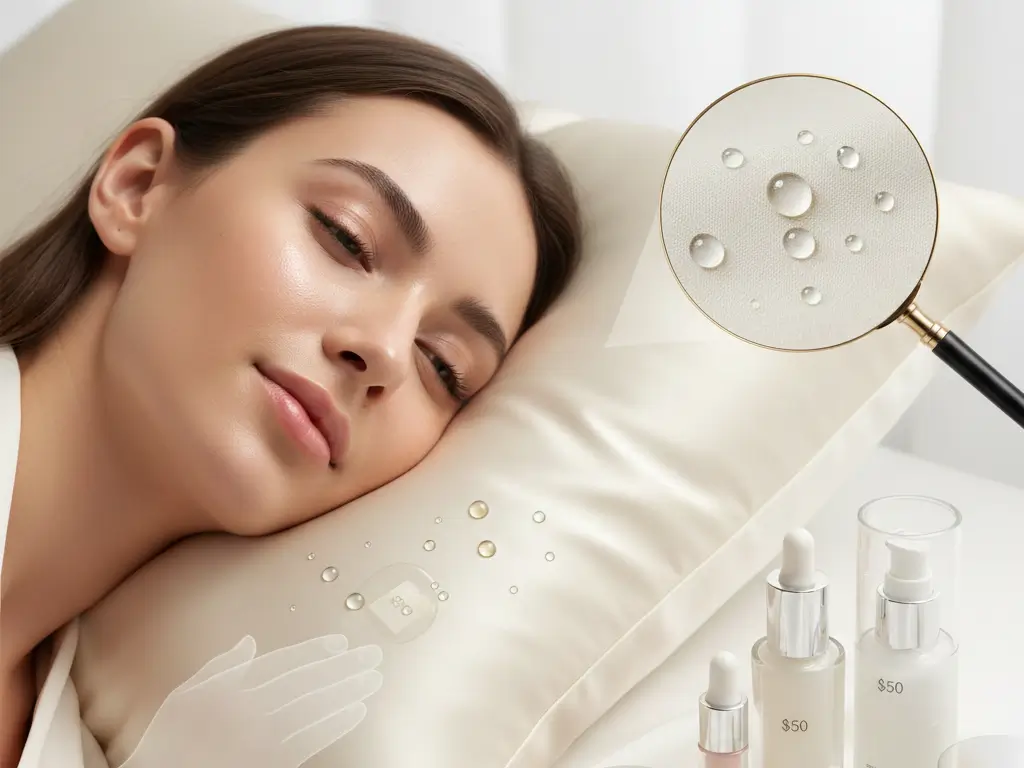
I have a question for you. How much money is currently sitting on your face right now?
If you just finished your evening routine, you might have $50, $100, or even more worth of serums, oils, and moisturizers layered on your skin. Now, here is the uncomfortable truth most of us ignore: within 20 minutes of hitting the pillow, a massive chunk of that investment is gone.
It didn’t evaporate. It wasn’t absorbed by your skin. It was stolen by your cotton pillowcase.
For years, I treated sleep accessories as a luxury afterthought. I thought silk was just for “fancy” people. But after digging into the material science of textiles and their interaction with the skin barrier, I realized I was wrong. The surface you sleep on isn’t just bedding; it is an active participant in your skincare routine.
If you are waking up with sleep creases, frizzy hair, or dry skin despite using heavy moisturizers, your pillowcase is likely the culprit. Let’s break down the mechanics of sleep surfaces and why switching materials might do more for your face than another expensive cream.
The Cotton Problem: Why Your Bedding Hates Your Skin
Cotton is a hydrophilic (water-loving) fiber designed to absorb moisture. When you sleep on cotton, it acts like a sponge, pulling natural oils and applied skincare products off your face. This friction also physically tugs at hair follicles and skin, contributing to breakage and sleep lines.
The Physics of Friction
I want you to think about what happens when you toss and turn at night. On a microscopic level, cotton fibers look like twisted ribbons. They are rough. When your hair or skin drags across them, it creates friction.
This matters because friction creates inflammation. For hair, this means the cuticle (the outer layer) gets roughed up, leading to tangles and dullness. For skin, that dragging motion contributes to “sleep wrinkles”, those deep vertical lines you see in the morning. Unlike expression lines, these are caused purely by mechanical compression and drag.
The Absorption Factor
Cotton can hold up to 27 times its weight in water. That is great for a bath towel. It is terrible for a pillowcase.
When you apply a rich night cream or a complex layering routine, you rely on occlusives to seal that moisture in. Cotton bypasses that seal. It wicks moisture away from your skin barrier.
If you are struggling with hydration, you might be blaming your moisturizer when you should be blaming your pillow. This is especially critical if you are focusing on plant ingredients for skin barrier health, as a compromised barrier needs a non-absorbent environment to heal overnight.
Silk vs. Satin: The Great Deception
Silk is a natural protein fiber produced by silkworms, while “satin” is a weave, not a fabric. Most cheap “satin” pillowcases are actually polyester (plastic). While polyester is smooth, it is not breathable, leading to sweating and bacterial growth. Silk is breathable, hypoallergenic, and naturally temperature-regulating.
Don’t Be Fooled by the Weave
This is the biggest trap in the industry. I see it all the time on Amazon. A brand will scream “Silky Smooth Satin!” and charge $15.
Here is the breakdown:
- Silk: A natural fiber containing amino acids (proteins) that are similar to human skin.
- Satin: A method of weaving. You can have silk satin, cotton satin, or polyester satin.
99% of the time, if it just says “Satin,” it is polyester.
Why Material Matters
I tested a polyester satin case for a week. Yes, it was slippery. But by night three, I noticed a problem: heat. Synthetic fabrics trap heat against the skin. If you are prone to acne or just sleep hot, polyester turns your pillow into a petri dish. Sweat mixes with bacteria, trapped against your pores all night.
Real mulberry silk is thermoregulating. It keeps you cool in summer and warm in winter. It breathes. If you are trying to navigate the difference between organic vs natural vs clean beauty standards, understanding the source of your fabrics is just as important as the source of your ingredients.
Decoding the “Momme” Count (Because Thread Count is a Lie)
Momme (mm) is the unit of weight used to measure silk density and quality. Unlike thread count, higher momme means more silk was used per square meter.
- 19mm: Entry-level. Good, but thin.
- 22mm: The gold standard. Durable and opaque.
- 25mm+: Luxury grade. Extremely durable but stiffer.
What Should You Buy?
I used to think “higher is better” for everything. With silk, there is a point of diminishing returns.
A 19mm pillowcase is affordable (usually $20-$40). It feels soft, but after about 50 washes, I noticed mine started to lose its sheen and thin out.
A 22mm pillowcase is the sweet spot. It creates that perfect balance of durability and softness. It feels substantial in your hand. This is what I recommend for 90% of people.
Anything 30mm or higher feels incredibly luxurious, almost like heavy canvas, but it can actually be too stiff for a pillowcase. It doesn’t drape as well. Unless you want your pillow to feel like a piece of furniture, stick to the 22-25mm range.
Investing in a quality silk pillowcase is typically a one-time cost that pays off every single night.
The Sleep Accessory Ecosystem
Changing your pillowcase is step one. But if we are looking at holistic sleep hygiene, we need to talk about the other tools in the kit.
The Sleep Mask: More Than Just Darkness
Blocking light is crucial for melatonin production, but the material of your mask matters just as much as the opacity.
The skin around your eyes is the thinnest on your body. A tight, rough sleep mask can actually cause edema (puffiness) by restricting lymph flow or creating creases. I switched to a padded silk mask that sits lightly on the face.
This is particularly helpful if you deal with morning swelling. While topical treatments for botanical under eye puffiness help, preventing the mechanical stress in the first place is smarter.
Pro-tip: If you use a heavy eye cream or a DIY overnight lip mask, a silk mask won’t absorb the product the way cotton or velvet masks do.
Hair Protection: Bonnets and Scrunchies
If you have textured hair, curly hair, or just hair that is prone to breakage, a silk pillowcase might not be enough.
This is where the bonnet comes in. It creates a micro-environment for your hair. By keeping hair contained, you prevent it from getting crushed under your shoulders or tangled by your own movement.
I have noticed a massive difference in how long my hydration lasts when I use a silk scrunchie instead of a regular elastic. Regular elastics cut into the hair shaft. Silk glides. It pairs perfectly with natural hair care treatments because the oil stays on your strands, not your sheets.
Maintenance: The Dealbreaker?
Silk requires gentle care but doesn’t necessarily need hand-washing. Use a pH-neutral liquid detergent, wash on a delicate/cold cycle in a mesh bag, and air dry out of direct sunlight. Never use bleach or fabric softener, as they coat the fibers and destroy the breathability.
The Myth of “Dry Clean Only”
Most high-quality modern silk can go in the washing machine. I wash mine weekly.
However, you have to be careful with your detergent choice. Standard laundry detergents contain enzymes that are designed to break down biological stains (like food or sweat). Since silk is a protein (biological) fiber, those enzymes can literally eat away at your pillowcase over time.
Look for a gentle, pH-balanced detergent. This is similar to the philosophy behind natural soaps for men and sensitive skin types, stripping agents destroy the barrier, whether it is your skin or your silk.
Also, never put silk in the dryer. Heat destroys the fibers. Lay it flat on a towel; it usually dries in a few hours.
Real Talk: Is It Worth The Cost?
Let’s look at the numbers.
A good 22mm silk pillowcase costs around $50 to $80. That sounds like a lot for a pillowcase. But compare it to your skincare budget.
If you buy a $90 serum and your cotton pillowcase absorbs 30% of it every night, you are wasting $27 of product per bottle. Over a year, the pillowcase pays for itself just in “saved” skincare product.
And that doesn’t account for the long-term benefits of reduced friction on your skin and hair.
Which Material is Right for You?
| Feature | Cotton | Polyester Satin | Mulberry Silk |
| Price | Low ($5-$15) | Low ($10-$20) | High ($40-$90) |
| Absorbency | High (Drying) | Zero (Sweaty) | Low (Hydrating) |
| Friction | High | Low | Very Low |
| Breathability | Good | Poor | Excellent |
| Best For | Durability | Budget | Skin/Hair Health |
Integrating Silk into Your Routine
You don’t just throw a pillowcase on the bed and hope for the best. To get the most out of this, you need to adjust your evening ritual slightly.
1. The Skincare Layering Adjustments
Since silk doesn’t absorb product, you might find your skin feels “heavier” if you apply the same amount of oil as you did with cotton.
I recommend applying your actives first, then your moisturizer. Give it about 10 minutes to sink in while you brush your teeth or read. Then, head to bed. Because the silk won’t wick the product away, you might actually be able to use less product to get the same result. This is efficient skincare layering at its finest.
2. Managing the “Slippage”
I’ll be honest, silk is slippery. If you prop yourself up on pillows to read, you might find yourself sliding down.
It takes a few nights to get used to. If it really bothers you, look for a pillowcase with a cotton underside (some brands make these to prevent slipping), though you lose the cooling benefit on the bottom side.
3. Stress and Sleep Quality
There is a psychological element here too. The tactile sensation of silk is soothing. It triggers a relaxation response.
We know that stress hormones wreak havoc on skin, it’s the connection between blue light, cortisol, and skin. Creating a sensory experience that signals “safety” and “rest” to your brain helps lower cortisol levels, allowing your skin’s overnight repair processes to work more effectively.
Troubleshooting Common Issues
“My silk pillowcase is yellowing.”
This is natural. Silk is a protein. Over time, sweat and oils can cause slight yellowing. To combat this, add a half cup of white vinegar to the rinse cycle. It helps break down residue and restores shine.
“I’m breaking out.”
While silk is naturally hypoallergenic, it needs to be washed. If you don’t wash it, oils sit on the surface (since they aren’t absorbed). If you have acne-prone skin, wash your silk pillowcase every 3-4 days.
“It’s too wrinkled.”
Silk wrinkles easily. Do not iron it on high heat. If you hate wrinkles, take it out of the wash while it’s still slightly damp and put it on the pillow. It will dry smooth.
The Bottom Line
Is a silk pillowcase a magic wand that will erase 20 years of aging overnight? No.
But is it a critical piece of infrastructure for anyone serious about skin and hair health? Absolutely. It is the only skincare product you use for 8 hours straight, every single night.
If you are mindful about what you put in your body and on your skin, perhaps exploring sustainable bathroom products or clean beauty, it makes no sense to sleep on a surface that fights against your goals.
For me, the switch wasn’t just about vanity. It was about respect for the rituals I perform every night. It was about ensuring that the care I give my skin isn’t undone the moment I close my eyes.
- Check the Label: Go look at your current “satin” pillowcase. If it says 100% polyester, it’s time for an upgrade.
- Start with One: You don’t need to replace the whole bed. Just buy one good 22mm mulberry silk pillowcase for the pillow you actually sleep on.
- Adjust the Wash: Buy a mesh laundry bag today so you are ready to care for your investment.
Your skin works hard to repair itself while you sleep. Give it a surface that helps, rather than hurts. For more guides on holistic beauty and material science, explore the resources at beautyhealingorganic.com.