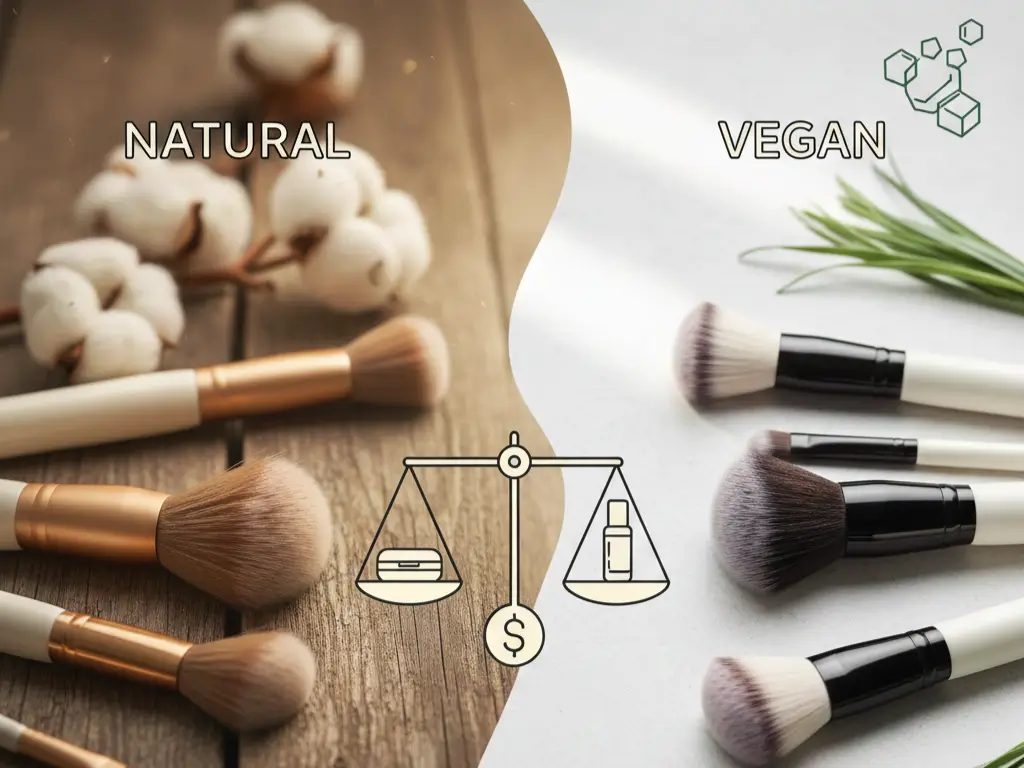
I assumed “natural” makeup brushes and “vegan” makeup brushes were basically the same thing. They’re not. In fact, they’re often opposites.
Natural and vegan makeup brushes use different materials with distinct performance characteristics, natural often means animal hair (not vegan), while vegan means synthetic or plant-based fibers that can outperform natural options.
This matters because you’re probably choosing brushes based on incomplete information. Most guides lump these categories together or skip the performance part entirely. What I’ve learned from testing dozens of brushes is that the “best” choice depends on three things nobody talks about together: what products you’re applying, how you actually care for your tools, and what you’re willing to spend over time (not just upfront).
What’s the Real Difference Between Natural and Vegan Makeup Brushes?
Natural makeup brushes use materials from nature (often animal hair like goat or squirrel), while vegan brushes contain zero animal-derived materials, using synthetic fibers or plant alternatives instead. A brush can be natural but not vegan, or vegan but not natural (like petroleum-based synthetics).
This is where most content gets it wrong.
“Natural” doesn’t mean plant-based. Most natural makeup brushes use animal hair, goat, squirrel, pony, or sable. These are technically natural materials, but they’re definitely not vegan. The confusion happens because brands market “natural” as a synonym for “good for you and the planet,” which sidesteps the animal ethics entirely.
Vegan brushes, on the other hand, exclude all animal-derived materials. This includes the obvious (animal hair bristles) and the less obvious (animal glue in ferrules, leather cases). Most vegan brushes use synthetic fibers, typically Taklon, which is a polyester-based material engineered to mimic natural hair.
some companies now make brushes from plant fibers, which are both natural AND vegan. These use materials like bamboo fiber or recycled wood pulp for bristles, though they’re still less common than synthetic options.
The performance difference is real. Natural animal hair has microscopic scales that grab and blend powder products beautifully. Synthetic fibers are smoother, which makes them better for cream and liquid products that would otherwise get trapped in natural bristles.
“cruelty-free” doesn’t automatically mean vegan. A brand can avoid animal testing (cruelty-free) while still using animal-hair brushes. If ethics matter to you, you need to check both certifications. Many of the considerations around ethical beauty choices apply here, similar to what I discuss in clean beauty sensitive acne skin routines.
The ferrule (the metal part connecting bristles to handle) and handle materials matter too. Vegan options typically use bamboo, recycled wood, or recycled aluminum instead of animal-based glues or bone-derived components.
Which Brush Materials Actually Perform Best for Different Products?
Synthetic vegan brushes excel with liquid and cream products (foundation, concealer, cream blush) because of their smooth, non-absorbent fibers. Natural or high-quality synthetic brushes work better for powder products (eyeshadow, powder blush, bronzer) due to fiber structure that picks up and distributes powder evenly.
This is where theory meets reality.
I’ve tested this with side-by-side applications, and the difference is obvious once you know what to look for. Here’s the breakdown by product type:
For Liquid Foundation and Concealer:
Synthetic vegan brushes win. The smooth fibers don’t absorb product (which means less waste), and they create a smooth, streak-free finish. Taklon and other synthetic fibers are essentially plastic, so liquids sit on the surface rather than soaking in.
Natural hair brushes with liquid foundation? You’ll lose about 30% of your product to absorption, and you’ll spend twice as long blending. Not worth it.
For Powder Products (Blush, Bronzer, Setting Powder):
This is where it gets interesting. High-quality synthetic brushes have caught up to natural hair in the past five years. Brands now engineer synthetic fibers with tapered tips and varied fiber thickness that mimics the natural scale structure of animal hair.
That said, ultra-fine natural brushes (like goat hair) still have a slight edge for picking up and depositing pigmented powders. The microscopic cuticles grab powder particles better than smooth synthetics.
My take: Unless you’re a professional makeup artist working with high-end powder products daily, you won’t notice enough difference to justify the animal ethics compromise.
For Eyeshadow:
Either works well, but synthetic brushes pack on color more intensely while natural brushes blend more seamlessly. I keep both: synthetic for lid color application, natural-style vegan brushes for crease blending.
Plant-based vegan brushes (made from bamboo fiber) perform somewhere between traditional natural and synthetic. They’re improving but still represent a smaller market share.
For Cream and Gel Products:
Synthetic vegan brushes are non-negotiable here. Cream blush, gel eyeliner, cream eyeshadow, all need the non-porous surface of synthetic fibers. Natural hair will absorb the product, harbor bacteria, and become stiff over time.
The handle and ferrule materials don’t affect performance much, but they do impact durability. Bamboo handles feel good but can crack in dry climates. Recycled aluminum ferrules are lighter than brass but equally durable. Similar to how we choose tools for facial massage tools guide, the material choice affects longevity more than immediate results.
How to Choose Between Natural, Vegan, and Synthetic Brushes
Choose based on (1) your ethics priorities, (2) the products you use most, and (3) your cleaning routine consistency. If animal welfare matters most, choose certified vegan. If performance with powder products is critical and ethics are flexible, natural may edge ahead. For most people, high-quality synthetic vegan brushes offer the best performance-ethics balance.
Let me be direct: your values should drive this decision, but only after you understand the tradeoffs.
Choose Certified Vegan Brushes If
You want to avoid all animal-derived materials, period. This is the clearest ethical stance. Look for certifications from PETA, Leaping Bunny, or Vegan Society, not just brand claims. The cruelty-free vegan certifications guide breaks down what these actually mean.
You primarily use liquid and cream products. Synthetic vegan brushes outperform here anyway, so you’re not sacrificing results.
You want easier cleaning and faster drying. Synthetic fibers don’t hold water like natural hair, which means less bacterial growth risk and less time waiting for brushes to dry.
Choose Natural (Animal Hair) Brushes If
You prioritize powder product performance above animal welfare concerns. I’m not here to judge, just be honest with yourself about this tradeoff.
You’re a professional working with high-pigment powder products where that 5-10% performance difference matters to your income.
You’re willing to invest in proper care. Natural brushes require gentle shampoo, careful drying, and occasional conditioning to maintain the hair structure.
Choose Plant-Based Vegan Brushes If
You want both vegan ethics and natural materials. These are newer to market, typically pricier, and performance varies by brand.
You’re willing to experiment. This category is evolving fast, and what’s available in 2024 will be outdated by 2025.
What Actually Matters in Quality
Fiber density (how packed the bristles are) affects product pickup and blending more than the material itself. A densely packed synthetic brush outperforms a sparse natural brush every time.
Ferrule crimping determines whether bristles shed. Check that the metal is tightly crimped with no visible gaps. This is true for both natural and vegan options.
Handle weight and balance impact control. Pick up the brush, does it feel front-heavy (bad) or balanced (good)? This matters more than whether it’s bamboo or recycled plastic.
Price doesn’t always correlate with quality. I’ve used $8 synthetic brushes that outperformed $35 “natural” brushes. Brand reputation and specific product reviews matter more than cost.
What I’ve noticed: people overthink this. If you’re already committed to clean beauty principles in your skincare and makeup products, vegan synthetic brushes are the logical extension. The performance gap has essentially closed for non-professional use.
Do Natural and Vegan Makeup Brushes Last as Long?
High-quality synthetic vegan brushes typically last 3-5 years with proper care, matching or exceeding natural brush longevity. Natural brushes can last 5-10 years but require more careful maintenance. Cheap versions of either type will fail within 12-18 months regardless of material.
This is where the “buy cheap, buy twice” principle really applies.
I’ve tracked the lifespan of my own brushes over six years, and quality trumps material type every time. A well-made synthetic brush with properly crimped ferrules and durable fibers will outlast a poorly made natural brush.
What Actually Makes Brushes Fail
Ferrule separation (bristles detaching from handle) is the number one failure point. This happens when the glue degrades or the metal crimping loosens. It affects natural and synthetic brushes equally and is almost always a quality control issue, not a material issue.
Bristle splaying happens when fibers lose their shape. Natural hair can be “retrained” with gentle shampooing and reshaping while wet. Synthetic fibers that splay are usually done, the plastic has deformed permanently.
Handle cracking affects bamboo and wood handles (common in vegan brushes) more than plastic or metal. This is climate-dependent. If you live in a dry environment, bamboo handles need occasional oiling, similar to how you’d maintain a wooden comb hair tool.
Color fading affects both types but is cosmetic, not functional.
Maintenance Requirements
Synthetic vegan brushes are objectively easier to maintain. Wash with gentle soap or brush cleaner, rinse until water runs clear, reshape, and lay flat to dry. They dry in 4-6 hours and are ready to go.
Natural brushes need similar washing but with extra precautions: don’t get water in the ferrule (it loosens glue), don’t use hot water (damages hair cuticles), and allow 12-24 hours for drying. Some professionals condition natural brushes monthly with hair conditioner.
If you’re inconsistent with cleaning, be honest with yourself, synthetic brushes are more forgiving. They resist bacterial growth better and bounce back from neglect more readily.
Real-World Longevity Data
From my own use and talking with makeup artists: quality synthetic brushes last 3-5 years with weekly cleaning. Quality natural brushes last 5-10 years with proper care. The extended lifespan of natural brushes is offset by higher initial cost and maintenance effort.
Cheap brushes of any type fail within 18 months. The ferrules separate, bristles shed constantly, or handles crack. This is where buying mid-range ($12-25 per brush) pays off versus budget ($4-8) options.
What surprised me: brush cleaning frequency matters more than material type for longevity. Brushes cleaned weekly last 2-3 times longer than brushes cleaned monthly, regardless of whether they’re natural or synthetic.
The Real Cost of Natural and Vegan Makeup Brushes Over Time
Over 5 years, mid-range synthetic vegan brushes cost $15-30 per brush total ($12-20 upfront + $3-10 in cleaners). Natural brushes cost $25-50 per brush total ($20-35 upfront + $5-15 in specialized cleaners and conditioners). Budget options of either type cost more long-term due to replacement needs.
Let’s run the actual numbers, because this is where things get interesting.
Upfront Costs (Per Brush):
- Budget synthetic vegan: $4-8
- Mid-range synthetic vegan: $12-20
- Premium synthetic vegan: $25-40
- Budget natural: $8-15
- Mid-range natural: $20-35
- Premium natural: $45-80
Most people need 8-12 brushes for a complete face and eye setup. That’s $96-240 for mid-range synthetic vegan versus $160-420 for mid-range natural. Already a significant gap.
Ongoing Costs Over 5 Years:
Synthetic vegan brushes can be cleaned with regular gentle soap or affordable brush cleaners. Figure $20-30 total over 5 years for cleaning supplies.
Natural brushes need specialized shampoos that won’t strip the hair ($8-15 per bottle, 2-3 bottles over 5 years) plus occasional conditioner ($6-12 per bottle, 1-2 bottles over 5 years). Total: $30-50 over 5 years.
Replacement Costs:
Budget brushes typically need replacing within 2 years. If you buy a $6 brush and replace it twice in 5 years, you’ve spent $18, more than buying one $15 mid-range brush that lasts the full 5 years.
Mid-range synthetic vegan: minimal replacement if you buy quality initially
Mid-range natural: minimal replacement with proper care
Total 5-Year Cost (12-Brush Set):
- Budget synthetic (with replacements): $288-432
- Mid-range synthetic vegan: $144-240 + $30 supplies = $174-270
- Mid-range natural: $240-420 + $50 supplies = $290-470
The mid-range synthetic vegan option wins on total cost by a significant margin.
What Nobody Mentions:
Storage matters. Brushes kept in closed containers or damp bathrooms fail faster regardless of type. I keep mine in an open cup on my vanity, simple, free, and extends lifespan.
Spot cleaning between deep cleans extends brush life significantly. A quick spray with brush cleaner after each use ($8 bottle lasts 6-12 months) means you can deep clean weekly instead of after every use.
The opportunity cost of time: if you value your time at $20/hour, the extra 10 minutes per month that natural brushes require for proper care adds up to about $20/year in opportunity cost. Over 5 years, that’s another $100 to the real cost of natural brushes.
My honest assessment: unless you have a specific performance need that natural brushes solve, mid-range synthetic vegan brushes offer better value. You’re not sacrificing quality, you’re saving money, and you’re making a choice that aligns with animal welfare ethics.
If you’re building out a complete clean beauty routine, brushes are just one component. The same value-based decision making applies to everything from full face clean beauty guide to natural vegan makeup brushes to the actual makeup products you’re applying.
Choose Based on What You’ll Actually Use
The best makeup brushes are the ones you’ll actually clean and use consistently.
I’ve seen people buy expensive natural brush sets that sit unused because they feel “too nice” for daily use. I’ve also seen people invest in vegan synthetic sets and use them daily for years because there’s no guilt about wear and tear.
Start with 3-5 mid-range synthetic vegan brushes for the products you use most often. Test them for 30 days. If you’re happy with performance, expand your collection. If you notice limitations with specific products (usually heavily pigmented powders), then consider adding one or two specialized brushes.
Look for brands that disclose their certifications, not just marketing claims. PETA certification, Vegan Society approval, and cruelty-free vegan certifications mean something. “Vegan-friendly” on a website means nothing.
Budget $12-20 per brush for quality that lasts, not $6 for brushes you’ll replace in 18 months.
The clean beauty movement extends beyond skincare into tools, packaging, and lifecycle impact. Whether you’re exploring zero waste beauty routine practices or just trying to make better choices, understanding what “natural” and “vegan” actually mean, and don’t mean, is where it starts.
Your brushes should match your values and your makeup routine. Not someone else’s ideal, and definitely not marketing hype.