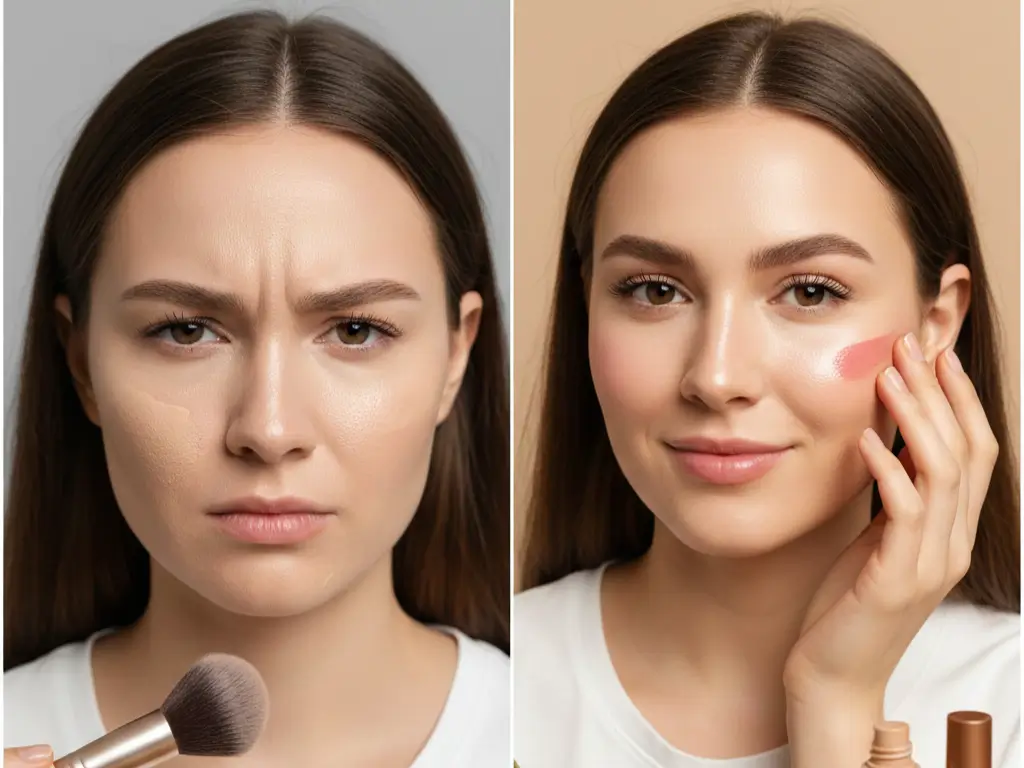
My first attempt at a full-face clean beauty look was a disaster. My mineral foundation clung to dry patches I didn’t know I had. My cream blush disappeared within an hour. And my natural mascara? Let’s just say “lengthening” wasn’t the word I’d use. The problem wasn’t the products, it was that I was applying clean formulations the exact same way I’d used conventional makeup for years.
A full-face clean beauty look uses plant-based ingredients and mineral pigments instead of synthetic chemicals, requiring adapted application techniques because natural formulations have different textures, absorption rates, and setting properties than conventional makeup.
Here’s what nobody tells you when you switch to clean beauty makeup: the formulations behave differently because they’re built differently. Conventional makeup uses silicones for slip, synthetic polymers for lasting power, and chemical binders for pigment suspension. Clean alternatives rely on plant oils, waxes, and mineral bases, which means your application order, tools, and techniques need to change too.
What Makes Clean Beauty Makeup Different From Conventional?
Clean beauty makeup excludes synthetic chemicals like parabens, phthalates, and silicones, using plant-based oils, mineral pigments, and natural waxes instead. These alternative ingredients create different textures, typically more emollient in creams and more finely-milled in powders, that absorb into skin differently and require adjusted application methods.
The texture difference is the critical part most people miss.
Conventional foundations use dimethicone (a silicone) to create that smooth, blurring effect. It sits on top of your skin, filling in texture. Clean foundations typically use ingredients like squalane, jojoba oil, or coconut alkanes for slip. These actually absorb partially into your skin rather than sitting on the surface.
This absorption characteristic changes three things:
Drying time: Clean liquid and cream products need 30-60 seconds to set between layers. Rush it, and you’ll lift the previous layer or create pilling. I learned this the hard way when my cream blush mixed with my liquid highlighter into a muddy mess.
Building coverage: You can’t pack on clean foundation the same way. The oils in natural formulations mean each layer slightly reactivates the previous one. Instead of layering, you need to use a denser coverage formula from the start or spot-conceal strategically.
Setting requirements: Without synthetic polymers that lock into place, clean makeup benefits more from powder setting, but you need the right kind. Traditional talc-based powders can look chalky over oil-based clean products. This is where understanding powder-based skincare formulations helps you choose compatible options.
The pigment story is different too. Synthetic dyes can be supersaturated for intense color payoff. Natural pigments from minerals, fruit extracts, and plant sources are generally less concentrated. Your cream blush might need two applications where conventional needed one. Not worse, just different.
What surprised me most? Clean formulations often work better for skin health. When I researched organic ingredients for rosacea, I realized the anti-inflammatory plant compounds in my clean makeup were actually calming my skin while I wore it. Conventional makeup is inert at best, irritating at worst.
How Do You Prep Skin for Clean Makeup Application?
Start with clean, moisturized skin, wait 5-10 minutes for skincare to absorb fully, then use a thin layer of clean primer or facial oil as a base. The prep window matters more with clean makeup because the formulations interact with what’s underneath rather than covering it.
Here’s the prep sequence I use:
1. Cleanse properly (30 seconds ago, not 30 minutes)
Clean makeup adheres better to fresh skin. If you do your skincare routine, then make coffee, then start makeup, you’ve got skin oil buildup that’ll cause slipping. I keep it tight: cleanse, skincare, makeup.
2. Layer skincare thoughtfully
This is where most people sabotage themselves. If you use a heavy occlusive moisturizer, then immediately apply makeup, you’re creating a slip-and-slide situation. Either use lighter hydration for makeup days, or give heavy creams a full 10 minutes to absorb.
My makeup-day morning routine focuses on humectants for hydration rather than heavy occlusives. Hyaluronic acid serums, lightweight lotions, things that sink in completely.
3. Strategic primer use
Not everyone needs primer, but here’s when you do with clean makeup:
- Large pores or texture: Use a blurring clean primer with silica or rice powder
- Dry skin: Skip primer, use a thin layer of facial oil (seriously, it works better than you’d think with mineral foundations)
- Oily skin: Look for primers with plant-based mattifying ingredients like bamboo extract or tapioca starch
4. The controversial oil layer
This technique changed everything for me with powder foundations. After skincare absorbs, I press (not rub) 2-3 drops of a fast-absorbing facial oil into my skin. Wait 60 seconds. Then apply mineral powder foundation. The slight tackiness helps the minerals actually adhere rather than sitting on top looking dusty.
Does this work for everyone? No. If you’re very oily, skip it. But for normal to dry skin, it’s the secret to making mineral makeup look like skin.
5. Address specific concerns first
If you’re dealing with redness or dark circles, handle those before foundation. I use a green color-correcting concealer on red areas and a salmon-toned one under eyes. The key: set these with a tiny amount of powder before foundation, or they’ll move around when you apply base makeup.
For undereye puffiness specifically, I learned from this botanical guide for puffiness that caffeine-based eye products need 5 minutes to actually work. Factor that into your timeline.
What’s the Complete Order for a Full-Face Clean Beauty Routine?
(1) Color corrector if needed, (2) Foundation, (3) Powder concealer or setting powder, (4) Cream blush and cream highlight, (5) Brows, (6) Eye shadow, (7) Eyeliner, (8) Setting spray, (9) Mascara, (10) Lips. This differs from conventional routines by powdering earlier and applying cream color products after base powder.
This order feels backward if you’re used to conventional makeup, but it works with how clean formulations behave.
Why powder before cream color?
Clean cream blushes and highlighters are typically oil-based. If you apply them directly over a dewy clean foundation, they slide around. But if you dust a thin layer of setting powder first, it creates a slightly textured surface that grabs the cream products.
I know what you’re thinking: won’t powder look flat under cream products? Not if you use a finely-milled setting powder (not heavy powder foundation) and apply it lightly. You’re creating tooth, not coverage.
The complete play-by-play
Foundation: Apply with a dense brush for powder formulas or a damp beauty sponge for liquids. Work in thin layers. For mineral powder, I use circular buffing motions. For liquid clean foundations, I stipple and blend.
Concealer strategy: Here’s the counterintuitive part, I often use powder concealer (mineral-based) rather than cream. Why? It doesn’t crease, and you can build it gradually. Apply with a small, dense brush to spots, undereyes, and any areas needing extra coverage. Set with a light dusting of translucent powder.
Cream blush and highlight: Apply to the apples of cheeks and high points of cheekbones using fingers or a stippling brush. The warmth of your fingers helps blend oil-based formulas better than cold brushes. Build gradually, clean pigments are sheer, which is actually a feature, not a bug. You won’t accidentally go full clown.
Brows: Most clean brow products are wax-based rather than gel-based. They hold differently, more texture, less wet look. I brush brows up, apply product in short strokes following hair direction, then brush through again to soften.
Eyes: Clean eyeshadows are typically more emollient. Use an eyeshadow primer or a tiny amount of concealer on lids first, set with powder, then apply shadow. Build color slowly. For more guidance on natural makeup application, this natural DIY makeup guide has detailed eye techniques.
Setting spray: This is non-negotiable for clean makeup longevity. Conventional setting sprays use acrylates (plastic-forming polymers) to lock makeup. Clean versions use plant extracts and hydrosols. You need more of it. I use 4-5 spritzes from 8-10 inches away, let it dry completely (this takes 90 seconds, not 10).
Mascara last: Clean mascaras are usually more prone to smudging when wet. Doing mascara last, after everything else is set, prevents black smudges on your lid work.
Lips: Clean lipsticks and lip products often contain nourishing ingredients similar to what you’d find in a DIY overnight lip mask. The trade-off is they’re more emollient and less long-wearing. I’ll address longevity in the next section.
Which Application Techniques Work Best for Natural Formulations?
Use stippling for liquid foundations, buffing circles for mineral powders, finger-warming for cream products, and layering with setting between steps. Natural formulations benefit from slower application with deliberate absorption time rather than fast, heavy-handed conventional methods.
Let’s break down texture-by-texture:
Mineral powder foundations
The standard advice is to swirl, tap, buff. That works fine, but here’s what works better: the press-and-roll technique. Load your brush, tap off excess, press the brush into your skin, then roll it gently in small circular motions. This presses minerals into skin texture rather than sitting on top.
For buildable coverage, work in three thin layers rather than one thick application. First layer evens tone, second builds coverage, third perfects.
Liquid clean foundations
Most are oil-based or use coconut-derived emulsifiers. They blend better when you work quickly with each section. Apply small amounts to one area (forehead, for example), blend completely with a damp sponge using bouncing motions, then move to the next area.
Blending clean liquid foundations in overlapping sections creates that airbrushed look. Trying to spread a bunch all over your face at once causes streaking because the oils start setting.
Cream products (blush, contour, highlight)
Finger application wins here. Your body heat makes oil-based creams blend seamlessly. Here’s my technique: dot product on the back of your hand first, warm it by rubbing your ring fingers together in the product, then press and blend onto skin.
For blush placement, I learned from traditional Mediterranean beauty secrets to smile and apply to the actual apple of the cheek, not where you think it should go. Blend upward toward temples.
Natural mascara application
Clean mascaras don’t have the same synthetic film-formers. Two coats with complete drying between (60 seconds) works better than multiple wet coats. Wiggle the wand at roots, then pull through. Let it dry. Second coat for length.
If you get smudging by midday, the issue is usually oil migration from your lids. Set your eye area extra well with powder, or try a tubing mascara formula (some clean brands make these now).
Powder eyeshadow over clean primer
Clean eye primers are usually tackier than conventional. This is good, it grabs powder shadows. Pat shadows on, don’t swipe. Patting deposits color, swiping blends it away before it adheres.
For those interested in the deeper science, this clean beauty science guide explains why natural binding agents work differently than synthetic polymers.
Tool choices matter
Synthetic brushes work better than natural bristles for powder mineral makeup. The reason? They’re denser and hold onto finely-milled minerals better. For cream products, I actually prefer using a damp silicone applicator or fingers.
Speaking of tools, the natural vegan makeup brushes guide covers which materials work best with different clean formulations.
How Do You Make Clean Makeup Last All Day?
Set with powder between cream layers, use clean setting spray generously (4-5 spritzes), choose long-wear formulations for base products, touch up powder products at midday if needed, and prep skin properly with balanced hydration. Clean makeup can last 8-10 hours with proper technique.
The honest truth: clean makeup won’t last 16 hours through a wedding, crying, and a dance floor. The trade-off for removing synthetic polymers and acrylates is reduced extreme longevity. But for normal 8-10 hour wear? Totally achievable.
Setting powder is your friend
I use setting powder three times in my routine: (1) after color corrector/concealer, (2) lightly over foundation before cream products, (3) in the T-zone after cream products are blended. This is more powder than conventional makeup typically needs, but it’s necessary for longevity with oil-based formulations.
Use a fluffy brush and very light hand, you’re creating staying power, not adding coverage.
Setting spray technique
Most people don’t use enough. Four to five good spritzes from 8-10 inches away. Let your face get actually wet. Then don’t touch it for 90 seconds while it dries. This is when I do my hair or get dressed.
Some clean setting sprays contain botanical extracts that actually help with anti-pollution skincare. You’re protecting your skin while setting your makeup.
Midday touch-ups
I keep a small mineral powder compact for T-zone shine. That’s usually the only touch-up needed. Blotting papers work too, but powder gives you coverage refresh plus oil absorption.
For lips, clean lipsticks fade faster, especially the more emollient formulas. I treat them like a hybrid lip treatment and reapply after eating or drinking. The upside? They’re actually improving your lip condition while you wear them.
Formula selection matters
Not all clean makeup is created equal for longevity. When shopping:
- Look for “long-wear” or “transfer-resistant” even in clean lines
- Check reviews specifically for lasting power
- Cream-to-powder formulas typically last longer than pure cream
- Mineral makeup generally has better longevity than all oil-based products
For comprehensive brand recommendations, this clean beauty at Sephora guide breaks down which retailers carry the best-performing natural makeup.
Skin prep for longevity
This circles back to prep: balanced skin creates lasting makeup. Too dry, and makeup clings to flakes and looks worse over time. Too oily, and everything slides off. Getting your skincare routine dialed in is half the battle.
I also adjust my base products seasonally. Summer gets more powder-based products, winter gets more cream. This mirrors the approach in weather-adaptive skincare.
Your First Clean Beauty Full-Face: The 24-Hour Action Plan
Start with this: tomorrow morning, try the oil-layer technique before your current foundation. Just that one change. Use 2-3 drops of a fast-absorbing facial oil, press it in, wait 60 seconds, then apply your base as normal.
See how it changes the finish and longevity.
From there, experiment with application order, move your powder step earlier, apply cream blush after setting powder. These small technique shifts will teach you more about how natural formulations behave than reading ten more articles.
When you’re ready to expand your clean beauty knowledge beyond just makeup, Beauty Healing Organic covers everything from ingredients to full routines.
The learning curve is real, but it’s shorter than you think. Most people dial in their clean makeup routine within two weeks of focused practice. The payoff, makeup that actually benefits your skin while you wear it, makes the adjustment worth it.