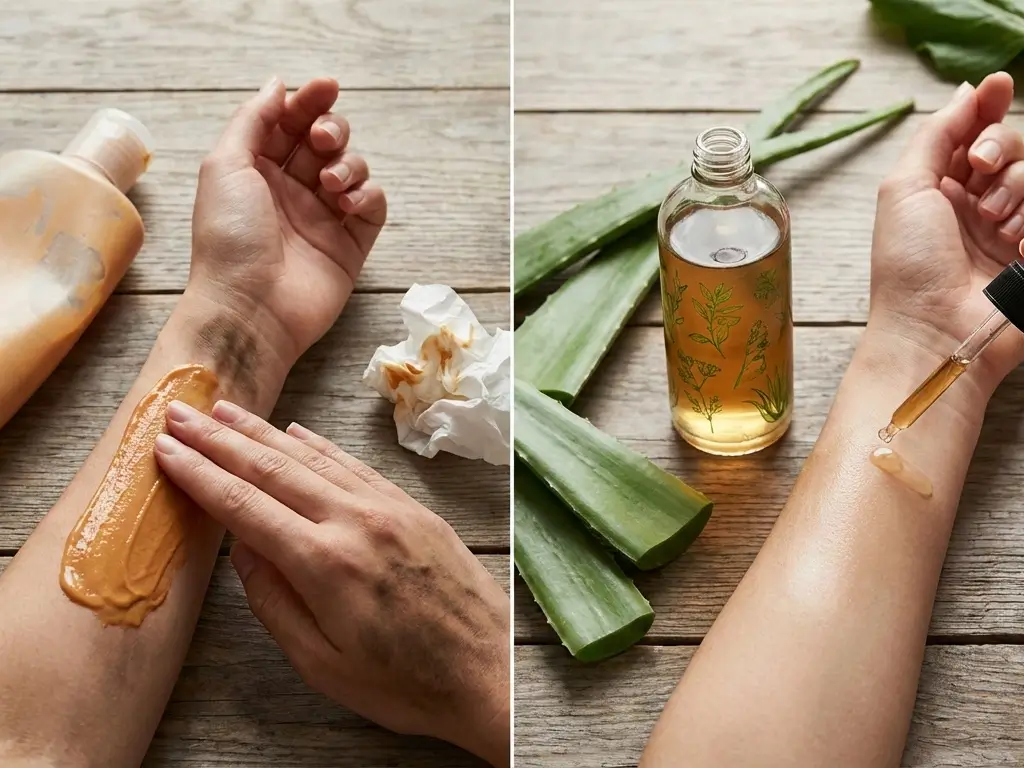
I spent years avoiding self-tanners altogether. The orange streaks, the chemical smell, the way my skin felt like it was suffocating under a layer of synthetic gunk. Then I tried a truly natural formula, and while it wasn’t magic, it completely changed what I expected from a sun-free tan.
Natural self-tanners use plant-derived DHA, erythrulose, and organic botanicals instead of synthetic chemicals, dyes, and fragrances. They work the same way as conventional tanners but with cleaner formulations that support skin health.
Here’s what nobody tells you: the active tanning ingredient, DHA (dihydroxyacetone), works the same whether it’s derived from sugar beets or synthesized in a lab. What makes natural self-tanners different isn’t some magical glow. It’s what else is in the bottle. The moisturizers, the color guides, the preservatives, the fragrance maskers, that’s where natural formulations actually shine. And that’s where your skin notices the difference.
If you’re trying to avoid UV damage but still want some color, you’ve probably wondered whether natural options actually deliver. They do, but you need to know what you’re buying and what realistic results look like. Let me walk you through what actually works.
What Makes a Self-Tanner “Natural”? (And What’s Just Marketing)
A truly natural self-tanner contains plant-derived or fermented DHA, organic botanical ingredients, natural preservatives, and zero synthetic fragrances, parabens, or sulfates. Most “natural” tanners fall somewhere on a spectrum between truly clean and greenwashed.
This is where things get tricky. I’ve seen products labeled “natural” that contain mostly synthetic ingredients with one organic aloe extract thrown in. That’s not what we’re talking about.
Here’s the spectrum I use when evaluating products:
Truly Natural: Plant-derived DHA from sugar beets or sugar cane, organic aloe and oils, natural preservatives like radish root ferment, essential oils (if fragranced), natural color guides from caramel or coffee.
Mostly Natural: Plant DHA but some synthetic preservatives, organic base ingredients, fragrance-free or naturally fragranced, certified by organizations like USDA Organic or COSMOS.
Natural-ish: Synthetic DHA with some organic botanicals, fewer harsh chemicals than conventional but not fully clean, may contain “nature-identical” fragrances.
Greenwashed: Synthetic formula with green packaging and one or two plant extracts for marketing purposes.
The difference matters for your skin barrier. When I switched to truly natural formulations, I noticed my skin didn’t feel as dry or tight after application. Why? Because quality natural tanners prioritize skin barrier care with nourishing oils and humectants that actually support your skin while tanning it.
Look for certifications. USDA Organic, COSMOS Natural, or EWG Verified actually mean something. “Naturally derived” or “botanical-based” without certification often doesn’t.
The uncomfortable truth? Even natural self-tanners have DHA, which can be drying and has that characteristic smell (though milder). If someone tells you their natural tanner has zero smell or zero drying effect, they’re either using very little DHA (weak color) or they’re not being straight with you. What natural formulations CAN do is minimize these effects with better supporting ingredients.
How Do Natural Self-Tanners Work on Your Skin?
Natural self-tanners use DHA and erythrulose to react with amino acids in your skin’s surface layer, creating a brown pigment. This process takes 4-8 hours and lasts 5-7 days as skin cells naturally shed.
The chemistry is actually pretty fascinating. DHA is a simple sugar that, when applied to skin, undergoes a Maillard reaction with amino acids in dead skin cells. It’s the same chemical reaction that browns bread when you toast it. This reaction creates melanoidins, brown pigments that sit in your outermost skin layer.
Natural tanners often combine DHA with erythrulose, another plant-derived sugar. Here’s why that matters: DHA works fast but can fade quickly. Erythrulose develops slower (24-48 hours vs. 4-8 hours for DHA) but lasts longer and produces a more golden, less orange tone.
When I use a product with both, I get initial color from DHA within about six hours, then the color deepens and warms up over the next day or two as erythrulose kicks in. The result looks more natural and fades more evenly.
What’s different about natural formulations? The delivery system. Conventional tanners often use silicones and synthetic emulsifiers to spread DHA evenly. Natural versions use plant-based alternatives like botanical oils and natural emulsifiers. These don’t just deliver DHA, they actively nourish your skin.
I’ve noticed natural tanners sometimes take an extra hour or two to fully develop compared to conventional ones. That’s because the formulation is designed to penetrate more gently without disrupting your skin’s natural pH or lipid barrier. For me, that trade-off is worth it. My color lasts just as long, and my skin actually feels better.
Natural tanners can vary slightly batch-to-batch because plant ingredients aren’t as standardized as synthetic ones. The color might be 10% deeper or lighter depending on the batch. If that inconsistency bugs you, this might not be your thing.
What Are the Benefits of Natural Self-Tanners for Skin Health?
Natural self-tanners nourish skin with organic botanicals, avoid hormone-disrupting chemicals, reduce allergic reactions, and support long-term skin barrier health while providing temporary color.
Let me break down what you’re actually getting:
Skin-Nourishing Ingredients
The best natural formulas read like a facial oil blend. Organic coconut oil, aloe vera juice, shea butter, vitamin E from sunflower. These ingredients don’t just sit on top, they actually improve skin texture and hydration while tanning.
I tested this by using a natural tanner on one leg and a conventional one on the other for a week. The naturally-tanned leg felt softer and looked more hydrated. The conventional side felt tight and started flaking earlier. Both had similar color, but the skin quality underneath was noticeably different.
Fewer Irritants and Allergens
Synthetic fragrances are one of the top allergens in skincare. Natural tanners either skip fragrance entirely or use essential oils (which some people also react to, but generally at lower rates). You’re also avoiding parabens, sulfates, and phthalates, chemicals that can disrupt hormones or cause sensitivity.
If you have reactive skin, starting with a clean beauty approach for your self-tanner makes sense. I have mild rosacea, and conventional tanners would trigger redness. Natural formulations don’t.
Better for Skin Barrier Long-Term
Here’s what surprised me: consistent use of quality natural tanners actually improved my skin over time. Why? Because I was regularly applying humectants, plant oils, and antioxidants. Conventional tanners left my skin needing recovery time between applications.
This matters if you’re someone who tans year-round. The cumulative effect of nourishing vs. depleting ingredients adds up.
Antioxidant Protection
Many natural tanners include ingredients like green tea extract, vitamin C from kakadu plum, or berry antioxidants. These don’t prevent sun damage (you still need mineral sunscreen for that), but they do provide some cellular protection against environmental stressors.
The Drawbacks
Natural tanners can cost 30-50% more than drugstore options. They sometimes have shorter shelf lives (6-12 months vs. 2+ years) because natural preservatives aren’t as robust. And yes, they still smell somewhat like self-tanner, just less intense and more quickly dissipated.
If you self-tan more than a few times a year, the skin health benefits justify the cost. If you’re only tanning for special occasions, the difference might not matter as much to you.
Natural vs. Conventional Self-Tanners: Which Delivers Better Results?
Natural tanners provide comparable color with better skin-nourishing benefits but cost more and may have slightly longer development time. Conventional tanners offer faster, more predictable results at lower prices but with potentially irritating synthetic ingredients.
Here’s the breakdown I wish someone had given me:
| Criteria | Natural Self-Tanners | Conventional Self-Tanners |
| Color Development | 6-10 hours for full color | 4-6 hours for full color |
| Color Longevity | 5-7 days with proper care | 5-7 days with proper care |
| Smell Intensity | Mild to moderate (fades in 2-4 hours) | Moderate to strong (fades in 4-8 hours) |
| Skin Feel | Moisturizing, sometimes slightly sticky initially | Often dry or tight-feeling |
| Streak Potential | Medium (depends on application skill) | Low to medium (silicones help even application) |
| Price Range | $25-$60 per bottle | $10-$30 per bottle |
| Best For | Regular use, sensitive skin, conscious consumers | Occasional use, budget-conscious, beginners |
When Natural Wins:
You use self-tanner weekly or more, you have sensitive or reactive skin, you’re avoiding endocrine disruptors for health reasons, or you want your tanner to double as skincare.
When Conventional Makes Sense:
You need foolproof application for a one-time event, you’re on a tight budget, or you prioritize speed and predictability over clean ingredients.
Application technique matters more than the formula type. I’ve gotten beautiful, even tans from both natural and conventional products when I took my time. I’ve also looked streaky and orange from both when I rushed.
For application tools that help with even color, check out options like exfoliating gloves for prep and konjac sponges for blending.
The future is interesting here. I’m seeing more brands use fermented DHA and bio-designed tanning actives that are both natural and highly stable. We might not have to choose between clean and effective much longer.
How to Choose and Apply Natural Self-Tanner for Even Color
Exfoliate 24 hours before, moisturize dry areas, apply in sections with a mitt or clean hands, wait 6-8 hours before showering, and maintain with daily moisturizing for longer-lasting color.
Choosing the Right Product
Match the formula to your skin type. If you’re dry, look for cream or mousse formulas with botanical butters like shea or mango. If you’re oily or acne-prone, lightweight serums or water-based gels work better and won’t clog pores.
Check the DHA percentage. Natural tanners often don’t list this explicitly, but you can gauge it: “light/gradual” formulas have 2-4% DHA, “medium” have 5-8%, and “dark/express” have 9-12%. Start lighter than you think you need. You can always build.
Read reviews for your specific skin tone. What looks “natural” on fair skin might barely show on deep skin tones. Some brands formulate different strengths for different complexions.
For your face, I strongly recommend a separate facial tanner. Body formulas can be too heavy and cause breakouts. Look for products designed for facial skin that incorporate ingredients you’d find in your regular organic skincare routine.
Application That Actually Works
24 Hours Before: Exfoliate your entire body. Use a natural exfoliant or dry brush. This removes dead skin cells that would otherwise shed unevenly and take your tan with them. Pay extra attention to elbows, knees, ankles, and feet.
30 Minutes Before: Moisturize dry areas, hands, feet, elbows, knees, with a lightweight, fast-absorbing lotion. This creates a barrier so these areas don’t grab excess color. Let it fully absorb.
Application: Work in sections. I do one leg, then the other, then torso, then arms. Use a tanning mitt or reusable silicone applicator. If you’re using your hands, wash them thoroughly after each section and lightly blend the tops with a damp cloth.
For natural tanners specifically: warm the product between your hands or in the mitt first. Plant-based formulas can be slightly thicker and blend better when warm.
Apply in long, sweeping motions. Don’t rub in circles, that creates streaks. Use lighter pressure on areas that naturally have less color (inner arms, stomach).
The Waiting Game: This is where people mess up. Don’t shower, sweat, or wear tight clothes for at least 6 hours. I usually apply at night, sleep in loose, dark pajamas on dark sheets, and shower in the morning. The color you see immediately is just the guide color, your actual tan is still developing.
Maintenance: Your tan fades as your skin cells shed. Extend it by moisturizing twice daily with products that support skin barrier function. Avoid harsh exfoliants or long, hot showers.
When your tan starts to fade unevenly (usually around day 5-7), exfoliate everything off and start fresh. Trying to tan over a patchy, fading tan never works.
Common Mistakes I Made (So You Don’t Have To)
Not waiting long enough between exfoliating and tanning, this made me absorb color unevenly. Forgetting to blend my hairline and behind my ears, obvious tan lines. Using too much product thinking more equals better color, it just equals more orange and waste.
For a complete glow, pair your natural self-tanner with practices from Beauty Healing Organic that prioritize skin health alongside aesthetics. A self-tanner gives you temporary color, but genuinely healthy, glowing skin comes from consistent care with clean beauty products and nourishing ingredients.
Natural self-tanners aren’t perfect, but they’re the best option I’ve found for getting sun-free color without compromising skin health. The key is managing your expectations, choosing quality products, and mastering your technique. Your first application probably won’t be flawless. Your fifth will be much better.
Start with a gradual tanner, practice your technique, and pay attention to how your specific skin responds. Once you dial it in, you’ll have a healthy glow year-round without the UV damage or the chemical cocktail of conventional tanners.