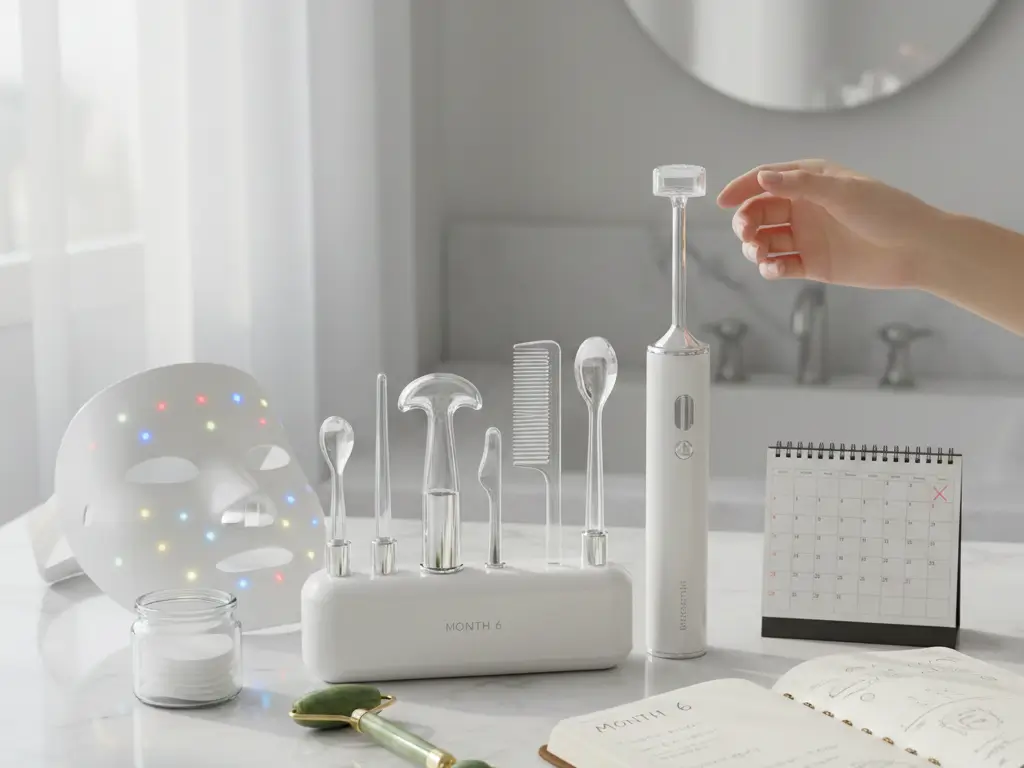
A high-frequency wand is an at-home electrical device that passes a small alternating current through glass electrodes to produce ozone, increase circulation, and create an antibacterial effect on skin. Originally a professional spa staple since the 1970s, these devices now sit on bathroom counters next to jade rollers and LED masks.
Here’s what nobody tells you upfront: high-frequency wands work, but they require showing up every single day for results that appear gradually, not magically. After six months of consistent use (and two false starts where I gave up), I finally understand what this device can and can’t do. The difference between success and another abandoned beauty tool comes down to three things, matching the right electrode to your concern, understanding realistic timelines, and actually sticking with it past week two when you see absolutely nothing happening.
This isn’t another “10 amazing benefits” list. This is what actually happens when you use one of these devices, what worked, what I got wrong initially, and whether it’s worth the nightly commitment.
What Is a High-Frequency Wand and How Does It Actually Work?
High-frequency wands use electrical currents (typically 100,000-250,000 Hz) passed through argon or neon gas-filled glass electrodes to produce ozone on the skin’s surface, which provides antibacterial effects while increasing blood circulation and oxygen to treated areas.
The device itself looks like a plastic wand connected to a small base unit. You insert different shaped glass electrodes (we’ll get to why shape matters in a minute) that light up when you turn on the power, violet if filled with argon gas, orange if filled with neon gas.
When the electrode touches your skin, it creates a mild electrical current. You’ll see a small spark and feel a slight tingling. That spark produces ozone molecules (O3) right on your skin’s surface.
Here’s the part most guides skip: ozone is unstable, which is exactly why it works. Those unstable oxygen molecules have antibacterial properties and signal your skin to increase circulation. More blood flow means more oxygen and nutrients delivered to that area. The warmth you feel isn’t just the electrical current, it’s increased circulation happening in real-time.
The technology isn’t new. Estheticians have used professional-grade high-frequency devices for decades. What changed is the availability of home versions that are less powerful but still effective if you’re consistent. Professional devices typically run at higher frequencies with more power, which is why a single spa treatment feels more intense than your home session.
I made a mistake early on thinking all electrodes did the same thing. They don’t. The mushroom electrode is best for large areas and general circulation. The bent tube targets specific spots like individual pimples. The comb electrode is designed for scalp treatments and hair health. Using the mushroom attachment on a single zit means you’re treating a bunch of skin that doesn’t need it, which wastes time.
Understanding this mechanism helps explain why high-frequency works differently than other popular tools like LED light therapy or microcurrent devices, it’s not about light wavelengths or muscle stimulation. It’s about localized ozone production and circulation.
What Can High-Frequency Wands Really Do for Your Skin? (Realistic Benefits)
High-frequency wands effectively reduce active acne over 4-6 weeks, minimize enlarged pores with consistent use, calm inflammation, and accelerate healing of blemishes. They don’t erase wrinkles, tighten sagging skin, or work overnight despite what influencers show.
Let me be straight about what happened during my six-month test. Week one: nothing. Week two: still nothing, almost quit. Week four: fewer new breakouts (I thought it was coincidence). Week six: existing pimples healed faster than usual. Week eight: this actually works.
Acne and Breakouts (Where It Shines)
This is where high-frequency delivers. The ozone produced has genuine antibacterial properties that target Cutibacterium acnes (formerly P. acnes), the bacteria involved in inflammatory acne.
It doesn’t kill bacteria instantly like hand sanitizer. It creates an environment where bacteria struggle to thrive, and it takes repeated sessions to see the effect. I noticed new breakouts became less frequent after about five weeks of nightly use. When pimples did appear, they resolved in 3-4 days instead of the usual week.
The bent electrode became my go-to for spot treatment. The moment I felt a painful under-the-skin pimple forming, I’d use it for 2-3 minutes directly on that spot. It didn’t prevent the pimple entirely, but it definitely reduced the severity.
For those dealing with body breakouts, the same principles apply, consistent treatment matters. You might find additional support in guides about body mapping for acne to understand where your breakouts originate and why.
Pore Appearance and Texture
High-frequency won’t shrink your pores (nothing actually does, pore size is genetic). But increased circulation and the slight thermal effect can make pores appear smaller over time. After three months, my skin texture looked smoother. My enlarged pores on my nose and cheeks seemed less obvious in photos.
This probably happens because improved circulation helps with cell turnover and the antibacterial effect keeps pores clearer. Clearer pores look smaller. It’s not magic, it’s maintenance.
Inflammation and Redness
The increased blood flow has an anti-inflammatory effect that genuinely surprised me. On days when my rosacea flared, a gentle session with the mushroom electrode (on lower power) helped calm redness within 20 minutes. The effect was temporary, maybe 2-3 hours, but noticeable.
If you’re dealing with sensitive skin conditions, pairing high-frequency with the right supporting ingredients matters. I found combining it with treatments from my organic skincare routine worked better than the device alone.
What It Doesn’t Do (Despite the Claims)
High-frequency wands don’t tighten loose skin, erase wrinkles, or replace retinol. The temporary “glow” you see after treatment comes from increased circulation, not collagen production. Within an hour, your skin returns to its normal state.
For anti-aging concerns, tools like gua sha or facial rollers combined with actual anti-aging ingredients like those in bio-retinols guides will serve you better.
High-frequency excels at acne management and creating temporarily clearer, calmer skin. It’s a support tool, not a cure-all.
How to Use a High-Frequency Wand: The Details Everyone Skips
(1) Cleanse skin thoroughly and dry completely, (2) Insert appropriate electrode and turn to low power, (3) Use circular motions for 3-5 minutes per area, keeping the electrode moving constantly, (4) Follow with serum and moisturizer immediately after treatment.
Most tutorials tell you the basics, cleanse, turn it on, move it around. What they skip are the details that determine whether you’ll actually see results or give up frustrated.
The Timing That Actually Matters
High-frequency works best on completely clean, dry skin. I learned this the hard way after using it over a serum and wondering why I wasn’t seeing results. The electrical current can’t effectively produce ozone if there’s product in the way.
My routine: double cleanse (oil-based, then water-based cleanser), pat completely dry, then high-frequency. Wait 2-3 minutes after treatment, then apply serums and moisturizer.
The weird part? Your skin is extra receptive to products immediately after treatment because of increased circulation. Whatever you put on absorbs more readily. This is good if you’re using quality ingredients, problematic if you’re using irritating products.
Movement Technique Nobody Explains
Keep the electrode moving constantly in small circular motions. Never hold it in one spot for more than a second. I made this mistake on a particularly angry pimple and ended up with a dry, irritated patch that took three days to heal.
For facial treatment, I spend:
- Forehead: 60 seconds
- Each cheek: 60 seconds
- Chin and jawline: 45 seconds
- Nose: 30 seconds
- Problem spots with bent electrode: 2-3 minutes total
Total treatment time: 5-7 minutes. If you’re going longer, you’re probably overdoing it.
Power Settings and Sensitivity
Start low, always. The highest setting isn’t better, it’s just more irritating. I use medium power for most facial treatments and only bump up to medium-high for body acne where skin is thicker.
If you have sensitive skin or conditions like rosacea, high-frequency can help but requires extra caution. Lower power, less time, and skip it entirely during active flare-ups. Resources on organic ingredients for rosacea can help you support your skin between treatments.
What Breaks Most People’s Consistency
The ozone smell. That’s what it is, not burning skin, not electrical fire, just ozone. It’s similar to the smell after a thunderstorm or near a photocopy machine. Some people don’t mind it. I found it off-putting for the first week, then stopped noticing.
If the smell bothers you, use it in a well-ventilated bathroom. The smell dissipates within minutes.
The other consistency killer? Not seeing instant results. If you can push through week three without visible changes, you’re far more likely to hit week six when things actually start happening.
High-Frequency Wands vs Other At-Home Devices: Which Delivers What
High-frequency targets active acne and inflammation through antibacterial ozone and circulation. LED therapy addresses acne, redness, and anti-aging through light wavelengths. Microcurrent focuses on muscle toning and temporary tightening through electrical muscle stimulation. Choose based on your primary concern.
I own multiple devices because I got sucked into beauty tool obsession. Here’s how they actually compare in real use:
| Feature | High-Frequency | LED Light Therapy | Microcurrent |
| Primary Benefit | Active acne, inflammation | Acne, anti-aging, healing | Facial toning, temporary lift |
| How It Works | Electrical current + ozone | Light wavelengths | Electrical muscle stimulation |
| Time Per Session | 5-7 minutes | 10-20 minutes | 15-20 minutes |
| Results Timeline | 4-6 weeks | 6-8 weeks | Immediate (temporary), 8-12 weeks (cumulative) |
| Best For | Inflammatory acne, congestion | Overall skin health, multiple concerns | Special events, anti-aging focus |
| Maintenance | Daily to 3x weekly | Daily initially, then 2-3x weekly | 3-5x weekly consistently |
When High-Frequency Is Your Best Choice
If active breakouts are your main concern, high-frequency delivers faster than LED therapy in my experience. The targeted antibacterial effect works specifically on acne, while LED takes a broader, slower approach.
I use high-frequency when I’m breaking out, LED when my skin is calm and I want overall improvement. They’re not competitors, they address different things.
For comparison, facial massage tools like gua sha or jade rollers work purely mechanically through lymphatic drainage and muscle manipulation. Different mechanism, different results.
The Device Combination That Worked
My current routine alternates tools based on what my skin needs that week:
- Breaking out: high-frequency daily, dermarolling once weekly
- Clear skin maintenance: high-frequency 2x weekly, LED 3x weekly
- Before events: ice roller morning of, high-frequency the night before
What I learned is that more devices doesn’t equal better skin. Consistent use of one or two targeted tools beats sporadic use of five.
Cost Reality Check
A decent high-frequency wand costs $30-80. Replacement electrodes (which you’ll need if you break one) run $10-15 each. No expensive serums required, no ongoing subscription costs.
Compare that to microcurrent devices ($200-400) that often push proprietary gel, or professional high-frequency treatments at $50-100 per session. The home version pays for itself quickly if you actually use it.
For budget-conscious approaches to effective skincare, exploring affordable clean beauty brands alongside device use maximizes results without premium prices.
Is a High-Frequency Wand Worth It? Who Should (and Shouldn’t) Buy One
High-frequency wands are worth it for people with persistent acne, oily/combination skin, and the discipline for nightly routines. Skip it if you want instant results, have very dry/sensitive skin, or collect devices you don’t use. The device costs $30-80, but the real investment is 5 minutes daily for 6+ weeks.
After six months and probably 150+ sessions, here’s my honest assessment.
You Should Buy One If
You deal with hormonal or inflammatory acne consistently. This is where high-frequency earns its place. If you’re constantly managing breakouts and nothing else has worked long-term, the daily antibacterial effect makes a real difference.
You’re okay with gradual results. If you can commit to 6 weeks before judging effectiveness, you’ll probably see benefits. If you need to see something tomorrow, you’ll be disappointed and it’ll end up in a drawer.
You already have a consistent skincare routine. High-frequency works best as part of a solid routine, not as a replacement for good basics. If you’re still figuring out skincare layering or your routine changes weekly, master the fundamentals first.
You like having control over your treatments. Unlike professional treatments where someone else decides timing and intensity, you control exactly where and how long you treat, which areas get attention, and how often you use it.
Skip It If
Your skin is very dry or extremely sensitive. The ozone can be drying, and the electrical stimulation may irritate already-compromised skin. You’d benefit more from focusing on skin barrier care before adding electrical treatments.
You have a pacemaker, epilepsy, or are pregnant. Standard electrical device contraindications apply. When in doubt, check with your doctor.
You’re looking for anti-aging results. The temporary circulation boost creates a nice glow, but it doesn’t replace actual anti-aging treatments. Your money is better spent on proven ingredients like vitamin C or peptides.
You don’t use devices consistently. Be honest, do you have a fancy cleansing brush or jade roller collecting dust? If starting new routines isn’t your strength, this will become expensive clutter.
The 3-2-1 Rule I Wish Someone Told Me
This is the framework that finally made high-frequency work for me:
Bent for spot treatment, mushroom for large areas, comb if you’re treating scalp. Using the right tool for each concern matters more than treatment time.
Commit to 60 days of consistent use (at least 5x weekly) before deciding if it works. Anything less and you’re not giving it a fair test.
More isn’t better. I tried twice-daily sessions and just irritated my skin. Once per day (or every other day) is the sweet spot.
The decision ultimately comes down to whether you’re in a phase where you’ll actually use it. I bought mine twice, the first one sat unused for eight months. The second time, I was ready to commit to the routine, and that made all the difference.
For those exploring multiple approaches to skincare, Beauty Healing Organic offers comprehensive guides that help you build routines that actually stick, combining tools and ingredients in ways that make sense for your real life, not just what looks good on Instagram.
High-frequency wands work, but they’re not magic. They’re a commitment to showing up every day and trusting gradual progress. If that sounds exhausting, be honest with yourself and skip it. If that sounds like finally having a tool that targets your specific concern, the $50 investment and 5-minute nightly routine might just be what your skin has needed all along.