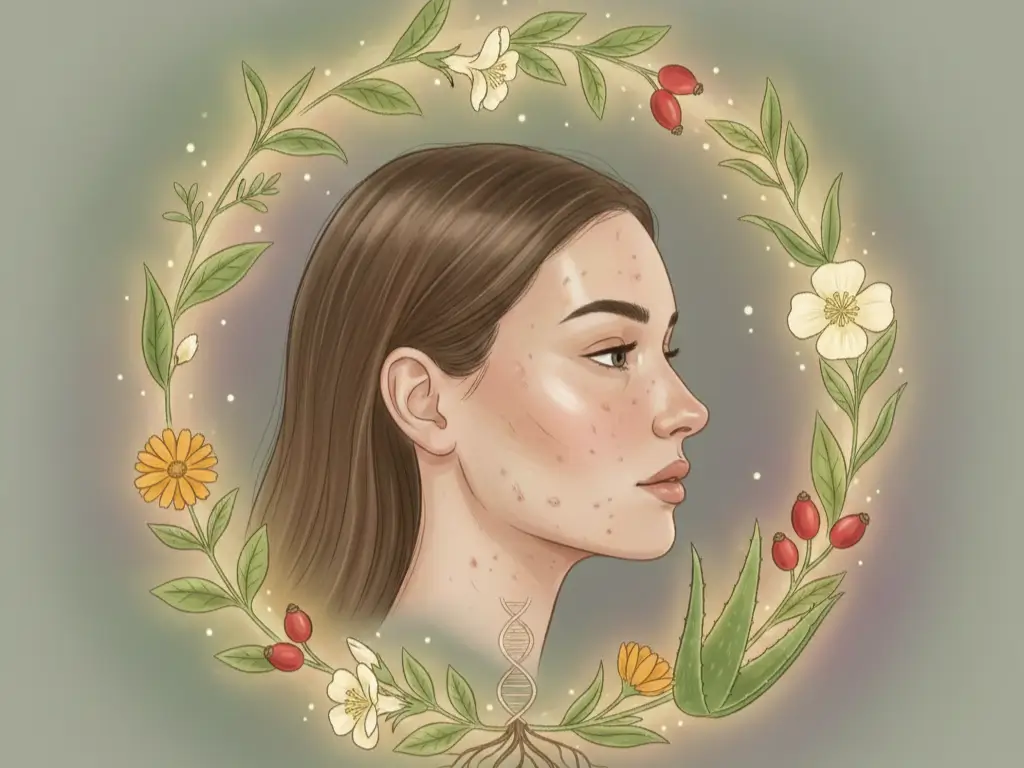
My skin started acting like a confused teenager right around my 43rd birthday. Dry patches appeared alongside breakouts. Products I’d used for years suddenly triggered redness. The “glow” everyone talked about? Replaced by dullness that no amount of highlighter could fix.
If your skin has started behaving unpredictably in your late 30s or 40s, perimenopause may be the reason, and plant-based skincare ingredients offer targeted support for these specific changes.
What I discovered after months of research and experimentation changed everything. The hormonal shifts happening beneath the surface require a completely different skincare approach than typical “anti-aging” products provide.
This article provides educational information about plant-based skincare during perimenopause. It is not intended to diagnose, treat, or cure any medical condition. Perimenopause affects everyone differently, and skin concerns can sometimes indicate underlying health issues. Always consult a dermatologist or healthcare provider before making significant changes to your skincare routine, especially if you experience persistent skin problems, severe reactions, or sudden changes. Individual results vary, and what works for one person may not work for another.
This guide is designed for people experiencing perimenopause skin changes who are interested in botanical skincare options. It focuses on cosmetic skincare support, not medical treatment for perimenopause symptoms. If you’re experiencing severe hormonal symptoms, please consult your healthcare provider.
The botanical ingredients discussed here have research supporting their potential benefits for skin, but they work best as part of a comprehensive approach that may include professional dermatological care.
What Actually Happens to Your Skin During Perimenopause?
Perimenopause triggers significant skin changes due to declining estrogen levels, including reduced collagen production, compromised barrier function, increased dryness, heightened sensitivity, and sometimes hormonal breakouts, often starting years before menopause officially begins.
Perimenopause typically begins in your late 30s to mid-40s and can last 4-10 years before menstruation stops completely. According to the North American Menopause Society, this transitional period involves fluctuating hormone levels that affect virtually every system in your body, including your skin.
Here’s what research tells us happens beneath the surface:
Estrogen decline affects your skin profoundly. Studies published in the American Journal of Clinical Dermatology show that skin loses approximately 30% of its collagen during the first five years of menopause, with this decline beginning during perimenopause. Estrogen receptors exist throughout your skin, and as estrogen levels drop, your skin produces less collagen, elastin, and natural oils.
Your skin barrier becomes compromised. The lipid layer that keeps moisture in and irritants out thins during this time. This explains why products you’ve used for years might suddenly cause irritation, your skin barrier isn’t functioning as efficiently.
Sebum production becomes unpredictable. Fluctuating hormones can trigger adult acne while simultaneously causing dryness. This confusing combination, oily and dry at the same time, is one of perimenopause’s signature skin challenges.
Cell turnover slows. The rate at which your skin sheds old cells and generates new ones decreases, leading to dullness, rough texture, and uneven tone.
Understanding these mechanisms matters because it explains why plant-based ingredients with specific properties may help support skin during this transition.
Why Plant-Based Ingredients Make Sense for Hormonal Skin Changes
Certain botanical ingredients contain phytoestrogens and other compounds that may help support skin function during hormonal transitions, while offering gentler alternatives to synthetic actives that perimenopausal skin often can’t tolerate.
When my skin became reactive during perimenopause, I noticed that many conventional products with synthetic actives triggered irritation. Research suggests I wasn’t imagining things, compromised barrier function makes skin more susceptible to sensitivity.
Plant-based skincare offers several advantages during this time:
Phytoestrogens provide gentle support. Phytoestrogens are plant compounds that can interact with estrogen receptors. According to research published in Dermato-Endocrinology, topical phytoestrogens from sources like soy, red clover, and certain oils may help support skin that’s adjusting to lower estrogen levels. These aren’t hormone replacement, they’re gentle botanical compounds that show promise for skin support.
Many botanicals support barrier repair. Ingredients rich in essential fatty acids, ceramides, and anti-inflammatory compounds help rebuild the compromised lipid barrier. Botanical oils like rosehip, evening primrose, and sea buckthorn deliver these nutrients directly to skin.
Gentler formulations reduce irritation risk. Well-formulated plant-based products often contain fewer synthetic fragrances and harsh preservatives that reactive perimenopause skin may not tolerate well.
That said, “natural” doesn’t automatically mean “safe” or “effective.” Some botanical ingredients can cause reactions, and quality formulation matters enormously. The goal is finding evidence-backed plant ingredients that address your specific concerns.
Best Botanical Ingredients for Each Perimenopause Skin Concern
Different plant-based ingredients target different perimenopause skin concerns, phytoestrogen-rich oils for dryness, barrier-supporting lipids for sensitivity, and gentle botanicals with antimicrobial properties for hormonal breakouts.
Rather than throwing generic “anti-aging” products at perimenopause skin, matching specific botanicals to your primary concerns delivers better results.
For Dryness and Dehydration
Sea buckthorn oil is remarkably rich in omega-7 fatty acids, which research suggests may support mucous membrane and skin hydration. This oil also contains vitamins A, C, and E.
Rosehip oil provides essential fatty acids and may help improve skin hydration and elasticity. Studies show it contains retinoic acid precursors, offering some bio-retinol benefits without the irritation of synthetic retinoids.
Squalane (derived from olives or sugarcane) mimics your skin’s natural sebum. As your skin produces less oil during perimenopause, squalane helps supplement this protective layer.
For effective hydration, combine occlusive oils with humectants like hyaluronic acid, glycerin, and aloe vera that draw moisture into skin.
For Sensitivity and Barrier Repair
Oat extract (colloidal oatmeal) has FDA-recognized skin-protective properties. It contains beta-glucans and avenanthramides that may help soothe reactive skin.
Calendula has traditionally been used for centuries to calm irritated skin. Modern research confirms its anti-inflammatory potential.
Chamomile extracts contain bisabolol and chamazulene, compounds studied for their soothing properties on sensitive skin.
Evening primrose oil delivers gamma-linolenic acid (GLA), which research suggests may help support barrier function in compromised skin.
When rebuilding barrier function, patience matters. I noticed significant improvement only after consistent use over 6-8 weeks. Understanding comprehensive skin barrier care principles helped me avoid ingredients that were undermining my progress.
For Hormonal Breakouts
Perimenopause acne often appears along the jawline and chin, different from teenage T-zone breakouts. Fluctuating hormones are usually responsible, but that doesn’t mean you can’t address breakouts topically.
Bakuchiol is a plant-based retinol alternative that research suggests may help regulate cell turnover and address breakouts without the irritation of conventional retinoids, which perimenopause skin often can’t tolerate.
Tea tree oil (properly diluted) has antimicrobial properties that may help address acne-causing bacteria.
Willow bark extract contains natural salicylic acid precursors for gentle exfoliation without over-stripping already-dry skin.
Niacinamide (vitamin B3) deserves special mention. Research shows it may help regulate sebum production, minimize pores, and calm inflammation. A niacinamide-focused routine can address multiple perimenopause concerns simultaneously.
For Loss of Firmness
Bakuchiol appears again here, studies suggest it may help stimulate collagen production similarly to retinol but with better tolerance for sensitive skin.
Rosehip and argan oils provide antioxidants and fatty acids that support skin structure.
Adaptogens like ashwagandha and rhodiola are increasingly appearing in skincare. Early research suggests these stress-modulating botanicals may offer skin benefits. Adaptogen-enhanced skincare represents an emerging area worth exploring.
For neck and décolletage, areas that often show changes first, targeted firming routines using consistent botanical treatments may help.
For Uneven Tone and Hyperpigmentation
Hormonal changes can trigger melasma and age spots. These botanical ingredients show promise:
Licorice root extract contains glabridin, which research suggests may help address uneven pigmentation.
Vitamin C (derived from sources like kakadu plum or camu camu) provides antioxidant protection and may help brighten skin.
Turmeric and mulberry extract are traditional ingredients with research supporting their potential for addressing discoloration.
Working on hyperpigmentation concerns requires patience and consistent sun protection. Results typically appear gradually over 8-12 weeks.
Building a Plant-Based Perimenopause Skincare Routine
An effective perimenopause routine prioritizes gentle cleansing, intensive hydration, barrier support, targeted treatments, and consistent sun protection, with product selection based on your primary skin concerns.
Here’s a framework that worked for me and aligns with dermatological principles:
| Step | Morning | Evening |
| Cleanse | Gentle oil or cream cleanser | Double cleanse if wearing makeup |
| Hydrate | Hyaluronic acid serum | Hydrating essence or toner |
| Treat | Niacinamide or vitamin C | Bakuchiol or targeted treatment |
| Moisturize | Medium-weight moisturizer | Richer cream or facial oil |
| Protect | Mineral sunscreen SPF 30+ | Optional occlusive balm |
Start slowly with new ingredients. Introduce one new product every 2-3 weeks. This gives your skin time to adjust and helps you identify what’s working, or causing problems.
Patch test everything. Apply a small amount behind your ear or on your inner arm for 24-48 hours before using new products on your face.
Prioritize hydration before treatment. A well-hydrated, supported barrier tolerates active ingredients better. If your skin is reactive, focus on barrier repair before adding bakuchiol or other actives.
Adjust seasonally. Your skin’s needs may shift with weather changes. Lighter formulations in summer, richer ones in winter typically work well.
For guidance tailored to where you are in life, life-stage specific skincare approaches can provide additional direction. Exploring Nordic botanical traditions and Amazonian oil wisdom may also inspire ingredient choices.
For a comprehensive starting point, the resources at Beauty Healing Organic offer extensive guidance on botanical skincare formulations and ingredient education.
When to See a Dermatologist
Consult a dermatologist if you experience persistent skin issues that don’t improve with consistent botanical skincare, severe or cystic acne, sudden skin changes, signs of infection, or symptoms that concern you.
While plant-based skincare can support skin during perimenopause, some situations require professional evaluation:
- Persistent acne that doesn’t respond to over-the-counter treatments after 6-8 weeks
- Severe or painful cystic breakouts that may require prescription intervention
- Sudden skin changes including new moles, unusual patches, or rapid textural changes
- Severe sensitivity or allergic reactions to products
- Suspected rosacea or other skin conditions that need professional diagnosis
- Signs of infection including pus, spreading redness, or fever
- Skin concerns affecting your quality of life or emotional wellbeing
A dermatologist can provide personalized recommendations, rule out underlying conditions, and potentially prescribe treatments that work alongside your botanical routine.
According to the American Academy of Dermatology, many skin changes during perimenopause are normal, but a professional evaluation ensures you’re not missing something that needs medical attention.
Moving Forward With Your Skin
Perimenopause skin changes can feel frustrating, especially when approaches that worked before suddenly don’t. What I’ve learned, both from research and personal experience, is that this transition requires meeting your skin where it is now, not where it was five years ago.
The botanical ingredients discussed here offer evidence-based options for supporting skin through hormonal changes. They work with your skin’s natural processes rather than against them. That said, they’re tools in a toolkit, not magic solutions.
- Assess your current routine. Are products you’re using potentially compromising your skin barrier? Are you experiencing specific concerns (dryness, breakouts, sensitivity) that botanical ingredients might address?
- Introduce one targeted botanical ingredient, perhaps squalane for dryness, bakuchiol for cell turnover, or niacinamide for multiple concerns. Patch test first. Give it 4-6 weeks before judging results.
- Schedule a dermatologist appointment. Botanical skincare can complement but shouldn’t replace professional guidance when needed.
Your skin will continue changing throughout this transition. Being willing to adapt your routine as needed, and being patient with the process, makes all the difference.
SOURCES CITED
- North American Menopause Society. “Menopause 101: A Primer for the Perimenopausal.” https://www.menopause.org
- American Academy of Dermatology Association. “Skin care during menopause.” https://www.aad.org
- Shu, Y.Y., & Maibach, H.I. (2011). “Estrogen and skin: therapeutic options.” American Journal of Clinical Dermatology, 12(5), 297-311.
- Thornton, M.J. (2013). “Estrogens and aging skin.” Dermato-Endocrinology, 5(2), 264-270.
- Dhaliwal, S., et al. (2019). “Prospective, randomized, double-blind assessment of topical bakuchiol and retinol for facial photoageing.” British Journal of Dermatology, 180(2), 289-296.
- Draelos, Z.D. (2008). “The role of vitamins and minerals in cosmetics.” Journal of Cosmetic Dermatology, 7(1), 59-64.