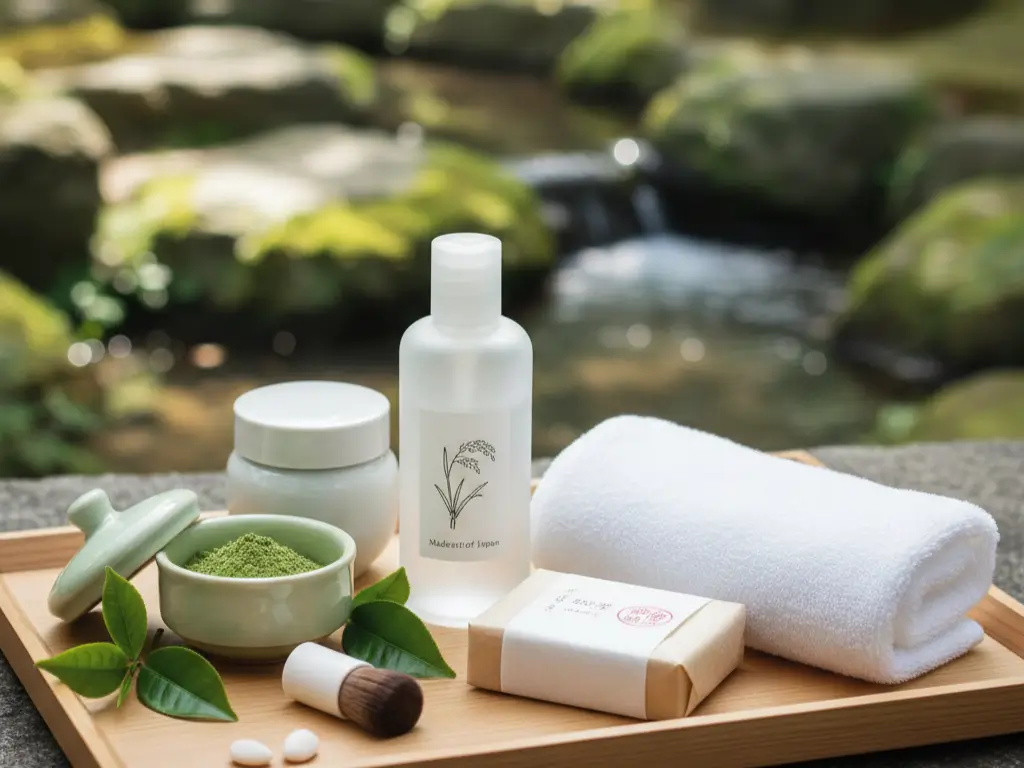
The products marketed as “J-beauty” in the US often look nothing like what’s actually sold in Japanese drugstores.
I noticed this after spending time comparing Japanese domestic skincare forums with English-language beauty publications. The disconnect is wild. While Western media obsesses over expensive essences and 12-step routines, Japanese consumers focus on consistency, quality sourcing, and unglamorous basics done extremely well.
J-beauty is a skincare philosophy centered on prevention, gentle formulations, and long-term skin health rather than dramatic quick fixes. It emphasizes high-quality natural ingredients, minimal processing, and respecting your skin’s natural functions.
The real value here isn’t exotic ingredients (though some are excellent). It’s the manufacturing precision and the cultural acceptance that good skin takes time and patience. That second part? It’s where most US adaptations fall apart.
What Makes J-Beauty Different from Western Skincare?
J-beauty prioritizes prevention and skin barrier protection over correction and active treatments, using gentle, high-quality ingredients with minimal irritation potential.
The philosophy rests on three pillars I call the “Triple-M”: Mochi-hada (soft, pillowy skin texture), Mottainai (waste-nothing approach to both products and skin tolerance), and Monozukuri (obsessive craftsmanship in manufacturing).
Here’s what this looks like in practice. Western skincare often follows a “problem-solution” model. Got dark spots? Use this. Wrinkles? Try that. J-beauty takes a maintenance approach, protect what you have, improve gradually, never compromise the skin barrier for quick results.
The ingredient selection reflects this. While Western formulations often feature high percentages of actives (think 10% niacinamide or 20% vitamin C), Japanese formulations typically use lower concentrations of multiple complementary ingredients. The idea is synergy over strength.
What surprised me most? Japanese consumers are incredibly label-literate. They don’t just look for “natural”, they research ingredient sourcing, extraction methods, and manufacturing standards. A rice bran extract isn’t just rice bran extract; where it’s grown and how it’s processed matters enormously. This is similar to the precision you’ll find in approaches like Ayurvedic beauty practices, which also emphasize ingredient quality and holistic balance.
The cultural context also matters. Japan’s humidity and pollution levels differ from most US climates. The four-season skincare adjustment is deeply embedded, you don’t use the same products in Tokyo’s humid summer and dry winter. Most American skincare routines don’t account for this seasonal variation.
One more thing nobody mentions: the time investment. Japanese skincare rituals often involve 5-10 minutes of gentle application techniques. That’s not compatible with a five-minute morning routine, and pretending otherwise sets you up for disappointment.
The Core J-Beauty Ingredients Worth Your Attention
The most effective J-beauty ingredients include rice ferments, camellia oil, green tea, licorice root extract, and squalane, all offering antioxidant, barrier-supporting, or brightening benefits with minimal irritation risk.
Let me break down what actually works and why, starting with what you’ll see most often.
Rice and Rice Ferments
Rice bran (komenuka) and fermented rice water have been used in Japan for centuries, but here’s what matters now: rice bran contains ferulic acid, gamma-oryzanol, and vitamin E. These compounds offer genuine antioxidant protection and can help fade hyperpigmentation gradually.
The fermentation process is key. Fermented ingredients break down molecules into smaller sizes, potentially improving absorption. Fermented rice water, specifically, may help with skin texture and brightness, though the research is still emerging. If you’re interested in DIY approaches, fermented rice water for glass skin offers a practical starting point.
Rice bran oil works well as a lightweight moisturizer for most skin types. It’s not revolutionary, but it’s reliable and rarely causes problems.
Camellia Oil (Tsubaki Oil)
This is one ingredient where the hype is mostly justified. Camellia oil closely matches skin’s natural sebum composition, making it an excellent occlusive that doesn’t feel heavy. It’s high in oleic acid and contains squalene (note: squalene with an ‘e’, which your skin converts to squalane).
Japanese women traditionally use it on hair and skin. I’ve found it particularly good for addressing under-eye concerns when patted gently around the orbital bone.
The catch? Quality varies dramatically. Cold-pressed, organic camellia oil from Japan performs differently than cheaper versions cut with other oils. This is where that monozukuri (craftsmanship) principle shows up in real terms.
Green Tea and Matcha
Green tea extract (particularly from Uji region matcha) delivers catechins, polyphenolic compounds with anti-inflammatory and antioxidant properties. Some evidence suggests it may help with photoaging and redness reduction.
Here’s the practical consideration: green tea in skincare oxidizes relatively quickly. Fresh formulations matter more than with stable ingredients. If you’re exploring antioxidant-rich botanicals, you might also appreciate how Nordic beauty traditions use different plant actives for similar protective benefits.
Licorice Root Extract
Specifically glabridin from licorice root, which inhibits tyrosinase (the enzyme involved in melanin production). This makes it useful for hyperpigmentation, particularly for those seeking alternatives to hydroquinone.
It’s gentler than many brightening actives, though you’ll need patience, we’re talking months, not weeks. Japanese formulations often combine it with vitamin C derivatives and arbutin for complementary action.
Squalane
Derived from olive oil, sugarcane, or (traditionally) shark liver, squalane is a stable, lightweight emollient that supports barrier function. Japanese skincare companies pioneered plant-based squalane extraction decades ago.
It works for nearly everyone and layers well with other products. Not exciting, but that’s the point, consistent, reliable performance over time.
Traditional Japanese Skincare Rituals (And How to Actually Do Them)
Core J-beauty rituals include double cleansing, layering lightweight hydration, gentle massage application, and sheet masking, all performed with slow, deliberate movements that prioritize skin preservation.
Let’s talk about what these rituals actually involve and where adaptation makes sense for US lifestyles.
Double Cleansing (W Cleanse)
First cleanse: oil-based cleanser to remove makeup, sunscreen, and sebum. Second cleanse: water-based cleanser for remaining impurities.
This works extremely well if you wear sunscreen daily (which you should). The oil cleansing method has gained traction in Western skincare for good reason, oil dissolves oil-based products more effectively than foaming cleansers alone.
The Japanese approach emphasizes gentle emulsification. You’re not scrubbing; you’re giving the oil time to bind with impurities before adding water to rinse. Most Americans rush this, which defeats the purpose.
Adaptation note: If you’re not wearing heavy makeup or waterproof sunscreen, you might not need this nightly. Listen to your skin, not rigid rules.
Lotion Layering (Kesho-sui)
Here’s where terminology confuses Americans. Japanese “lotion” is actually a hydrating toner, watery, not creamy. The ritual involves patting multiple thin layers into skin until it feels plump and hydrated.
This technique, sometimes called the “3-skin method” or “7-skin method” (referring to layers, not products), front-loads hydration. It’s particularly useful in dry climates or for dehydrated skin.
I’ve found this works beautifully with humectant-based hydration strategies, especially when you finish with an occlusive to seal everything in. Though honestly, seven layers is excessive for most people. Three or four typically suffice.
Gentle Massage Application
Every product gets pressed and patted, never rubbed or tugged. The application itself becomes a brief facial massage, promoting circulation and lymphatic drainage.
This connects to traditional practices using tools like jade or rose quartz rollers and gua sha. The pressure is always feather-light, moving upward and outward.
Real talk: this adds time. If you’ve got 90 seconds for skincare, aggressive patting won’t happen. That’s fine, just don’t expect the same results as someone spending ten minutes on application technique.
Sheet Masking
Japanese sheet masks prioritize fit, material quality (often silk or microfiber), and essence saturation. They’re used 2-3 times weekly as a hydration boost, not daily.
The ritual involves cleansing, applying toner, then masking for 10-15 minutes while practicing deep breathing or meditation. The mindfulness component matters as much as the product, stress affects skin, and this is recognized self-care time.
For DIY enthusiasts, creating custom overnight treatments captures some of this intentional self-care without the single-use waste.
J-Beauty vs K-Beauty: Which Approach Fits Your Life?
J-beauty favors minimalism, long-term prevention, and gentle maintenance, while K-beauty embraces innovation, targeted treatments, and visible results, choose based on your patience level and skin goals.
Let me be direct: both work, but they require different commitments.
| Aspect | J-Beauty | K-Beauty |
| Philosophy | Prevention and preservation | Innovation and correction |
| Routine Length | 4-6 steps, applied slowly | 10+ steps, applied efficiently |
| Ingredient Focus | Traditional, proven, minimal processing | Cutting-edge, high-tech, active-heavy |
| Results Timeline | Months to years | Weeks to months |
| Best For | Patient, minimal-intervention types | Active problem-solvers, trend-adopters |
| Climate Consideration | Formulated for humidity | More climate-versatile |
J-beauty suits you if you’re playing the long game, have relatively healthy skin you want to maintain, and value ritual over results speed. It’s the “eat well and exercise” equivalent, boring, effective, requires discipline.
K-beauty fits better if you’ve got specific concerns you want to address actively, enjoy experimenting with new products, and have the time for multi-step routines. The innovation cycle in K-beauty means you’re always trying new actives and technologies.
Here’s what I’ve noticed in practice: J-beauty consumers use the same products for years. K-beauty consumers rotate products seasonally or monthly. Neither is wrong, but know which personality type you are before committing.
The combination approach, J-beauty philosophy with selective K-beauty actives, works for many. Use gentle J-beauty basics (cleansing, hydration) while incorporating targeted K-beauty treatments (essences, ampoules) for specific issues. This is similar to how you might approach layering skincare products generally, mixing traditions based on what your skin actually needs.
Building a Practical J-Beauty Routine in the US
An effective US-adapted J-beauty routine includes oil cleanser, gentle foaming cleanser, hydrating toner (multiple layers), lightweight serum, emulsion or light cream, and sunscreen, adjusted for your climate and lifestyle.
Here’s a realistic approach that respects the philosophy without demanding you become Japanese.
Morning (5-7 minutes)
- Water or gentle cleanser: If your skin feels clean from last night, just splash with lukewarm water. If you’re oily or used a heavy night cream, do a quick cleanse.
- Hydrating toner (2-3 layers): Pat in each layer until absorbed. This is where you front-load moisture.
- Serum or essence: Choose one targeted treatment. This might be where you incorporate actives like vitamin C or niacinamide.
- Light moisturizer: Emulsion-style, not heavy cream. Should absorb within 60 seconds.
- Sunscreen: Non-negotiable. Japanese sunscreens are legitimately superior, lightweight, no white cast, high protection. If you need alternatives, check mineral sunscreen options.
Evening (10-15 minutes)
- Oil cleanser: Massage for 60-90 seconds, emulsify with water, rinse thoroughly.
- Foaming cleanser: Gentle, low-pH formula. Not stripping.
- Hydrating toner (3-4 layers): This is when you have time to really pat it in.
- Treatment serum: If using actives like retinols or bio-retinols, this is the step.
- Facial oil or richer cream: Seal everything in. Camellia oil works beautifully here, or explore facial oils by skin type.
- Optional eye cream or lip treatment: If these are concerns.
Climate Adjustments
Dry/cold climates (much of the US in winter): Add more occlusive layers, consider a humidifier, increase oil content. The lotion layering becomes especially valuable here.
Hot/humid climates: Lighter textures, fewer layers, more emphasis on antioxidants and sun protection. You might skip morning moisturizer entirely if your sunscreen is emollient enough.
Seasonal transitions: Japanese skincare culture changes products with seasons. At minimum, lighten up in summer, add richness in winter. Your skin’s needs genuinely change with weather and environment.
What to Skip
You don’t need to adopt every element. Here’s what I’d consider optional:
- Sheet masks: Lovely for self-care, but not essential for results. The essence can be replaced with serum.
- Seven-layer toning: Three layers deliver 80% of the benefit.
- Specialized tools: Facial massage works with clean hands. Tools like facial rollers or massage tools are nice but not required.
- Multiple essences: One good serum beats three mediocre essences.
The core principles, gentle cleansing, layered hydration, quality over quantity, patience, those are worth adopting fully.
The Part Nobody Mentions: This Takes Real Time
Here’s my honest take after years watching skincare trends cycle through: J-beauty works, but it’s incompatible with the “miracle product” mentality most Americans (myself included) default to.
You won’t see dramatic changes in two weeks. You probably won’t get Instagram-worthy before-and-after photos. What you might get, if you stick with it for six months, is skin that just… functions better. Fewer random breakouts, more even tone, resilience to environmental stress.
The ritual aspect, the slow application, the mindfulness, the acceptance that this is ongoing maintenance rather than a problem to solve, that’s where the real shift happens. It’s less about the specific products and more about changing how you think about skin care itself.
If that sounds appealing, start small. Pick one ritual (maybe double cleansing or lotion layering), commit to it for a month, and see if it fits your life. J-beauty isn’t all-or-nothing.
And if it doesn’t fit? That’s fine too. The goal isn’t to adopt Japanese skincare wholesale, it’s to learn from the philosophy and adapt what serves your skin and lifestyle. For more guidance on building a routine that actually works for you, check out the comprehensive resources at Beauty Healing Organic, which offers practical approaches to natural skincare across multiple traditions and philosophies.
Choose one ingredient and one ritual from this guide. Test them for 30 days with genuine consistency. Then decide if the J-beauty approach deserves more space in your routine.