Let’s be real for a second. You probably spend good money on shampoos, conditioners, and serums, but you’re likely applying them with a tool that fights against you.
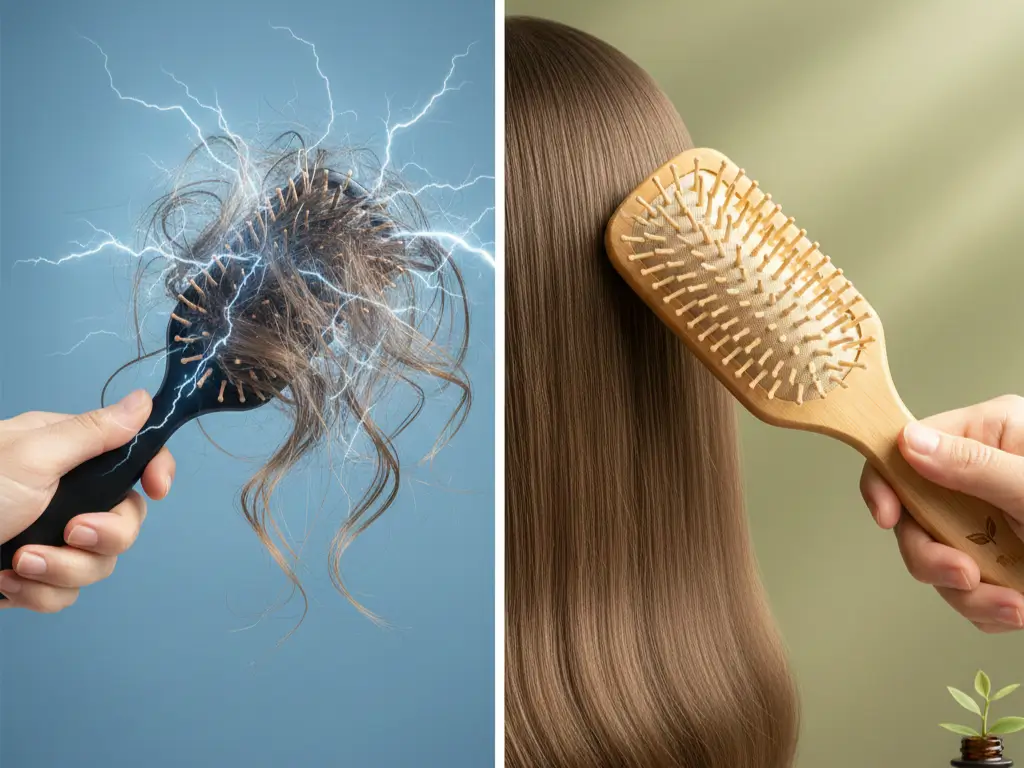
If you’ve ever brushed your hair in the winter and watched it stand up like you just touched a plasma ball, you know the struggle. That’s not just annoying; it’s a sign your plastic brush is generating static electricity, causing friction, and damaging your hair cuticle.
I used to think a brush was just a brush. Plastic, wood, metal, who cares, right? But after dealing with constant breakage and an oily scalp that somehow still had dry ends, I realized the material matters.
Switching to a bamboo hairbrush isn’t just an “eco-friendly” move to feel good about saving the turtles (though that’s a nice bonus). It’s a mechanical upgrade for your hair health.
Here is what you need to know about why bamboo works, how it compares to the alternatives, and the specific maintenance routine nobody talks about.
Why Switch to Bamboo? The Science of Static and Sebum
A bamboo hairbrush has a neutral negative charge, meaning it doesn’t generate static electricity like plastic does. This flattens the hair cuticle for less frizz. Mechanically, the wooden bristles soak up natural scalp oils (sebum) and redistribute them down the hair shaft, acting as a natural conditioner while stimulating blood flow to the hair follicles.
The Static Problem
Here is the science part, kept simple. Plastic and metal are terrible at managing electrical charges. When plastic bristles drag against your hair, they create a triboelectric effect, essentially, static. This causes your hair cuticle (the outer layer) to lift up.
When the cuticle lifts, two bad things happen:
- Moisture escapes, leading to dryness.
- The rough surface catches on other strands, causing tangles and breakage.
Bamboo contains carbon, which gives it a neutral charge. It glides through without the spark. If you struggle with flyaways, this is the first mechanical fix you should try before buying more product.
The Sebum Distribution Factor
Your scalp produces sebum, which is technically the best conditioner on earth. The problem? It usually gets stuck at the roots, making your hair look greasy while your ends remain dry as straw.
Plastic bristles are too slick; they slide right past the oil. Bamboo bristles, being porous wood, actually pick up that oil. As you brush, you are physically moving that hydration from the scalp down to the ends. It’s a similar concept to using a wooden comb for hair, but with a brush, you cover more surface area effectively.
Scalp Stimulation
Bamboo bristles are usually rounded and hard. This isn’t a defect; it’s a feature. When you brush, you’re essentially giving yourself a massage. This increases circulation to the hair follicles, which brings nutrients to the root. Think of it as a daily version of a gua sha tool, but for your scalp.
Bamboo vs. Boar Bristle vs. Plastic: Which Tool Wins?
Plastic is cheap but damaging. Boar bristle is excellent for polishing and styling but isn’t vegan and struggles to detangle thick hair. Bamboo is the best all-rounder: it detangles, reduces static, massages the scalp, and is vegan-friendly. It’s ideal for daily maintenance and stimulating growth.
If you are trying to decide, here is how they stack up:
| Feature | Plastic / Nylon | Boar Bristle | Bamboo / Wood |
| Static Control | Poor (High Static) | Good | Excellent (Neutral) |
| Detangling | Good | Poor (Too soft) | Excellent (Sturdy) |
| Oil Distribution | None | Superior | Very Good |
| Scalp Massage | Moderate | Gentle | Intense/Stimulating |
| Sustainability | Low | Moderate | High |
| Best For | Wet hair (if specialized) | Styling & Fine Hair | Daily Brushing & Growth |
The Boar Bristle Dilemma
Many experts swear by the boar bristle brush. And look, they aren’t wrong, boar bristles are amazing for polishing hair. However, they have limits. They are often too soft to penetrate thick curly hair, meaning you end up brushing the top layer while the underneath stays tangled.
Plus, there is the ethical side. If you are looking for natural vegan makeup brushes and cruelty-free tools, bamboo is the obvious winner. It does 80% of the polishing work of boar bristles but with 100% better detangling power.
Why Plastic Still Exists
Plastic isn’t evil; it’s just misused. Plastic brushes are generally better for wet hair because they don’t absorb water. Bamboo (and wood in general) should ideally be kept dry. If you need something for the shower to distribute conditioner, stick to a specialized wide-tooth plastic comb or a silicone tool. But for dry styling? Bamboo wins every time.
The Correct Way to Brush for Scalp Health and Growth
Don’t just rip through tangles. Start at the ends and work up to prevent breakage. Once detangled, brush from the hairline back to the crown, and from the nape up to the crown. This “inversion method” stimulates blood flow. Do this twice daily, morning and night, to maintain a healthy scalp microbiome balance.
The Technique That Changes Everything
Most people brush to detangle. You need to shift your mindset: brush to treat.
- Detangle First: Start at the bottom few inches. Hold the hair in your hand to prevent pulling on the root. Work your way up.
- The Scalp Massage: Once the knots are gone, press the bamboo bristles firmly against your scalp. You want to feel pressure, not pain.
- Sectioning: If you have thick hair, section it. Brush from the scalp to the ends in long, slow strokes. This ensures that the sebum we talked about actually reaches the tips.
This routine is particularly helpful if you are dealing with scalp issues. By manually exfoliating the scalp with the wooden pins, you help lift buildup that sulfate-free shampoo can wash away later. It’s a physical assist to your chemical cleansing.
Frequency Matters
I recommend doing a thorough brushing session before you shower. It loosens dead skin cells and dirt, making your wash day more effective. It also helps those natural hair care treatments penetrate better because you’ve cleared the debris field first.
How to Clean a Bamboo Brush Without Ruining It
Never soak a bamboo brush. Water causes the wood to swell, crack, and eventually rot or grow mold. Instead, remove hair with a comb. Mix warm water and a drop of gentle shampoo or tea tree oil. Dip a toothbrush in the solution and scrub the bristles and pad. Wipe dry immediately and lay it bristles-down on a towel to air dry.
The Mold Fear is Real
This is the part nobody tells you until your expensive brush turns black. Bamboo is organic matter. Organic matter plus trapped water equals mold.
I’ve ruined a brush by soaking it in a bowl of soapy water like I used to do with my plastic ones. The cushion absorbed water, didn’t dry out, and started smelling like a damp basement. Don’t make my mistake.
The “Dry” Cleaning Method
- Remove Hair: Use a comb or a toothpick to lift all the hair out of the bristles. Do this weekly.
- The Scrub: You need a gentle cleanser. A drop of clarifying shampoo or even a castile soap works well (similar to what you’d find in a natural soaps for men guide).
- Tea Tree Oil Trick: I like adding a drop of tea tree oil to the water. It’s naturally antimicrobial and helps keep the rubber cushion sanitary.
- Gravity is Your Friend: When drying, always place the brush bristles down. You want gravity to pull any moisture away from the wooden handle and the cushion’s air hole.
If you are rigorous about your sustainable bathroom products, you want them to last. A well-maintained bamboo brush can last for years, but one accidental soak can ruin it in a day.
Choosing the Right Bristle Shape and Cushion
Look for a pneumatic (air-filled) rubber cushion, which absorbs shock and prevents hair snapping. Pins should be one solid piece of wood, not a pin with a glued-on plastic ball tip. Solid wood pins are smoother and won’t snag hair. Choose paddle brushes for long/straight hair and oval brushes for styling or shorter cuts.
The Pin Shape Matters
Cheap “bamboo” brushes sometimes cheat. They use a wooden handle but stick plastic bristles in it. Avoid those.
You also want to avoid wooden bristles that have a little ball glued to the end. In my experience, those balls eventually snag your hair or fall off, leaving a sharp stick that scratches your scalp. Look for pins that are sanded into a round shape from a single piece of bamboo.
Cushion vs. No Cushion
Most bamboo brushes have a rubber cushion. This is good, it provides “give” so you don’t rip your hair out if you hit a knot. However, if you have extremely thick, curly hair, you might prefer a rigid brush without a cushion for more control.
Size and Portability
If you travel often, consider a mini version. Maintaining your hair routine on the road is difficult, and having a familiar tool helps. It fits right in with your organic skincare gift sets or travel bag.
Is It Worth The Hype?
So, is a bamboo hairbrush a magic wand that will give you Rapunzel hair overnight? No. But is it a superior tool to the $5 plastic paddle brush you bought at the drugstore? Absolutely.
The reduction in static alone makes it worth the switch for anyone living in a dry climate. But the long-term benefit is the mechanical conditioning of your hair. By moving your natural oils down the shaft, you protect your ends and balance your scalp.
- Buy a solid bamboo brush (check for the one-piece pins).
- Commit to the “bristles down” drying rule, no exceptions.
- Brush twice a day to stimulate blood flow.
It’s a small change in your daily ritual, but over months, you will notice your hair is shinier, heavier, and healthier.
For more deep dives into clean beauty tools and organic living, explore the resources at Beauty Healing Organic to build a routine that actually works.