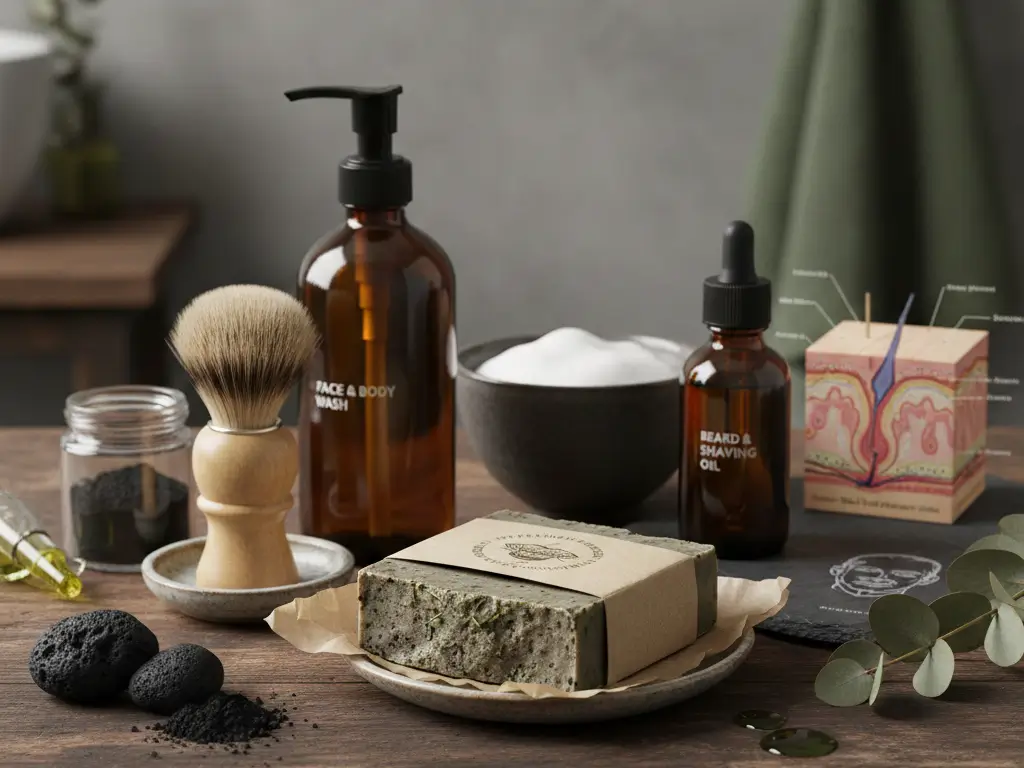
Walk into any men’s grooming section and you’ll see it: separate soaps for face, body, beard, and shaving. Different bottles, different prices, same basic question, is this actually necessary, or just clever marketing?
Men’s skin IS different (about 25% thicker with more active sebaceous glands), but you probably don’t need three separate natural soaps unless you’re dealing with specific issues like severe razor burn or back acne.
What you do need is understanding which ingredients in natural soaps actually address the challenges men face. I’m talking about the stuff that matters, managing oil production without stripping your skin, preventing ingrown hairs from daily shaving, and handling the reality that most guys sweat more and shower less frequently than product marketing assumes.
The ingredient list matters way less than the pH level and how it’s made. A $6 bar of properly formulated castile soap often outperforms $25 “men’s face soap” loaded with essential oils that irritate more than they help.
Why Men’s Skin Needs Different Soap Considerations
Men’s skin produces up to twice as much sebum as women’s skin and is approximately 25% thicker, meaning it needs soaps that clean thoroughly without over-stripping natural oils. The presence of facial hair adds another layer, literally, that affects how soap interacts with skin, particularly around shaving and breakout patterns.
The biology here isn’t complicated, but it gets ignored in most soap advice.
Your skin is thicker and oilier. That means two things: you can handle stronger cleansing than most “sensitive skin” products assume, but you’re also more prone to issues when soap pH is off. Most men’s skin sits around pH 5.0 to 5.5 (slightly acidic). Use a soap with pH above 9.0 regularly, and you’ll disrupt your skin barrier, cue the irritation, dryness, and that tight feeling after washing.
Facial hair complicates everything. Shaving creates micro-abrasions daily. Even if you have a beard, the skin underneath gets less air circulation, trapping oil and dead skin cells. This is why men deal with different breakout patterns than women, often around the jawline, neck, and upper back. Your soap needs to actually address this, not just smell like pine trees.
The sweat factor is real. Men have more active sweat glands and typically higher body temperatures during physical activity. If you’re hitting the gym or doing physical work, you need soap that handles that reality without requiring two showers a day.
What I’ve noticed working with guys switching to natural skincare routines: the biggest mistake is treating men’s soap as a category instead of matching ingredients to your actual skin issues. You might need a lower-pH face soap if you shave daily, but regular castile soap works fine for your body. Or vice versa.
The goal isn’t to buy more products. It’s understanding when the same bar works everywhere and when you legitimately need something different. For most men dealing with occasional razor burn or body acne, understanding how to support your skin barrier matters more than owning multiple soaps.
What Actually Makes a Soap “Natural” (And Why It Matters for Your Face)
Natural soap is made through saponification, combining oils or fats with an alkali (like lye) to create soap molecules. Unlike synthetic detergents, true natural soap retains glycerin and doesn’t require artificial hardeners, fragrances, or preservatives. The “natural” label matters because it typically means gentler surfactants and no hormone-disrupting chemicals.
All real soap involves lye (sodium hydroxide for bar soap). When someone says “lye-free soap,” they’re either lying or selling you detergent. The chemistry is simple, you can’t make soap without the saponification reaction between fats and alkali. The lye completely transforms during the process, leaving none in the finished product if it’s made correctly.
What makes soap “natural” comes down to three things:
The oils used: Natural soaps use plant oils (olive, coconut, palm) or animal fats instead of petroleum-derived ingredients. This matters because plant-based oils more closely match your skin’s natural lipid composition. Coconut oil creates that satisfying lather but can be drying in high concentrations. Olive oil (the base of castile soap) is gentler but doesn’t lather as much, something that bothers guys who think lather equals cleaning power. (It doesn’t.)
What’s NOT added: Synthetic fragrances, parabens, phthalates, and artificial colors get skipped. For your face especially, this matters. Those tiny fragrance molecules can penetrate skin and trigger inflammation. When you’re already creating micro-damage from shaving, adding fragrance irritants is asking for problems.
The glycerin stays in: Commercial soap manufacturing removes glycerin (a humectant that attracts moisture) to sell separately for more profit. Natural soap keeps it. This is actually significant for men who think their skin is “tough enough” to handle harsh soap, the glycerin is what prevents that tight, dried-out feeling.
Here’s the part most articles skip: natural doesn’t automatically mean better for everyone. I’ve seen guys with oily skin do worse with olive oil-heavy soaps because they leave a slight residue. Sometimes a well-formulated natural soap with higher coconut oil content works better, even though it’s technically more stripping.
The key is matching the soap formulation to your skin type and how you’re using it. A natural soap perfect for body might be too alkaline for daily face washing. Understanding how different clays work in natural skincare can help you choose soaps with added clays for oil control if that’s your issue.
Face Soaps for Men: Ingredients That Target Razor Burn and Breakouts
For razor burn, look for soaps with colloidal oatmeal, calendula, or chamomile (anti-inflammatory) and pH around 5.5. For breakouts, activated charcoal, tea tree oil (1-2% maximum), or white willow bark extract help without over-drying. Avoid high coconut oil concentrations (over 30%) on your face if you shave daily.
Your face takes the most abuse. Daily shaving, environmental exposure, touching your face without thinking about it, it needs different treatment than your body.
For razor burn and sensitivity
The goal is calming inflammation while keeping skin clean enough to prevent ingrown hairs. Colloidal oatmeal acts as a natural anti-inflammatory, it’s basically oats ground so fine they stay suspended in the soap. I’ve found this works better than most essential oils for guys with sensitive skin.
Calendula-infused soaps help too. Calendula has actual research backing its wound-healing properties, which matters when you’re essentially creating micro-wounds daily. It’s gentle enough for frequent use, unlike some of the more aggressive “men’s” soaps loaded with menthol that feel cooling but actually irritate.
If you’re dealing with persistent razor burn, the problem might not be your soap. Check your shave routine setup and whether you’re actually prepping skin correctly. Sometimes switching soap is a band-aid for a technique problem.
For breakouts and oily skin
This is where activated charcoal actually earns its hype. It’s not magic, but charcoal’s porous structure does bind to oil and impurities more effectively than regular soap. If you’re breaking out along your jawline or neck (common for men), a charcoal soap used 3-4 times a week can help.
Tea tree oil shows up in tons of men’s face soaps. It has legitimate antimicrobial properties, but here’s what nobody tells you: concentrations above 2% can irritate like crazy, especially on freshly shaved skin. Most commercial soaps don’t tell you the concentration. If your “acne-fighting” soap stings, that’s not it working, that’s irritation.
White willow bark extract is basically natural salicylic acid. It helps with breakouts and ingrown hairs without the harshness of synthetic BHA. For guys dealing with both razor bumps and acne, this ingredient combination works better than choosing one or the other.
The pH issue
Most bar soaps sit around pH 9-10. Your face is happiest at 5.0-5.5. That gap matters more for your face than your body. Look for soaps specifically formulated to lower pH, or consider using a natural soap for body and a different approach for face (like oil cleansing methods if you’re not too oily).
What changed my thinking on face soaps: realizing that sometimes simpler is actually better. A basic castile soap diluted with water often beats a product loaded with six active ingredients that all compete with each other. Your skin can only respond to so much at once.
Body Soaps: What Works for Sweat, Odor, and Back Acne
For body odor and sweat, soaps with eucalyptus, peppermint, or charcoal work well without requiring antibacterial agents. For back and chest acne, look for body bars with salicylic acid alternatives (willow bark) or bentonite clay. Higher coconut oil content (40-60%) is fine for body use and creates better lather.
Your body can handle more than your face. That’s the simple truth most guys need to hear.
Sweat and odor management
You don’t need antibacterial soap. Actually, you probably shouldn’t use it regularly, it disrupts your skin microbiome and can create resistant bacteria. What works better: soap that emulsifies the oils where odor-causing bacteria live, then rinses clean.
Eucalyptus and peppermint aren’t just for scent. Both have mild antimicrobial properties that reduce bacteria without scorched-earth destruction of your skin’s beneficial microbes. Understanding your skin’s microbiome explains why this gentler approach actually works better long-term.
Charcoal body bars handle sweat well because they absorb excess oil without requiring harsh detergents. If you work physical jobs or train hard, a charcoal soap 4-5 times a week keeps you clean without drying out your skin. The other days, regular natural soap works fine.
Back and chest acne
This is where men’s higher sebum production and sweat really show up. Body acne often comes from oil and dead skin cells trapped in follicles, made worse by friction from backpacks, gym equipment, or not showering quickly enough after sweating.
Bentonite clay soaps pull out impurities from pores more effectively than regular cleansing. You can feel the difference, clay soap has more grip to it. For body acne specifically, this textural difference actually helps. Some guys make their own using DIY charcoal and bentonite masks adapted into soap form.
The key is consistency without over-washing. Showering twice a day with harsh soap makes things worse. Once daily with a good natural soap, plus a quick rinse after heavy sweating, beats marathon scrubbing sessions.
Exfoliation needs
Men’s thicker skin can handle more physical exfoliation than women’s, but that doesn’t mean you need those abrasive “scrubbing stones.” A good natural soap with a konjac sponge or exfoliating glove a few times a week handles dead skin cell buildup without micro-tearing skin.
Thinking “stronger soap = cleaner.” You want effective cleansing that doesn’t strip so much oil that your skin overproduces to compensate. That cycle is what keeps a lot of guys stuck with oily skin and body acne.
Shaving with Natural Soap: Traditional vs Modern Approaches
Traditional shaving soaps create dense, protective lather through potassium hydroxide (softer soap) and specific oil ratios. Modern approach: using gentle castile soap as pre-shave and cream or oil for glide. Traditional gives better cushion for thick beards or sensitive skin; modern works fine for light facial hair or electric shavers.
Shaving is where natural soap either proves itself or fails spectacularly. There’s no middle ground.
Traditional shaving soap
This is what your grandfather used, hard puck of soap, shaving brush, works into thick lather. The formula is different from bar soap. It typically uses potassium hydroxide instead of sodium hydroxide, creating a softer consistency that lathers more easily with a brush.
The benefits are real. That thick lather creates a protective layer between blade and skin that reduces friction and lets you see where you’ve shaved. For guys with coarse facial hair or sensitive skin, this approach works better than canned foam (which is usually full of numbing agents that hide irritation while it’s happening).
Key ingredients in good shaving soap: stearic acid for stable lather, glycerin for glide, and tallow or shea butter for cushion. Some natural versions use bentonite clay to add slip. It’s not complicated chemistry, but it’s specific.
Modern/simplified approach
Using regular natural soap, properly diluted, as a pre-shave cleanser, then applying shaving cream or oil. This works if you don’t have particularly tough facial hair or sensitive skin. A basic castile soap lifts oils and softens hair, then your shaving product provides the glide.
What makes this effective: you’re not asking one product to do everything. The soap cleanses, the shaving cream or oil protects. For guys who shave in the shower (steam already softens hair), this streamlined version saves time.
If you shave daily with a multi-blade razor or have sensitive skin, invest in actual shaving soap and learn to lather properly. If you use an electric shaver or only shave a couple times a week, don’t overthink it, good natural soap and a quality shaving oil work fine.
Your post-shave routine matters more than your soap. If you’re not using something to restore your skin’s pH and calm inflammation after shaving, you’ll get irritation regardless of soap quality. Even simple rosewater and glycerin mist helps more than most guys expect.
Do You Really Need Three Different Soaps? The Honest Answer
Most men need one great natural soap for body and either the same soap (if no shaving or skin issues) or a second gentler option for face. You only need separate shaving soap if you wet-shave with a razor regularly and have coarse hair or sensitive skin. The three-soap setup is marketing more than necessity for 70% of guys.
Let me be direct: the grooming industry profits from complexity.
When one soap works everywhere
If you have normal to oily skin, don’t shave daily (or use electric), and don’t have acne or sensitivity issues, a well-formulated castile or olive oil-based natural soap handles everything. Use it on your face, body, even hair if you’re minimalist about it.
The key is choosing the right one soap. It should have pH around 8-9 (lower is better but hard to achieve with true soap), balanced oil content (not 100% coconut which over-dries), and minimal fragrance. A basic bar from a good natural soap maker beats six specialty products from questionable brands.
When you need two
Face and body have different enough needs that most guys benefit from separate soaps, even if they’re both “natural.” Your face gets shaved, touched constantly, and exposed to environmental stress. Your body doesn’t need the gentler formulation (and probably benefits from stronger cleansing if you’re active).
Gentle soap for face (lower pH, anti-inflammatory ingredients), more robust soap for body (higher cleansing power, can include clay or charcoal). That’s not marketing, that’s matching product to actual different conditions.
When three makes sense
Daily wet shaving + acne or very oily skin + active lifestyle that means serious sweat. Now you’ve got three distinct needs: protecting skin during close shaves, managing facial oil and breakouts, and thoroughly cleaning body without overdrying.
Even then, think carefully. Could a good shaving soap and one quality body soap (used gently on face) work? Probably. But if you’ve found three specific products that each solve a real problem, that’s fine too.
Testing the “one soap for everything” approach for two months. My skin didn’t fall apart. Actually, it improved, fewer products meant less chance of irritation from competing ingredients. Sometimes doing less beats doing more.
The real questions to ask:
- Does each soap solve a problem the others don’t?
- Could I achieve the same results with fewer products?
- Am I buying because I need it or because marketing is good?
For most men exploring clean beauty options, starting simple and adding only as needed beats starting complex and trying to figure out what’s working.
Start Simple, Adjust Based on Reality
You don’t need a bathroom full of specialized soaps to have healthy skin. You need one or two quality natural soaps matched to your actual skin challenges, not marketing categories.
Get one well-formulated natural bar soap. Use it everywhere for two weeks. If your face feels tight or irritated, that’s your signal to try something gentler just for face. If you’re dealing with body acne or you can’t stay clean after workouts, add something with clay or charcoal for body.
Pay attention to what your skin actually tells you, not what advertising says you should need. Razor burn that won’t quit? Look into proper shaving soap and technique, it’s probably not just the cleanser. Breakouts along your jawline? Consider whether you need better post-shave care more than different soap.
Check the pH and ingredient list of whatever soap you’re using now. If it contains “fragrance” (not specific essential oils listed), synthetic colors, or you can’t find pH information and it leaves your skin feeling tight, that’s your sign to switch. Order one quality natural soap and test it for two weeks before adding anything else.
The goal isn’t perfect skin from soap alone. It’s clean, healthy skin that isn’t fighting irritation from products that don’t match how you actually live.