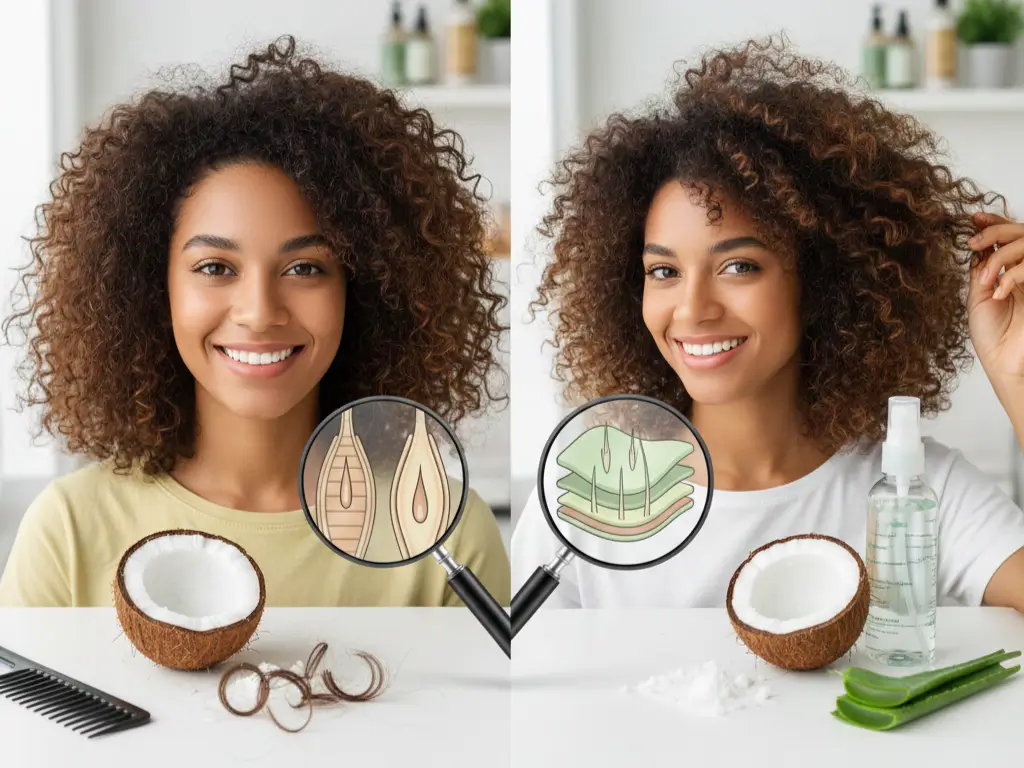
I ruined my hair with coconut oil.
Not because coconut oil is bad, it’s fantastic. But I have low porosity hair, and coating it with heavy oil was like waterproofing a raincoat. My hair looked greasy, felt stiff, and broke more than before. Meanwhile, my friend with high porosity hair used the same treatment and got soft, manageable curls.
Natural hair care treatments work brilliantly when matched to your hair’s structure. Use the wrong treatment for your hair type, and you’re fighting biology.
This guide breaks down which natural hair care treatments actually deliver results based on hair porosity, the single most important factor nobody talks about. You’ll learn what works, what backfires, and how to stop wasting time on treatments designed for someone else’s hair. No fluff, no product pushing. Just what actually works.
Why Your Natural Hair Treatments Aren’t Working
Most natural treatments fail because they’re mismatched to your hair porosity. Low porosity hair needs lightweight, penetrating treatments. High porosity hair needs heavy, sealing treatments. Using the wrong category makes problems worse, not better.
You’ve probably tried everything. Rice water. Shea butter masks. Apple cider vinegar rinses. Some work temporarily. Most do nothing. A few make your hair worse.
The problem isn’t the ingredients, it’s the mismatch.
Hair porosity determines how your hair absorbs and retains moisture. Think of it like your skin type for beauty products. You wouldn’t use the same moisturizer on oily skin and dry skin, right? Same logic applies to hair, but nobody explains this when sharing viral hair mask recipes.
Low porosity hair has tightly closed cuticles. Moisture can’t get in easily, and heavy oils sit on top creating buildup. You need heat, steam, and lightweight ingredients that can actually penetrate.
High porosity hair has open, damaged cuticles. Moisture gets in fine but escapes immediately. You need heavier butters and proteins that seal and fill the gaps.
Most DIY natural hair care treatments on social media don’t mention this. They show beautiful results on one person’s hair and assume it’ll work for everyone. It won’t.
What surprised me most? The treatments that work best aren’t always the most “natural-sounding” ones. Sometimes the simple botanical oils matched to your hair type outperform complicated 10-ingredient masks.
Understanding Hair Porosity (The Factor Everyone Skips)
Drop a clean strand of hair in water. Sinks fast = high porosity. Floats = low porosity. Stays mid-water = normal porosity.
Hair porosity isn’t complicated, but it changes everything about which treatments work.
Here’s what each type actually means in practical terms:
Low Porosity Hair:
- Products sit on your hair instead of absorbing
- Takes forever to get wet in the shower
- Air-dries slowly (sometimes stays damp for hours)
- Doesn’t respond well to heavy oils or butters
- Gets buildup easily
Normal Porosity Hair:
- Absorbs moisture at a moderate rate
- Holds styles well
- Looks healthy with minimal effort
- Most treatments work reasonably well
- Least prone to damage
High Porosity Hair:
- Absorbs water immediately (gets soaking wet fast)
- Dries very quickly
- Feels rough or straw-like when dry
- Color fades quickly
- Tangles easily
I tested this on my own hair after years of failed treatments. I have low porosity hair and was using heavy shea and cocoa butters meant for high porosity hair. No wonder nothing worked.
Once I switched to lightweight oils with heat, my hair transformed in two weeks. Same ingredients I’d tried before, just applied differently.
The porosity test takes 30 seconds. Do it before buying another product or trying another treatment. It’ll save you months of frustration and money on ingredients that were never going to work for your hair structure.
For seasonal adjustments, your hair porosity can shift slightly based on weather and styling damage. Check out how to adjust your natural hair care for different seasons to account for these changes.
The 5 Core Natural Hair Treatments (And How to Match Them to Your Hair)
Low porosity needs heat + lightweight oils. Normal porosity handles most treatments. High porosity needs protein + heavy sealants.
Let me break down the treatments that actually work, and which hair types they’re designed for.
1. Hot Oil Treatments
Best for: Low to normal porosity hair
Heat opens the cuticle so oils can penetrate instead of sitting on top. This is why hot oil treatments work when regular oil applications don’t.
How to do it right:
- Use lightweight oils: grapeseed, jojoba, argan, or sweet almond
- Warm oil to comfortable temperature (test on wrist)
- Apply to dry hair, focusing on ends
- Cover with shower cap for 30-45 minutes
- Add external heat with a warm towel or bonnet
- Shampoo thoroughly (might need two washes)
I do this every two weeks. If you have high porosity hair, skip this, you don’t need heat to get moisture in. You need help keeping it there.
2. Protein Treatments
Best for: High porosity and damaged hair
Protein fills in the gaps in damaged cuticles, temporarily strengthening hair. Rice water is the gentlest protein treatment. Gelatin masks are stronger.
Warning sign you need protein: Hair stretches too much when wet and snaps back slowly or breaks.
How to use:
- Start with fermented rice water (15-20 minutes)
- Don’t overdo it, once every 2-3 weeks maximum
- Always follow with deep conditioning
Here’s what nobody tells you: protein overload is real. Your hair gets stiff, brittle, and breaks more. If you have low porosity hair that’s not damaged, you probably don’t need protein treatments at all.
3. Deep Conditioning
Best for: All porosity types (technique varies)
Deep conditioning is your moisture treatment. It’s different from protein treatments, you need both if you have damaged hair.
By porosity:
- Low porosity: Use heat, leave on 30-45 minutes, choose lightweight conditioners
- Normal porosity: 20-30 minutes, moderate weight conditioners
- High porosity: No heat needed, 45+ minutes, thick butter-based conditioners
I mix my own with botanical butters matched to my hair needs. Store-bought works fine too, just check the weight.
4. Apple Cider Vinegar Rinses
Best for: Low porosity hair with buildup; high porosity hair to close cuticles
ACV rinses balance pH and remove product buildup. They’re particularly helpful if you live in an area with hard water.
Recipe: 1 tablespoon ACV to 1 cup water. Rinse through after shampooing. Don’t leave on more than 2-3 minutes.
If you’re dealing with scalp issues like dandruff, ACV rinses can help rebalance the scalp microbiome. But don’t overuse, once a week maximum.
5. Leave-In Treatments
Best for: High porosity hair (essential); normal porosity (helpful); low porosity (use sparingly)
Leave-ins seal moisture in after washing. High porosity hair desperately needs this. Low porosity hair can get weighed down.
Application:
- Apply to soaking wet hair
- Use less than you think (start with a dime-sized amount)
- Focus on ends, avoid roots
- Consider natural humectants for extra moisture retention
The key is matching the weight to your porosity. High porosity can handle cream leave-ins. Low porosity should stick to lightweight serums or skip entirely.
Hot Oil Treatment vs Deep Conditioning: Which Does Your Hair Actually Need?
Hot oil treatments add lipids and shine (best for low porosity). Deep conditioning adds moisture and softness (essential for high porosity). Damaged hair needs both, alternating weeks.
This confused me for years because people use these terms interchangeably. They’re not the same treatment.
| Feature | Hot Oil Treatment | Deep Conditioning |
| Primary Benefit | Adds lipids, improves elasticity, adds shine | Adds moisture, softens, reduces breakage |
| Best For | Low porosity, dry but not damaged hair | High porosity, damaged, chemically-treated hair |
| Key Ingredient | Oils (coconut, argan, olive) | Conditioners, butters, humectants |
| Requires Heat | Yes (essential for low porosity) | Optional (not needed for high porosity) |
| How Often | Every 2-3 weeks | Weekly for damaged hair, bi-weekly for healthy |
| Time Required | 30-45 minutes | 20-45 minutes depending on porosity |
If your hair is dry but strong, start with hot oil treatments. If it’s damaged and breaks easily, prioritize deep conditioning with occasional protein.
I alternate. Week one: deep conditioning. Week three: hot oil treatment. Week five: deep conditioning. It sounds complicated written out, but becomes automatic once you establish a routine.
The mistake I see constantly? People with low porosity doing deep conditioning without heat and wondering why their hair feels heavy and limp. You need heat to open those cuticles. A shower cap and warm towel makes all the difference.
For understanding how different facial oils work for skin types, similar matching principles apply, lightweight for oily skin, heavier for dry skin.
The Natural Treatments That Backfire (And What to Use Instead)
Coconut oil causes protein buildup on low porosity hair. Baking soda damages the cuticle permanently. Lemon juice creates uneven lightening and dryness. Always test pH and match ingredients to porosity.
Let me save you some heartbreak. These popular treatments sound natural and harmless but can seriously damage your hair.
Coconut Oil on Low Porosity Hair
Coconut oil penetrates the hair shaft, which sounds great. But on low porosity hair with tightly closed cuticles, it can’t rinse out properly. You get buildup, stiffness, and eventually protein overload (yes, coconut oil has protein-like effects).
What I use instead: Argan oil or grapeseed oil with heat. They coat without penetrating as deeply.
High porosity hair? Coconut oil is probably perfect for you. See how porosity changes everything?
Baking Soda “Clarifying” Treatments
Baking soda has a pH of 9. Your hair’s natural pH is 4.5-5.5. Using baking soda opens and roughens the cuticle, permanently. I’ve seen people’s hair texture change from using this regularly.
What to use instead: Apple cider vinegar rinses (pH 3-4) or a proper sulfate-free clarifying shampoo.
Lemon Juice for “Natural Highlights”
Lemon juice is acidic and drying. Combined with sun exposure, it damages the cuticle and creates uneven, brassy lightening. It’s not “natural highlights”, it’s chemical damage from citric acid.
No good alternative if you want to lighten hair naturally. You’re better off embracing your natural color or using professional treatments designed not to wreck the cuticle structure.
Daily Oil Treatments
More isn’t better. Daily oil application leads to buildup, attracts dirt, and prevents moisture from actually reaching your hair. Even botanical oils for your hair type should be used strategically, not constantly.
I learned this the hard way. My hair looked progressively worse until I clarified and cut back to weekly treatments.
DIY Protein Treatments Without Moisture Balance
Egg masks, gelatin treatments, rice water, all fantastic protein sources. But if you use them without balancing moisture treatments, you get brittle, stiff hair that breaks.
The rule: For every protein treatment, do two moisture-focused deep conditioning sessions. Your hair needs both structure (protein) and flexibility (moisture).
If you’re interested in the science behind how ingredients affect your skin barrier, similar protein-moisture balance principles apply there too.
Your Action Plan: Starting This Week
You don’t need to overhaul everything at once. Here’s what to do in the next 24 hours, next week, and next month.
Do the porosity test. Drop a clean strand of your hair in a glass of water and see where it goes. This determines everything else.
Based on your porosity result, choose ONE treatment from the core five above. Don’t try all of them. Pick the one that addresses your biggest complaint (dryness, breakage, dullness, or buildup).
Low porosity with buildup? Start with an ACV rinse.
High porosity with breakage? Start with deep conditioning.
Normal porosity looking dull? Try a hot oil treatment.
Establish a rotation. I keep it simple: wash day includes deep conditioning or hot oil (alternating). Midweek, I might do a leave-in treatment if my ends feel dry.
Track what works. I use my phone’s notes app. “Deep conditioning with heat, 45 min, hair felt soft for 4 days.” Simple tracking helps you figure out what your specific hair responds to.
When you need help troubleshooting your routine, the complete organic skincare routine guide shares similar principles for matching treatments to your specific needs.
The goal isn’t perfection. It’s finding the 2-3 treatments that consistently work for your hair structure, and doing those well. That’s how natural hair care actually delivers results, not by trying everything, but by doing the right things for your specific hair.