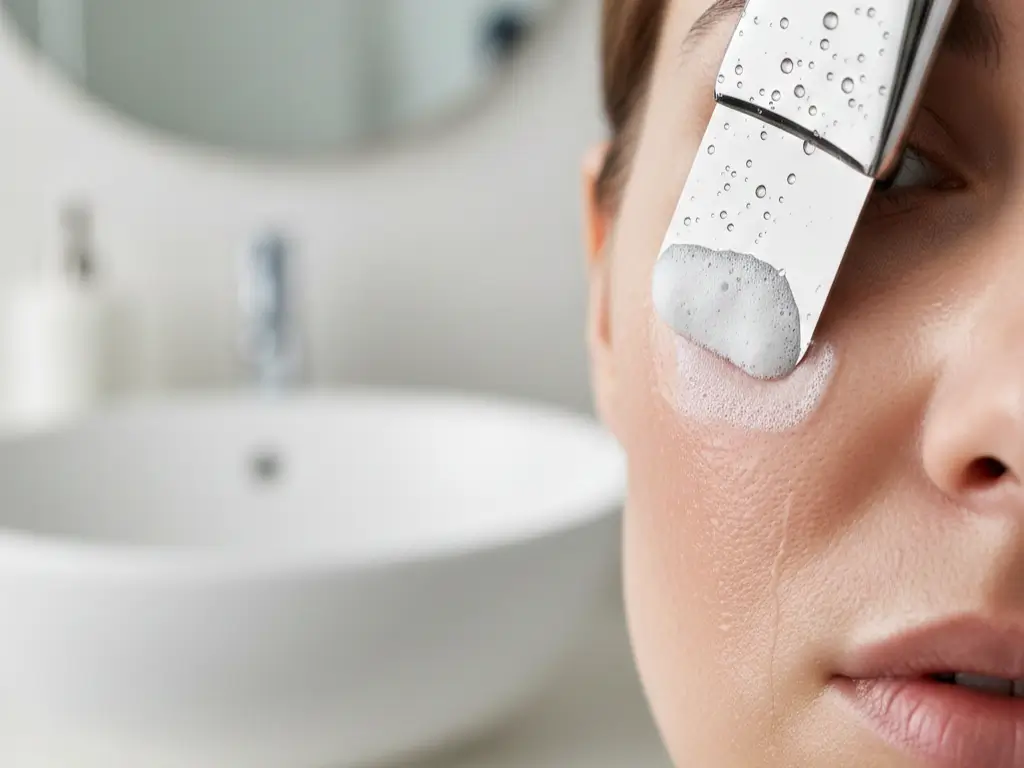
I’ve watched hundreds of ultrasonic skin spatula videos where people scrape their faces and marvel at the white residue coating the blade. “Look at all the dirt and oil!” they exclaim. Here’s what nobody mentions: a good portion of that isn’t gunk at all.
After testing ultrasonic spatulas on different skin types and comparing results with both proper and improper technique, I’ve learned that this tool delivers wildly different outcomes depending on how you prep your skin. Most people skip this step entirely, then wonder why their $30-$150 device doesn’t work.
An ultrasonic skin spatula uses high-frequency vibrations (24,000-28,000 Hz) to exfoliate dead skin cells, dislodge debris from pores, and help products penetrate deeper. It works best on properly prepped, thoroughly wet skin, but improper use can damage your skin barrier.
What Is an Ultrasonic Skin Spatula and How Does It Actually Work?
An ultrasonic skin spatula is a handheld metal blade that vibrates at ultrasonic frequencies (above 20,000 Hz) to gently exfoliate skin, extract debris from pores, and enhance product absorption through a process called sonophoresis.
The device has three basic functions, though not all models include every mode:
Cleansing/extraction mode – The blade vibrates at an angle that pushes debris up and out of pores. You glide it across wet skin in upward motions. This is the “scraping” mode you see in videos.
Infusion mode – The vibration direction reverses to help serums and treatments penetrate deeper into skin. Think of it as the opposite of extraction.
Lifting mode – Some devices add a pulsing pattern intended for facial massage and temporary firming.
The science involves ultrasonic vibrations creating microscopic movements in your skin tissue. According to research on ultrasonic exfoliation, these vibrations disrupt the bonds between dead skin cells and the skin surface, making removal gentler than manual scrubbing. The same vibrations create temporary microchannels that allow skincare products to absorb more effectively.
What surprised me when I first tested this: the device doesn’t actually scrape in a mechanical sense. The blade itself is dull. All the work happens through vibration, not pressure. If you’re pressing hard enough to feel it scraping, you’re doing it wrong and potentially irritating your skin.
The ultrasonic frequency also generates microscopic cavitation bubbles in the water on your skin’s surface. When these bubbles collapse, they create tiny cleaning forces that help dislodge material from pores. This only works when your skin is properly wet, which brings us to the biggest mistake people make.
Similar to how facial massage tools work best with proper technique and the right products, ultrasonic spatulas require specific conditions to deliver results.
What Really Happens When You Use an Ultrasonic Spatula on Your Face
The white residue you see combines dead skin cells, oxidized sebum, product residue, and, here’s the part nobody admits, dried water, minerals from tap water, and cream from your skin prep. Not everything coming off is “gunk.”
Let me be honest about what you’re seeing on that blade.
What’s actually in the residue:
- Dead skin cells (keratinocytes) – This is the legitimate exfoliation component. Your skin naturally sheds about 30,000-40,000 dead cells per minute, and the ultrasonic action helps remove the stubborn ones.
- Sebum and oxidized oil – If you have oily or combination skin, you’ll see actual sebum, especially from your T-zone. Oxidized sebum (exposed to air) turns yellowish-white.
- Product buildup – Sunscreen, moisturizer, makeup residue, and other skincare products that didn’t fully absorb.
- Water and mineral deposits – If you’re using tap water, minerals create white residue, especially in hard water areas. This is often 30-50% of what you see.
- Emulsified prep products – If you prepped with an oil or balm (which you should), the spatula emulsifies it with water, creating a creamy white substance.
The first time I used one, I was impressed by the amount of material on the blade. Then I tested it on the back of my hand, freshly washed, no makeup, barely any oil production. Still got white residue. That’s when I realized how much was water-based emulsion and minerals.
This doesn’t mean the device is fake or useless. It means you need realistic expectations. You ARE removing some dead skin and debris. You’re NOT pulling months of “toxic buildup” from your pores, no matter what the marketing claims.
Timeline for visible results:
- Immediately after use – Skin feels smoother, looks slightly brighter
- 24-48 hours – Products absorb faster, skin texture feels refined
- 2-3 weeks of regular use – Noticeable improvement in skin smoothness and reduced congestion
- 4-6 weeks – Potentially reduced appearance of blackheads and whiteheads (if you have them)
This aligns with what I’ve seen with other exfoliating methods, where consistency matters more than dramatic one-time results.
The device works through physical exfoliation similar to using a konjac sponge but with added ultrasonic benefits for deeper cleansing.
The Preparation Step Most Guides Skip (And Why Results Fail Without It)
Your skin must be thoroughly saturated, not just damp, and prepared with a water-soluble product for the ultrasonic vibrations to work effectively. Dry or barely-wet skin produces poor results and potential irritation.
This is the make-or-break factor I see people mess up constantly.
Why wetness matters so much:
The ultrasonic vibrations need a medium to work effectively. Water acts as a conductor for the vibration and creates those cavitation bubbles I mentioned earlier. When your skin is just damp, the blade drags and catches. When it’s properly wet, the spatula glides smoothly and the vibrations transmit into your skin tissue instead of just bouncing off the surface.
Think of it like trying to skip a stone on dry land versus water. Same stone, same technique, completely different physics.
Proper prep protocol (takes 2-3 minutes):
- Cleanse first – Remove makeup and surface dirt with your regular cleanser. The spatula isn’t a replacement for cleansing; it’s a deep-cleansing treatment.
- Steam or warm compress – Optional but helpful. Warmth softens sebum and dead skin. Even just 1-2 minutes with a warm washcloth makes a difference. Facial steaming explains why this step enhances extraction.
- Apply a thin layer of water-soluble product – This is the step everyone skips. Apply a gel cleanser, aloe vera gel, or hyaluronic acid serum. This creates slip and keeps skin wet during the process.
- Keep a bowl of water nearby – Constantly re-wet the spatula and add water to your face. Your skin should look glossy-wet, not just moist.
I tested this with split-face comparisons. Left side: just splashed with water. Right side: proper prep with gel cleanser and constant rewetting. The difference was dramatic, smoother glide, more material removed, less redness afterward, better product absorption.
What I got wrong initially: I thought wetting my face once before starting was enough. Within 30 seconds, my skin started drying, and the spatula began dragging. Now I keep a small spray bottle of water handy and spritz every 20-30 seconds.
For those interested in comprehensive device-based treatments, understanding the ultrasonic skin spatula alongside other tools creates a complete routine.
Who Gets the Best Results, And Who Should Skip This Device
Ultrasonic spatulas work best for normal to oily skin with visible blackheads or texture issues. People with dry, sensitive, rosacea-prone, or currently compromised skin should avoid them or use with extreme caution.
After watching friends and clients use these devices, I’ve noticed clear patterns in who loves them versus who damages their skin.
Best candidates:
| Skin Type | Why It Works | What to Expect |
| Oily/Combination | More sebum to extract, tolerates exfoliation well | Reduced blackheads, less congestion, better product absorption |
| Normal with congestion | Benefits from deep cleansing without over-stripping | Smoother texture, refined appearance, brighter tone |
| Thick/resilient skin | Can handle regular exfoliation | Improved product penetration, reduced bumpy texture |
Who should skip it or proceed very carefully:
- Dry or dehydrated skin – The exfoliation can worsen dryness. If you already struggle with flaking or tightness, focus on humectants for hydration instead.
- Sensitive or rosacea-prone skin – The vibration and exfoliation can trigger inflammation. Better options exist for organic ingredients for rosacea.
- Active acne or broken skin – Don’t use it over inflamed pimples or any open wounds. You’ll spread bacteria and worsen inflammation.
- Thin or compromised skin barrier – If you’re already dealing with irritation, peeling from actives, or barrier damage, this will make it worse. Focus on skin barrier repair first.
- Very dark skin tones – Any physical irritation risks post-inflammatory hyperpigmentation (PIH). If you have melanin-rich skin prone to dark spots, gentler exfoliation methods combined with hyperpigmentation treatments might be safer.
If you’re wondering whether this fits your skin type, consider comparing it with gentler options like gua sha or facial rollers, which offer benefits without the aggressive exfoliation.
How to Use an Ultrasonic Skin Spatula Without Damaging Your Skin
Hold the blade at a 45-degree angle, use feather-light pressure, keep skin saturated, and limit use to 1-2 times weekly maximum. Move in upward motions for extraction mode, downward for infusion mode.
Here’s the step-by-step I wish someone had given me before my first use.
Proper technique:
- Prep your skin (see protocol above) – This can’t be optional.
- Start on low setting – Most devices have 2-3 intensity levels. Always start low. You can increase if needed, but you can’t undo irritation.
- Hold at 45-degree angle – The blade should be tilted, not flat against your skin. Too flat and it won’t work; too steep and it won’t glide.
- Use NO pressure – Let the weight of the device do the work. You’re guiding it, not pressing it. If you see your skin pulling or dragging, you’re pressing too hard.
- Work in sections – Forehead, each cheek, nose, chin. Spend 1-2 minutes per area. Total facial time: 5-8 minutes.
- Upward motions for extraction – Glide from jawline toward temples, from nose outward, from chin upward. This works with lymphatic drainage patterns.
- Wipe the blade frequently – Clean off accumulated residue every 3-4 strokes. Otherwise, you’re just moving debris around.
- Switch to infusion mode – After extraction, apply your serum (hyaluronic acid, vitamin C, or niacinamide work well) and use downward/inward motions to help it absorb.
- Follow with hydration – Your skin is freshly exfoliated. Apply a gentle moisturizer to support barrier recovery.
Frequency guidelines:
- Oily/resilient skin: 2 times weekly maximum
- Normal/combination skin: Once weekly
- Dry/sensitive skin: Once every 2 weeks or skip entirely
More is not better. I learned this the hard way after using mine four times in one week and ending up with irritation and tiny broken capillaries on my cheeks. It took three weeks to heal.
What NOT to do:
- Don’t use on dry skin (can’t emphasize this enough)
- Don’t press hard or use like a traditional scraper
- Don’t use over active breakouts or irritation
- Don’t combine with strong chemical exfoliants on the same day
- Don’t use before applying makeup (wait at least 6-8 hours)
- Don’t share devices without thorough sanitization
For those building a complete skincare tool collection, understanding how this fits with microcurrent devices, LED light therapy, and other at-home treatments helps create a balanced routine without over-treating your skin.
Maintenance:
Clean your device after every use with rubbing alcohol or gentle soap. Water can get into the charging port if you’re not careful, so dry it thoroughly. Most devices last 2-3 years with regular use.
If you’re interested in comprehensive, science-backed skincare approaches, Beauty Healing Organic offers detailed guides on everything from ingredients to complete routines.
The Bottom Line
This device isn’t a miracle worker, but it’s not a gimmick either.
It works best as a weekly or bi-weekly deep-cleansing treatment for people with oily or normal skin who want smoother texture and better product absorption. The key is proper preparation, keeping your skin thoroughly wet throughout the process makes the difference between mediocre and genuinely helpful results.
If you have dry, sensitive, or compromised skin, the risk of irritation outweighs the benefits. There are gentler ways to exfoliate and enhance product penetration.
- Look at your skin type and current routine. If you’re already using strong actives like retinoids or acids daily, adding this might be too much.
- If you decide to try one, use it once every 7-10 days for the first month. See how your skin responds before increasing frequency.
- If you develop persistent redness, increased sensitivity, or breakouts after using one, stop immediately. Focus on barrier repair and consider consulting a professional.
The most important thing I’ve learned: skincare tools work differently for everyone. What transforms one person’s skin might damage another’s. Pay attention to what your skin is telling you, not just what the marketing promises.